Scythian Cannabis Funerary Rites on the Steppe
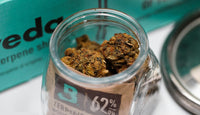
Photo by Ira Komornik via Unsplash.
Herodotus pictures it vividly: mourners crouch inside a small tent of felt stretched over poles, a dish of red-hot stones at their feet. They toss hemp seed onto the stones, and thick vapor fills the tent. Centuries later, archaeologists dug up gear that looks a lot like his description.
The real question is how much of the funerary cannabis story rests on a written record, how much on excavation, and how much on inference stretched across an enormous region. Those are three different kinds of evidence, and they do not always line up neatly.
One caution up front. Scythian is a broad label the Greeks applied to many mounted steppe peoples, not a single nation with a single set of customs. The funerary cannabis evidence comes from several cultures and several centuries, and the sections below keep them apart.
Who the Scythians Were, and Why the Label Is Slippery
Scythian was the name Greek writers gave to mounted nomadic peoples of the Eurasian steppe, roughly from the first millennium BCE. It was an outsider's umbrella term, and the people it covered did not necessarily see themselves as one group.
Scythian-type cultures stretched from the western steppe eastward to the Altai Mountains and beyond. Their burial customs differed from place to place, which is the first reason to be wary of any claim that begins with what the Scythians did.
Most written testimony comes from outsiders, chiefly Herodotus in Book 4 of the Histories. He wrote from the Greek world, drawing on reports rather than first-hand observation of steppe funerals. His account has to be read against what the ground itself has given up.
The ground has given up a lot. Kurgans, the burial mounds the steppe is famous for, preserved much of what we know. In the Altai, permafrost kept organic material in unusually good condition, including items that rot almost everywhere else.
Access to the plant was never the issue, since cannabis grew wild across much of the steppe and nobody had to import or cultivate it. The open questions are what people did with it, and why.
Herodotus and the Tent Steam Bath
The passage sits in Histories 4.73-75. Herodotus describes a purification carried out after a burial. People build a small tent from poles covered in felt, bring in a dish holding red-hot stones, and throw hemp seed onto them.
He says the vapor rose thick and that the Scythians howled with delight, and he compares the experience to a Greek bath. Translators render the details differently, so the exact wording of his phrases for the vapor and the howling varies from edition to edition.
Herodotus ties the ritual to cleansing after contact with the dead, including washing the body and head, so in his telling it is a purification for the living and sits outside the burial itself.
He was an outsider writing secondhand, and the description runs only a few lines, far too little to carry a whole theory of steppe religion.
There is also a technical wrinkle. What he calls vapor from seed most plausibly means smoke from burning seed and plant matter, since hot stones would scorch dry material rather than steam it. That reading is an inference, but later finds appear to support it.
Pazyryk: What Rudenko Found in the Altai
Sergei Rudenko excavated the Pazyryk kurgans in the Altai Mountains over several seasons in the middle decades of the twentieth century. The burials are usually dated to roughly the fifth to third centuries BCE.
The site owes its reputation to ice. Water seeped into the burial chambers and froze, preserving felt, textiles, wood and even tattooed skin. Very few steppe sites offer anything like that window into daily and ritual life.
Rudenko reported tent-like pole frames and a vessel holding stones and hemp seeds, which echo Herodotus closely.
There is a real scholarly debate here. Pazyryk is called Scythian-type, and researchers differ on how directly it connects to the Scythians of the western steppe whom Herodotus wrote about.
Even so, a matching set of equipment, thousands of kilometers from Herodotus's informants, suggests the practice was a regional steppe custom. It looks less like a Greek exaggeration and more like something he heard about accurately, if incompletely.
Jirzankal and the Burning-Cannabis Evidence
A 2019 study in Science Advances reported chemical residues of cannabis in wooden braziers at the Jirzankal Cemetery in the Pamirs, dated to about 500 BCE. It is the first chemical identification of cannabis burning in a funerary setting that early.
The residues were read as pointing to cannabis with higher THC than typical wild plants, which the researchers took as possible selection or cultivation.
The braziers sat in funerary contexts alongside stones. That supports a link between burning cannabis and burial ritual, and it is the closest chemical match yet to the scene Herodotus sketched.
Jirzankal is in the Pamirs, and its people were not necessarily Scythian; the Yanghai tombs in Turpan, Xinjiang, where earlier work reported burned cannabis, are associated with the Gushi.
So these sites are best read as a wider Eurasian pattern of funerary cannabis smoke. They are neighbors in space and time and cannot demonstrate a single Scythian practice.
What the Residues Can and Cannot Say

Photo by hannah via Pexels.
Residues show burning, so how psychoactive the smoke was, and whether the effect mattered to the ritual, remains out of reach.
Hemp on the steppe also meant rope, cloth and felt. Ritual use shared the plant with everyday uses, which complicates reading the ritual as only about intoxication.
The written sources are thin and secondhand, and the ice of the Altai is exceptional, so conclusions drawn from the best-preserved places may not generalize.
Newer archaeobotany and residue methods will keep revising the picture.
This history is archaeological and historical. It is not guidance about any modern use, and cannabis laws vary by country, so anyone with a practical question should look to the rules where they live.
The most defensible reading is that burning cannabis in funerary and purification contexts was an old habit across the steppe and the lands east of it, and Herodotus saw only a slice of it, whatever the Greek label implies.
The better question is no longer whether it happened but why mourners chose it. Herodotus's own framing, a bath after handling the dead, is the best-anchored answer, and I would favor purification as the core purpose, with any intoxicating effect a welcome side of it.