Scythian Smoke Pits and Native Ceremonial Pipes: An Ancient Parallel
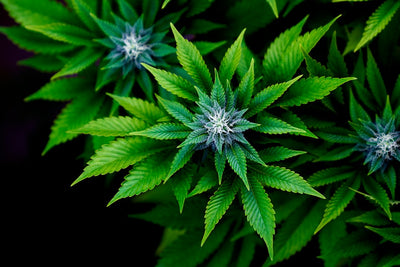
Photo by Elliot Voilmy via Unsplash.
Herodotus wrote it down around 440 BCE and most readers since have assumed he was exaggerating, the way Greek travel writers sometimes did when describing people living past the edge of the known world. The Scythians, he said, would take hemp seed, crawl into a small tent made of woolen felt stretched over three sticks, and throw the seed onto stones heated red-hot in a pit at the center. The vapor that rose, he wrote, was so thick and so intoxicating that the Scythians inside would howl with pleasure -- and no Greek steam bath could match it. For nearly two and a half thousand years, that passage sat in the historical record as a curiosity, filed somewhere between ethnography and travel-writer embellishment, because nobody had ever dug up anything to confirm it.
The real question worth asking isn't whether Herodotus was telling the truth about a specific felt tent in the fifth century BCE, though that turns out to matter too. It's why two cultures with no contact, no shared trade routes, and no common ancestor language built strikingly similar enclosed-smoke rituals tied to death and the sacred. One was a horse-mounted steppe people stretching from the Black Sea to the Altai Mountains. The other encompasses dozens of distinct nations across North America, separated from the Scythians by an ocean and, in most cases, thousands of years. The connection between them, if there is one, has to be structural rather than botanical -- because the plants involved were not the same.
That distinction matters enormously here. The Scythian side of this story is now cannabis-confirmed by archaeology, backed by physical residue found in frozen tombs and golden vessels. The pre-contact Native American record, by contrast, is built on tobacco, kinnikinnick, and jimsonweed -- not cannabis, which has no confirmed place in pre-Columbian North American ceremonial life. What follows is an account of how modern residue analysis and careful excavation have only recently been able to test claims that ancient writers and oral traditions had already been describing for centuries, and what happens when you compare the results honestly instead of reaching for the tidier story.
Herodotus's Vapor-Bath, Confirmed by a Frozen Tomb

Photo by Grianghraf via Unsplash.
Herodotus's description is oddly precise for something that was long treated as folklore. He describes the Scythians fixing three wooden poles into the ground, leaning them together, and draping thick woolen felt over the frame to seal it as tightly as possible -- essentially a portable sweat tent. Inside, they placed a shallow basin or pit filled with stones brought to a glowing heat, then threw handfuls of hemp seed directly onto them. The seed, he wrote, never actually burned the way wood does on a fire; it smoldered and produced a dense vapor that filled the enclosed space. People inside reacted with what he called shouts of joy, and Herodotus was careful to note that this was not a bath in the way Greeks understood bathing -- it was something else, something more intense.
For centuries that account had no corroborating physical evidence, so historians treated it the way they treated a lot of Herodotus's more exotic claims -- plausible in outline, unverifiable in detail, and probably polished for effect by a writer who liked a good story. That changed between 1947 and 1949, when Soviet archaeologist Sergei Rudenko excavated the Pazyryk burial mounds high in the Altai Mountains of southern Siberia. The permafrost there had done something remarkable: it had frozen organic material in place for roughly two and a half thousand years, preserving textiles, wood, and even skin that would have rotted away almost anywhere else on earth.
What Rudenko's team found inside one of the kurgans was a miniature version of the exact apparatus Herodotus had described -- a small tent frame with felt covering, scaled down and placed as grave goods, with a leather pouch of cannabis seed still tied to one of the support poles. Alongside it sat a bronze container holding stones and hemp seed, with a section of cloth that had covered it. It was, in effect, a complete ritual kit frozen in place at the moment of burial. Few cases in classical archaeology offer this clean a vindication -- a detail from a Greek historian, doubted for twenty-four centuries, confirmed almost exactly by a shovel in Siberian permafrost.
Gold Vessels and a Hidden Chamber Near Stavropol

Photo by Daniel Neves Cotta via Pexels.
Pazyryk wasn't the last word on this. Decades later, archaeologist Andrei Belinski led an excavation at a site called Sengileevskoe-2, near Stavropol in southern Russia, where his team uncovered a hidden chamber dating back roughly 2,400 years -- placing it squarely in the Scythian period Herodotus was writing about. Inside, they found an extraordinary cache: close to seven pounds of gold vessels, the kind of find that immediately signals high-status burial rather than an ordinary grave.
What made the discovery relevant to the hemp-smoke question wasn't the gold itself but what was crusted onto it. Forensic residue analysis -- the same type of criminological lab work used in modern drug casework -- identified black residue on the interior surfaces of the vessels as a mixture containing both opium and cannabis. That detail matters because it gives Herodotus's account a second, entirely independent line of physical confirmation, separate from Rudenko's excavation at Pazyryk and recovered from a different region of the Scythian world altogether. Two sites, two different research teams, decades apart, converging on the same conclusion from different physical evidence is about as strong as archaeological corroboration gets.
The gold vessels also suggest this wasn't casual, everyday consumption. Burying that much precious metal alongside the residue points toward ritual or elite use -- something closer to a ceremony reserved for people of status than a recreational habit shared broadly across Scythian society. It fits the pattern Herodotus himself implied: this was a specific practice, tied to specific moments, not a background feature of daily life.
This is also a live field of research rather than a closed one. Work continues at other Scythian-era sites, including the roughly 175-grave cemetery at Chervony Mayak in Kherson Oblast, under excavation through 2026. It's worth noting plainly that the most recent reported find there was cinnabar pigment, not cannabis residue -- a reminder that this branch of mortuary chemistry keeps turning up new material, and not every result confirms the pattern archaeologists expect going in.
What Native American Pipes Actually Contained

Photo by Rinat Askarov via Pexels.
The North American side of this comparison has its own serious research behind it, and it points in a different direction. Washington State University anthropologist Shannon Tushingham led residue research, published in the Proceedings of the National Academy of Sciences, conducted in direct collaboration with the Nez Perce Tribe. The findings documented something significant: ancestral Nez Perce communities and other Plateau hunting-and-gathering peoples had built an entire smoking complex around wild, indigenous tobacco species well before domesticated tobacco arrived with fur traders in the decades following the 1790s. This wasn't a practice borrowed or introduced by European contact -- it predates it.
What makes this research notable beyond the chemistry is who asked for it. The Nez Perce Culture Department itself requested the residue testing, specifically to document the depth of this tradition and support the renewal of traditional smoking practices within the community today. That's a meaningful detail -- the science here was done in service of cultural continuity, not extracted from it.
Separate residue studies from the Pacific Northwest Coast back up a similar timeline, showing hunter-gatherer communities smoking tobacco by at least AD 860, centuries before European contact and independent of any outside introduction. A 2018 WSU study examined pipes recovered along the Columbia River and tested them specifically for cannabis residue alongside tobacco. The result was a clean negative -- no cannabis markers turned up, which is exactly what researchers expected, since cannabis has no established place in pre-contact North American ceremonial or botanical life.
Elsewhere, pipes dated to roughly 500 to 600 years old and supported by research connected to the Eastern Band of Cherokee Indians showed residue from jimsonweed, a potent entheogen used carefully and ceremonially across various North American traditions, often alongside kinnikinnick -- the bearberry-and-bark smoking blend common across many northern and Plains nations. Together, these findings sketch a rich, varied, and thoroughly indigenous smoking tradition built on an entirely different set of plants than the one Scythian horsemen carried onto hot stones half a world away.
The Real Parallel Is Structural, Not Botanical

Photo by Dieny Portinanni via Unsplash.
It would be easy, and wrong, to look at Herodotus's hemp tent and a Lakota or Cherokee sweat lodge and claim they're the same ritual with the same substance passed hand to hand across an ocean nobody crossed in antiquity. The archaeological record simply doesn't support that. Cannabis residue shows up in Scythian kurgans and golden vessels; it does not show up in pipes from the Columbia River, the Plateau, or the Cherokee homelands. Anyone claiming otherwise is going well past what the evidence says.
The genuine parallel sits one level up, in the architecture of the ritual rather than the chemistry of the smoke. Both traditions independently arrived at the same basic design: an enclosed space, heat applied to stones or coals, smoke or vapor generated and inhaled by people gathered together, and a function tied to purification, to communion with the dead, or to contact with something beyond the ordinary world. Herodotus's felt tent over three sticks and the sweat lodge traditions found across many North American peoples -- built from bent saplings, hide, or canvas, heated with stones carried in from an outside fire -- are solving the same engineering problem with materials each culture had on hand.
Neither tradition treated this as a solitary act, either. The Scythian tent, as described and as excavated, was built for a group experience -- people shouting together inside it. Sweat lodge ceremonies across North American traditions are likewise collective by design, not private rituals performed alone. In both cases, the shared experience of the group mattered as much as whatever substance or vapor triggered it, which suggests the social function of the ritual may have been doing as much work as the pharmacology.
What this really documents is convergent design -- two cultures, unconnected by contact or trade, facing a similar human problem: how to ritualize an altered state connected to death and the sacred. They built structurally similar technology -- heat, stone, enclosure, shared inhalation -- out of entirely different plants. Resisting the urge to collapse that into a single shared cannabis tradition across the Atlantic isn't a disappointing conclusion. It's arguably a more interesting one, because it shows two unrelated peoples solving the same ritual problem from scratch.
What makes this comparison worth taking seriously is precisely that it survived scrutiny instead of requiring anyone to look past the evidence. Herodotus spent twenty-four centuries as a historian whose more colorful claims were treated with polite suspicion, until Rudenko's spade in the Altai permafrost and, later, Belinski's gold vessels near Stavropol confirmed the hemp-smoke tent almost exactly as described. That's the same rigor worth applying in the other direction. It should make readers skeptical, not credulous, of any claim that pre-contact Americans were smoking cannabis in some mirrored version of the Scythian rite -- because so far, residue chemistry from the Columbia River to Cherokee territory says otherwise, consistently and across multiple independent studies.
The honest version of this story doesn't need a shared plant to be compelling. What actually endures, visible on both continents and built without any contact between the people who built it, is the recurring human instinct to use heat, smoke, and enclosure as tools for marking death and approaching the sacred. The Scythians threw hemp seed on hot stones inside felt walls. Nez Perce, Cherokee, and countless other nations built their own enclosed, heat-driven traditions around indigenous tobacco, kinnikinnick, and jimsonweed. Different plants, different continents, same basic architecture -- arrived at independently, which is the detail that should actually stick with you.
Sources