The Chanvre Fields of Brittany: France's Forgotten Hemp Heartland
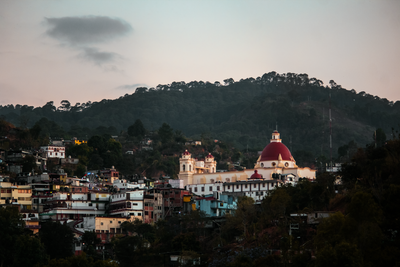
Photo by Terje Sollie via Pexels.
Walk the lanes of the Léon or the hinterland around Locronan a few centuries ago and you would have passed the chenevière: a small, fenced hemp plot tucked beside the farmhouse, often next to a patch of flax. Today you can drive across much of Brittany and see maize, vegetables and dairy pasture, and almost no hemp.
That is odd for a coastal region whose economy once ran on sails and rope. Brittany's ports fitted out fleets, and fleets ran on fiber. So how did Brittany drop out of the French hemp story, and is any of it coming back?
This piece takes the history first, then the current agricultural and legal picture. A caveat up front: I have no sourced figures for tonnages, dates or acreage, so I describe frameworks rather than numbers. French rules on hemp and CBD have shifted repeatedly, so check Légifrance and the Journal officiel before acting on anything here.
Key takeaways
- Brittany's hemp and linen economy supplied sailcloth and rope to the naval ports of Brest and Lorient.
- Most French hemp today is grown outside Brittany, so the region's revival is small-scale and focused on building materials.
- French hemp farming is governed by a 0.3% THC limit, while CBD flower rules have been repeatedly contested in court.
Sailcloth and Rope: Brittany's Naval Hemp Economy
Brittany's Atlantic ports, above all Brest and Lorient, were naval arsenals. A sailing warship swallowed rope, rigging and canvas in huge quantities, and every ship needed replacements for as long as it stayed afloat. That demand had to be met from somewhere.
Hemp was the standard answer. Its long, strong bast fiber made cordage and heavy sailcloth in the age of sail, and no other crop of the period did the job as well. Local farms that could grow and process hemp were therefore tied, directly or through merchants, to the needs of the navy.
The Léon area and Locronan are the places most often linked to sailcloth weaving in Brittany. Exact dates for when the trade peaked, and how many tonnes of fiber or bolts of canvas moved through it, need checking against the Archives départementales and the Musée de Bretagne. I won't offer numbers I can't source.
It would also be wrong to treat this as purely a naval story. Breton linen and hemp cloth traveled through merchant trade as well, supplying shipowners, fishermen and households. The fiber economy was broader than the arsenal gates.
The honest summary is a framework, not a ledger: ports with relentless demand, farms and weavers supplying fiber and cloth, and a commercial network linking the two. The figures that would put scale on that picture are in the archives, and they should be pulled before anyone quotes them.
Life Around the Chenevière: From Field to Retting Pond
A chenevière was the plot where a household or farm grew its hemp, frequently alongside flax. It was small by modern standards, but it fed a long chain of labor.
The basic sequence ran like this:
- Sowing the seed in the plot.
- Harvesting the stalks.
- Retting, called rouissage, in ponds or in the field, to loosen the fiber from the woody core.
- Breaking, then scutching and combing to separate and clean the fibers.
- Spinning the fiber into thread, and weaving it into cloth or twisting it into cord.
Much of this was done by hand, and much of it by rural families. Hemp shaped the rhythm of village life, with seasonal tasks that fell to men, women and children, not only the export trade that the ports might suggest.
Retting had a cost. Soaking stalks in standing water was smelly, and it fouled watercourses, which is a documented reason authorities in various places regulated where it could be done. Whether and how that played out in Brittany specifically should be verified before anyone states it as fact.
The memory of the weaving trade survives in places such as Locronan and the Léon. Museums and heritage trails there preserve tools, textiles and stories, and they are the best starting point for readers who want to see what the work actually looked like.
Why the Fields Went Quiet

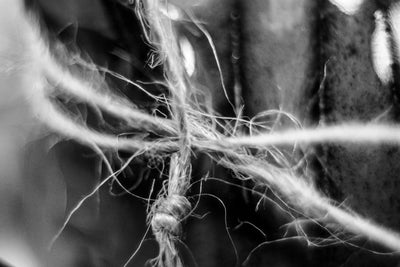
Photo by Robert Zunikoff via Unsplash.
Hemp did not collapse in Europe because of one event. Several forces pushed in the same direction: cheaper imported fibers, the rise of cotton, and the replacement of wood and sail by steel and steam. Later, synthetic fibers took over much of what natural cordage once did.
For Brittany, the decline of sail mattered most. The navy and merchant fleets had anchored local demand for rope and canvas. As ships stopped needing either in bulk, the reason to keep a chenevière, and the weaving trade behind it, weakened.
Hemp did not vanish from France, though. It concentrated elsewhere, notably in the Champagne areas, largely for paper and other industrial uses. Interchanvre and Agreste are the places to confirm the current geography.
A second drag came in the twentieth century. Cannabis acquired a heavy stigma, and industrial hemp, a separate use of the plant grown for fiber and seed, was caught in the same suspicion. Farmers and processors had to work under tight controls and a muddied public image.
I am treating all dates here as approximate until sourced. In particular, I will not name a year for Brittany's last commercial crop, because I cannot support one. The pattern is clear enough without it: demand shrank, competitors arrived, and production drifted to regions with other markets.
Hemp in Brittany Today: Building Materials and Small Farms
France is often described as Europe's largest hemp producer, with national acreage reported in the range of 17,000 to 20,000 hectares. Those figures should be checked against FranceAgriMer, Agreste and Interchanvre, since they move year to year.
Brittany is a minor player in that national picture. Any revival there is therefore small and local, a handful of farms and processors, not a return to the old scale of the naval era.
The most visible modern use is construction. Hempcrete, or béton de chanvre, and hemp-fiber insulation suit a region with plenty of older stone houses that need renovating. Builders value the material for how it handles moisture and insulation, which fits Brittany's damp, changeable climate.
Other uses are worth checking: textiles, animal bedding and horticultural mulch all have markets in France. Which of them, if any, have processors in Brittany is a question for the Chambre d'agriculture de Bretagne and local producers.
One firm limit applies. I have not sourced any named Breton hemp initiative, so none appears here. Anyone writing about a specific farm, mill or building firm in the region should confirm it directly before publication.
The Legal Frame: THC Limits and the CBD Flower Fight
Industrial hemp farming in France operates under EU rules, with a 0.3% THC threshold for approved varieties. Check for any recent changes to the EU farm-support provisions attached to hemp growing, since I could not verify them.
The CBD flower dispute is a separate matter. France's arrêté of 30 December 2021 sought to ban the sale of raw CBD flowers and leaves. The Conseil d'État suspended it in a decision dated 29 December 2022.
Put plainly, the fight was over what farmers and retailers may do with the flower and leaf. It had little to do with the fiber that built Brittany's history, which sits under different commercial and regulatory logic.
EU discussions on novel foods and THC levels are ongoing, so the position may have changed since these decisions. Légifrance and the Journal officiel carry the current texts, and they are the sources to trust over any summary.
The usual caution applies. Laws change, and readers should verify current specifics for their own situation, whether they farm, sell or build with hemp.
Brittany's hemp story is about a working fiber tied to ships, ports and villages. That use predates today's CBD arguments by centuries, and it is worth remembering when the modern debate gets loud about flowers and leaves.
Any revival will most likely be modest. Construction materials and local processing are the realistic path, not a return to naval-scale cultivation. The chenevière may not come back as a fixture of every farm, but a few fields feeding a few mills would already say something about where the region's fiber history can still be useful.
Sources
- Bécherel : du lin aux livres, l’incroyable métamorphose d’un village breton
- Robuste, économe en eau, utile pour la construction... Pourquoi la culture du chanvre est une filière agricole d'avenir pour la Bretagne
- FICHE D’INVENTAIRE DU PATRIMOINE CULTUREL IMMATÉRIEL LES SAVOIR-FAIRE DU
- PCI Lab - Patrimoine Culturel Immatériel en France
- Histoire du Chanvre en Bretagne
- Lin, chanvre et commerce des toiles : Une richissime Bretagne - Le Flaneur