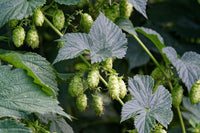
Vanuatu's Cannabis Law Meets the Chiefs: Kava's Shadow Over a New Industry
Photo by William ZALI via Pexels.
Walk into a nakamal in Port Vila on any given evening and you'll find a scene that hasn't changed much in a century: shells of kava passed hand to hand, voices dropping low as the drink takes hold, the whole ritual governed by custom as much as by commerce. Cannabis has no equivalent place yet. Vanuatu's Parliament passed the Medical Cannabis and Industrial Hemp Act back in 2021, but the regulations needed to actually license anyone sat unsigned for nearly two years, finally clearing in February 2023. That gap wasn't bureaucratic foot-dragging alone -- it reflected a country still working out whether cannabis belongs in the same category as kava, or somewhere else entirely.
The licensing framework that emerged answers that question in an uncomfortable way. Where the Kava Act of 2002 locks trade to indigenous ownership, the cannabis regulations ask for a decade of industry experience few ni-Vanuatu entrepreneurs could possibly hold, having had no legal domestic market to build that experience in. The practical effect is a sector designed around foreign capital, with local participation bolted on afterward through landowner partnership requirements. Meanwhile the Malvatumauri National Council of Chiefs, which flatly rejected cannabis commercialization in 2018, had by 2023 shifted toward a more measured, island-specific posture -- not blanket approval, but a willingness to negotiate. That's the tension running through this whole story: one plant with a century of chiefly legitimacy behind it, and another still trying to earn its place at the table, island by island.
A Law Years in the Making
The Medical Cannabis and Industrial Hemp Act cleared Vanuatu's Parliament in 2021, but passing a law and operationalizing one are different exercises entirely. It took until February 2023 for the implementing regulations to be signed off, a delay that left the legislation sitting mostly symbolic for close to two years. During that stretch, the Medical Cannabis and Industrial Hemp Advisory Committee took shape under the chairmanship of Moses Amos, Director General of the Ministry of Agriculture, Livestock, Forestry, Fisheries and Biosecurity -- the body tasked with vetting applicants and keeping the sector within the lines Parliament had drawn.
The process of getting there wasn't clean. When the Act originally passed, it bypassed the kind of broad public consultation Vanuatu's church communities expected on a matter touching morality and custom in equal measure. Church leaders, who carry real social weight in a country where Christian congregations and chiefly authority often overlap, were left reacting to a law already on the books rather than shaping it beforehand. That omission fed a broader skepticism that has trailed the industry since.
Even after the 2023 regulations, momentum stayed slow. By late 2025, Director General Timothy Tumukon was telling stakeholders the sector now expects early operations to begin in the first quarter of 2026 -- a timeline that, if it holds, will mean roughly five years between the Act's passage and an actual harvest reaching a licensed buyer. For a small Pacific economy that watched kava build export markets over decades, that lag isn't unusual by comparison, but it does underline how much groundwork -- banking, land agreements, chiefly buy-in -- had to be laid under the surface before the paperwork could translate into product.
Who Actually Qualifies for a Licence

Vanuatu's cannabis cultivation licence fee rose from VT10 million in 2023 to VT12 million in 2025, a 20% increase, reflecting tighter regulatory costs for growers.
The numbers attached to Vanuatu's cannabis licences tell you most of what you need to know about who the system was built for. The annual licence fee started at VT10 million (roughly US$85,341) before being raised to VT12 million, with each licence valid for a decade. The Act provides for at least two medical cannabis licences and at least three industrial hemp licences, a deliberately small pool meant to keep the early sector controllable rather than sprawling.
The eligibility bar does the rest of the filtering. Applicants must demonstrate at least ten years of industry experience -- a requirement that, in a country where cannabis cultivation has been illegal for essentially the entire modern era, no ni-Vanuatu applicant could meet on paper. In practice it favors established operators, many with backgrounds in US-style cannabis markets, who can show the regulatory track record Port Vila wants. To soften that imbalance, the framework requires foreign companies to partner with local landowners before they can operate. After initial screening, four licences remained active, a modest number that reflects just how narrow the funnel is.
Geography adds another layer of control. Industrial hemp cultivation is currently limited to Efate, Santo, Malekula, Tanna and Erromango, while medical cannabis is restricted to just Efate, Santo and Malekula -- a narrower footprint reflecting both infrastructure realities and, almost certainly, which islands' chiefs and communities were further along in accepting the idea. The upshot is a licensing map that looks less like an open market and more like a carefully rationed experiment, watched island by island.
The Banking Wall

Photo by Luke Shaffer via Unsplash.
Getting a licence turned out to be only half the battle. Once the first approvals went out, licence holders ran straight into a wall that no amount of Ministry paperwork could clear: banks simply refused to open accounts for them. Without banking access, there was no way to move capital in, pay contractors, or process the kind of transactions any agricultural operation needs to function -- the licence existed on paper while the business it was meant to enable sat frozen.
The impasse became serious enough to require intervention at the highest level. On 19 March 2024, a stakeholders' meeting brought together the Prime Minister and Deputy Prime Minister specifically to address the banking deadlock, a sign of how much the government had riding on the sector actually getting off the ground after years of delay already baked into the timeline.
It took until late October 2025 for the government to complete the amendments needed to move things forward -- an Industrial Hemp and Medical Cannabis Policy and Strategy that was approved by Parliament, signed by the President, and formally gazetted. That sequence of approvals, each one a separate bottleneck in a small administrative system, shows how much institutional weight had to shift before banks would reconsider their position.
The underlying caution isn't unique to Vanuatu. Banks in small Pacific economies typically operate through correspondent banking relationships with larger international institutions, and those larger banks are notoriously risk-averse about anything touching cannabis, even where it's fully legal domestically, for fear of jeopardizing their own compliance standing elsewhere. A law passed in Port Vila doesn't change risk calculations made in Sydney or Auckland boardrooms. The banking wall is a reminder that legislation is necessary but nowhere near sufficient -- a functioning industry needs the plumbing of ordinary commerce behind it, and that plumbing runs through institutions no single government fully controls.
From Rejection to Shareholders: The Chiefs' Turnaround

Photo by Adiardi Zulfansyah via Pexels.
The Malvatumauri National Council of Chiefs isn't a ceremonial body tacked onto Vanuatu's constitution for appearances -- it's a recognized advisory institution with genuine influence over how land and custom matters get handled, and land in Vanuatu is inseparable from custom. Nothing involving cultivation on customary land moves far without some accommodation from chiefly structures, formally or otherwise.
That's why the Council's 2018 rejection of an early cannabis push landed so hard. The proposal, pitched partly around diabetes treatment, was turned down outright by then-Prime Minister Charlot Salwai alongside the Malvatumauri Council. Part of what doomed it was an earlier memorandum of understanding that had allocated 5,000 acres on Espiritu Santo for marijuana cultivation without consulting the chiefs or landowners whose territory it actually was. In a country where land claims run through custom lineage rather than title deeds alone, that omission wasn't a technicality -- it was the whole problem.
Tanna tells a different story. There, Tafea Industries built its footing by securing support directly from tribal chiefs around the island, going further than consultation by bringing those chiefs in as shareholders in the company itself. VanHemp, working alongside Tafea Industries, had earlier convened a workshop with the Malvatumauri Council on Tanna specifically aimed at building the case for legislative change -- groundwork that helped shift the conversation from whether cannabis belonged in Vanuatu at all to how it might be structured so custom authorities retained a stake rather than standing outside looking in.
The contrast between Santo's 2018 collapse and Tanna's shareholder model is really the whole lesson of Vanuatu's cannabis rollout so far: there's no single moment of national acceptance to point to. Acceptance gets negotiated one island, one council, one chief at a time, and the islands where companies did that work patiently are the ones now furthest along.
Kava's Head Start

Photo by HONG SON via Pexels.
Kava didn't need any of this negotiation, because the negotiation happened generations ago and got written into law decades before cannabis was ever on the table. The Kava Act 2002 reserves the kava trade for indigenous ownership, or at minimum a 50% partnership stake held by an indigenous person -- the exact inverse of the cannabis framework, which is built almost entirely around foreign capital and imported expertise with local partnership as an add-on requirement rather than the foundation.
That difference isn't an oversight; it reflects two completely different starting points. Kava has been embedded in chiefly ceremony and nakamal social life for roughly a century in its modern commercial form, and far longer than that in custom practice. Current Malvatumauri President Chief Paul Robert Ravun has spoken about the need to protect that legitimacy from erosion, warning about substance abuse and pointing out that in custom, kava is consumed only on special occasions and in modest quantities -- one or two shells, not to excess. That's a meaningful distinction in a country now watching kava bars multiply and wondering whether commercial consumption patterns are drifting from the ceremonial restraint the plant's reputation was built on.
The government, for its part, is doubling down on kava's growth rather than hedging against it. The Agriculture Minister has set a target of 10 million new kava plants by 2030, backed by a dedicated Kava Strategy covering 2026 through 2030 -- an investment in scale that assumes the cultural legitimacy is already secure and the task now is purely economic expansion.
Cannabis has no century of nakamal history to draw on, no chief's blessing baked into a two-decade-old statute. That absence is exactly why its ownership rules were written the way they were, and exactly why the industry's path runs through chiefs and landowners first, regulations second -- the reverse of how kava earned its protections.
Set side by side, the two statutes read almost like mirror images of each other. The Kava Act protected indigenous ownership first and let the market grow underneath that protection over twenty years. The cannabis framework courted foreign capital and decade-long industry résumés first, treating custom acceptance as something to be managed afterward, island by island, through partnership clauses and advisory committees. That's not necessarily the wrong order for a government trying to get a fledgling industry off the ground quickly -- but it does mean Vanuatu is now running the custom-negotiation process in parallel with licensing rather than ahead of it, with all the friction that implies.
What happens after the projected Q1 2026 start date will likely say more about the islands than about Port Vila's regulatory text. Tanna's model, where chiefs hold shares rather than simply tolerance, gave Tafea Industries a foundation other licensees haven't necessarily built yet. Whether that model spreads to Efate, Santo and Malekula, or whether those islands find their own version of chiefly buy-in, will probably matter more to the industry's staying power than any further amendment gazetted in the capital.
The 5,000-acre Espiritu Santo memorandum from the pre-2018 era is worth remembering precisely because it failed so completely. A deal that size, struck without the chiefs or the landowners whose ground it covered, collapsed the moment it reached the Malvatumauri Council's attention. Vanuatu's gazette can authorize a licence, set a fee, and draw a map of eligible islands. It can't, on its own, grant the legitimacy that still runs through custom and the chiefs who hold it.
Sources