Why Cannabis Reform Stalls in the Middle East, Even When Laws Pass
Photo by Ramon Karolan via Pexels.
Three neighboring stretches of the same broad legal and religious tradition, and three completely different outcomes for the same plant. In 2025, Morocco harvested nearly 2,000 tons of legal cannabis under a state licensing system that now covers thousands of farmers in the Rif mountains. In that same year, Lebanon's landmark 2020 law legalizing medical cannabis cultivation still hadn't produced a single licensed patient, a single approved production facility, or a functioning path from plant to pharmacy. Algeria hasn't moved an inch toward either model, and the Gulf states treat a bottle of hemp-derived CBD oil the same way they'd treat a kilo of hashish.
The obvious explanation is bureaucracy, or political instability, or the usual grinding slowness of Middle Eastern legislatures. That's part of it, but it's not the real variable. The real variable is whether cannabis fits into something a society already recognizes as legitimate -- a farming tradition, a regional economy, a centuries-old export -- or whether it reads as a violation of Islamic and social taboos around intoxication. Morocco didn't ask its population to accept getting high; it legalized a crop that Rif farmers have grown for generations regardless of what Rabat said about it. Lebanon asked something closer to a leap of faith from a state and society that had never made peace with cannabis as anything other than contraband. Those two starting points, more than any difference in the text of the laws themselves, explain why one country is exporting kilograms of dried flower and the other is still holding press conferences about a law it passed five years ago.
Four case studies -- Lebanon, Morocco, the Gulf states, and Algeria -- show just how unevenly the same regional legal and religious inheritance gets applied once economics, geography, and cultural memory enter the picture.
Lebanon's Law That Exists on Paper Only

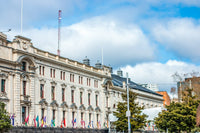
Photo by Husam Yaghi via Unsplash.
Lebanon made history on April 21, 2020, when parliament passed a law legalizing the cultivation of cannabis for medical and industrial purposes -- the first such move by an Arab country. The law also opened the door to non-psychoactive hemp production, and the government's own projections, circulated at the time, put potential annual revenue from a regulated industry at roughly $1 billion, administered through a newly created Cannabis Cultivation Management Committee. For a country in the middle of a currency collapse and a banking crisis, that number was more than tempting -- it was practically a lifeline on paper.
Nearly six years later, the paper is about all there is. On August 17, 2025, Prime Minister Nawaf Salam and Agriculture Minister Nizar Hani convened a conference at the Grand Serail in Beirut specifically to try to relaunch momentum behind the law -- itself a tacit admission that momentum had stalled out completely. As of February 2026, licensing still hadn't started. No production facility had cleared regulatory approval. There is no legal channel through which a Lebanese patient can obtain medical cannabis, despite the law nominally making that possible since 2020.
Into that vacuum has flowed exactly what you'd expect: the illicit cultivation that was already there before the law existed. The Hermel foothills in the Bekaa Valley have an estimated 450 hectares under cannabis cultivation, grown by farming families who have worked this crop for decades without waiting on Beirut's permission and without much fear that permission would ever fully translate into enforcement against them either way.
The gap between passing a law and implementing one is where Lebanon's real story lives. Ministries have to sign off, banks have to be willing to process transactions tied to a plant most of their compliance departments still associate with narcotics trafficking, and law enforcement has to recalibrate what's legal and what isn't in a country where cannabis has always carried moral baggage well beyond its legal status. Five years of inaction isn't a paperwork problem. It's a stigma problem wearing paperwork as a disguise.
Morocco: Tradition as a Legal Shortcut

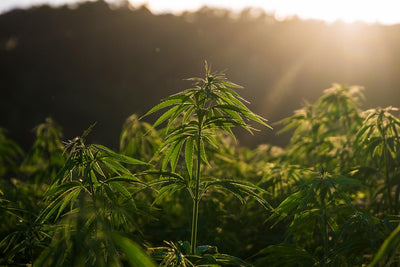
Photo by Mohamed Khettouch via Pexels.
Morocco had one advantage no other country in this story can claim: it didn't need to invent a cannabis culture from scratch. Hashish cultivation in the Rif region predates any modern legal framework by generations -- Ketama and the surrounding provinces have been synonymous with cannabis farming since well before Morocco was a modern state, let alone one with a drug policy. That gave reform advocates something Lebanon never had: a plausible argument that legalization wasn't introducing something foreign to Moroccan life, just formalizing something that had always been there.
Law 13-21, passed in 2021, moved from statute to actual harvested product within a handful of growing seasons -- a pace that looks almost startling next to Lebanon's standstill. The National Agency for the Regulation of Cannabis-Related Activities, ANRAC, reported 5,765 active licenses for the 2025 season, including 5,492 cultivation permits covering more than 5,300 individual farmers. Licensing in Morocco doesn't stop at the farm gate, either -- it extends through processing, transport, marketing, and both exports and imports, meaning the state has built out a supply chain regulatory structure rather than just permitting people to grow.
The output backs up the framework: nearly 2,000 tons of dried cannabis produced in 2025, a 10% increase year over year. That's not a pilot program. That's an industry with real volume behind it, feeding both domestic processing and export markets.
What Morocco pointedly did not do is touch the underlying taboo around recreational use. Getting high remains fully illegal there. The government legalized a crop -- an agricultural commodity with a defined regulatory and industrial purpose -- not a lifestyle or a social practice around intoxication. That distinction is the whole trick: Morocco found a way to reform cannabis policy without ever asking its population to reconsider what it thinks about drug use itself.
The Gulf's Zero-Tolerance Line

Photo by Matthew Turner via Pexels.
The United Arab Emirates, Saudi Arabia, and Qatar occupy the opposite end of the spectrum from Morocco, and there's no ambiguity about where the line sits. All three treat cannabis and CBD products with the same criminal severity regardless of THC concentration or medical framing. There is no meaningful legal distinction in daily enforcement between a jar of full-spectrum flower and a vape cartridge labeled as broad-spectrum hemp extract with negligible THC.
In the UAE, the controlling statute is Federal Decree-Law No. 30 of 2021 on Combating Narcotic and Psychotropic Substances, which governs possession, trafficking, and use with penalties that can run into years of imprisonment even for quantities that would draw a citation or nothing at all in much of the US or Europe. Carrying CBD products across UAE, Saudi, or Qatari borders -- even products purchased legally elsewhere, even ones marketed explicitly as non-psychoactive -- carries real risk of criminal prosecution.
The hemp-versus-marijuana distinction that shields travelers in most Western jurisdictions, where a product under a defined THC threshold is treated as an entirely different legal category, simply doesn't exist in this part of the Gulf. A trace amount and a trafficking quantity can trigger comparable legal exposure, because the underlying framework isn't calibrated around potency at all -- it's calibrated around the presence of a prohibited substance, period.
That posture isn't just a quirk of statutory drafting. It's rooted in a religious and state-level prohibition on intoxicants that predates any modern conversation about THC percentages or medical cannabinoids. Enforcement reflects that underlying framework rather than departing from it.
Travelers get caught by this constantly, and not because the law is secret -- it's because Western CBD marketing has trained people to assume a hemp-derived product is functionally legal everywhere. Airport declarations, prescription CBD, gummies bought at a US pharmacy: none of it reliably protects a traveler at Gulf customs, and the assumption that it should has landed more than a few tourists in serious legal trouble.
Algeria: Standing Still Next to a Moving Neighbor

Photo by samirsmier via Pixabay.
Algeria sits geographically between the two poles of this story and has chosen to move in neither direction. There's been no legislative movement toward decriminalization or medical legalization, no equivalent of Morocco's Law 13-21, no Lebanese-style symbolic gesture toward reform even on paper. Algeria's cannabis policy in 2026 looks essentially like Algeria's cannabis policy a decade ago.
That stillness isn't cost-free. In March 2025, Algerian authorities seized more than 3,000 kilograms of cannabis in a single operation near the border with Morocco -- a reminder of just how much product moves across that frontier and how central interdiction has become to Algeria's actual, lived drug policy, even in the absence of any legislative reform. Geography put Algeria squarely on one of the region's major trafficking corridors for Moroccan-grown cannabis, and that reality raises the stakes for Algiers in a way that has nothing to do with domestic consumption patterns and everything to do with transit volume.
There's also a political dimension that's hard to separate from the policy one. Algeria and Morocco have a long-running rivalry that touches everything from Western Sahara to diplomatic recognition, and Algeria's rigid prohibitionist stance reads, at least in part, as a rejection of the reform model next door rather than a purely independent judgment about drug policy on its own terms. Legalizing cannabis, even for industrial hemp or export purposes, would mean following Rabat's playbook -- and that's not a small thing between these two governments.
The contrast between the neighbors makes a point that's easy to miss if you look at either country in isolation: legal reform in this region tracks cultural inheritance and political calculation far more than it tracks any emerging regional consensus on drug policy. Algeria didn't evaluate Morocco's cannabis program and decide it was bad policy. It largely didn't engage with the substance of the question at all.
What the Three Paths Actually Show

Morocco leads the region with a licensed cannabis production framework, while Lebanon shows minimal progress and Algeria, the UAE, Saudi Arabia, and Qatar maintain full prohibition, highlighting stark disparities in cannabis policy across the Middle East/North Africa.
Islamic legal tradition across this region treats intoxicants as taboo in a fairly consistent way at the textual level, yet the four case studies here show that taboo getting applied with wildly different intensity depending on local history and economic interest. That inconsistency is the real finding here, more than any single country's law.
Morocco succeeded, where success is measured in actual licensed hectares and tons of legal product moving through a regulated supply chain, because it legalized a crop already deeply embedded in regional identity and the rural economy of the Rif. It never asked Moroccan society to endorse recreational drug use -- it asked the state to formally recognize an agricultural practice that had operated in a gray zone for generations. That's a much smaller cultural ask than what Lebanon attempted.
Lebanon's stall is the clearest evidence that passing a law through parliament is not remotely the same thing as dismantling the stigma embedded inside the ministries, banks, and law enforcement agencies that have to actually implement it. A $1 billion revenue projection means nothing if no committee will approve a license, no bank will process the transaction, and no ministry wants to be the one that signed off first.
The Gulf states represent the opposite extreme entirely: a legal system built with zero room for the kind of nuance -- hemp versus marijuana, medical versus recreational, trace THC versus trafficking quantity -- that other jurisdictions have spent years building into their statutes. And Algeria shows that even proximity to a working reform model next door is no guarantee anything changes; sometimes it just hardens the opposite position.
Below is how legal status and penalty severity actually compare across these four countries side by side.
If there's one lesson worth carrying out of this region's last five years, it's to watch implementation, not legislation. A bill clearing a Middle Eastern parliament tells you almost nothing about whether a farmer will ever hold a license or a patient will ever fill a prescription. Lebanon proved that in the most expensive way possible -- a law on the books since 2020, a revenue projection in the billions, and still no functioning pathway for anyone to legally touch the plant it supposedly regulates.
Morocco's approach -- legalizing a crop that was already woven into the regional economy and identity, rather than asking an entire society to make peace with recreational drug use -- may simply be the only reform template that has a real chance of working in this region right now. It sidesteps the taboo instead of confronting it head-on, and the harvest numbers suggest that's not a small distinction.
Lebanon's $1 billion projection was never really about economics. It was about whether a government could move a law from the page into a functioning bureaucracy in a country where cannabis still carries the moral weight of contraband inside the institutions meant to regulate it. Until that changes, the number stays theoretical -- suspended, like the law itself, somewhere between passage and practice, and that gap has always been measured in stigma, not paperwork.
Sources
- Global Cannabis Laws in 2026: A Fragmented Legal Landscape
- Recent Legal Articles from Middle East on Cannabis & Hemp
- The Use of Cannabis for Medical Purposes in the Arab World - Cannabis and Health Research Initiative
- List of 2026 United States cannabis reform proposals
- The Use of Cannabis for Medical Purposes in the Arab World - PMC