Zimbabwe's Cannabis Export Bottleneck: Legal on Paper, Blocked at the EU Border
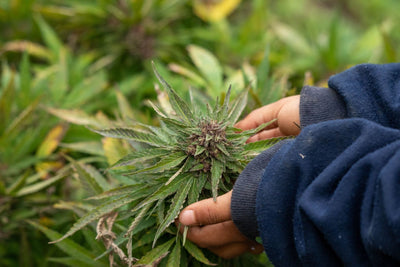
Photo by Mohamed Fsili via Unsplash.
April 2018 was supposed to be the turning point. When Zimbabwe's government issued Statutory Instrument 2018-062, it made the country only the second in Africa, after South Africa's court-driven reform, to open the door to legal cannabis cultivation for medicinal and scientific purposes. Farmers who had grown mbanje in the shadows for generations suddenly had a legal pathway, at least on paper. Investors flew in. Trade publications ran optimistic projections about Zimbabwe becoming a regional cannabis export hub, feeding the booming European medical cannabis market.
Six years later, that hub hasn't materialized. Licensed growers in Mashonaland and around Harare can legally plant, tend, and harvest cannabis under Zimbabwean law. What they can't do is sell that product directly into the European Union as a finished pharmaceutical import. The obstacle isn't the cultivation license itself, and it isn't a lack of agronomic skill or suitable growing climate, both of which Zimbabwe has in abundance. It's a separate, far more demanding certification regime called EU-GMP, one that has nothing to do with how well a crop grows and everything to do with pharmaceutical manufacturing standards that almost no African facility currently meets. Zimbabwe's experience is a useful case study in a broader problem across cannabis reform globally: legalizing a plant and building a functioning export economy around it are two completely different jobs, and finishing the first one doesn't guarantee you'll ever get to the second.
From Blanket Ban to Licensed Crop: How Zimbabwe Got Here
For most of the twentieth century, Zimbabwean cannabis policy was simple and absolute: the Dangerous Drugs Act of 1955, inherited from colonial-era Rhodesia, criminalized cannabis outright, full stop. Independence in 1980 didn't touch this. The new government kept the prohibition framework intact for nearly four decades, even as cannabis, known locally as mbanje or dagga, continued to be grown informally in rural areas including parts of Manicaland, often for traditional and medicinal use that predated the ban by generations.
The break came in April 2018, when the government issued S.I. 2018-062 under the same Dangerous Drugs Act, carving out a narrow legal exception for cultivation, possession, and processing of cannabis for medicinal and scientific purposes under license. It was a significant regional moment. Zimbabwe became the second African country, after South Africa's Constitutional Court ruling on private cultivation and use, to formally legalize any form of cannabis production. But the reform was deliberately narrow. Recreational use, possession, and sale remained fully criminal, and everything hinged on obtaining a license from the state.
The next meaningful shift came in 2023, when Zimbabwe's Criminal Law Amendment Act redefined industrial hemp as cannabis containing no more than 1% delta-9-THC, and removed that category from the legal definition of a dangerous drug altogether. That single percentage point matters enormously in practice. Hemp growers producing low-THC fiber and seed crops now operate in a comparatively lighter regulatory lane. Medicinal cannabis, the higher-THC product aimed at pharmaceutical and wellness markets, remains legally classified as a dangerous drug, subject to the full weight of licensing, security, and reporting requirements that classification implies. Two crops that look similar in a field occupy entirely different legal universes.
The Fifty-Thousand-Dollar Licence and the Banks That Won't Play Along

Photo by Audy of Course via Pexels.
The cost of entry tells you who this system was built for. A medicinal cannabis production license in Zimbabwe currently runs around US$50,000, on top of capital requirements for secure growing facilities, fencing, surveillance, and compliance record-keeping that regulators expect from a pharmaceutical-adjacent operation. Industrial hemp permits are considerably cheaper, typically in the US$200 to US$500 range, but even that modest fee, combined with input costs and processing infrastructure, is enough to shut out most smallholders who might otherwise want to convert existing land to hemp production.
Then there's a problem that has nothing to do with the license fee itself. A farmer operating near Harare described a recurring issue to researchers: local banks routinely refuse to open business accounts for licensed cannabis growers, because the license document itself still carries language referencing dangerous drugs and narcotics. Bank compliance departments, wary of anti-money-laundering exposure and correspondent banking relationships with international institutions, treat that label as a red flag regardless of the underlying legality of the operation. The result is growers holding a valid government license who still can't get a functioning bank account to receive payment for their crop.
Put the license fee, the compliance infrastructure, and the banking friction together, and the pattern is unmistakable. This system was never really designed with a smallholder in mind. It favors well-capitalized foreign investors and a handful of larger local firms who can absorb the upfront costs and navigate the paperwork. Traditional growers, many with generations of cultivation knowledge, are effectively priced and paperworked out of the legal market they were told this reform was meant to include. What legalization created, in practice, is a two-tier system: a small formal sector serving export ambitions, and a much larger informal sector that legalization was supposed to absorb but instead left largely untouched.
Production Numbers Tell the Real Story

Zimbabwe's CBD flower exports collapsed from 8,000 kg in the 2021/22 season to just 485 kg in 2022/23, a decline of over 90%.
The output numbers from Zimbabwe's own agricultural reporting undercut a lot of the early optimism about a booming export sector. During the 2022/23 season, only 11 of the 31 farmers registered to grow hemp actually produced CBD flower. Roughly two-thirds of the licensed growing base simply didn't get a marketable crop to harvest, whether from input shortages, financing gaps, or processing bottlenecks further down the chain.
The land under cultivation shrank too. Hectarage planted to hemp fell by 22% year over year, and total CBD flower output dropped to just 11.6 tons nationally, a modest figure for a crop that was supposed to be positioning Zimbabwe as a regional exporter. The export data is where the contraction becomes stark. In the 2021/22 season, two growers managed to ship roughly 8 tons of CBD flower to Switzerland. The following season, that fell to just 485 kilograms, from three growers. Export prices realized were thin, in the range of US$10 to US$50 per kilogram, margins that leave little room to cover the licensing, compliance, and security costs the sector carries.
Individual project failures reinforce the pattern. Eco-Equity Zimbabwe, a UK-backed cannabis venture that generated considerable early press attention, has since closed operations entirely. Medigrow, a South African-backed project, had still not begun production as of early 2023 despite having secured licensing. These aren't fringe operators; they were among the better-capitalized entrants into the sector, and their stalled or failed status suggests the barriers here go well beyond what a small local farmer's cooperative could reasonably be expected to solve on its own.
Why EU-GMP, Not the Growing Licence, Is the Real Wall

Photo by Pixabay via Pexels.
Here's the distinction that gets lost in a lot of coverage of cannabis legalization: growing the plant well and manufacturing it to pharmaceutical standard are governed by entirely different rulebooks. Zimbabwean farmers can generally meet GACP, or good agricultural and collection practice, the standard covering how cannabis is cultivated, harvested, and initially handled. That's the bar Zimbabwe's licensing regime was built around, and it's an achievable one given the country's climate and existing agricultural expertise.
EU-GMP is a different animal altogether. Good Manufacturing Practice certification, as recognized by the European Union, applies to the processing and manufacturing stage and is required for any cannabis product entering the EU's medical pharmaceutical supply chain directly. Getting it isn't a matter of paperwork submitted to a local regulator. It requires a physical, on-site inspection carried out by a medicines regulatory authority based in an actual EU member state, and successful applicants get listed in the EudraGMDP database, the EU's public register of certified manufacturing sites. The process typically takes twelve to twenty-four months from application to certification, and as of now, no Zimbabwean facility appears anywhere in that database.
Zimbabwean operators have found a workaround, but it comes at a cost to margins and to national ambitions. One Zimbabwean joint venture, producing over a ton of CBD oil monthly, currently routes its product through EU-GMP-certified intermediaries based in Lesotho and South Africa rather than attempting direct export. That arrangement works commercially, but it means value-added processing, certification credit, and a meaningful share of the margin accrue somewhere else. South Africa's SafriCanna achieved EU-GMP certification back in 2021, giving South African-linked supply chains a direct pharmaceutical access route into Europe that Zimbabwe, six years after its own legalization, still can't claim for itself.
Who Should Be Regulating This, Anyway?
There's a structural question sitting underneath all of this that Zimbabwean policymakers haven't fully resolved: who should actually be regulating cannabis, and toward what end? Right now, the Medicines Control Authority of Zimbabwe oversees cannabis licensing, applying pharmaceutical-grade scrutiny to what is, for a large share of applicants, fundamentally an agricultural crop grown outdoors in fields, not synthesized in a lab. That framing shapes everything downstream, from the fee structure to the compliance expectations, in ways that make more sense for a pharmaceutical manufacturer than for a farming cooperative.
Policy researchers have started pushing back on that arrangement directly. A June 2026 op-ed in The Conversation, drawing on analysis tied to Bristol University research, argued that oversight should shift substantially toward Zimbabwe's Agriculture Ministry, on the reasoning that a ministry oriented around farmer support and rural livelihoods would better serve the sector's actual base than a medicines regulator built to police pharmaceutical manufacturing.
It's worth being honest, though, about the limits of that fix. Moving the regulatory home from one ministry to another doesn't by itself lower the US$50,000 license fee, fix the banking access problem, or shrink the EU-GMP certification gap. Small-scale farmers would still be looking at a cost structure that assumes access to serious capital. And that exclusion has a consequence beyond individual hardship: it keeps the informal, untaxed cannabis market alive and functioning in parallel to the legal one, which is precisely the outcome the 2018 reform was partly intended to eliminate. Regionally, the more pragmatic path forward looks like what Lesotho and South Africa are already doing, building partnership and middleman arrangements with certified processors rather than each country independently pursuing its own EU-GMP status from scratch. Zimbabwe's cannabis sector may end up following that same script by necessity, whether or not its regulatory architecture ever gets rebuilt around farmers instead of pharmaceutical exporters.
Legalizing cultivation and actually reaching EU pharmacy shelves turn out to be two entirely separate regulatory projects, running on different timelines, different standards bodies, and different cost structures. Zimbabwe solved the first one in 2018 and refined it further with the 2023 hemp amendment. It has made essentially no progress on the second, and the production and export numbers from the past two seasons make that gap impossible to spin as a temporary hiccup.
Until the certification costs come down, or Zimbabwe's own facilities finally clear an EU inspection and land in the EudraGMDP database, or the banking friction around license terminology gets resolved, the country's legal cannabis sector is going to keep functioning as back-office supply for South African and Lesotho-based processors rather than as an independent exporter in its own right. That's not a failure of ambition. It's a predictable outcome of building a licensing system around pharmaceutical-grade scrutiny while leaving the actual pharmaceutical-grade manufacturing infrastructure unbuilt.
The real measure of whether this reform ever delivers on its promise isn't going to be another statutory instrument or amendment to the Dangerous Drugs Act. It's going to be something much more concrete: whether a Zimbabwean grower, ideally a small one, can eventually get a shipment certified and listed under their own name, from their own facility, without routing it through a neighboring country first. Six years in, that day still hasn't arrived.
Sources
- EU Cannabis Regulation 2026: Country Laws, Markets & Policy | Business of Cannabis
- EXCLUSIVE: Zimbabwe approves first private cannabis company
- European Cannabis Regulations by Country:The 2026 Business Guide - Cannabis Europa
- Cannabis Compliance in Zimbabwe – Background Info, Fees & How-to Checklist [FREE LICENSING GUIDE] - Cannavigia
- How to Get a Cannabis Licence in Europe: Country-by-Country Guide 2026 - Cannabis Europa