AC Infinity Controller 69: Settings That Quietly Waste Electricity
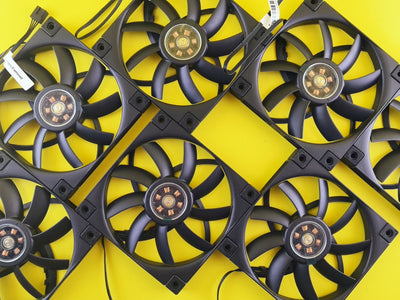
Photo by A.Rahmat MN via Unsplash.
Pull up the spec sheet on the AC Infinity Controller 69 and you'll find it draws about 1 watt at 0.1A. That's nothing — less than a phone charger left in the wall. If your tent's power bill is creeping up month over month, the controller itself is not the culprit. What's actually costing you money is sitting in the app: the trigger settings, the PWM minimums, the humidity cycles governing every fan, heater, and dehumidifier plugged into it.
Most 3x3 growers set up their Controller 69 once, during the stressful first week of a grow, and never open the app again except to check temps. The defaults it ships with aren't dangerous, but they're not efficient either — they're built to be safe and broadly workable across every tent size and climate, which means they're rarely tuned to yours. A fan left on a flat cycle instead of AUTO, a dehumidifier fighting a mismatched trigger, a VPD band set tighter than it needs to be — none of these will kill a plant. They'll just quietly run your equipment harder and longer than necessary, every single day of a 10-to-12 week grow.
That adds up faster than people expect. The national average residential electricity rate sits at 18.05 cents per kWh in 2026, up 5.4% from last year, and that's just the average — Louisiana growers are paying closer to 12 cents while someone running a tent in Hawaii is looking at nearly 40 cents per kWh. At those rates, a handful of inefficient settings on climate control equipment can rival or beat your lighting cost. None of this requires new hardware or a rewiring project. It's a settings-and-habits problem, and it's fixable in about 15 minutes once you know what to look for.
Continuous Fan Mode vs. Temperature-Triggered AUTO

Running the fan in 24/7 Continuous Mode adds about 40 kWh per month, four times more than the 10 kWh added by Temp-Triggered AUTO Mode, highlighting the energy savings of using automatic temperature-based control.
Ask around any serious grow forum long enough and you'll hit the same line of reasoning: 24x7 fans don't need a controller, temperature-controlled fans do. It sounds obvious written out, but it's worth sitting with, because a huge number of Controller 69 owners run their exhaust fan on a flat ON or timer cycle and never touch AUTO mode at all. If that's you, you bought a $70+ piece of climate automation and are using it as an expensive power strip.
An exhaust fan left running at a fixed speed around the clock — even a modest 4-to-6 inch inline fan pulling moderate CFM — can add 30-40 kWh to your monthly draw compared to the same fan running AUTO with a sensible temperature trigger. AUTO mode lets the fan idle at a low PWM percentage most of the day and only ramp up when the tent actually needs it. A practical trigger looks something like this: fan begins ramping at 78°F, climbs proportionally, and hits max speed around 82°F. Outside that window, especially during lights-off hours when ambient temps drop, the fan should be doing almost nothing.
Two details make or break this setup. First, exhaust CFM should be set slightly higher than intake CFM — running the tent at a mild negative pressure means air gets pulled in through passive vents rather than fighting its way out against a sealed, over-pressurized space. That negative-pressure setup exchanges air more efficiently and lets the exhaust fan accomplish more at a lower speed. Second, check your minimum PWM level. A lot of growers set this artificially high out of a vague sense of safety margin. That one setting single-handedly defeats everything AUTO mode is supposed to do, because the fan never actually drops to a true idle between triggers. It's running most of the day at half speed or more, continuously, which is functionally the same as the ON mode you thought you'd moved away from. Set the minimum low — 10-15% is usually plenty for air movement at rest — and let the temperature trigger do its job.
Dehumidifier Settings: The Most Expensive Mistake in the App
If you're going to overspend on electricity anywhere in a 3x3 tent, it's going to be here. A 30-pint dehumidifier run continuously for a month costs an estimated $23-33 depending on local rates, and a 70-pint unit — not unreasonable for a tent pushing aggressive VPD targets in flower — runs $56-75/month on its own. That's frequently more than the lighting bill, and it's almost always the line item nobody checks.
Growers tend to make this mistake in one of two opposite directions. Some leave the dehumidifier running nonstop out of caution, which one grower summed up well: it's a waste of money right up until the first time you get bud rot, and then it feels cheap in hindsight. Others overcorrect by wiring the dehumidifier to an aggressive trigger that cycles it on and off constantly, chasing every small humidity fluctuation. Both approaches cost more than necessary, just in different ways.
The deeper issue is that dehumidifiers are not fans. They have a compressor, and compressors have pre-run and post-run cycle logic for a reason — abrupt on/off switching driven by a generic trigger not designed for compressor equipment shortens the unit's life and spikes power draw every time it has to restart and stabilize. A compressor working through a cold start pulls meaningfully more current than one running steady-state, so a unit cycling 15-20 times a day is burning more electricity than one running fewer, longer cycles even if the total runtime looks similar on paper.
The fix is to stop piggybacking the dehumidifier on a temperature trigger meant for fans and give it its own dedicated humidity trigger in the app, with realistic RH targets by growth stage — generally higher in veg, stepping down as the plant moves into flower. A single aggressive year-round setpoint, especially one borrowed from late-flower mold-prevention targets and left in place during veg, keeps the compressor cycling constantly trying to correct a gap that doesn't need correcting yet. Match the target to the stage, give it its own trigger logic, and the compressor settles into a far more efficient rhythm.
VPD Triggers Set Too Aggressively

Photo by XRP Relic via Unsplash.
VPD Trigger mode is the Controller 69's most powerful feature and, set wrong, also one of its most expensive. It governs fans, dehumidifier, and heater together based on keeping vapor pressure deficit inside a target range, which sounds elegant until you realize how many growers set that range far tighter than the plant actually needs.
A narrow band — something like plus or minus 0.1 kPa around the target — forces every piece of equipment tied to VPD Trigger to correct constantly. The moment VPD drifts a hair outside that window, the controller fires the fan, the dehumidifier, or the heater to pull it back, and then fires something else minutes later when it overshoots the other direction. Widen that same band to plus or minus 0.2-0.3 kPa, still well within a safe range for healthy growth, and the equipment gets room to breathe between corrections instead of chasing a moving target all day.
This matters more for electricity cost than most people assume, because motors and compressors draw the most power at startup, not during steady operation. A dehumidifier or fan that short-cycles on and off a dozen extra times a day is burning a disproportionate amount of energy on those startup spikes alone, even if total runtime looks modest. Fewer, longer, steadier run periods are almost always cheaper than frequent short bursts, independent of how much total work gets done.
The Dynamic Transitions setting helps here too — it ramps equipment up and down gradually instead of snapping instantly from off to full power, which smooths out the number of hard starts across a day and further reduces that startup-draw penalty. And it's worth double-checking that your VPD target actually matches your current growth stage. It's common to dial in a flowering-stage VPD setpoint, usually something tighter and higher, and just leave it running through veg out of inertia. That mismatch forces equipment to overwork correcting a gap between where the plant actually is and where the controller thinks it should be, which costs you electricity for zero benefit.
Reading the Real Power Bill: Lighting vs. Climate Control

Photo by Anh-Bao Tran-Le via Pexels.
Before changing a single setting, it's worth actually running the numbers on your own tent, because the ratio between lighting and climate control cost surprises most people. A typical 3x3 LED draws somewhere in the 200-300W actual range (not the inflated marketing wattage on the box), run 12-18 hours a day depending on stage. At the national average of 18.05 cents per kWh, that's roughly $13-30 a month on lighting alone — a wide range, but a predictable one once you know your fixture's real draw and your photoperiod.
Climate control is where the budget gets less predictable, and often ends up rivaling or exceeding the lighting line item entirely once you add up the exhaust fan, intake fan, dehumidifier, and any heater or humidifier running off the controller. A dehumidifier alone can cost as much as the lights. Add an inefficient fan setup from Section 1 and a tight VPD band from Section 3, and it's entirely possible climate control is quietly the largest single expense in the tent — bigger than the genetics, bigger than the nutrients, bigger than the light.
The math is simple enough to do in five minutes: watts × hours per day × days per month ÷ 1000 × your local rate per kWh. The variable that changes the outcome the most isn't your equipment — it's where you live. The national average of 18.05 cents per kWh (up 5.4% from 2025) hides enormous regional spread. Louisiana growers are paying around 12 cents per kWh; Hawaii growers are looking at close to 40 cents. That's more than a 3x difference for the exact same tent, same fan, same dehumidifier, running the exact same inefficient default settings.
Practically, this means the urgency of fixing these settings scales directly with your zip code. A grower in Hawaii running an oversized dehumidifier on a bad trigger is bleeding real money every month — potentially $20-30 in avoidable waste. The same mistake in Louisiana costs noticeably less in absolute terms, though it's still worth fixing. Either way, knowing your actual local rate, not the national average, is the first real step — it tells you how much upside there is in the 15 minutes of settings work that follows.
A Practical Settings Checklist for a 3x3 Tent

Photo by HUUM │sauna heaters via Pexels.
Once you know where the waste is coming from, fixing it in the app is mechanical. Here's the order worth going through, tent by tent:
- Exhaust fan: switch from ON/continuous or flat timer to AUTO with a temperature trigger, and set exhaust CFM a notch higher than intake CFM so the tent runs at a slight negative pressure.
- Minimum PWM: pull this down to a genuine idle level, typically 10-15%, instead of an inflated for safety baseline that keeps the fan running at half speed around the clock.
- Dehumidifier: move it off any shared temperature trigger and onto its own dedicated humidity trigger, respecting pre-run and post-run cycle timing so the compressor isn't slamming on and off.
- VPD trigger band: widen it to a realistic range for your current growth stage — plus or minus 0.2-0.3 kPa is a reasonable starting point — rather than leaving a tight band pinned to one setpoint.
- Schedules and Advance Programs: use these to pre-empt predictable swings, like the heat and humidity spike that hits right as lights turn on, instead of waiting for the trigger to react after the fact.
That last point is underused. Most growers treat the controller as purely reactive — it waits for a threshold to cross, then responds. But lights-on heat and the humidity bump that follows watering are predictable events on a schedule you already know. Programming the fan or dehumidifier to ramp slightly ahead of that transition, rather than waiting for VPD or temp to drift out of range first, smooths out the exact short-cycling that wastes power in Section 3.
There's a longer-term lever here too, and it's worth naming honestly: the single best way to reduce your climate control bill is to reduce how hard your plants push your equipment in the first place. Genetics that tolerate a wider VPD and temperature range without stress mean you can run a looser band on the controller without risking the plant, which means less cycling, lower minimums, and a smaller bill every month. Seedtiva breeds with exactly this kind of real-world tent resilience in mind — seeds that don't demand a razor-tight environment to perform well, which takes pressure off both your equipment and your power bill. Outcomes still depend on your specific tent, climate, and setup, but starting with genetics suited to what your equipment can actually deliver is a real variable, not a marketing line.
It's easy to think of the Controller 69 as a way to run more things, more precisely, all the time — more fan speeds, more trigger options, more automation. Its actual value runs the opposite direction. The whole point of the thing is to let your equipment sit idle when it doesn't need to be working, and every setting covered here is really about restraint: let the fan idle low, let the dehumidifier rest between cycles, let the VPD band breathe instead of chasing every fractional drift.
None of this requires new hardware, a bigger exhaust fan, or a more expensive dehumidifier. It requires about 15 minutes in the app — AUTO mode instead of continuous, a sane PWM minimum, a dedicated humidity trigger, a VPD band with some room in it. At current electricity rates, with the national average sitting at 18.05 cents per kWh and climbing, correcting even two or three of these defaults typically pays for itself within the first month, faster if you're growing somewhere like Hawaii where every kWh costs double the national rate.
The settings fix the symptom. The real long-term improvement is reducing how hard your tent's climate control has to work in the first place, and that starts before you ever open the controller app — with genetics that don't demand a razor-thin environmental window to thrive. A plant that tolerates a wider swing in VPD and temperature is a plant that lets you run looser triggers, wider bands, and lower minimums without any added risk. That's less equipment cycling, a lower bill, and one less thing to think about for the rest of the grow.