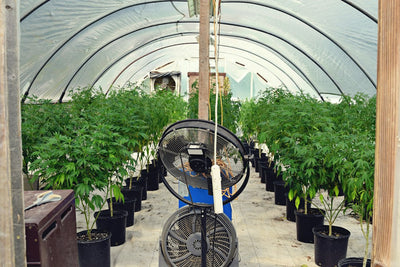
Best High-Yield Strains for a 4x4 Grow Tent
Scroll through enough grow forums and seed bank product pages and you'll start to believe a 4x4 tent is basically a money printer -- two pounds a cycle, every cycle, guaranteed. It isn't. A 4x4 footprint (16 square feet) is genuinely the best size for most home growers: big enough to run a real light and a handful of plants, small enough to control temperature, humidity, and odor without turning your spare room into a greenhouse. But the yield numbers thrown around in marketing copy are almost always best-case, competition-grade results, not what a person running their second or third grow should expect to see under their own roof.
Let's set real expectations before anything else. A beginner running a 4x4 with decent but unoptimized technique should land somewhere between 115 and 225 grams (4-8 oz) per cycle. Once you've dialed in training, feeding, and environment, 285-455 grams (10-16 oz) is a realistic and genuinely good outcome. Push into advanced territory -- tight VPD control, CO2 supplementation, well-selected genetics, aggressive but competent training -- and 510-900+ grams (18-32+ oz) is achievable. Notice that top tier still tops out well short of the mythical two pounds most people picture when they hear four-by-four grow tent.
Genetics obviously matter -- a lazy, low-yielding phenotype will underperform no matter what you do around it. But which strain you pick only sets a ceiling; training method, canopy density, and light wattage decide how close you actually get to it. This piece walks through both halves: which strains make sense for a 4x4, and the setup decisions -- plant count, training style, light output, airflow -- that actually determine whether you land in the beginner tier or the advanced one. Seedtiva's take, after watching a lot of grows succeed and a lot of grows disappoint, is that pairing the right genetics with the right training style is the single biggest lever most growers leave unpulled.
What a 4x4 Tent Can Actually Yield

Yields from a 4x4 grow tent scale sharply with grower skill, rising from about 225 grams for beginners to roughly 455 grams with optimized techniques and up to 900 grams for advanced, high-efficiency setups—a fourfold increase from novice to expert level.
Start with the three tiers, because they're the yardstick for everything else in this article. Beginner-tier grows -- first or second attempt, decent light, some training but not much finesse -- typically land 115-225 grams total per 4x4 tent. That's 4-8 ounces, which is nothing to be disappointed about; it's a normal, honest first result. Moderate or optimized grows, where you've got topping or a scrog screen dialed in, feeding on a real schedule, and temps/humidity under control, push that to 285-455 grams (10-16 oz). Advanced and high-efficiency setups -- think supplemental CO2, tightly managed VPD, genetics selected specifically for density and light penetration -- can hit 510 to 900+ grams, or 18 to 32-plus ounces.
That top number needs a caveat, because it's exactly where marketing claims start to lie by omission. When you see a seed bank or grow light company advertise 1-2 pounds from a single 4x4 tent, they're describing a best-case scenario that usually assumes CO2 enrichment above ambient (typically pushed to 1200-1500 ppm), genetics that have been run and re-run by the same grower for multiple cycles, and years of accumulated technique. It is not a fair target for your first, or even your fifth, grow. Treat it as a ceiling that exists, not a floor you've failed to reach.
Tent height is the setup variable people underestimate most. A 4x4 that's only 72 inches tall sounds fine until you subtract a 6-8 inch LED fixture, several inches of ducting and inline fan housing, and 10-14 inches of pot height plus root ball. Suddenly your actual usable canopy space is 30 inches or less, and you're topping plants out of necessity rather than choice. Aim for a minimum of 80 inches (6'7") of interior height, and 84 inches (7 feet) if you can manage it -- that leaves roughly 36-42 inches of real canopy space to work with, which is enough room to run a scrog screen or let an indica stretch a bit during the first two weeks of flower without hitting the light.
On lighting, 400-600 true watts (measured at the wall, not the inflated equivalent-wattage marketing number) is the sweet spot for full 4x4 coverage without wasting energy spilling past the canopy edges. A useful real-world sanity check: one grower running four Chocolope plants under 730 watts of LED pulled just over 26 ounces -- 737 grams -- which works out to almost exactly 1 gram of dry flower per watt. That ratio is a good benchmark to hold marketing claims against; if a company's projected yield implies 2-3 grams per watt, it's fantasy.
Training Style Decides Your Plant Count as Much as Genetics Does

Plant count in a 4x4 isn't a fixed number -- it's a decision you make based on training style, and it changes the entire grow. Run a Sea of Green (SOG) setup and you're looking at 1-2 plants per square foot, which in a standard 16 sq ft tent means 16-25 small plants vegged briefly and flipped early, each producing a single main cola. Run a Screen of Green (scrog) or heavily topped/LST setup instead, and you might have just 1-4 plants total, trained flat across a screen or tied down repeatedly to build a wide, even canopy. Both approaches can hit the same tier of total yield -- they just get there differently.
SOG lives or dies on genetics choice. It works best with indicas or indica-leaning hybrids that finish compact and don't stretch much once flipped to 12/12. Push a heavy sativa into a SOG layout and you'll watch it double or triple in height during the stretch phase, blow past your headroom, and force you into emergency topping or defoliation just to keep it off the light. If you know you want a high plant count, that decision should steer you toward short, bushy, fast-finishing genetics before you even start browsing strain names.
The alternative -- fewer, larger, heavily trained plants -- trades plant count for individual cola size and evenness. A scrog screen installed 12-18 inches above the pots lets you weave branches horizontally as they grow, filling gaps in the canopy and exposing far more bud sites to direct light than an untrained plant ever would. Topping (removing the apical meristem) combined with low-stress training (tying branches down instead of cutting them) achieves something similar without hardware, though it takes more hands-on attention over a longer veg period. Either method rewards patience: a well-trained single plant filling a 4x4 canopy can outyield a poorly managed group of six.
The mistake a lot of growers make is picking a strain first and figuring out training method later. Do it backwards. Decide whether you're running high-density SOG or a low-count trained canopy before you buy seeds, then choose genetics that actually suit that structure -- an indica-leaning auto for SOG density, or a stretchy, vigorous hybrid that responds well to topping for a scrog build. Matching the plant's natural growth habit to your training plan up front saves you weeks of corrective pruning down the line.
Autoflower Picks for Fast, Space-Efficient Harvests

Photo by Francis Costelloe via Pexels.
Autoflowers are the natural fit for anyone leaning toward SOG-style density in a 4x4, because their fixed life cycle removes the biggest variable in plant count math: veg length. You're not guessing how big a photoperiod plant will get before you decide to flip it -- an autoflower moves from seed to harvest on its own internal clock, typically 65-100 days depending on the genetics, regardless of your light schedule. That predictability lets you pack more plants into the same footprint without worrying about one runt stretching unexpectedly and shading its neighbors.
Fast Buds' GMO Auto is worth a serious look if you want competition-grade genetics without committing to a long veg period -- it's been recognized as the Autoflower World Cup Champion for 2026, which signals the kind of vigor and resin production that autoflower breeders are competing hard to hit. Royal Queen Seeds' White Widow Auto goes the opposite direction on stature: it stays genuinely compact, typically around 19.5 inches tall and only occasionally stretching to 39 inches, which makes it a strong choice for stealth grows or tents where headroom is tight. Growers report 6.7-8.5 oz per plant off it, respectable numbers for something that small.
Ethos Genetics' Banana Jealousy IBL Auto deserves a mention for sheer speed and flexibility -- it finishes flowering in 60-65 days and can produce up to 550 g/m2 indoors, with outdoor plants (given the extra light and root space) capable of pushing 1,000 grams per plant. That indoor-outdoor spread is a good reminder that autoflower genetics aren't just a space-saving compromise; the right cultivar can scale up impressively when conditions allow.
On breeder reputation, it's worth knowing who's actually winning where. Mephisto Genetics has been noted as the top craft autoflower breeder of 2026 on the American Autoflower Cup's high-THC leaderboard -- a signal of quality and consistency among smaller-batch breeding. Fast Buds, meanwhile, leads on sheer sales volume, which speaks to accessibility and track record across a huge number of grows rather than boutique-level selection. Neither ranking makes the other irrelevant; they're just measuring different things, and it's useful to know which one you're actually optimizing for when you pick seeds.
Photoperiod Strains Worth Growing for Yield and Flavor

Photo by GB The Green Brand via Pexels.
Photoperiod strains give up the autoflower's speed and space efficiency in exchange for something valuable: full control over veg length. That control matters most if you're running a scrog or a multi-plant canopy fill, because you decide exactly how long to vegetate before flipping to 12/12, which means you can grow the screen out to 80-90% full before forcing flower -- something you can't do with an autoflower's fixed timeline.
Among the strains getting attention heading into the 2026 season, a few stand out for different reasons. Candy Pop, a cross of OG Kush and Blue Dream, is named among the reliable-yield picks in the spring 2026 trending lineup from Seeds Here Now founder James Bean -- exactly the kind of dependable, no-drama genetic you want if total harvest weight is your priority and you don't want to gamble a whole cycle on an unproven cross.
Cream Smoothie, a cross of Gelonade and C.R.E.A.M., sits at the other end of that same tradeoff curve -- it gives up a bit of raw yield in exchange for a genuinely standout flavor and terpene profile. If you're growing for personal use and bag appeal matters as much as total grams, that's a completely reasonable trade to make, and one that generic yield charts never capture.
King Runtz, a cross of Rock-N-Runtz and Bellagio Gelato, rounds out that trending lineup as the potency-focused option -- the pick for growers whose priority is effect strength over either yield or flavor nuance. Having three strains from the same trending list that each optimize for a different variable -- yield, flavor, potency -- is a useful reminder that no single strain is best in every category, and you should pick based on what you're actually trying to maximize this cycle.
It's also worth returning to the real-world data point from earlier: four Chocolope plants under 730 watts of LED produced 737 grams, right around 1 gram per watt. Chocolope is a sativa-leaning hybrid, historically not the easiest thing to keep compact in a 4x4, and yet with solid technique -- training to manage its stretch, adequate headroom, dialed feeding -- it delivered a genuinely strong, proven result. It's proof that sativa-leaning genetics aren't automatically a bad fit for a tent grow, provided your training and headroom account for how they actually grow.
Dialing In the Setup Around Your Strain Choice

Photo by Mike van Schoonderwalt via Pexels.
Once you've picked genetics and a training style, the rest of the outcome comes down to environment, and light wattage is where most people either overspend or undershoot. The 400-600 true-watt range (measured at the wall) is the target for full 4x4 coverage -- enough to maintain adequate PPFD across the whole canopy without wasting power lighting empty space at the tent's edges. Going lower than that and you'll see weak, airy buds at the corners; going much higher without the CO2 and airflow to match just burns electricity without adding proportional yield.
Headroom is the other physical constraint that quietly wrecks more grows than bad genetics do. With an 80-inch minimum tent height as the baseline, budget realistically for your fixture (6-8 inches), ducting and inline fan housing (another several inches depending on your carbon filter setup), and pot height plus root ball (10-14 inches for a typical 5-7 gallon fabric pot). Do that math before you buy seeds, not after your plants are already stretching toward a light that's too close -- being forced to top early or train aggressively out of necessity, rather than choice, is a common and avoidable cause of stress and stunted growth.
As plant density goes up -- particularly in SOG layouts running 16-25 plants -- airflow and VPD control stop being nice-to-haves and become the difference between a clean harvest and a moldy one. A crowded canopy traps humidity right at the bud sites, and that's exactly where bud rot (Botrytis) takes hold, often invisibly, in the last few weeks of flower when you can least afford to lose colas. Oscillating fans below and above the canopy, an exhaust fan sized to fully exchange tent air every 1-3 minutes, and keeping late-flower VPD in the 1.0-1.5 kPa range go a long way toward preventing it.
Finally, be honest with yourself about CO2. It's the real differentiator behind those inflated 1-2 lb marketing claims -- ambient CO2 sits around 400 ppm, and pushing it to 1200-1500 ppm alongside matched light intensity and feeding is what actually unlocks commercial-grade numbers. Without it, don't chase those figures; they aren't the benchmark for a home tent. What you can control is starting with well-bred seeds from a reputable source, which gives you a real shot at the moderate-to-advanced tier -- understanding that results still vary meaningfully by climate, setup quality, and how well you execute the training method you chose.
If there's one thing worth taking away from all this, it's that the gap between marketing claims and what actually comes out of your tent almost never comes down to the seed alone. It's training method and environmental control that separate a beginner's 150 grams from an advanced grower's 700. The same Chocolope, White Widow Auto, or Candy Pop seed can land in any of the three tiers we opened with, depending entirely on whether the person growing it matched plant count to training style, kept VPD in range through flower, and gave the canopy enough headroom to develop without stress.
So pick a strain that fits the growth style you're actually equipped to run, not the one with the flashiest yield claim on the page. If you've got the setup and patience for a dense SOG, an indica-leaning autoflower is going to serve you better than a stretchy sativa ever will in that layout. If you'd rather nurture one or two plants across a full flowering cycle and build a proper scrog canopy, a vigorous, trainable photoperiod hybrid is the right call, and the extra veg time is the whole point, not a drawback.
Beyond that, the most useful thing you can do for your next several grows isn't chasing whatever strain is trending this season -- it's keeping your own numbers. Track wattage, final dry weight, plant count, and training method every cycle, and you'll have a real benchmark specific to your tent, your climate, and your hands, rather than a marketing figure that was never meant to describe a home grow in the first place.