Best Strains for Hot Summer Outdoor Grows
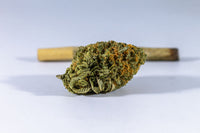
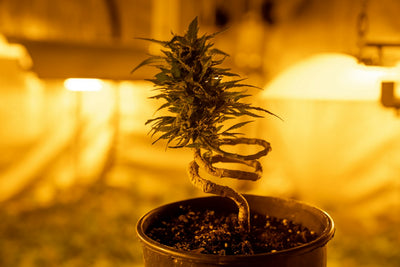
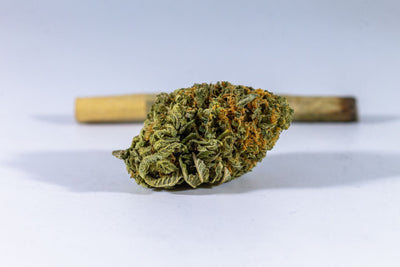
Photo by Phước Sang via Unsplash.
It's 3 p.m. in mid-July, the thermometer on the fence post reads 95°F, and two plants sit eight feet apart. One holds its leaves flat and wide, still pushing new growth at the tips. The other has every leaf folded upward like a taco, stalled and sulking until the sun drops.
Same soil, same water, same day. The difference was decided months earlier, when someone picked a seed. Shade cloth and drip lines help, but they are repairs. Heat tolerance is mostly inherited, and a plant bred for cool, short-season gardens will fight your July no matter how much you fuss over it.
This guide covers the genetic traits and strain families that tend to handle hot summers, in general terms. Results vary with your climate, your site and the individual phenotype that sprouts, so treat everything below as a starting hypothesis to test in your own yard.
Key takeaways
- Cannabis stress begins around 85-90°F, so strain choice should be built around your peak summer afternoons, not the average temperature.
- Sativa-leaning and landrace-derived genetics with open bud structure generally handle heat better than dense, compact indica-leaning cultivars.
- Dry heat and humid heat call for different strains: dense flowers in humid heat raise bud rot and mold risk.
What Heat Actually Does to a Cannabis Plant
Cannabis photosynthesizes happily in the 70s and low 80s. Once leaf temperatures climb past roughly 85-90°F, the plant starts closing its stomata to save water. Closed stomata also shut off CO2 intake, so the plant is effectively no longer feeding itself, even in brilliant sun.
The visible signs show up in a predictable order:
- Leaves curl upward at the edges (taco-ing), usually first on the upper canopy.
- Plants droop at midday, then perk up in the evening.
- Leaf tips bleach or go crispy where sun hits hardest.
In flower, sustained heat does more lasting damage. You can get foxtailing, where calyxes stack into spiky towers, along with airier buds. Terpenes are volatile, so they evaporate faster in heat, and you end up with a flatter smell and flavor than the genetics promised.
Root temperature deserves as much attention as air temperature. A black nursery pot in full afternoon sun can run far hotter than the air around it, cooking fine roots while the canopy looks fine. Damaged roots then limit water uptake, and the leaf symptoms follow.
Before you act, rule out lookalikes. Light burn tends to bleach the very top leaves nearest the sun while lower growth stays healthy. Underwatering gives drooping that reverses quickly after a drink, with light, dry pots. Heat stress curls leaves even when the soil is moist. The fixes differ, so check pot weight and root zone temperature first.
Genetic Traits That Make a Strain Heat Tolerant
Plants that evolved near the equator have been solving this problem for thousands of years. Landrace-derived and sativa-leaning genetics generally handle heat better than dense, indica-leaning cultivars bred for cooler climates and short seasons. Their structure is the clue.
Look for these traits when reading a description or judging seedlings:
- Narrow leaflets, which shed heat more easily than broad, dark fan leaves.
- Open internodal spacing, which lets air move through the canopy.
- An airy, branching structure instead of tight, stacked colas.
There is a tradeoff, and it is time. Many heat-adapted sativas need well over the usual flowering time. If your first frost or autumn rains arrive in early October, a plant that finishes in late November is a disappointment no matter how well it tolerated August. Count backward from your local season before you fall for a flavor description.
These plants also stretch. Expect vigorous, lanky growth that can double or triple in height after the flip to flower. Plan for big plants: give them room, top early, and start training while the branches are still flexible.
Finally, accept phenotype variation. Even within one line, seedlings differ in leaf width, structure and heat response. Germinate a few seeds of the same cultivar, watch them through your hottest weeks, and keep the one that stays flat-leaved when the others curl. That plant is worth more than any label.
Strain Families Worth Running in the Heat
A few families come up again and again when growers talk about heat, and each has a clear profile.
African and equatorial sativa lines, Durban-type genetics being the classic example, suit hot, sunny climates. They tend to finish earlier than most pure sativas, which makes them one of the more practical heat-adapted options.
Thai-descended lines, and the hazes built from them, handle strong sun and high temperatures well. The catch is season length. They want a long, warm runway to finish, so they suit southern latitudes and growers who can start plants early.
Sativa-dominant hybrids with open structure are the middle ground. They borrow some heat tolerance and airflow from the sativa side while finishing in a more manageable window. For most growers with a shorter season, this is where to start.
Afghan-type and hash-plant indicas can handle dry desert heat in some cases. Their dense flowers become a liability once humidity rises, though, so reserve them for arid sites.
Seedtiva carries seeds across all of these categories, so you can grow two or three lines side by side and compare how each handles your worst afternoons.
Whatever you choose, read the breeder's lineage notes and stated flowering time before buying. A strain name alone tells you very little, since the same name can cover quite different crosses.
Dry Heat vs. Humid Heat: Pick for Your Climate
Heat is not one problem. Dry heat and humid heat stress a plant in different ways, and the best genetics for one can fail in the other.
Dry heat mainly threatens water balance and root temperature. Very hot, dry air pulls water out of leaves faster than roots can resupply it. The result is wilting, crispy edges and stalled growth even in moist soil.
Humid heat adds fungal pressure on top of the heat stress. Dense, compact flowers trap moisture, and that is where bud rot and powdery mildew take hold. Airy sativa structures dry out faster after rain or dew, which is a big part of why they do better in the tropics.
| Climate | Main risk | Genetics to favor |
|---|---|---|
| Humid, hot summers | Bud rot, powdery mildew, wet late season | Open-structured, mold-resistant, earlier-finishing lines |
| Dry desert or high desert | Water loss, root heat, very dry air | Heat-adapted lines; dense strains workable with good water and shade |
| Mediterranean | Long stretches of dry heat, strong sun | Sativa-leaning hybrids; more freedom with dense types |
In humid regions, prioritize finishing before the wet weather of late season arrives. A slightly earlier plant that harvests clean beats a magnificent one that molds in October.
In dry climates you have more freedom to run dense cultivars, provided you manage water and shade. That freedom is conditional, though: it disappears if irrigation slips during a heat wave.
Growing Practices That Back Up Good Genetics
Good genetics give you a head start, and a few practices protect it.
Start with the root zone. Use light-colored or fabric pots, which shed heat and breathe, and mulch the surface with straw to cool the soil and slow evaporation. A cooler root zone keeps water uptake steady through the afternoon.
Water early in the morning so plants are fully hydrated before the afternoon peak. Favor deep, less frequent watering over daily sprinkles, which encourages roots to go down where it is cooler.
In extreme regions, light shade cloth over the hottest afternoon hours can take the edge off. Even better is a site that gets afternoon shade naturally, from a fence, tree line or building.
Prune lightly. Opening up the interior for airflow is useful, but stripping leaves is not. Leaves protect the plant and feed it, and a defoliated plant in 95°F sun is more exposed, not less.
Timing helps too. Whenever possible, plan planting so the hottest weeks fall in vegetative growth rather than late flower, when heat costs you terpenes and structure.
Finally, keep notes. Microclimate, soil and exposure vary from one yard to the next, so record the hottest days and how each plant responded. That log will teach you more about your site than any general guide.
Treat heat tolerance as a selection criterion you can test. Pick two or three lines, run a few seeds of each in your own yard, and write down what happens on the worst afternoons. By next season you will have data from your own site rather than guesses.
Remember that the best heat strain is the one that finishes before your local weather turns. A plant that shrugs off 98°F but needs until mid-November is the wrong plant for a place with October rain. Season length and humidity belong in the decision as much as temperature does.
Sources
- What Are the Best Cannabis Strains to Grow Outdoors in a Warm Climate? ☀️
- Best Outdoor Cannabis Seeds for 2026: Top Strains & Tips
- Top 5 Heat-Resistant Weed Strains to Grow in Warm Climates - RQS Blog
- 5 Best Cannabis Strains for Hot and Humid Climates
- Best Cannabis Strains for Humid & Hot Climates
- Best Outdoor Cannabis Seeds — Top Outdoor Strains