Cannabis Grow Terminology Every Beginner Should Know
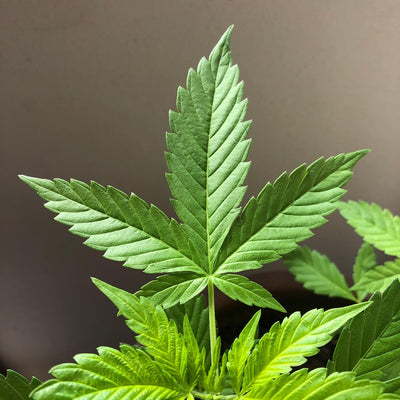
Photo by TeeFarm via Pixabay.
A new grower opens a forum thread and reads the top reply: top it at the fifth node, let it recover, then flip to 12/12 once you're hitting 600 PPFD in late veg. Every word in that sentence is plain English or a number, and none of it means anything to them yet. They close the tab and buy a bigger light instead, which fixes nothing.
Jargon is the real barrier to entry. Most beginner mistakes I see trace back to misreading a term, not to missing equipment. Someone hears flush and stops feeding in week three. Someone reads PPM in one guide and EC in another and feeds double what they meant to.
This glossary runs in the order a grow unfolds, not alphabetically, so each term shows up when you need it: seeds, growth stages, light, environment, feeding, and harvest. Every number here is a starting point. Genetics, setup, and climate move the targets, so adjust for your own room. Check your local home-grow laws before you germinate anything, because plant limits and rules differ by place and change often.
Key takeaways
- Photoperiod plants flip to flower on a 12/12 light schedule, while autoflowers switch on age, usually within a few weeks of sprouting.
- PPFD, DLI, VPD and EC are the four measurements that turn guesswork into repeatable results.
- Trichome color, not the calendar, is the most reliable signal that a plant is ready to harvest.
Genetics and Seed Terms: What You're Actually Buying

Photo by Rene Terp via Pexels.
Start with the biggest fork: photoperiod versus autoflower. A photoperiod plant stays in vegetative growth as long as it gets long days, and it flowers when you cut the light cycle to roughly 12 hours on and 12 off. An autoflower starts flowering based on age, regardless of the light schedule, so it can run on a steady cycle from seed to harvest. Photoperiods give you control over plant size. Autoflowers give you speed and simplicity, with less room to recover from early mistakes.
Next, feminized versus regular seeds. Feminized seeds are bred to produce female plants, and only females grow the flowers you're after. Regular seeds give you a rough 50/50 split of male and female, which means sexing plants and removing males before they pollinate the room. Breeders who want to preserve or build lines use regular seeds. Most home growers want feminized.
Indica, sativa, and hybrid are loose descriptors. They hint at growth pattern, with indica-leaning plants often shorter and bushier and sativa-leaning plants taller with longer internodes, and they hint at effect tendencies. They are not guarantees. The breeder's lineage information tells you far more than the label on the pack.
Genotype is the genetic blueprint inside the seed. Phenotype is how that blueprint shows up in your room: height, stretch, branching, and terpene profile. Two seeds from one pack can look noticeably different, which is why some growers pop a handful of seeds and keep the best performer. That selection process is called pheno hunting.
Three words get blurred constantly:
- Landrace: a variety that adapted over generations to a specific region, without modern breeding programs.
- Cultivar: the botanically correct term for a cultivated variety, selected and maintained by people.
- Strain: the industry's catch-all for any named variety. It's used so loosely that two products with the same name can be different plants.
When you shop, look for stable, well-documented lines. Seedtiva offers quality genetics with clear lineage notes, which is the kind of information worth reading before you buy anything.
Growth Stages: Germination, Veg, Flower, and the Flip
Germination is the seed cracking open and pushing out a taproot. Once the taproot is in the medium, the seedling stage begins: the stem rises, two round cotyledons open first, then the first true leaves with their serrated edges appear. Seedlings have tiny root systems and little tolerance for stress, so they want gentle light and high humidity. Blasting them at full power is a classic early mistake.
Vegetative growth, or veg, is the leaf-and-branch building phase. Photoperiod plants typically get 18 hours of light or more per day. Veg can last a few weeks or several months, depending on how large you want the plant. Longer veg means a bigger plant, so match it to your tent or garden height.
Flowering is when bud formation takes over. For photoperiods, the flip is the moment you switch the light cycle to 12/12. Autoflowers make the transition on their own.
Right after the flip comes stretch. For the first two to three weeks, plants shoot upward fast, and many gain a large share of their final height in that window. That's why canopy planning and light height need sorting out before the flip. Flip a plant that already touches the light and you'll be fighting it for the rest of the run.
Around the same time, look for pre-flowers at the nodes. Female plants show pistils, small white hairs emerging from a teardrop-shaped calyx. Males show tiny pollen sacs that look like little balls or bananas. A male or a hermaphrodite, a plant that grows both, needs immediate attention. Remove males right away, and monitor hermaphrodites closely, because pollen can seed an entire room.
Late in flower you'll hear two more terms. The flush means feeding only plain water, or very light input, for a period before harvest. Growers disagree about whether it improves the final product, so treat it as a preference to test, not a rule. The harvest window is the stretch of days when the flowers are at peak ripeness. You judge it by trichomes, which we'll cover in the last section.
Light Language: PPFD, DLI, Photoperiod, and Spectrum
PPFD stands for photosynthetic photon flux density. It measures how much usable light lands on the canopy, in micromoles per square meter per second. A dedicated PAR meter is the best way to measure it, and a phone app gives you a rough estimate. Measure at canopy height, not at the fixture.
DLI, daily light integral, adds up all the light a plant receives over a full day. It matters most when you change the schedule: dropping from 18 hours to 12 hours at the same intensity cuts the daily total sharply. Keep that in mind when you flip.
Here are general starting ranges for PPFD by stage. Treat them as starting points that shift with CO2 levels, genetics, and environment:
| Stage | Typical PPFD starting range |
|---|---|
| Seedlings and clones | 100 to 300 |
| Vegetative | 400 to 600 |
| Flowering | 600 to 900 |
Plants in enriched CO2 can use more than the flowering range. Plants in a hot, dry room often do better below it.
Wattage is what the fixture pulls from the wall. It says little about what reaches the plant. Efficacy, measured in micromoles per joule, tells you how much light the fixture produces per unit of energy, and it's the better figure for comparing LEDs. A 300-watt fixture with poor efficacy can lose to a 200-watt fixture with good efficacy.
Spectrum is the mix of wavelengths. Most modern grow lights are full-spectrum white LEDs. Kelvin describes color temperature: warmer light sits around 3000K, cooler light around 5000K or higher. Blue-heavy, cooler light tends to keep plants compact in veg, while warmer light is common in flower.
Finally, light stress and light burn. Leaves nearest the fixture may bleach to pale yellow-white, or curl upward at the edges like a taco. Raise the light or dim it, and check again in a day or two. A bleached top with healthy leaves below it is the giveaway.
Environment Terms: VPD, Humidity, Airflow, and Canopy
Relative humidity is the percentage of moisture the air holds compared to its maximum at a given temperature. VPD, vapor pressure deficit, combines temperature and humidity into one number describing how hard the plant is transpiring. Same humidity, different temperature, different VPD. That's why growers who track VPD get more consistent results than those who watch humidity alone.
Seedlings and clones prefer low VPD and high humidity, because they have little or no root system and take up moisture through their leaves. Late flower is the opposite: drier air reduces the risk of bud rot in dense flowers. Expect to lower humidity gradually as the run progresses.
Airflow terms trip people up because they sound similar:
- Intake: brings fresh air into the tent.
- Exhaust: pulls air out, taking heat, humidity, and odor with it.
- Circulation fans: clip-on or oscillating fans that move air within the tent, keeping leaves gently stirring and preventing stagnant pockets.
Moving air through a tent and moving air within it are two separate jobs. You need both.
A carbon filter is a canister of activated carbon attached to the exhaust. It scrubs odor from outgoing air, and you'll find one in nearly every tent kit.
Several terms describe how you shape the plant to spread light evenly:
- Canopy: the top layer of leaves and bud sites, ideally a level surface.
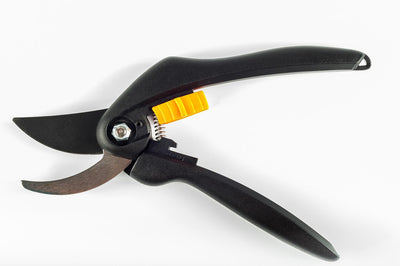
- Topping: cutting the main growing tip so the plant branches into multiple tops.
- Defoliation: removing selected leaves to open up airflow and light penetration.
- LST, low-stress training: bending and tying branches down to even out the canopy without cutting.
Two environment-driven problems catch beginners most often. Bud rot is gray, mushy decay inside dense flowers, usually spurred by high humidity and poor airflow. Powdery mildew is a white, flour-like coating on leaves. Both are easier to prevent with airflow and sensible humidity than to cure once established.
Feeding and Root Zone: pH, EC, PPM, and Medium Terms
pH measures acidity on a scale where lower is more acidic. It controls which nutrients roots can absorb, regardless of how much you feed. Commonly cited ranges are about 6.0 to 7.0 in soil and about 5.8 to 6.2 in hydro or coco. Drift outside the range and the plant can show deficiencies even in a well-fed pot.
EC and PPM both estimate dissolved nutrients in your solution. EC, electrical conductivity, is the underlying measurement. PPM converts it to parts per million, but there are two common scales, 500 and 700, and meters vary. Always note which scale a guide uses before you copy its numbers.
Medium is what the roots live in:
- Soil: forgiving, buffers mistakes, and often holds nutrients.
- Coco coir: fast-growing and inert, with frequent feeding and Cal-Mag support.
- Hydroponics: roots in water or an inert medium, very fast, with little margin for error.
- Living soil: a biologically active mix that feeds the plant through microbes, often with mostly water input.
Runoff is the water that drains from the bottom of the pot, and checking its pH and EC shows what's building up in the root zone. Dry-back is the pot losing weight between waterings. Letting it lighten before you water again gives roots oxygen. Overwatering, constant wetness, is among the most common ways beginners stunt a plant.
Macronutrients are N-P-K: nitrogen, phosphorus, and potassium. Calcium and magnesium are the usual secondary nutrients, and coco growers often add Cal-Mag because coco tends to hold onto calcium and magnesium in ways that cause shortages.
Finally, nutrient lockout is when pH or salt buildup stops roots absorbing what's in the pot. Deficiency means too little of a nutrient, burn means too much, and both can look similar. Burn often shows as crispy, dark leaf tips. Deficiencies tend to start on older or newer leaves, depending on the nutrient. Be cautious diagnosing from a photo alone. Check pH, EC, and runoff first.
Harvest, Drying, and Curing Terms: Trichomes, Cure, and Burping

Photo by CRYSTALWEED cannabis via Unsplash.
Trichomes are the tiny resin glands covering the flowers. Under a jeweler's loupe or a small microscope, they look like little mushrooms. Growers judge ripeness by their color progression: clear, then cloudy or milky, then amber. Many harvest when most are cloudy with a few amber, but the ideal point depends on the effect you prefer.
Pistils, the hairs, are a secondary and less reliable ripeness indicator. They darken and curl in as the flower matures, but they don't track the trichomes closely. Use them as a hint only.
After the chop, you choose how to trim. Wet trim means removing the leaves right after harvest, while the plant is fresh. Dry trim means hanging the branches whole and trimming once dry. Wet trim is easier to do, while dry trim tends to slow the dry slightly.
Drying usually takes about 7 to 14 days when hung in a dark room, depending on humidity and bud density. The point of the dry is slow and even, not fast. Small stems should snap rather than bend when it's ready.
Curing means storing dried buds in sealed jars. Burping means opening those jars periodically in the first weeks to release moisture and let fresh air in. Jar curing is where much of the smoothness and aroma develops. If you smell ammonia, the buds were jarred too wet.
Water activity describes how much free moisture is available in the flower, and it's what really matters for mold risk. Many growers store finished flower with a humidity pack rated at 58 to 62 percent, a general practice for holding it steady.
A beginner who learns these terms can follow nearly any guide and, more usefully, start asking sharper questions: which PPM scale, what VPD, how many days of dry-back. Better questions get better answers.
Keep a grow journal, and write it in these terms. At every watering, log the pH and EC going in, the runoff, the air temperature and humidity, and the distance between light and canopy. Add what you see: leaf posture, new growth, color. After a few weeks the vocabulary stops being something you look up and becomes how you think about the room.
Terminology only earns its keep when it's tied to observation. A guide's numbers are starting points, and your genetics, your tent, and your climate will bend them. The plant is the final authority on whether a number is right, so read the plant, adjust, and write down what worked. And before any of it, confirm what your local laws allow.
Sources
- DEA Rules for Schedule III Medical Cannabis Registrants Pose Major Disruptions to State Programs
- List of 2026 United States cannabis reform proposals
- Removal of cannabis from Schedule I of the Controlled Substances Act
- Cannabis in the United States
- Cannabis rescheduling update: What’s next for Schedule III?
- Marijuana Rescheduling: Fact Sheet