Cannabis Stretching Too Much? How to Diagnose and Fix It
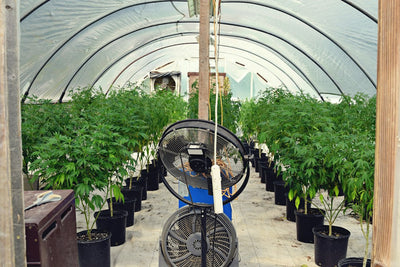
Photo by MySeeds DE via Pexels.
Every grower's seen it: canopy looks tight and even at the flip, then two weeks into flower there's suddenly six inches of bare stem between the last node and the new growth, and the whole plant looks like it's trying to escape the tent through the ceiling. The instinct is to panic and start throwing fixes at it. Don't, yet. Some of that vertical surge is completely normal — it's a hormonal shift triggered by the change in light cycle, not a mistake you made.
The line between healthy flowering stretch and an actual problem isn't about whether a plant grows taller after the flip — it will. It's about degree and structure. Normal stretch gives you a plant that's taller but still sturdy, with internodes that stay reasonably tight and stems thick enough to hold bud weight. Excessive stretch gives you thin, weak stems, internodes stretched out like a ladder, and ultimately lower bud density because the plant spent its energy on height instead of building the structure to support fat colas.
Nearly every case of excessive stretch traces back to light — the wrong distance from canopy, the wrong intensity for the tent size, or a spectrum too heavy on red and far-red. Heat and genetics play supporting roles, but light is almost always the primary lever. This piece walks through how to tell normal stretch from a real problem, the actual fixes for light, spectrum, and heat, what training can do when genetics are the real cause, and how to stabilize a plant that's already stretched further than you'd like.
Normal Flowering Stretch vs. a Real Problem

Photo by Jose Luis Sanchez Pereyra via Unsplash.
When you flip a photoperiod plant to a 12/12 light cycle, it triggers a hormonal cascade — auxin and gibberellin activity shift, and the plant responds with a burst of vertical growth called flowering stretch. This is the plant racing to establish its final height before it redirects energy into bud formation, and it happens whether you do anything right or wrong. Expect it, plan for it, and don't mistake it for a symptom on its own.
For most strains, this stretch runs the first two to three weeks of flower. Somewhere around day 14 to 21, depending on genetics, vertical growth slows dramatically as the plant shifts resources into bud-site development and calyx swell. If a plant is still stretching hard at week four, that's no longer the normal hormonal window talking — something in the environment is keeping it in a growth-chasing state.
The practical yardstick a lot of experienced growers use: doubling in height from flip to the end of stretch is common and expected for a wide range of photoperiod strains. A plant that was 14 inches at flip finishing stretch around 28 inches is unremarkable. A plant that triples — that same 14-inch plant blowing past 42 inches — usually means light, heat, or genetics pushed it further than it needed to go, and it's worth diagnosing rather than shrugging off.
Genetics set the baseline you should be measuring against, though, so know what you're actually growing before you assume something's wrong. Indica-dominant varieties tend to stay short, bushy, and tight-noded even under imperfect conditions — modest stretch is baked into the phenotype. Sativa-leaning genetics are a different animal entirely; some will clear 2 meters even when everything is dialed in, because that's simply how they grow. A grower running a lanky sativa-dominant strain in a 4x4 tent needs a different mental benchmark than someone running a compact indica, and comparing the two against the same expectations is where a lot of unnecessary panic starts.
The Real Culprit: Getting Light Distance and Intensity Wrong

Recommended LED distance from the canopy decreases as plants mature, from 30 inches at the seedling stage down to just 18 inches during the stretch phase, reflecting the need for stronger light to prevent stretching in later growth stages.
Stretching is fundamentally a light-stress response, and it cuts both directions. A light that's too intense for the space causes the plant to slow growth and bleach under stress. A light that's too weak, or hung too far away, tells the plant it isn't getting enough energy to work with, and it responds by stretching upward to physically close the distance to the source. Both are light problems, but they look completely different and need opposite fixes — which is exactly why guessing instead of measuring gets growers into trouble.
Every LED fixture worth using ships with a manufacturer-recommended hanging distance for a given growth stage and power setting, and skipping that spec is one of the most common mistakes in home grows. People eyeball it, or they copy a distance from a completely different fixture's manual, and end up either scorching a canopy or starving it of usable PPFD.
Seedlings and young plants under high-intensity LEDs need real clearance — 24 to 36 inches — because their tissue can't handle full-power photon density up close. The visual tell that clearance is wrong is etiolation: long, thin, pale stems reaching straight up, wider gaps between leaf pairs than you'd expect, and a generally stretched, spindly look even at the seedling stage.
Forget the old hand test — holding your palm under the light to feel for heat — as a way to judge distance with modern fixtures. Today's cool-running, high-efficiency LEDs can deliver intense light with almost no perceptible heat at the canopy, which means you can get real light stress or stretch-inducing intensity issues while your hand feels nothing at all. Use a PAR meter or trust the manufacturer's PPFD chart instead of your palm.
In late veg, before stretch phase kicks in, running the LED at 18 to 24 inches at full power is one of the better tools for encouraging bushier, more compact growth going into flower. Once stretch actually begins, raise the fixture 2 to 4 inches as the canopy rises, aiming to hold roughly 18 inches of clearance throughout — close enough to keep growth compact, far enough to avoid burning the tallest colas as they close the gap.
Spectrum, Heat, and Crowding: The Supporting Causes

Photo by XRP Relic via Unsplash.
Light intensity and distance are the biggest levers, but spectrum matters more than most growers give it credit for. Red and orange-heavy light — the kind naturally more abundant at sunset and under a forest canopy — triggers a shade-avoidance response in plants. In nature, that shift in ratio signals competition from neighboring plants, and the response is to grow taller to reach open light. Run a fixture too red-shifted for too long during veg or early flower and you're essentially telling the plant it's being shaded out, and it responds exactly as it would outdoors: it stretches.
Cooler tones counteract that. Blue, white, and yellow wavelengths encourage thicker stem tissue and lateral branching rather than a single reach for height. Most quality full-spectrum LEDs let you adjust the ratio, or at minimum you can choose a fixture with a cooler default spectrum for veg and early flower, shifting warmer only once you're deliberately chasing bud development later in the cycle.
Heat in the canopy does something similar for a different reason. Plants growing in warm, stagnant air near the light source stretch upward trying to physically move away from the heat source, the same instinct that drives the shade-avoidance stretch. A canopy running consistently above 82-84°F at leaf level, especially combined with poor airflow, will produce taller, lankier, more structurally unstable growth even under otherwise correct light distance and intensity.
Crowding compounds all of it. A packed canopy forces plants to compete with each other for light, water, and root space the same way an overplanted outdoor bed does, and the shade-avoidance stretch response kicks in between plants even when your lighting setup is otherwise dialed in correctly. The result is frail, spindly stems and disappointing bud quality that has nothing to do with your fixture and everything to do with spacing.
The good news is that fixing spectrum and heat problems is usually a settings adjustment, not a shopping trip. Dial the fixture's spectrum knob cooler, add a clip fan to move air through the canopy, or pull the tent's exhaust rate up a notch — cheaper and faster than buying new equipment, and it addresses the actual mechanism causing the stretch instead of just masking it.
Training and Genetics: Working With What You Planted

Photo by Quynn McDonald via Pexels.
Some stretch is written into the genetics before you ever crack the seed, and no amount of light or heat management is going to turn a lanky sativa-dominant phenotype into a compact bush. If you've already got light distance, intensity, spectrum, and heat all correctly dialed and a plant is still reaching hard, it's reasonable to conclude you're looking at a genetic trait rather than an environmental mistake — and at that point, training becomes your real tool, not more equipment tweaking.
Low-stress training and topping done before the flip both work by reducing apical dominance — the tendency of a plant to funnel growth hormone into one main cola at the expense of everything below it. Topping removes that dominant growth tip; LST bends and ties down branches to spread the canopy horizontally instead of letting the plant put all its energy into reaching upward. Both redirect the plant's growth instinct toward lateral development rather than height, which is exactly what you want going into a strain you know runs tall.
SCROG setups are particularly effective for stretchy, sativa-leaning genetics specifically because they don't fight the stretch — they redirect it. A screen installed a foot or so above the canopy gives every branch a horizontal path to grow into as it stretches upward toward the net, so the height gain gets captured as canopy spread instead of a handful of tall, thin colas competing for the same light.
All of this is easier if you choose genetics suited to your space from the start rather than discovering three weeks into flower that you planted the wrong plant for a 3x3 tent. Shorter, indica-leaning varieties are the obvious choice for tight vertical space, and knowing a strain's known growth habit before you plant saves a lot of mid-grow scrambling with stakes and screens. This is part of why we breed and select genetics at Seedtiva with documented growth habits — so growers can match a variety to their actual tent height instead of guessing.
Even with known genetics, treat any strain's expected height as a range rather than a guarantee. Climate, container size, root health, and individual phenotype variation within a strain all shift the outcome, sometimes significantly, so build in a margin rather than planning to the exact inch.
Damage Control: Fixing a Plant That's Already Stretched

Photo by CRYSTALWEED cannabis via Unsplash.
If you're reading this because the stretch has already happened and you're staring at a top-heavy plant with six inches of bare internode space, there's still a solid path forward. Transplanting into a deeper container and burying part of the stretched stem is one of the more underused fixes here. Cannabis stems will readily throw new roots along a buried section, given time and darkness, effectively turning wasted vertical stem into functional root mass instead of a liability.
That buried-stem technique does double duty: it stabilizes a plant that's become top-heavy and prone to leaning or snapping, and it gives the root system meaningfully more uptake capacity right when the plant is about to start packing on bud weight. A stem that was pure structural dead weight becomes an extension of the root zone instead — one of the few cases where a mistake earlier in the grow can be partially converted into an asset rather than just managed around.
Physical support matters just as much at this stage. Get stakes, bamboo canes, or a trellis net installed now, before flowers start swelling, not after a branch has already bent or snapped under the weight. A plant that stretched excessively in weeks one through three of flower is going into weeks five through eight with weaker stem tissue than it should have, and that tissue is only going to be asked to carry more weight as buds finish filling out. Tie branches loosely enough to allow some movement but firmly enough to take the load off the stem itself.
None of this matters if you don't also fix whatever caused the stretch in the first place. Raise or lower the light to correct clearance, adjust spectrum toward cooler tones if you're running an adjustable fixture, get airflow moving through the canopy if heat's been the issue — do it now, immediately, not after you've finished troubleshooting the support side. A plant that keeps stretching on top of an already-stretched frame just compounds the structural problem you're trying to solve.
Be realistic about where this leaves you. A plant that stretched significantly beyond normal is very likely going to finish with somewhat lower bud density and total yield than it would have under ideal conditions from the start — that's a real trade-off, not something buried-stem support fully erases. The goal at this stage is stabilizing what you've got and protecting the harvest that's still coming, not pretending the stretch never happened.
If there's one habit worth building from all of this, it's checking light distance and intensity before you start blaming genetics, nutrients, or anything else. Excessive stretch is, in the overwhelming majority of cases, a light problem wearing a disguise — wrong clearance, too weak an output for the space, or a spectrum running too warm for the growth stage. Rule that out first, every time, before you decide you've got a stubborn phenotype on your hands.
The actual fix is almost never dramatic. Raising or lowering a fixture two to four inches, nudging a spectrum dial toward cooler tones, or clipping a fan into a dead air pocket in the canopy will typically do more for stretch control than anything marketed as a stretch-stopper product. Cannabis doesn't need a gadget to grow the way it's supposed to — it needs the environmental signals it's built to respond to, delivered correctly and consistently.
And if you're already past the point of prevention, staring at a leggy plant with weak stems and long internodes, it's not a lost cause. Buried-stem transplanting, stakes or trellis netting, and correcting the underlying cause immediately can still get that plant to a respectable finish. Don't scrap a stretched plant this early in flower — stabilize it, support it, and let it do what it can still do with the bud sites it's got.
Sources
- Preventing and Fixing Long, Stretchy Stems on Marijuana Plants
- Cannabis flowering stretch master guide - Dutch Passion
- How to Control and Prevent Stretching in Cannabis Plants - RQS Blog
- Stop Stretchy Cannabis Seedlings — Easy Fixes - RQS USA - RQS Blog
- Cannabis Flowering Stretch: Foreawarned Is Forearmed