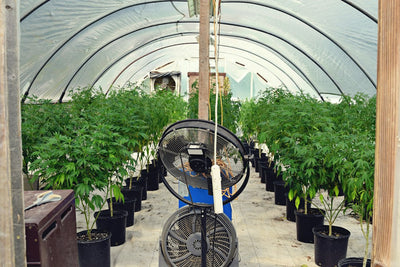
Choosing Cannabis Strains Bred for Mold Resistance
Photo by Marina Leonova via Pexels.
Every grower who's lost a crop to bud rot two weeks before harvest has heard the same advice afterward: better airflow, tighter humidity control, more diligent defoliation. All true, all useful, and all incomplete. What that advice misses is that some plants get hammered by powdery mildew or Botrytis year after year regardless of how carefully you manage the room, while others in the same tent, same feed schedule, same climate, shrug it off. That's not luck. It's genetics. Susceptibility to mold is baked into certain lineages at a level no amount of dehumidifier wattage can fully override, and until recently, breeders were selecting against it mostly by feel -- tracking which mother plants kept coming back clean, without much idea of the underlying mechanism.
That changed in a concrete way on March 20, 2025, when Aurora Cannabis announced it had identified PM2, a single dominant genetic locus that confers resistance to powdery mildew in Cannabis sativa. This wasn't a marketing claim dressed up as science -- it was published research, mapped through actual sequencing work, targeting the specific pathogen that causes the problem. It's the clearest signal yet that mold resistance has moved out of the realm of grower folklore and into documented, patentable plant genetics.
This piece is meant as a practical guide, not a science lecture: what actually makes a strain resistant to mold, which lineages have earned their reputation for it, and how to weigh that against your own climate and setup. One caveat up front, and it's important -- no genetics, PM2-derived or otherwise, make a plant immune. Resistance is a spectrum you can shift in your favor. It's not a force field.
The Science Just Caught Up: Aurora's PM2 Discovery

Photo by RDNE Stock project via Pexels.
On March 20, 2025, Aurora Cannabis (NASDAQ/TSX: ACB) put out an announcement that mattered a lot more than most cannabis industry press releases. Its research team had identified PM2, a novel single dominant genetic locus that confers resistance to powdery mildew in Cannabis sativa. The work was led by Principal Scientist Jose Celedon in collaboration with University of British Columbia researchers Dr. Loren Rieseberg and Dr. Todesco, and it was published in Frontiers in Plant Science under the title 'Mapping and characterization of a novel powdery mildew resistance locus (PM2) in Cannabis sativa L.' That's a peer-reviewed journal, not a blog post or a seed catalog blurb -- the distinction matters when you're deciding how much weight to give a resistance claim.
The methodology is worth understanding because it tells you how rigorous this actually was. The team used bulked-segregant analysis combined with high-throughput RNA sequencing, a technique known as BSRSeq, to pinpoint the genomic region responsible for resistance to Golovinomyces ambrosiae, the specific fungal pathogen behind most powdery mildew outbreaks in cannabis. Rather than just observing which plants got sick and which didn't, they traced the resistance down to a single dominant locus -- meaning a plant carrying even one copy of the resistant allele shows the trait, which is exactly the kind of genetic architecture breeders want because it makes the trait easier to fix into stable cultivars.
This didn't happen overnight. The research has been running at Aurora's Coast facility on Vancouver Island, at what the company calls its Occo research centre, since 2018. Seven years of work led to this locus, and PM2 is already being bred into cultivars Aurora expects to bring to market in 2025, with international patents filed to protect the discovery.
Why does a single gene locus matter so much in an industry full of resistance claims? Because the conventional tool for controlling powdery mildew in most agricultural crops -- fungicide -- is heavily restricted on cannabis in Canada and in most jurisdictions worldwide, due to inhalation safety concerns for the end product. Growers can't just spray their way out of a powdery mildew outbreak the way a grape or tomato grower might. That leaves cultural practices and genetics as the two real levers available, and until PM2, genetics was the less understood of the two.
What Actually Makes a Strain Mold-Resistant

Photo by Esteban López via Unsplash.
Resistance to mold isn't a single gene flipping a switch in most cases -- PM2 is unusual precisely because it's dominant and singular. For most existing resistant lines on the market today, what you're actually getting is a bundle of physical traits that breeders have stacked together over many generations of selection, each one chipping away at the conditions mold needs to establish itself.
Bud structure is the biggest one. Dense, tightly packed colas trap humidity at the core of the flower, and once moisture sits there without airflow, Botrytis and powdery mildew both get a foothold that's brutally hard to knock back once it's inside the bud. Strains bred for a looser, airier calyx arrangement let air actually move through the cluster instead of pooling. You can often see this difference just by handling two buds side by side -- one feels almost fluffy, the other feels like a fist.
Flowering time matters just as much, especially outdoors. A strain that finishes in 8 weeks spends far less total time exposed to the cool, damp swings of early fall than one still finishing in week 11 or 12. Every extra week outdoors during that period is another week of dew point risk, and mold pressure compounds fast once night temperatures start dropping while daytime humidity stays high.
Leaf and calyx surface characteristics play a role too. Some resistant lines show thinner, waxier cuticle layers on leaves and calyxes that hold less surface moisture, and in certain lines, lower trichome density reduces the amount of surface area available for spores to establish on. Plant architecture rounds it out -- varieties with more lateral branching and a naturally more open canopy resist the stagnant microclimates that build up inside a dense, uninterrupted canopy, the same way a well-spaced hedge dries out faster after rain than a solid wall of foliage.
The honest framing here is that these traits stack to make a plant far less likely to get infected and, when it does, less likely to suffer a severe outbreak. That's meaningfully different from immunity, and any breeder or seller telling you otherwise isn't being straight with you.
Lineages Worth Seeking Out

Photo by Mark Stebnicki via Pexels.
If you're picking genetics with mold resistance as a priority, a handful of lineages come up again and again in breeder notes and grower reports, and it's worth knowing why each one earns its reputation rather than just taking the label at face value.
Kush lineage strains are frequently cited as a resilient parent line, generally showing tighter, more compact genetics overall that translate into hardier plants across several stress categories, mold included. Skunk lineage varieties bring a different advantage -- they were bred largely for vigor and speed, and that shorter flowering cycle means Skunk-descended strains tend to finish before peak fall humidity really sets in on an outdoor grow, sidestepping a lot of risk simply through timing rather than structure.
Haze lineage works from the opposite angle. It's contributed a genuinely sativa-dominant, looser bud structure to a lot of modern hybrids, and that openness resists moisture buildup well. The tradeoff is flowering time -- Haze-heavy strains often run long, sometimes 10 to 14 weeks, which can put them right back into that fall humidity window you're trying to avoid. It's worth weighing structural resistance against exposure time rather than assuming looser automatically means safer.
White Widow gets mentioned constantly by breeders specifically for anti-mold qualities, and the working theory is that it's tied to its resin production and overall bud structure rather than any single trait. It's become something of a reference standard the way certain grape varietals become reference standards for disease resistance in viticulture. Northern Lights holds a similar status -- it's valued for producing compact colas that still manage to stay airy enough to avoid trapping moisture, a combination that's harder to breed for than it sounds.
The practical move here isn't to just chase these names blindly. Cross-reference the lineage claim against actual flowering time and bud density data from a reputable breeder before committing seeds to an outdoor season. A strain can carry Kush or White Widow somewhere in its ancestry and still be a poor mold-resistance choice if later breeding pushed it toward denser, later-finishing phenotypes.
Matching Genetics to Your Climate and Setup

Photo by britt gaiser via Unsplash.
The right genetics for mold resistance depend heavily on where and how you're growing, and treating this as a one-size-fits-all decision is where a lot of growers go wrong. If you're in a humid, coastal, or short-season climate, prioritize flowering time and structure over yield and bud density every time. A strain that yields 15% less but finishes three weeks earlier and holds a loose calyx structure will outperform a denser, heavier-yielding strain in real-world terms, because the alternative is losing part or all of that heavier harvest to rot right before you'd have cut it down.
Indoor growers sometimes assume resistant genetics are wasted on them since they control the environment directly, but that's not quite right. Resistant genetics function as insurance against the VPD swings that happen even in well-run rooms -- equipment failures, a dehumidifier that can't quite keep pace during a heavy transpiration period, or dense sea-of-green setups where per-plant airflow is genuinely hard to manage no matter how good your overall room numbers look. A canopy packed wall to wall with plants can develop pockets of stagnant, humid air around individual colas even when the room's average RH reads fine on the controller.
Aurora's PM2 work isn't the only relevant patent activity here. The company also holds a separate 2024 patent, US 12,002,546, covering methods for determining photoperiod sensitivity in cannabis plants -- work aimed at building outdoor cultivars specifically suited to high-latitude regions. That's directly relevant if you're growing at northern latitudes fighting early fall rain and a compressed season, since photoperiod sensitivity determines how a plant's flowering timeline lines up with your actual daylight hours and, by extension, how much mold-risk exposure it accumulates before harvest.
None of this replaces basic cultural practice. Defoliation to open the canopy, proper plant spacing to maintain airflow between individual plants, and active dehumidification still matter even with the most resistant genetics available -- resistant seeds shift the odds in your favor, they don't override poor cultivation. Seedtiva breeds and selects for these resilience traits specifically because we've seen how much difference lineage makes in real grows, but the responsibility to match strain choice to your specific climate and setup still sits with the grower.
Reading Breeder Claims Critically

Photo by Petr Ganaj via Pexels.
Once a discovery like PM2 hits the news, expect a wave of marketing to follow it, some of it earned and some of it not. The single most important thing to understand is that no strain, including cultivars carrying the PM2 locus, is fully immune to powdery mildew or any other mold. What resistant genetics do is reduce the likelihood of infection and reduce severity when infection does occur. That's a real and valuable shift, but it's not the same claim as 'can't get mold,' and any seed listing that uses language like 'mold-proof' without explaining the mechanism behind it should raise your skepticism.
When you're evaluating a resistance claim, ask what specifically is doing the work. Is it structural -- loose bud formation, lateral branching, thinner leaf surfaces? Is it timing -- a short flowering window that dodges peak humidity season? Or is it an actual documented genetic locus, the way PM2 is? A breeder who can answer that question specifically is a breeder who's actually done the selection work. A legitimate breeding program will disclose parent lineage and the criteria used in selection, and a reputable seed bank will reference known resistant lines like Kush, Skunk, Haze, White Widow, or Northern Lights by name rather than leaning on blanket claims with nothing behind them.
It's also worth setting realistic expectations on timeline. Genetic discoveries like PM2 take years to move from an initial lab finding into stable, widely available commercial seed stock -- Aurora's own timeline ran from 2018 research initiation to a 2025 announcement, with commercial cultivars only just beginning rollout. Any claim that a brand-new resistance discovery is already fully stabilized across a wide catalog of available strains deserves scrutiny.
In the meantime, the best practical validation still comes from the ground -- track record and grower reviews across multiple climates and seasons tell you more about a strain's real-world mold resistance than any single lineage name or patent filing. A strain that's been grown successfully in humid, mold-prone regions by multiple independent growers over several seasons has earned its reputation the hard way, and that's worth more than any single marketing claim.
What PM2 really represents is a line being crossed -- mold resistance going from something growers talked about anecdotally around a trim table to something mapped, published, and patented. That's a genuine shift, and it's likely just the first of several similar discoveries as more breeding programs invest in this kind of research. But it supplements good cultivation practice rather than replacing it. The grower who buys resistant genetics and then crams plants together with no airflow plan is going to have a worse season than the grower running mediocre genetics with disciplined defoliation and a properly sized dehumidifier.
Choose your lineage deliberately, based on your actual climate's humidity patterns and season length, not on which strain has the highest yield number or the flashiest terpene profile on the label. A grower in a humid Gulf Coast climate and a grower in a dry high-desert climate should often be making different choices even if they both want a mold-resistant plant, because the risk profile they're each managing is different.
Expect this area of breeding to keep compounding over the next few years. Programs like Aurora's are converting years of lab work into actual available seed stock right now, and that pipeline isn't going to slow down -- if anything, a documented locus like PM2 gives other breeders a template and a reason to look harder at their own lines. Growers who pay attention to lineage now, rather than treating strain choice as an afterthought to potency and yield, are going to be the ones with less to lose the next time a wet fall or a stretch of bad weather rolls through.