CO2 Enrichment Tech and Bud Density Indoors
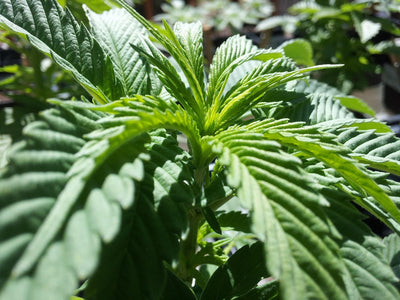
Photo by Kinodel via Pixabay.
Lights come on in a sealed flower room, and within the first hour the CO2 reading drops. It can slide well under the 400 ppm of outside air, because a canopy at full photosynthetic tilt drinks the gas faster than leaky seams and a small intake can replace it. The plants are hungry, and the air has nothing left to give them.
That gap is what enrichment is meant to close. The real question is whether extra gas makes buds denser or just makes more of them, and at what point the equipment earns its keep.
My stance is simple: CO2 is a finishing tool for a room that is already dialed in. It will not rescue weak light, sloppy climate control or tired genetics. A note on sourcing: this piece draws on general, well-established horticulture rather than newly published studies, so every figure here is a working range that shifts with genetics, light and room design.
Key takeaways
- Enrichment to roughly 1,000-1,500 ppm only pays off when light intensity, temperature and vapor pressure deficit are already dialed in.
- Infrared sensors and closed-loop controllers have largely replaced timer-based dumping, which cuts waste and overshoot risk.
- Treat CO2 safety as non-negotiable: monitor the room, alarm the doorway, and never rely on guesswork.
Why CO2 Changes How Flowers Pack On Mass
Outdoor air sits around 400-420 ppm, and that is the baseline most cultivars evolved against. Photosynthesis is a trade: leaves take in CO2, fix it into sugars, and send those sugars to growth. When light is strong enough that CO2 becomes the limiting input, adding gas raises the rate of that trade.
More carbohydrate means more fuel for flower sites. The plant can build more calyxes and swell the ones it has.
Be realistic about what that means for density. Most of the gain shows up as more total flower mass and fatter calyxes, not some structural transformation. Genetics set the ceiling on how tight a bud can stack, and trimming and canopy management decide how much of that mass gets light. A loose, airy phenotype stays fairly airy under 1,200 ppm. It just carries more weight per site.
There is a second effect worth knowing about. Under enrichment, plants can run with their stomata slightly more closed, since they no longer need to open wide to capture carbon. That can change transpiration and water use, and it is one reason your irrigation and humidity habits may need adjusting once the gas is flowing.
Then there is the floor problem. A sealed room can pull CO2 below ambient inside an hour of lights-on. In that situation, simply holding the room at 400 ppm is a real improvement, before you chase anything higher. Plenty of growers who think they have a nutrient issue in week five actually have a starved canopy.
What Is Actually New in CO2 Delivery
The old approach was a timer and a regulator. Gas dumped on a schedule whether the room needed it or not, which meant overshooting at some hours and wasting gas whenever a vent was open. It worked in the loosest sense of the word.
Newer closed-loop controllers react to a live reading instead. They release gas to hold a setpoint, and they stop when the room reaches it.
The sensor is where most of the quality lives. Non-dispersive infrared sensors are the accurate standard for this job. Cheaper electrochemical or metal-oxide units drift over weeks and read poorly, and a controller trusting a bad number will either starve the room or overfeed it.
Modern controllers also tie CO2 to other inputs: temperature, humidity and light status. The logic you want is that gas releases only when lights are on and vents are closed. Anything less and you are paying to enrich air you are about to exhaust.
Delivery methods break down like this:
- Bulk tank with regulator and solenoid: clean, adds no heat or moisture, and easy to control precisely. Ongoing cost is the refill.
- Propane or natural gas burner: produces CO2 from combustion, but adds heat and moisture and needs proper venting and CO monitoring.
- Injection through the air handling system: distributes gas through the heating and cooling ductwork, which suits larger rooms but takes planning.
Before buying anything, check product claims and pricing against the manufacturer's own documentation. I am not going to quote launch dates or figures here, because they change and you should not rely on a blog for them.
Dialing In PPM Targets

Even high-end CO2 enrichment (1,500 ppm) stays well below the OSHA 8-hour exposure limit of 5,000 ppm, though it is nearly four times ambient levels of about 400 ppm.
For flowering, the typical enrichment range runs about 1,000-1,500 ppm. Many growers settle near 1,200 ppm, which captures most of the benefit without pushing the gas bill. Past roughly 1,500 ppm you mostly add cost and risk with little extra return.
Timing matters as much as the number. Run enrichment only during lights-on, since plants do not use CO2 for photosynthesis in the dark. If you want to save gas, consider stopping it in the last week or two of flower, because late-flower gains are smaller.
Exhaust fans are the biggest leak in most setups. When they kick on to pull heat, they push your enriched air outside, and the controller keeps injecting to compensate. Seal the room properly and pause enrichment whenever exhaust runs, or you are literally venting money.
Sensor placement gets overlooked. Mount it at canopy height, away from the injection point, so it reads what the leaves actually breathe rather than a gas plume next to the diffuser. A sensor near the outlet will report a rich room while the far corner sits near ambient.
Finally, calibrate. Even good infrared sensors wander over time. Check yours against fresh outdoor air on a schedule, with a monthly check a reasonable habit, and adjust the baseline to about 400-420 ppm. A sensor off by 200 ppm means every target you set is fiction.
Light, Heat and Vapor Pressure Deficit Must Come First
Enrichment is wasted if light is the bottleneck. Before adding gas, plan for a canopy light intensity around 900-1,200 µmol/m²/s and a daily light integral to match. If your canopy sits at 600, extra CO2 has nothing to amplify.
Temperature is the next piece. Plants tolerate and use more heat when CO2 is elevated, so raise leaf-zone temperatures into the upper 70s to mid 80s °F. Running a cool room at 72 with 1,200 ppm leaves performance on the table.
Vapor pressure deficit keeps the whole system moving. Hold it in a flower range of roughly 1.2-1.5 kPa so plants keep transpiring and pulling nutrients up from the root zone. Higher temperatures with the wrong humidity push it out of range quickly, so adjust both together.
Faster growth means higher appetite. Increase feed strength gradually and watch EC at the runoff and at the root zone rather than jumping in one step. Tip burn, clawing or dark, overfed leaves tell you that you moved too fast. Pale, hungry leaves tell you the opposite.
The last item is water leaving the plant. Faster growth raises transpiration, and all that moisture ends up in the air. Size your dehumidifiers for the extra load, because a room that handled the old canopy fine may fall behind once the plants are working harder.
Safety Is Not Optional
CO2 is not just a growing input. At high concentrations it is a hazard, and it deserves the same respect as any other gas in your facility.
OSHA's permissible exposure limit is 5,000 ppm as an 8-hour average, so any occupied room needs a monitor and a plan well below sensible limits. Higher concentrations cause headaches, dizziness and impaired judgment, and extreme levels are dangerous. A leaking tank in an enclosed space can build up faster than you expect.
Build in layers:
- Install a separate, independent CO2 alarm at the doorway, not tied to your controller. If the controller fails, the alarm still works.
- Add a shutoff interlock so injection stops when the door opens or a fan fails.
- Keep tanks secured upright and check fittings for leaks regularly.
- Train anyone who enters the room on what the alarm means and what to do.
Burner setups add another risk. Combustion can also produce carbon monoxide, so these systems need CO detection and proper venting. A poorly tuned burner is a quiet way to make a room dangerous.
Finally, check the rules. Local fire code and state cannabis facility regulations may carry monitoring or equipment requirements, and they differ by jurisdiction. Confirm with the official agency sources rather than a forum post, and rather than me.
Cost, Terpenes and When It Is Not Worth It
Start with the ledger. Recurring gas cost, equipment and maintenance sit on one side, and realistic yield gains on the other. Those gains vary by cultivar, light and room, so use your own numbers, not someone else's headline percentage.
Small tents with leaky seams rarely justify enrichment. The gas escapes as fast as you add it. Sealed rooms with strong light and solid climate control get the best return, and those are the rooms where the equipment pays back.
Quality is less settled. Faster growth can change density and airiness, and I would not promise that terpene content holds steady. Test on a few plants, then judge dry weight and terpene retention yourself, by smell and by what the cured flower does.
Dense buds also raise bud-rot risk. When enrichment packs more mass into each flower, airflow and late-flower humidity control matter more than they did before. A tight bud holds moisture in its core, and one bad week can cost you a harvest.
If your room is built for high intensity, Seedtiva offers quality genetics well suited to it, the kind of well-bred seeds that can use the extra carbon. Outcomes still depend on your climate, setup and the plants themselves, so treat every claim, including mine, as something to verify in your own space.
Think of CO2 as the last 10-20 percent of optimization. It belongs after light, climate and genetics are consistently strong, not before. If your last three runs had uneven canopies or humidity swings, spend the money there first.
When you are ready, test it honestly. Run enrichment in one room, or half of one room, across a single cycle. Then compare dry weight, bud density and cured quality against the control side. Your own scale and nose will tell you more than any marketing claim.
Sources
- CO2 Safety in Cannabis Grow Rooms: Compliance, Monitoring & Yield Opti
- Using CO2 Enrichment for Improved Cannabis Growth
- CO2 for Indoor Growing: The Complete Beginner's Guide
- Carbon dioxide supplementation product with delayed activation control
- The Impact of CO2 Enrichment on Cannabis Yield and Potency - Seeds Genetics Co. UK
- CO2 for Hemp & Cannabis