Four Plants or One: What a Density Trial Means for a 4x4
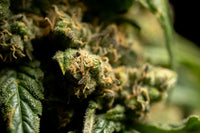
Photo by TeeFarm via Pixabay.
Most advice on how many plants to put in a tent stops at one number: grams. A 2026 paper in Horticulturae does something less common. It changes planting density and the length of vegetative growth together, then tracks cannabinoid content alongside yield.
My read is that this gives home growers a cleaner way to frame the decision. You are trading yield per plant against yield per square foot, and consistency across the canopy is a third measure that deserves a column of its own in your notes. The paper does not hand you a plant count. It shows which two dials interact and which outcome seems to stay put while you turn them.
One caution up front. This was a controlled-environment trial on medicinal cannabis, not a study of home tents. I will separate what probably transfers from what is extrapolation, and I will end with a side-by-side you can run in your own 4x4 next cycle.
Key takeaways
- A 2026 Horticulturae trial found area-based yield rose with density, while 28-day veg gave more flower per plant than 10-day veg.
- Total THC did not differ significantly across densities, veg durations or canopy positions, so the trade is about weight, not potency.
- The trial tested 8, 14 and 18 plants per square metre, far above home practice, so only the pattern transfers to a 4x4.
What the trial tested, and what it left out
The paper is The Impact of Planting Density and Vegetative Duration on Yield Optimization and Cannabinoid Stability in Medicinal Cannabis Under Controlled-Environment Cultivation, in Horticulturae volume 12, issue 5 (May 2026), DOI 10.3390/horticulturae12050619. It is a medicinal-grade, controlled-environment trial, and density is reported in plants per square metre.
Under a 10-day vegetative regime, the authors compared 8, 14 and 18 plants per square metre. A 28-day veg treatment appears in a section on the effect of vegetative duration at 8 plants per square metre.
They measured plant height, stem diameter and internodal length. They counted flowers and measured their diameter and length by canopy position, top and bottom. Dry yield was recorded per plant and per square metre, with top and bottom split out. Total THC, CBD and CBG percentages were also reported by canopy position.
Here is what I could not confirm from the text I read. I do not know whether other densities were run at 28 days, or whether other durations were used. The cultivar, light intensity, pot size and flowering length sit in the full text, and I did not get them. Check the paper's tables before you copy any number from anyone, including me.
Why pair the variables at all? The authors report that plant density influenced yield differently depending on vegetative duration. Choosing a plant count without a veg length, or the reverse, gives you half an answer. That is the habit this paper quietly breaks.
Why the trial's densities do not fit your tent

Scaling the trial's planting densities to a 4x4 ft tent, plant counts rise from about 12 at 8 per m² to 27 at 18 per m², more than doubling the number of plants in the same footprint.
Start with the arithmetic, which is mine and not the paper's. A 4x4 ft tent is about 1.49 square metres. At 8, 14 and 18 plants per square metre, that is roughly 12, 21 and 27 plants.
Nobody I know runs 27 plants in a 4x4. Even the lowest level in the trial is well past typical home practice. The density levels themselves do not transfer, and anyone who tells you the paper proves a number for your tent is overreaching.
The setting differs in other ways too. A commercial-style bench has its own airflow, light distribution and pot size. A tent has a fan, a hood and walls that bounce light, and your hands are on the plants every few days with training. All of that changes what a plant count means.
What probably transfers is direction. In the trial, more plants with short veg gave more yield per area, and longer veg gave more yield per plant. Those are the two dials. How far each one moves in your tent is for you to measure.
This is also why the top and bottom split in the paper matters. When we looked at Fixing Uneven Canopy Growth in a 4x4 Grow Tent, the recurring problem was that crowding amplifies unevenness: some plants race ahead and shade their neighbours. A trial that reports canopy position separately is asking the same question from the other direction.
Yield per plant versus yield per square foot
The paper reports that area-based yield increased as density increased. It also reports that, under the 10-day regime, per-plant yield differed among densities. I am deliberately not quoting per-plant or per-square-metre figures, because I have not verified them against the tables.
The shape of the trade is easy to state. Fewer plants each yield more. More plants each yield less. But the tent is the fixed cost, with its rent, power and lights, so for most home growers square foot is the fairer yardstick.
Now my inference, not the paper's finding. I expect diminishing returns. Past some point, an extra plant adds little weight and adds work, shade and airflow trouble. Where that point sits in a 4x4 under your light is exactly the thing the trial cannot tell you.
Per-plant yield still earns its place in one case. If your genetics are scarce, expensive or slow to replace, the question becomes what each plant returns. That is a seed-count question. A grower running a pack of feminized seeds from a rare cross may rationally accept lower yield per square foot to spend fewer seeds, or keep a mother. The right yardstick depends on what is actually limiting you.
So pick your constraint before you pick your count. If it is space, optimise per square foot. If it is plants, optimise per plant. Writing that down first stops you from judging a run by whichever number looks better afterwards.
Veg time: more flower per plant, same chemistry
The authors report that plants grown for 28 days produced substantially more inflorescence biomass per plant than plants grown for 10 days. The flowers had the same cannabinoid composition. Their conclusion is that vegetative duration drove yield without driving chemistry.
That is a useful split. Veg time looks like a lever on quantity that leaves quality alone.
The practical reading follows. If you run few plants, longer veg is how you fill the tent, because each plant has to cover more ground. If you run many, short veg lets you skip weeks of vegetative growth and still get area-based yield from the head count.
The cost is time. Extra weeks of veg occupy the space and the lights. So compare yield per square foot per week of total cycle, not just per harvest. That is my suggestion, not a measured result, but a heavier harvest that took three more weeks may not beat a lighter one that let you turn the tent around sooner.
Here is the caveat I would not skip. The 28-day comparison was at 8 plants per square metre. From the text I retrieved, I do not know how long veg behaves at higher densities. Crowded plants with long veg may stack up in ways the paper never tested, so treat that corner of the map as blank.
Consistency: the part most advice skips
This is the finding I trust most. Total THC did not differ significantly among planting densities, vegetative durations or canopy positions. The higher area-based yields at high density under short veg did not come with lower THC.
In this trial, then, crowding and short veg did not drag potency down. That is documented, and it is what makes the yield trade easier to reason about: you are mostly choosing weight, not strength.
Now the inference, kept apart. THC held steady in this setting. I would not assume the same for terpenes, which were not in the data I read. I would not assume it for a tent with weaker light at the lower canopy either, since a controlled facility lights its benches far more evenly than most home setups.
The paper tracked top and bottom canopy for flowers, yield and cannabinoids, and a home grower can copy that cheaply. Weigh top and bottom colas separately. If you can, test them separately too.
This echoes Bud Density at Scale: Why Commercial Harvests Underperform, which looked at why scale and uniformity do not always arrive together. A big total with a fat gap between top and bottom is a different harvest from a smaller, even one. Consistency belongs in your records beside the weight.
Running your own side-by-side next cycle
Here is a method that fits a home tent. Every step keeps the comparison fair.
- Use the same tent, light, medium, nutrients and genetics in both runs, from the same seed or clone source.
- Change one variable per run: either plant count or veg days. Hold everything else fixed.
- Pick counts you can actually manage. For example, run a few plants in one cycle and a handful in the next, or keep the count and compare a short veg against a longer one. These are my suggestions, not the paper's treatments.
- Log dry weight per plant, and total dry weight divided by 16 square feet.
- Weigh top and bottom canopy separately.
- Record days from flip to harvest and total days in the tent.
For potency consistency, send top and bottom samples to a lab if one is available near you. Failing that, log smoke, aroma and bud-size differences between canopy positions. It is rough, but a written note beats a memory.
Know what failure looks like. Heavy bottom larf is one sign. Rising humidity or mold risk in a packed canopy is another. The clearest is a bottom-canopy share that grows while total weight does not, which means extra plants are adding shade and work rather than yield. If you see that, you have passed your tent's point of diminishing returns.
The paper does not tell you how many plants to put in a 4x4. It tells you which two dials to turn, density and veg time, and which outcome, potency, probably will not punish you for turning them.
The open question is whether the area-versus-plant trade holds at home-scale densities and under home lighting. The trial cannot answer that. Only your own logged runs, tent against tent, can.
Sources
- The Impact of Planting Density and Vegetative Duration on Yield Optimization and Cannabinoid Stability in Medicinal Cannabis Under Controlled-Environment Cultivation
- Architecture of Cannabis cv. NB140 following inflorescence development....
- The Impact of Planting Density and Vegetative Duration on Yield Optimization and Cannabinoid Stability in Medicinal Cannabis Under Controlled-Environment Cultivation
- Optimizing cultivation density to enhance yield and cannabinoid consistency in medicinal hemp cultivars AC/DC and Charlotte's Angel under greenhouse conditions
- The effects of plant density and duration of vegetative growth phase on agronomic traits of medicinal cannabis (Cannabis sativa L.): A regression analysis
- The effects of plant density and duration of vegetative growth phase on agronomic traits of medicinal cannabis (Cannabis sativa L.): A regression analysis