Grow Tent Kits Compared: What's Included vs. What You'll Need
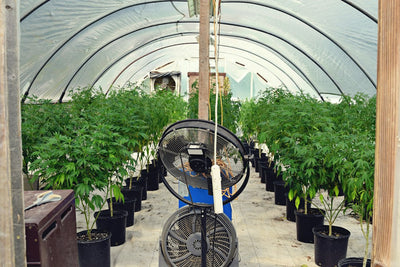
Photo by Erik Mclean via Unsplash.
Open five different grow tent kit listings right now — VIVOSUN, Mars Hydro, Spider Farmer, AC Infinity, Gorilla Grow Tent — and you'll find the same skeleton underneath the marketing copy. A tent, a light, an inline fan, a carbon filter, some ducting, a clip fan. The industry converged on this bundle years ago because it works, and because customers kept making the same expensive mistakes buying components piecemeal. What actually separates a $150 kit from a $400 one isn't a mystery ingredient — it's fabric weight, frame tolerance, and whether the electronics are dumb or smart.
The math on kits versus building your own setup from scratch is straightforward: a complete kit runs 15-25% cheaper than sourcing the same tent, light, fan, filter, and ducting separately, and it sidesteps the single most common rookie error — buying a light rated for a 4x4 footprint and cramming it into a 2x2 tent, or pairing a whisper-quiet fan with a filter that chokes its airflow to nothing. This piece breaks down exactly what ships in a standard kit, what the premium tier actually buys you, where even good kits leave gaps, and what you'll need to source yourself before you ever put a seedling under the light.
What's Actually in a Standard Grow Tent Kit

Photo by Tanha Tamanna Syed via Pexels.
Pull the box open on almost any mid-range kit and the contents read like a checklist that's been copied and refined across the industry for a decade: tent, light, inline fan, carbon filter, ducting, and a small clip-on circulation fan to keep air moving across the canopy. The differences between brands show up in materials and tolerances, not in what's present.
Take the Spider Farmer SF2000 2x4 kit as a concrete example. It ships with a 1680D Oxford-fabric tent with a high-reflective Mylar interior, heavy-duty zippers that don't jam after the fortieth open-and-close cycle, and a leak-proof floor tray that actually holds water if you overflow a saucer. Paired with it is a 4-inch inline fan rated at 205 CFM and a matched carbon filter — sized specifically so the fan isn't fighting the filter's static pressure. VIVOSUN's 2x2 kit takes a similar approach but leans into accessories: 25 feet of flexible ducting, fabric grow bags, trellis netting, and a mechanical timer, all pitched as a two-plant system that fills the tent once the plants reach finishing height.
Where kits actually diverge is fabric and frame. 1680D Oxford canvas is standard and holds up fine for most home growers, but 2000D canvas — thicker, more abrasion-resistant, better at blocking light leaks at the seams — shows up in the pricier tents and matters more than people expect once you're brushing against tent walls weekly during maintenance. Frame poles and corner connectors follow the same pattern: thin-wall steel poles flex under a loaded light bar and scrog netting, thicker poles don't.
The real value of buying a kit rather than assembling one isn't the discount, though the discount is real. It's that the manufacturer has already solved the sizing problem for you — tent footprint matched to the light's actual coverage area, fan CFM matched to tent volume and ducting length. A huge share of DIY grow problems trace back to exactly this kind of mismatch: a light too weak for the footprint, or a fan too small to exhaust the heat that light produces.
Premium Kits: The Extras That Separate a $150 Kit from a $400 One

Photo by XRP Relic via Unsplash.
Spend more and you're mostly paying for two things: tougher materials and smarter electronics. Neither is strictly necessary for a first grow, but both solve real problems once you've run a tent for a season or two.
Premium kits tend to throw in the accessories that ordinarily eat into your first-month budget as afterthought purchases — fabric grow bags, trellis netting for scrog training, a decent pair of pruning shears, rope hangers for the light, sometimes even a roll of aluminum duct tape for sealing ducting joints. None of this is expensive individually, but it adds up to real money and real time saved not making three separate Amazon orders in your first week.
Gorilla Grow Tent has built its premium positioning almost entirely around materials rather than electronics — the thickest fabric and strongest frame components in the category, aimed at growers who care more about a tent surviving five years of seasonal teardown and setup than about app connectivity. AC Infinity takes the opposite bet and has largely defined what a premium kit means in this space: 2000D canvas construction paired with controllers that use temperature and humidity readings to automatically adjust inline fan speed in real time, rather than making you guess at a manual dial setting. Their CLOUDLAB 642 frame is rated to hold roughly 70 kg — about 154 lbs — which sounds like overkill until you're hanging a heavy quantum-board light, a full scrog net, and the weight of a mature canopy pulling down on that same structure.
Mars Hydro sits comfortably in the budget-to-mid tier, using 1680D tent fabric across most of its lineup, and it's worth saying plainly: that fabric still does the job for a first-time grower who isn't going to notice the difference between 1680D and 2000D in year one. The gap only becomes meaningful with heavy use or a harsher climate.
One honest caveat worth flagging: most of the brand-ranking content you'll find claiming to have tested every kit on the market for 2026 is vendor or affiliate content dressed up as independent review. Read it for the spec sheets, not the verdict.
The Gaps: What Even Good Kits Leave Out

Photo by FOX ^.ᆽ.^= ∫ via Pexels.
Even a well-assembled kit leaves gaps, and some of those gaps are packaging errors rather than design choices. Spider Farmer shipments in particular have generated a steady stream of complaints about missing parts — a fan clamp not in the box, a bag of hardware short a few screws. Before you assume a component was never included, check the contents against the printed manual's parts list; a surprising number of missing-item complaints turn out to be a bag taped to the inside of the tent's carry case rather than an actual shipping error.
Some budget kits cut corners in ways that are more structural. iMeshbean's entry-level bundles, for instance, commonly ship without pre-cut ventilation ports, which means you're cutting your own holes through the tent fabric for ducting passthrough — not difficult, but not something a first-time buyer expects to be doing with a utility knife on day one.
Then there are the omissions that show up across nearly every price tier, kit after kit, because manufacturers treat them as consumables rather than core equipment. A pH meter is almost never in the box, and it's genuinely non-negotiable — feeding at the wrong pH locks out nutrient uptake regardless of how good your soil or your feed schedule is, and you cannot diagnose that problem without a meter. Budget a decent digital one; the $8 pen-style meters drift out of calibration within weeks and will lie to you with total confidence.
A digital hygrometer to track temperature and relative humidity is another frequent absence, especially in stripped-down bundles. Running a tent without one means flying blind on the two variables that determine mold risk, transpiration rate, and how hard your plants are working — don't do it.
Heavy-duty rope ratchets, which let you raise the light as plants stretch through veg without unclipping and reclipping a fixed hanger every few days, are commonly missing on the cheapest kits. And a programmable timer for clean 18/6 vegetative and 12/12 flowering light cycles should be treated as mandatory equipment, even if that means a $15 add-on purchase — manually flipping a light switch every day is how photoperiod strains get stressed into early flowering or revert unpredictably.
Beyond the Kit: Dehumidifiers, CO2, and When You've Outgrown the Box

Photo by CRYSTALWEED cannabis via Unsplash.
Once the tent is running, a second wave of equipment decisions shows up — not because the kit failed you, but because these are problems that only appear once plants are established and the canopy starts demanding more from the environment.
Dehumidifiers are almost never bundled with any kit at any price point, and for good reason — humidity needs vary wildly by climate and by grow stage, so a one-size solution doesn't exist. But once relative humidity inside the tent climbs above 65% during late flower, add one immediately. Dense, resinous colas sitting in humid air for weeks is exactly the condition that produces bud rot, and by the time you can see it on a cola, you've usually already lost more than one bud site.
CO2 enrichment gets recommended constantly online, and just as often misapplied. It only pays for itself when canopy-level light intensity exceeds roughly 600-800 µmol/m²/s PPFD — the range you'd see under double-ended HPS, ceramic metal halide, or serious high-output LED fixtures. At that intensity, photosynthesis becomes limited by available CO2 rather than by light, and supplementation genuinely accelerates growth. Under a basic T5 fixture or an entry-level LED putting out a few hundred µmol/m²/s, there simply isn't enough photosynthetic demand for extra CO2 to matter — save the money and the equipment complexity for when your lighting actually justifies it.
Airflow is the other quiet upgrade worth making in tents 4x4 and larger: the single clip fan included in most kits does fine in a 2x2, but a larger canopy develops dead zones and humidity pockets that a second oscillating fan clears out far more effectively than repositioning one fan back and forth.
All of this hardware, though, is in service of a plant — and it's worth saying plainly that genetics set the ceiling for what any of this equipment can accomplish. Vigorous, well-bred seed stock responds to a well-dialed environment with real vigor and stability; weak or inconsistent genetics won't reward you no matter how precisely you control PPFD and VPD. Seedtiva's seed selection is built with exactly that pairing in mind — good hardware and good genetics working together, not one compensating for the other.
Kit vs. A La Carte: Doing the Cost Math

Photo by Pixabay via Pexels.
The 15-25% savings figure for complete kits versus a la carte buying shows up consistently across current buying guides, and it holds up under scrutiny once you account for what a la carte buyers typically miss: shipping costs on five separate packages, and the near-certainty of at least one return when a component turns out to be the wrong size.
The real hidden cost of building your own setup isn't price, it's compatibility risk. A tent sized for a 2x4 footprint paired with a light rated for 3x3 coverage either wastes light at the edges or runs hot in the center. An undersized fan paired with a high-resistance carbon filter moves less air than its CFM rating suggests, and you won't notice until the tent's climate starts drifting during a hot week. These aren't hypothetical failure modes — they're the most common reasons new growers post frustrated troubleshooting threads three weeks into their first grow.
A useful rule of thumb for fan sizing, whether you're buying a kit or building one: your fan's CFM rating should be able to move the tent's total air volume at least once per minute, then adjust that figure downward to account for ducting length and the static pressure resistance added by a carbon filter — each additional foot of ducting and each filter stage effectively reduces real-world CFM below the fan's rated spec. A 4x4x7 tent has roughly 190 cubic feet of volume; a fan rated at 200 CFM sounds adequate until you've added eight feet of ducting and a filter, at which point you're closer to 150 CFM of real performance.
For a first grow, a kit removes this entire category of guesswork, which is worth paying for. For a second or third grow, the better move is usually upgrading individual components — a stronger light, a quieter and more efficient fan — rather than replacing the whole kit wholesale, since the tent and ducting rarely need changing once they're dialed in.
Whichever route you take, budget for the non-kit essentials before you compare prices: a pH meter, a spare hygrometer, a timer, rope ratchets. Only once those are priced in are you comparing true apples to apples.
A grow tent kit gets you roughly 80% of the way to a functional setup, and that 80% is genuinely well-solved — tent, light, fan, and filter arriving pre-matched in size and capacity is worth the sticker price on its own. The remaining 20% is smaller in dollar terms but larger in consequence: a pH meter, a hygrometer, a reliable timer, and eventually a dehumidifier once late flower humidity climbs. Skip those and you're running expensive equipment blind.
Buy the kit sized correctly for your space and light needs first — that's the decision with the least room for improvisation. After that, treat every additional purchase as a response to a problem you've actually observed in your own tent, not a preemptive purchase because a forum thread mentioned it. CO2 supplementation before your lighting justifies it, a second dehumidifier before humidity has actually climbed — these are wasted money solving problems you don't have yet.
None of this hardware, at any price point, compensates for weak seed stock or a tent nobody's checking on daily. Good equipment narrows the margin for error considerably, but it doesn't replace attentive daily monitoring, and it doesn't replace starting with genetics that were bred to perform. Get the kit right, fill the gaps deliberately, and put good seeds under the light — in that order.