Home Grow Kits vs. Illicit Bud: The Real Safety Gap
Photo by Pexels via Pixabay.
Introduction
The debate over cannabis legalization has, for years, revolved around a handful of familiar talking points: criminal justice reform, tax revenue, personal freedom, and the vague, often unsubstantiated claim that legal markets are "safer." But safety, in the context of a product millions of Americans consume weekly, is not a feeling. It's not a marketing slogan on a dispensary jar or a reassurance from a dealer who seems trustworthy enough. Safety is data. It's lab results. It's the measurable, chemical reality of what actually ends up in your lungs, your bloodstream, and your watershed. And when you look at that data—really look at it—the picture that emerges is stark enough to challenge almost every assumption about where your cannabis comes from and what it's doing to you and the world around you.
This article isn't about the moral case for or against prohibition. It's about the physical, chemical, and ecological consequences of where you choose to source your flower. Across multiple studies, enforcement reports, and investigative deep dives, a single pattern repeats with numbing consistency: illicit cannabis is not just untaxed or unlicensed—it is, in measurable ways, dangerous. It is contaminated with pesticides that turn toxic when burned, heavy metals that accumulate in tissue, and environmental destruction that doesn't make it onto any receipt. Meanwhile, a patchwork of state laws governs whether you can simply grow your own, cutting out the entire problematic supply chain. The choice, as the evidence presents it, is not between legal and illegal. It is between known and unknown, controlled and uncontrolled, transparent and opaque. And once you've seen the numbers, it's hard to unsee them.
What's Actually in Illicit Bud: The Pesticide and Heavy Metal Data

Photo by Pavel Danilyuk via Pexels.
Let's start with the number that should stop anyone mid-toke: a study affiliated with Health Canada ran licensed and illicit cannabis flower through a 327-pesticide screening panel, the kind of lab work that catches everything from systemic fungicides to organophosphate insecticides at parts-per-billion levels. Licensed, regulated inflorescence came back with a 6% positivity rate. Only two residues turned up at all across the entire licensed sample set -- myclobutanil and dichlobenil -- and both at trace concentrations well under any established threshold. That's what a functioning regulatory system looks like: not zero pesticides ever touching a plant during cultivation, but a supply chain with testing gates that actually catch contaminated batches before they reach a consumer.
The illicit samples told a completely different story. Same panel, same lab methodology, 92% positivity rate. Researchers identified 23 unique pesticide active ingredients across the illicit set, and the average contaminated sample wasn't carrying just one residue -- it was carrying 3.7 different pesticides simultaneously. That's not a rounding error or an occasional bad batch slipping through; that's a supply chain where multi-pesticide contamination is closer to the norm than the exception. A follow-up version of this research, posted December 3, 2025, essentially confirmed the pattern held up under further scrutiny: 94% of illicit samples contained pesticide residues, averaging 3.4 compounds per sample across 24 unique active ingredients identified in total. Two independent passes at the data, two years apart in effect, landing on nearly identical numbers. This isn't a fluke result.
Heavy metals followed the same split. Testing across both product streams found illicit samples running higher for arsenic, cadmium, lead, and mercury -- the four heavy metals that show up on basically every cannabis compliance panel because cannabis is a known bioaccumulator, meaning it pulls heavy metals out of contaminated soil, water, or cheap nutrient salts and concentrates them in the tissue you eventually combust and inhale. Licensed product actually ran higher for chromium specifically, a reminder that no supply chain is spotless, but the overall metal burden skewed hard toward the unregulated side.
The myclobutanil detail matters more than it might look at first glance. Myclobutanil is a systemic fungicide, effective against powdery mildew, and legal for use on plenty of agricultural crops that get eaten or juiced. Cannabis isn't eaten or juiced -- it's combusted. When myclobutanil and structurally similar triazole fungicides burn, they break down and release hydrogen cyanide gas. That's not a theoretical toxicology footnote; it's a well-documented combustion byproduct, which is exactly why myclobutanil is banned outright for cannabis cultivation in essentially every legal market that regulates the plant, even in places where it's perfectly fine to spray on grapes or almonds.
Growing your own from a known seed source closes that entire question. You know what touched the plant because you're the one who applied it, if anything at all -- no unknown pesticide stack, no guessing what the grower upstream sprayed to save a crop from mites three weeks before harvest. Quality genetics from a reputable seed bank are step one; the discipline you apply from seed to cure is what actually determines what ends up in your lungs.
Abandoned Grows Are Poisoning Public Land

Photo by Marek Piwnicki via Pexels.
Walk into a raided grow site in the Shasta-Trinity National Forest and the plants themselves are almost beside the point. What's left behind is the story: coils of black irrigation line snaking between oaks, propane canisters rusting into the duff, and pesticide sprayers just sitting there, half-full, exactly where whoever mixed the batch set them down before running. A joint CalMatters/AP investigation published Feb. 9, 2026 walked through several of these sites and found the same pattern over and over -- growers who trespassed onto public land, dosed the soil and water with whatever would kill pests fastest and cheapest, then abandoned the entire operation the moment it got too risky or too picked-over to bother finishing.
Greta Wengert, an ecologist with the Integral Ecology Research Center who has spent years surveying these sites, described the discarded sprayers to the reporters in blunt terms: little death bombs, waiting for any wildlife that is going to investigate. That's not a rhetorical flourish. A fisher or a black bear cub doesn't know the difference between a leaking sprayer and a puddle of runoff -- it just smells something and licks it. Lab tests on residue pulled from hillside sprayers at these abandoned sites turned up a chemical class that includes carbofuran, a carbamate pesticide banned in the U.S. for exactly this reason: it's potent enough that a dose the size of a teaspoon can kill a black bear. Illegal grows have used it for years specifically because it wipes out rodents and deer fast, with no regard for what else eats the bait or drinks the runoff.
Scale that up and the numbers get genuinely hard to process. Nonprofit tallies cited in the CalMatters reporting put the count at nearly 7,000 abandoned grow sites on California public lands alone -- not raided-and-cleaned sites, but ones still sitting there, leaching chemicals into watersheds that feed rivers, reservoirs, and in some cases municipal water supplies. The U.S. Forest Service has acknowledged it doesn't have the funding or staff to remediate them at any real pace, which means most of these sites just weather in place for years, doing damage the entire time.
A California Department of Fish and Wildlife operation from September 2025 makes the pattern concrete. Officers found cannabis planted directly among a stand of western Joshua trees -- a species already under state protection -- with a container of rodenticide left sitting in plain view nearby. CDFW estimated the roughly 21,000 plants eradicated at that one site would have consumed as much as 9.5 million gallons of water, pulled straight from a landscape that can't spare it.
None of that shows up on a dispensary receipt, legal or otherwise, and none of it shows up on a random street-corner bag either. It's the invisible line item behind illicit cannabis: dead wildlife, poisoned creeks, drained aquifers, all so the plant could be grown somewhere nobody was looking. A seed packet and a grow tent in your own spare room carry none of that liability.
The Enforcement Numbers Show This Market Isn't Slowing Down

Photo by Selvin Esteban via Pexels.
Numbers make the case better than any argument about principle ever could. Governor Newsom's office put out figures for enforcement activity between April and June 2026, and they're worth sitting with: over 63,000 pounds of illegal cannabis seized in a single quarter, valued at more than $104 million, plus nearly 90,000 plants pulled out of illicit grow sites. That's not a shrinking industry getting mopped up on its way out the door. That's an active, well-funded market that state and local task forces are still chasing at scale, three-plus years after full adult-use legalization was supposed to make the black market obsolete.
What gets less attention than the pounds and dollars is what came with them. Those same operations recovered 17 firearms and resulted in 24 arrests. That ratio matters. This isn't a story about hobbyists with a few extra plants in a backyard getting swept up in a dragnet — it's armed operations, organized enough to warrant coordinated raids, embedded in a supply chain that has every incentive to protect its product with force rather than paperwork. When you buy from an unlicensed source, you don't get to pick which version of that supply chain your bud came from.
Then there's the chemical side, which is arguably scarier than the guns. During this same enforcement window, a raid in Los Angeles County turned up methamidophos at two separate cultivation sites. Methamidophos is an organophosphate pesticide banned for use on cannabis and restricted or prohibited outright in most legal contexts because of its acute toxicity — it's absorbed through skin and lungs, not just ingestion, which makes it a real hazard for anyone smoking or vaping flower grown with it. Nobody buying a bag off an unlicensed source has any way of knowing whether their product came from a site like that. There's no lab result to check. There's no license number to look up. You're trusting the word of someone who, by definition, is operating outside every rule designed to catch exactly this kind of contamination.
Zoom out further and the pattern holds. Since 2022, California has seized and destroyed more than 841,000 pounds of illicit cannabis, worth over $1.3 billion. That's not one bad quarter or one aggressive task force having a moment — that's a sustained, years-long enforcement effort against a market that keeps regenerating because demand for cheap, untested product hasn't gone anywhere. Every one of those pounds was grown with inputs nobody verified, handled by people nobody vetted, and moved through a chain with zero testing requirements at any point. Buying into that market — even passively, even without meaning to support anything — means funding the exact system these numbers describe.
Where Home Grow Is Actually Legal in 2026

Photo by Tom Jur via Unsplash.
Legalization and the right to grow your own plant are not the same thing, and the gap between them is bigger than most people assume. As of 2026, only 25 markets in the U.S. -- 24 states plus D.C. -- actually permit home cultivation. That's roughly 61% of the jurisdictions that have legalized cannabis in some form. Do the math the other way and it's a striking figure: nearly four in ten legal cannabis markets will happily sell you a jar of flower at a licensed dispensary but will not let you put a seed in a pot of soil at home.
Delaware, New Jersey, and Washington are the clearest examples of this split. All three run active adult-use retail markets, with dispensaries doing steady business and tax revenue flowing to state coffers, yet home cultivation remains flatly illegal in all three. Illinois takes a middle path: home grow is legal, but only for registered medical patients, so recreational adult consumers there are stuck buying everything from a dispensary shelf. If you've legally purchased weed in one of these states and assumed that meant you could also legally grow it, you'd be wrong, and it's a mistake worth avoiding before you ever click buy on a pack of seeds.
Washington is worth watching closely right now. A bill introduced in January 2026 would legalize home cultivation for the first time, allowing adults to grow up to six plants per household. It's a meaningful proposal in a state that has run a mature commercial market since 2014 while still criminalizing the one thing that would let patients and budget-conscious consumers control their own supply. But it's facing real resistance -- law enforcement associations and a number of city governments have pushed back, citing concerns about diversion, code enforcement, and local zoning. Whether it passes this session or gets watered down or shelved is genuinely uncertain, which is exactly why anyone in Washington should treat home grow as still illegal until it's signed into law, not before.
This state-by-state patchwork means you cannot treat home grow as a settled national right the way you might treat, say, buying beer. Plant counts range from two to a dozen or more per household depending on the state. Some states cap total plants per residence regardless of how many adults live there; others count per-person. Some require indoor cultivation only, in a locked, enclosed space out of public view; others allow outdoor grows with fencing requirements. A few, like New Mexico and Michigan, are notably permissive. Before you order seeds or build out a tent, check your specific state statute and your city or county ordinance -- HOA rules and local zoning can add another layer of restriction even where state law is generous.
Where cultivation is legal, though, the economics tilt hard in favor of growing your own. A basic setup -- a decent tent, a few packs of quality seeds, soil, and a competent LED light -- runs a few hundred dollars as a one-time cost and can produce multiple harvests a year. Compare that to years of paying inflated, unregulated street prices for product of unknown origin, and the math, plus the safety upside, isn't close.
What Growing Your Own Actually Controls

Photo by bhossfeld via Pixabay.
Start with the seed itself, because everything downstream traces back to it. When you buy from an unlabeled bag off the street or a sketchy delivery service, you have no idea what genetics you're actually holding. Was it flushed properly before harvest? Grown in soil dosed with who-knows-what? Cured for two weeks in a garbage bag to move product faster? There's no way to know. When you start from quality, well-bred seeds -- Seedtiva's stock included -- you know exactly what strain you're growing, its lineage, and what to expect from it in terms of growth pattern, flowering time, and cannabinoid profile. That's not a small thing. It's the difference between growing a known quantity and gambling on a mystery.
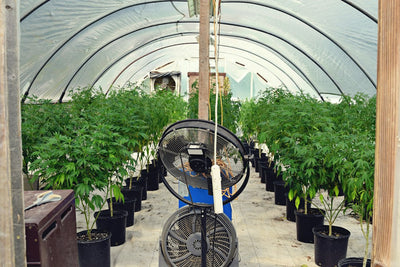
From that seed forward, you control every input that touches the plant. Soil or coco or hydro, which nutrient line you feed, whether your water comes filtered or straight from the tap, and critically, whether pesticides go anywhere near your grow. Most home growers I know run integrated pest management: yellow sticky traps, predatory mites if things get bad, maybe a neem oil spray during veg and nothing after the switch to flower. Compare that to commercial illicit cultivation, where growers facing spider mites or powdery mildew on a tight timeline sometimes reach for whatever kills fastest, including products never approved for consumable crops, applied right up until harvest. You'd never know by looking at the bud. You would know if you grew it yourself, because you'd have made every one of those calls.
That transparency doesn't stop at harvest, either. Homegrown flower can go to an independent lab for a full panel -- potency, pesticide screen, microbials, heavy metals -- for real peace of mind. Illicit bud has no such option; there's no chain of custody to trace back, no cultivator to hold accountable, nothing to test against a baseline. You're simply trusting a stranger.
None of this guarantees a flawless crop. Your climate, your setup, and the genetics you start with all still shape the outcome, and a bad month of humidity swings can still cause bud rot regardless of how careful you were. What growing your own guarantees isn't perfection -- it's transparency. A simple 2x4 or 4x4 tent with a decent LED and four to six plants can realistically cover a household's personal use for a year, often for less than a few months of illicit-market prices. And nobody's hands but yours ever touched it between seed and jar.
Conclusion
The core argument here isn't that all legal cannabis is pristine or that every illicit grow is a toxic wasteland. Licensed markets have their own issues—contamination happens, remediation falls short, and regulatory bodies are perpetually underfunded. And certainly, there are small-scale, conscientious black-market growers who take pride in their craft and would never spray their plants with anything dangerous. But the data doesn't describe exceptions. It describes averages. When 94% of illicit samples in a major study come back carrying multiple pesticides, when illegal grows poison public land by the thousands, and when enforcement seizures reveal armed operations dousing plants with banned organophosphates, you are no longer talking about outliers. You are talking about a system.
That system persists for one simple reason: price. Illicit cannabis is cheaper, often significantly, than its regulated counterpart. For a consumer on a budget, that price gap is persuasive. But price is not the same thing as value. What you save in dollars at the point of purchase, you pay for elsewhere—in unknown chemical exposure, in environmental damage that takes decades to remediate, and in the funding of an underground economy that answers to no one. A discount on an ounce is not worth hydrogen cyanide from burning myclobutanil. It's not worth lead and arsenic accumulating in your system. And it's certainly not worth the ecological wreckage left behind in national forests, where fishers, bears, and watersheds pay the cost for someone else's shortcut.
Growing your own, where the law allows it, closes every one of those gaps. It's not a magic bullet—it requires effort, equipment, and a willingness to learn. But it hands you back control that no dispensary or dealer can offer: control over inputs, control over timing, control over transparency. You know what genetics you planted, what nutrients you fed, and whether any pesticide ever touched the plant. You can test the final product if you want to, or trust the process you witnessed from seed to jar. And you can do it for less money than most people spend on illicit flower in a single year, with none of the guilt of funding a system that destroys public land and leaves poison in its wake.
The question, then, isn't really about legality. It's about agency. In states that allow home cultivation, you have the agency to opt out of the entire mess. In states that don't, you're stuck choosing between two imperfect options: a regulated market that's flawed but testable, or an illicit one that's cheaper but entirely opaque. That's not a satisfying answer, but it's an honest one. The data doesn't tell you what to do—it just tells you what's actually in the bag. What you do with that information is yours to decide. But at least now, you're deciding with your eyes open.
Sources
- Cannabis Pesticide Contamination: Why Legal Markets Help But Don't Solve the Problem | The Cannigma
- Pick Your Poison: Pesticide Contamination in Cannabis Reveals Longstanding Gaps in Safety - Beyond Pesticides Daily News Blog
- Quantification of THC, heavy metals, pesticides, mycotoxins, and microbial contaminants in cannabis inflorescence reveals higher levels in illicit samples than in the licensed Canadian market | Sciety
- Cannabis Contamination: Pesticides, Mycotoxins, Clinical Risk
- Pesticides in Cannabis: The Need for Evidence to Inform Policy and Protect Patients - Clinical Therapeutics