Humboldt's Hidden Water Crisis: Illegal Grow Wastewater & Rural Wells
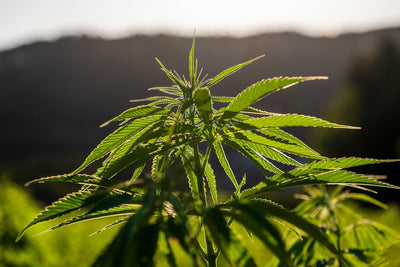
Photo by Vedrana Filipović via Unsplash.
Since 2016, Humboldt County has eliminated more than 1,400 unpermitted cannabis cultivation sites. That's a number county officials cite often, and it sounds like progress. Then October 2026 happens: the Sheriff's Marijuana Enforcement Team moves on properties outside Alderpoint and Garberville and pulls more than 3,000 plants out of the ground in a two-day operation. Seven years of enforcement, and the raids still look the same size as they did in 2017.
The plant count is the part that makes the news. What doesn't make the news is what's sitting in the ground after the deputies and the news crews leave. Grow sites don't just grow plants -- they generate wastewater, and when an operation is unpermitted, that wastewater was never contained, tested, or disposed of by anyone following a protocol. It was dumped, pooled, or left in tanks that are now rusting through, usually on a hillside somewhere in the Mattole, Mad River, or Eel River watersheds.
This matters because Humboldt County is not a place with municipal water treatment covering every household. It's a place where rural families pull their drinking water from private wells sunk into the same fractured bedrock and shallow alluvial soil that a grow site's runoff moves through. Downhill and downstream from an abandoned operation isn't an abstraction here -- it's often a specific neighbor's kitchen tap, a half mile or a mile away. What follows is a look at what's actually in that wastewater, how it gets from a grow site to a well, and why the economics of the legal cannabis market are currently pushing more of this risk into the unregulated space rather than out of it.
What's Actually in Grow Op Wastewater

Photo via Pexels.
A 2023 State Water Resources Control Board study on cannabis cultivation wastewater gives a useful baseline for what's actually in this stuff, because it looked at licensed operations -- the ones doing things closest to right. The study found cultivation wastewater is a mix of irrigation runoff carrying dissolved nutrients, reverse osmosis filtration reject water loaded with concentrated salts and minerals, decontamination runoff from cleaning grow equipment and surfaces, and a general category of cultivation waste liquids that includes leftover nutrient solution and tank rinsate. None of that is especially exotic on its own. The problem is volume and concentration, and what the study found permitted operators actually doing with it.
Even licensed, inspected cultivators were caught disposing of this wastewater badly: dumping it into septic systems never designed to handle agricultural chemical loads, depositing it directly onto land, routing it into landscaping irrigation, or discharging it straight into irrigation ditches and ephemeral streams that run dry most of the year and carry whatever's in them the rest. These are operators with permits to lose, inspectors who show up, and disposal requirements on paper. If that's the baseline under regulation, unpermitted sites start from a lower floor -- there's no containment requirement to ignore, no testing regime to fail, no paper trail at all.
What's found on abandoned unpermitted sites is often worse than runoff. A 2021 raid referenced in a June 2026 EcoNews Report writeup turned up carbofuran on site, along with other dangerous chemicals. Carbofuran is a carbamate pesticide so toxic to birds, aquatic life, and mammals that it's been banned from agricultural use for years -- its old formulations could kill a bird that ate a single treated seed. Finding it at a grow site means someone brought in a product they knew they couldn't buy legally for crop protection, used it anyway, and then walked away. Add to that the fertilizer stockpiles, petroleum products for generators, and poorly built storage ponds and reservoirs left with no maintenance, and an abandoned site becomes less a dormant piece of land and more a slow-motion hazardous materials problem waiting on the next storm.
How Contaminants Reach a Rural Well

Photo via Pexels.
Humboldt's rural geography is exactly the wrong setup for this kind of contamination. Most properties outside the incorporated towns run on private wells drawing from shallow groundwater, not a municipal system with treatment and testing built in. There's no filtration barrier, no utility inspector, no chlorination step between a hillside grow site and a household tap. If something gets into the groundwater upslope, it has a fairly direct path to whoever's drinking it downslope.
Fertilizer runoff is the slow, steady contributor. Nitrate and phosphorus loading from over-applied cultivation fertilizer moves through the fractured bedrock and alluvial soils that make up much of the region's subsurface geology. Fractured rock doesn't filter the way a few feet of packed clay would -- it channels water (and whatever's dissolved in it) along cracks and fissures that can carry contaminants a surprising distance before they show up in a well's screened interval. Nitrate contamination in particular is a known rural well problem broadly, and cannabis cultivation fertilizer use adds another significant loading source in a county already thick with small-scale agriculture.
Pesticide residues behave differently but are arguably more concerning. Something like carbofuran doesn't break down quickly in soil -- it can persist across multiple rainy seasons, with each winter's rain pushing a little more of it down toward the water table. That's a multi-year contamination event from a single season of misuse, not something that flushes out after one storm.
Then there's the sudden-release risk. Failing ponds and improperly lined reservoirs built to store diverted water or wastewater don't always leak gradually -- after a heavy rain event, saturated and poorly engineered berms can give way all at once, releasing months of stored wastewater into a drainage in a single pulse rather than a slow trickle a watershed might absorb. Layer on top of all this the effect of diverted or over-pumped groundwater, the kind documented in the Sweet case, and you get lowered water tables that concentrate whatever contaminants are present into a smaller remaining volume of water -- making an already bad problem measurably worse.
The Enforcement Numbers Don't Tell the Whole Story
Humboldt County's enforcement numbers are genuinely large. More than 1,200 unpermitted operations have been targeted, most abated, and the county counts over 1,400 cultivation sites eliminated since the 2016 baseline. Those are real operations shut down, real plants destroyed, real resources committed by the Sheriff's Office and partner agencies.
And the raids keep coming at a pace that suggests the underlying activity hasn't actually dropped off much. The October 5-6, 2026 Humboldt County Sheriff's Marijuana Enforcement Team operation around Alderpoint and Garberville destroyed more than 3,000 plants, with support from California Fish and Wildlife and the Department of Cannabis Control. It wasn't an outlier -- an earlier MET raid on July 16, 2026 on Ware Ranch Road in Alderpoint followed the identical pattern: same multi-agency task force structure, same rural southern Humboldt geography, same plant-eradication focus.
Here's the gap that doesn't show up in the press release: destroying plants is not remediation. A cultivation warrant authorizes law enforcement to seize and eradicate an illegal crop and often the immediate cultivation infrastructure tied to growing it. It does not typically authorize, fund, or require hazmat-level cleanup of fuel tanks, pesticide containers, fertilizer stockpiles, or contaminated soil and water left on site. Chemical storage and wastewater ponds are rarely within the scope of what a warrant is written to address, and rarely within the budget allocated to execute it.
So the metric that gets reported -- plants destroyed -- is a bust metric. It tells you an operation got shut down on a given day. It tells you nothing about whether the tanks on that property were pumped and hauled off, whether the soil was tested, or whether the pond that's been feeding a nearby creek all season got drained safely or just left to fail on its own schedule. For the neighboring family on a well, the day of the raid is almost irrelevant. What matters is what's still sitting on that hillside a year later, and that part of the story doesn't get a press release.
The Sweet Case and What Real Accountability Looks Like

Photo by Martin Škeřík via Pexels.
If you want to see what real accountability can look like, the case against grower Joshua Sweet is the one to know. Operating as Shadow Light Ranch LLC and The Hills LLC, Sweet illegally diverted roughly 16.2 acre-feet of water into storage reservoirs between 2017 and 2020 -- enough water, by state estimates, to supply around 49 households for a full year. That's not a rounding error in a watershed already stressed by drought and competing agricultural demand.
The case settled for $750,000, with $500,000 of that figure standing as the largest water rights violation penalty ever levied in California. It took sustained documentation -- years of monitoring, water rights analysis, and legal work -- to build a case that specific and that large against a single operator. That's the honest caveat here: this is what it takes to hold one grower accountable, out of a county with a history numbering in the thousands of unpermitted sites.
The Sweet settlement isn't the only live legal pressure point. A lawsuit filed by Friends of the Eel River around August 2025 is still pending, arguing that Humboldt County has a legal obligation to actually regulate groundwater pumping in the Eel River Valley rather than leaving it effectively unmonitored. The suit targets a structural gap: California's groundwater law doesn't automatically catch unpermitted agricultural pumping the way it might catch a municipal utility's withdrawals, and the county's own attorney has acknowledged that it cannot fully account for the likely scale of illegal water takings tied to unpermitted grow sites across the county.
That admission is worth sitting with. It's not a claim that the problem is small and hard to prove -- it's an acknowledgment that nobody actually knows the full size of it, because the monitoring infrastructure needed to know doesn't exist at the scale the problem requires. One $750,000 settlement is real progress against one bad actor. It is not, by the county's own account, a sign that the broader water diversion and contamination problem is under control.
Why Market Pressure Is Making This Worse, Not Better
Here's the part of this story that tends to get missed: the legal market's own regulatory squeeze is part of what's driving wastewater risk in the unregulated space. The Department of Cannabis Control ended California's provisional licensing program in January 2026, leaving somewhere close to 8,000 active annual licenses statewide. Annual licensing comes with real compliance costs that provisional status let operators defer -- and wastewater handling is one of the expensive pieces. A licensed cultivation operation is required to build and maintain containment systems, run water testing, and use permitted disposal pathways for everything from RO reject water to decon runoff. That infrastructure isn't cheap to install or operate.
Meanwhile, wholesale cannabis prices in California's legal market have stayed depressed for years, squeezed by oversupply and a legal price point that still competes against an untaxed illicit market. Put those two pressures together -- rising compliance costs on one side, flat or falling revenue on the other -- and the economic incentive tilts in a predictable direction: either skip licensing entirely, or abandon a licensed operation rather than keep paying for compliant wastewater infrastructure that no longer pencils out.
That's the perverse cycle at the center of this whole issue. Tighter regulation on the legal market is a reasonable policy response to real problems, but without price support or compliance cost relief, it pushes cultivation activity toward the unregulated space precisely because that space has no containment requirements to fund. The wastewater problem doesn't shrink when the legal market tightens -- it migrates to where there's even less oversight than before.
For growers trying to stay on the right side of this, the lesson runs further upstream than wastewater plumbing. Starting a season with clean, well-bred genetics -- the kind Seedtiva works to supply -- reduces crop loss, disease pressure, and the pest problems that tempt growers toward products like carbofuran in the first place. A healthier crop needs fewer rescue inputs. Less rescue chemistry means less hazardous waste sitting in a tank at the end of the season, and less temptation to cut corners on how it gets handled.
Plant counts and raid tallies make for clean press releases: a number goes up, an agency looks effective, a news cycle closes. None of that tells a family on a well a half mile from a former grow site whether their water is safe to drink. That's a different question, requiring a different kind of measurement -- groundwater testing, soil sampling, long-term monitoring -- and it's not the question current enforcement is built to answer.
Real fixes here look less like search warrants and more like remediation funding: money and staffing to actually pump out failing tanks, test soil and well water near former grow sites, and track contaminant levels over the years it takes pesticides like carbofuran to work their way out of a watershed. Right now, neither the county's budget nor state law fully provides for that work. The Sweet settlement and the Friends of the Eel River lawsuit show the legal tools exist to push in that direction, but they're being applied case by case against a problem the county's own attorney admits it can't fully size up.
None of this is an argument against cultivation -- it's an argument for doing it in a way that doesn't leave a chemical legacy on a hillside for someone else to inherit. Legitimate growers, licensed or working toward it, have every reason to want this fixed: clean water management protects the land they're farming, and a legal market that isn't constantly undercut by unregulated contamination risk and bad press is a market worth staying in for the long term. Quality genetics and careful cultivation from the start are a small piece of that, but they're the piece every grower actually controls.
Sources
- 1
- Humboldt Cannabis Grower to Pay $750,000 for Violating State Water, Wildlife Regulations
- Marijuana Enforcement Team Operation • County of Humboldt
- Humboldt County Cannabis Grower to Pay $750,000 for State Water, Wildlife Violations
- THIS WEEK IN SUPES: Back to Yee Haw; Code Enforcement Staff Will Update the Board on the State of Sewage at the Unpermitted Trinidad Group Living Space