Humidity Control Tricks for Drying & Curing Rooms
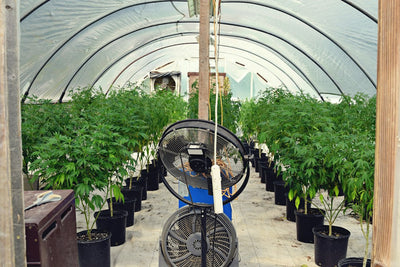
Photo by CRYSTALWEED cannabis via Unsplash.
Nobody loses a crop at week eight because of a light schedule mistake. They lose it in the drying room, three days after the best harvest they've had all year, because they hung the plants in a spare bedroom and walked away. Drying and curing is where a lot of otherwise well-grown flower gets ruined, and the frustrating part is that it's almost never a genetics problem or a nutrient problem. It's a humidity problem, and humidity is the one variable in the entire grow that's actually simple to control once you stop guessing at it.
The number that keeps showing up across 2026 grower guides is 60/60: 60% relative humidity, 60°F. It's become the industry-standard shorthand for a reason -- it's the point where moisture leaves the bud slowly enough to preserve terpenes and bud structure, without sitting in the mold-and-rot danger zone. Small swings off that target don't just nudge quality a little. A five-degree bump in temperature or a ten-point jump in RH can cost you a meaningful chunk of your terpene profile in a matter of days, or turn a dense cola into a bud rot problem overnight. The upside is that none of this requires intuition. With a decent hygrometer, a cheap AC unit, and an understanding of the numbers below, drying and curing stops being a guessing game and starts being a mechanical process you can repeat, crop after crop.
The 60/60 Rule: Your Drying Room Targets

Drying time increases sharply with humidity: cannabis dries in about 5 days below 50% RH, but takes over twice as long (13 days) at 65% RH, highlighting the importance of controlling relative humidity to speed up post-harvest drying.
The working range modern growers use is 55-65% RH at 60-68°F, with 60% RH and 60°F as the target most cultivators dial in and leave alone. That range isn't arbitrary -- it's the product of a pretty direct relationship between RH and drying speed. At 65% RH, expect a full dry to take 12-14 days. Drop to 55% RH and you're looking at 7-10 days. Push below 50% RH and buds will dry in 4-6 days, which sounds efficient until you realize what you're actually doing: locking in chlorophyll, trapping a hay-like harshness in the smoke, and skipping past the slow enzymatic breakdown that makes cured flower smooth instead of grassy.
Why Temperature Matters as Much as Humidity

Photo by You-Chen Hsu via Unsplash.
Growers tend to treat temperature as an afterthought next to humidity, but the two matter almost equally, and for a specific reason: terpenes are volatile compounds, and volatility is temperature-dependent. Run your drying room at 70°F and you'll lose roughly 45% of the most volatile terpenes within the first seven days. Push that to 75°F and retention drops to just 28% -- meaning you're throwing away nearly three-quarters of the aroma and flavor compounds that make a strain taste like itself instead of just tasting like weed. That's not a rounding error. That's the difference between flower that sells itself on smell alone and flower that needs a marketing department.
Jar Curing: Hitting the Right Moisture Window

Photo by Elsa Olofsson via Unsplash.
Jarring too wet and you're growing mold in a sealed container. Jarring too dry and you've skipped the cure entirely, leaving flower that's harsh, brittle, and missing the smoothing-out that only happens over weeks of slow moisture equilibration. The target most experienced curers aim for is 10-12% moisture content in the bud itself, which translates to roughly 58-65% equilibrium RH once that bud is sealed in a jar and given time to stabilize. You can't measure moisture content directly without a lab, but a small hygrometer dropped into the jar gets you close enough, and after a few cures you'll learn to read bud texture -- crackly stem snap, not a bend, and a slight tackiness on the outside of the flower -- as a reliable proxy.
Humidity Packs and Climate-Specific Adjustments

Photo by Budding . via Unsplash.
Once your buds are sitting near that 10-12% moisture target, a two-way humidity pack takes a lot of the daily fussing out of the cure. Boveda-style packs work by buffering jar RH automatically -- they release moisture when the jar is too dry and absorb it when the jar runs too wet, holding the whole container at a fixed equilibrium point instead of drifting with the weather outside. Which pack you reach for should depend on where you live, not just what's on the shelf. In dry climates -- think 20-30% ambient RH, common through a lot of the Mountain West and inland California -- lean toward 62% packs. Anything lower and you'll be fighting the pack's own tendency to keep pulling moisture out of buds that are already borderline dry from the ambient air.
When It's Worth Automating the Whole Process

Photo by Jess Loiterton via Pexels.
All of the above -- hygrometers, window AC units, humidity packs -- works fine for a grower handling a few pounds a run. Once you're processing more volume, or running a facility where labor time actually costs something, purpose-built dry/cure/storage cabinets start to make financial sense. These units automate the entire moisture curve from wet trim to shelf-stable flower, holding temperature and RH inside a sealed cabinet without anyone opening jars or checking a hygrometer twice a day.
Humidity control after harvest isn't a side detail you tack on once the real work of growing is done -- it is the real work, just at the back end instead of the front. It's the difference between flower that actually smells like the strain you grew and flower that just smells like weed, generic and flat, no matter how much care went into the first ten weeks. Nobody tastes your VPD charts or your feeding schedule. They taste the dry and the cure.
The good news is that the targets don't move depending on your budget. Whether you're running a $30 hygrometer taped to the inside of a closet with a window AC unit humming in the corner, or a full automated cabinet that costs more than your first grow tent setup, the numbers stay the same: 60/60 for drying, 58-65% RH equivalent once buds are sealed in the jar. Genetics set the ceiling on how much terpene content and potency a plant can produce -- and starting with well-bred seed stock genuinely matters, which is part of why Seedtiva focuses on quality genetics in the first place. But genetics only set the ceiling. A sloppy dry and a rushed cure will waste that ceiling every time. Dial in the room before you blame the strain.
Sources
- Cannabis Drying and Curing: Better Post-Harvest Control — Ed Rosenthal
- Humidity for Drying Cannabis | Ideal Temp to Dry and Cure
- Drying & Curing Cannabis: Step-by-Step for Maximum Quality (2026)
- How to Dry Weed: Complete Drying Guide (2026) – BudTrainer
- CANNABIS HUMIDITY CONTROL: THE COMPLETE GROWER'S DEEP DIVE 2026