Napalm vs Agent Orange: Debunking the Jungle Plot Myth
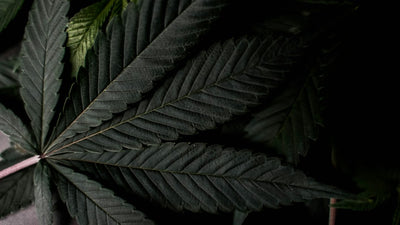
Photo by XuanHai2022 via Pixabay.
The story goes like this: during the Vietnam War, hidden plots of cannabis survived by growing under thick jungle canopy, shielded from napalm defoliation spray drift. It sounds plausible. It has no sourcing behind it.
The claim fuses two separate things. Napalm was fire. The defoliation program was Operation Ranch Hand, which sprayed herbicides. This piece tests the story instead of repeating it.
The payoff is practical. You get the documented history of what was sprayed, how, and what it left behind, plus a clear look at what herbicide drift means for anyone growing outdoors today.
Key takeaways
- Napalm was an incendiary weapon; the defoliation program, Operation Ranch Hand, sprayed herbicides like Agent Orange.
- Ranch Hand ran from 1961 to 1971 and sprayed roughly 19 million US gallons, and the Air Force delivered 95% of it.
- No sourced record shows any grower hiding a plot under canopy from spray, and the spray was aimed at the canopy itself.
Napalm Was Fire, Not a Spray Defoliant
Napalm was an incendiary weapon, a gelled fuel that burned. The defoliation campaign was a different program with a different purpose: Operation Ranch Hand, which sprayed herbicides from aircraft to strip leaves off forest. Nothing in the research for this piece treats napalm as a defoliant spray.
So the phrase napalm defoliation spray drift is a conflation. Fire does not drift the way a fine herbicide mist does, and herbicide does not burn anything down.
One honest caveat. The distinction is well known, but the secondary sources I reviewed did not state it in so many words. Confirm it against primary records before you quote it anywhere.
Why it matters: if the weapon is misidentified, every downstream claim collapses. Any story about how a plot dodged drift, how far it traveled, or what it did to plants depends on knowing what was actually in the air. Get the agent wrong and you are no longer describing anything that happened.
The prohibition-era framing does not fit either. This is a wartime herbicide story, not a cannabis-law story, and nothing found connects it to scheduling, enforcement or the legal history of the plant.
What Operation Ranch Hand Actually Sprayed

The U.S. Air Force's Operation Ranch Hand carried out 95% of herbicide spraying in the Vietnam War, leaving just 5% to the U.S. Army and other forces.
Ranch Hand was part of a larger effort called Operation Trail Dust. Its first test run was 10 August 1961. It became operational in 1962, and the final run flew on 7 January 1971.
The scale was large. Lewis's estimate is roughly 19 million US gallons of herbicide. The Stellman et al. 2003 estimate is about 77 million litres, or about 20.3 million gallons. Nearly 20,000 sorties flew between 1961 and 1971, and about 20% of South Vietnam's forests were sprayed at least once. Parts of Laos and Cambodia were hit too, to a lesser extent.
Ranch Hand, run by the Air Force, delivered 95% of all herbicide used in the war. The U.S. Army and others sprayed the remaining 5%.
The chemistry was not one product. The mix included:
- Agent Orange, the best known of the formulations
- Agent White, sold as Tordon 101
- A cacodylic acid / sodium cacodylate blend, used from 1962 to 1971
Notice what is absent: anything resembling napalm. These were liquid herbicides, applied to kill or strip vegetation, and that is the record any survival story has to be measured against.
Why Canopy Cover Would Not Have Protected Anything

Photo by Ana Mai via Pexels.
Here I am reasoning, not citing. Spray was aimed at the forest canopy to strip leaves. Sitting beneath that canopy is not an obvious shield, because the canopy was the target.
Consider the delivery. A typical run covered a strip about 80 m wide by 16 km long in roughly 4.5 minutes. The aircraft carried a 1,000 US gallon tank and applied about 3 US gallons per acre. That is a heavy, deliberate, broad application, not a narrow pass that a few trees could deflect.
A herbicide meant to defoliate trees works by reaching leaf tissue. As the upper layer thins, what falls through lands on the understory. Shade offers cover from sun, not from liquid coming down through gaps.
Now the direct statement: no source I found documents any grower or farm plot that avoided drift by sitting under canopy. Treat the survival story as unverified folklore until someone produces evidence.
Verifying it would take real records:
- Primary mission records showing where and when specific areas were sprayed
- Veteran accounts naming locations and plots
- Agricultural survey data comparing sprayed and unsprayed ground
Without those, the story is a tale that survives because it sounds good.
The Real Legacy: Dioxin Contamination
The documented legacy is contamination. A 2003 Nature study by Stellman and colleagues used recovered mission records and found mean TCDD (dioxin) concentration in Agent Orange of about 13 ppm. Earlier work had assumed about 3 ppm.
The same records turned up about 200 pre-1965 missions that sprayed over 2 million litres of Agent Purple. That was an earlier formulation, and a more heavily contaminated one.
The point is not just the numbers. The damage did not end when the aircraft stopped flying. Contamination persisted long after the last run in January 1971, which is far more sobering than any legend about plants slipping through.
For health and exposure questions, go to primary sources, not summaries like this one. Start with:
- The Stellman et al. paper in Nature
- The U.S. Department of Veterans Affairs
- The Institute of Medicine's Agent Orange reports
Figures here come from secondary sources and should be checked against those documents before you rely on them.
What Herbicide Drift Means for Growers Today

Photo by Studio32 via Pixabay.
Modern drift is a far smaller problem in scale, but it is real. A neighbor's field, a roadside crew or a utility right-of-way can send herbicide onto an outdoor garden. Growth-regulator type herbicides show up on cannabis as twisted, cupped, distorted new growth.
Defenses start with site selection. Put plants away from sprayed fields and rights-of-way, add a windbreak or fence, and pay attention to wind direction on days when neighbors are likely to apply.
Watch what you bring in, too. Test soil and amendments, and avoid manure, compost or hay of unknown origin. Persistent herbicide residues can survive in those materials and surface weeks later.
If symptoms appear, work through it in order:
- Document them with dated photos
- Check what was sprayed nearby and when
- Compare against nutrient and pest problems before reacting
Distorted growth is not always herbicide. Outcomes vary by climate, setup and genetics, so rule out the common causes first.
Starting from quality genetics, such as well-bred seeds from Seedtiva, gives a vigorous plant more room to recover from minor stress.
The survival-under-canopy story is unsourced, and it gets weaker the closer you look. The agent was misidentified, the target was the canopy itself, and nobody has produced a single documented plot.
What holds up is the contamination record. Dioxin outlasted the spraying by decades, and the lesson for a grower is plain: know what touches your soil, water and plants, because contamination outlasts any single season.
Sources
- Operation Ranch Hand: The C-123s That Sprayed Agent Orange on Vietnam
- Operation Ranch Hand
- Exposure Assessment - Veterans and Agent Orange - NCBI Bookshelf
- Operations Ranch Hand and Trail Dust
- 1962 - Operation Ranch Hand > Air Force Historical Support Division > Fact Sheets
- Operation Ranch Hand - Wikiwand