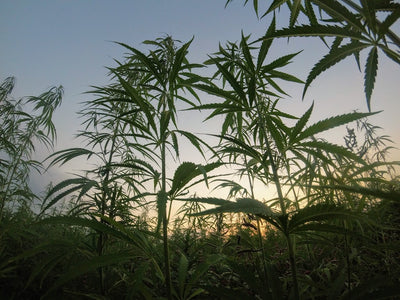
Pest ID Guide: Spider Mites, Thrips, Fungus Gnats, Aphids
Photo by lil artsy via Pexels.
You find stippling on a fan leaf on a Tuesday, tell yourself it's probably nothing, and by the following Tuesday you've got a full-blown infestation across three rows and a decision to make about whether to hit veg with something aggressive. That week you lost isn't a rounding error. It's the difference between a spot treatment with neem oil and ripping plants out of a tent. Spider mites can double their numbers in three to five days under warm, dry conditions. Thrips aren't far behind. Misidentify the pest, treat for the wrong thing, and you've handed the population a full reproductive cycle to dig in while you figure out what actually went wrong.
That pressure to act fast is exactly what's been driving growers toward products that never should have touched a cannabis crop. Colorado and Maine have both spent early 2026 dealing with recalls tied to chlorfenapyr and a handful of other unregistered miticides, all applied by growers who were staring at mite or thrips damage and reached for whatever promised to kill it overnight. The pattern is consistent: panic first, identification second, and a banned chemical fills the gap. It's a bad trade. The pests covered here -- spider mites, thrips, fungus gnats, and aphids -- are all identifiable in under five minutes once you know what you're looking at, and all manageable without touching anything that could get your harvest pulled from shelves. This guide walks through the visual and behavioral tells for each one, then the legitimate IPM moves that actually work.
Why Growers Are Reaching for Banned Miticides in 2026

Photo by CHUTTERSNAP via Unsplash.
Colorado's Marijuana Enforcement Division opened 2026 with a recall on January 8, pulling four harvest batches from Rotation Farms after finding chlorfenapyr residue, with five more batches from the same grow window yanked shortly after as a precaution. That wasn't an isolated event. It was the eighth chlorfenapyr-related recall in the state in just over two months, following a New Year's Eve flower recall that had already reached 295 dispensary shelves before it got caught, and the sixth such recall since the previous June. Eight recalls tied to a single unregistered compound in ten weeks isn't a rogue actor problem. It's a pattern of growers under pest pressure reaching for the same shortcut.
What makes this especially dangerous is that several of these contaminated batches passed their initial testing and only failed on re-test. Contamination isn't guaranteed to show up the first time a lab runs a sample, which means product can reach a shelf, get flagged later, and force a recall after the fact. Chlorfenapyr's appeal for growers is specific: it disrupts energy production inside insect cells, works fast, and is used off-label against spider mites in particular. That's precisely why it keeps surfacing in mite-related contamination cases -- it's being used exactly where growers are panicking hardest.
Maine's Office of Cannabis Policy has been blunt about the human cost. Unsafe chlorfenapyr exposure can cause high fever, sweating, nausea, vomiting, and altered mental status. In a separate advisory, Maine regulators found five of six tested batches from one grower carrying eight different unsafe pesticides, including bifenthrin, cypermethrin, and pyridaben stacked together. That's not one bad call -- that's a grower cycling through banned chemistry trying to get ahead of a pest problem that never got properly identified in the first place.
Even legal, EPA-approved products aren't immune to failure. Arizona saw a recall this year tied to Spinosad, a legitimate pesticide labeled for mites, thrips, and beetles, because of a lab-reporting failure rather than misuse. The lesson there is separate from the chlorfenapyr pattern: even when you're using something approved, testing and reporting infrastructure can still break down. Correct ID up front, paired with products actually labeled for your state's cannabis program, is the only way to stay out of both categories of recall.
Spider Mites: The Hot, Dry Weather Threat

Photo by Egor Kamelev via Pexels.
Spider mites don't chew leaf tissue -- they pierce individual cells and drain out the chlorophyll, which is why the damage looks like fine white or yellow pinpricks scattered across the leaf surface rather than ragged bite marks. Hold a damaged fan leaf up to light and you'll see a stippled, almost dusty pattern that spreads outward from the midrib. In light infestations that's often the only sign you'll get. Once populations build, the confirming tell shows up as fine webbing strung across nodes and along the underside of fan leaves, sometimes fine enough that you won't notice it until you brush a leaf and feel it catch.
Mites are a heat-and-drought pest. Above 80F with relative humidity down in the 30s and 40s, you're in their ideal breeding window, and populations can double in as little as three to five days. That's fast enough that a grower checking plants once a week can go from a couple of dozen mites on one leaf to a canopy-wide problem before the next scouting pass. If your grow room runs hot and dry -- common in summer outdoor setups or under-ventilated tents with strong lighting -- treat mites as a standing risk, not an occasional one.
Confirming ID is simple with the right tool: a 30x jeweler's loupe on the underside of a suspect leaf. You're looking for moving specks roughly the size of a period on a printed page, often with a faint two-spot pattern on the body if you catch the light right. If they're stationary and larger, you're probably looking at something else -- mites don't sit still for long.
Legitimate control starts early with insecticidal soap or neem oil applied directly to leaf undersides, which disrupts the mites' waxy cuticle on contact. Once an infestation is established, predatory mites -- Phytoseiulus persimilis in particular -- are the standard biocontrol, since they hunt spider mites specifically and can crash a population within one to two weeks under the right release density. Prevention matters more than any treatment: keep humidity above 50% and temperatures under 80F, and you remove the conditions mites need to explode in the first place, no miticide required.
Thrips: Silvery Scarring on Warm, Dry Leaves

Photo by Oliver Potter via Unsplash.
Thrips damage looks different from mite damage the moment you know what to compare it to. Instead of piercing individual cells, thrips scrape the leaf surface and feed on the exposed tissue underneath, leaving silvery or bronze streaks that run with the leaf's grain rather than scattered pinpricks. Look closely at the damaged area and you'll usually find tiny black specks scattered across it -- thrips fecal deposits, and one of the more reliable ways to separate thrips scarring from mite stippling or plain leaf abrasion.
Thrips like the same warm, low-humidity conditions mites do, and populations can escalate on a similar timeline, which is exactly why growers confuse the two. The tell isn't the environment, it's the damage pattern and the insect itself. Adults are slender, straw-colored to dark brown, only 1-2mm long, and instead of sitting on the leaf surface like a mite, they dart or hop the moment you disturb the plant. If you tap a leaf over a white sheet of paper and see something jump rather than crawl, you're looking at thrips.
For biocontrol, Neoseiulus cucumeris is the standard choice and for good reason -- it targets first and second instar thrips larvae specifically, which is the life stage doing most of the early damage, and it's highly effective once established at sufficient release density. It won't touch adult thrips directly, but by suppressing the larval stage it collapses the population's ability to rebuild.
Monitoring matters as much as treatment here. Yellow or blue sticky traps hung just above the canopy catch adult thrips in flight and give you an early warning well before scarring becomes obvious on leaves -- checking trap counts weekly is one of the cheapest, most reliable habits a grower can build into a routine. Because thrips pupate in the growing medium rather than exclusively on the plant, Stratiolaelaps scimitus applied to the soil surface adds another layer of control, feeding on pupating larvae before they emerge as adults and breaking the reproductive cycle from below rather than relying on foliar treatment alone.
Fungus Gnats: The Overwatering Tell

Photo by Egor Kamelev via Pexels.
If you're seeing fungus gnats, the first thing to check isn't the plant -- it's your watering schedule. Fungus gnats are a wet-media pest above all else, and a sudden population of adults swarming near the soil surface is usually the first visible sign that a grower is overwatering or that media isn't drying enough between irrigation cycles. They're a symptom as much as a pest.
Adults are easy to spot once you know to look near the ground rather than around foliage: small, weak-flying insects that resemble tiny mosquitoes, hovering and crawling around the base of the plant and the surface of the growing medium rather than settling on leaves. They're annoying but mostly harmless as adults. The larvae are the actual problem. Living in the top inch of media, larvae feed on root hairs and decaying organic matter, and in seedlings and clones with limited root mass to spare, that feeding can stunt growth noticeably within days. A mature plant with an established root system can usually tolerate moderate larval feeding; a two-week-old clone often can't.
Confirming population size is straightforward -- lay yellow sticky traps flat directly on the media surface rather than upright near foliage, since that's where fungus gnat adults are actually flying. Trap counts over a week give you a clear trend line: rising counts mean the wet-media conditions are getting worse, not better.
Control here is mostly about environment rather than chemistry. Letting the top 1-2 inches of media dry out fully between waterings removes the moist surface layer larvae need to survive, and a coarse topdress layer -- perlite, coarse sand, or a similar material -- makes that top layer inhospitable to egg-laying adults in the first place. Stratiolaelaps scimitus, a predatory soil mite, is the standard biocontrol option here and works best applied preventatively at planting, typically at a rate of 10-25 mites per square foot, since it establishes in the root zone and feeds on fungus gnat larvae directly rather than needing to be reapplied reactively once a problem is already visible.
Aphids: Sticky Leaves and Sooty Mold

Photo by Sonny Sixteen via Pexels.
Aphids give themselves away before you ever spot one, usually through the mess they leave behind rather than the insect itself. They cluster densely on new growth and the undersides of young leaves, feeding on phloem sap, and excrete more sugar than they can use as a sticky residue called honeydew. That honeydew coats lower leaves and, given a few days, develops a black sooty mold on the surface -- and for most growers, that black coating on lower leaves is the actual first sign of an aphid problem, showing up well before anyone notices the insects clustered above.
Once you go looking, aphids themselves are easy to confirm: soft-bodied, pear-shaped insects roughly 1-3mm long, ranging from green to black to pink depending on species. They don't move fast and don't hide well, which makes them one of the more straightforward pests to identify visually once you know to check new growth specifically rather than mature fan leaves.
One more confirming detail worth checking: ants at the base of the plant or trailing up the stem. Ants farm aphids deliberately, protecting them from predators in exchange for honeydew, so a sudden ant trail on a plant that didn't have one last week is a reliable secondary indicator of an aphid colony establishing itself, even before sooty mold shows up.
Control options for aphids are some of the most established in the entire IPM toolkit. Ladybugs and lacewing larvae are effective predators and will actively hunt aphid colonies once released, and insecticidal soap sprays work well as a direct contact treatment against their soft bodies without the residue concerns of harsher chemistry. The market is also shifting further toward naturally derived options generally -- CANNA Continental's July 2026 launch of CANNA Control, built on thyme oil, targets aphids and mites alongside botrytis and powdery mildew in a single product, which reflects where a lot of commercial IPM is heading: broader-spectrum, plant-derived actives instead of single-target synthetic chemistry.
Building an IPM Program That Doesn't Land You in a Recall

Photo by Erik Karits via Pexels.
Every pest in this guide is beatable with timing and observation, not chemistry -- but only if you're actually looking. Weekly scouting with a loupe across 10-15 randomly selected plants, checking leaf undersides and media surface both, catches populations while they're still small enough to knock back with a soap spray or a targeted beneficial release instead of a room-wide intervention. Skipping that weekly pass is the single most common reason growers end up reaching for something aggressive later.
Environment does most of the prevention work before you ever need a treatment. Keeping relative humidity above 50% and temperatures below 80F suppresses both spider mites and thrips, since neither pest breeds well outside hot, dry conditions. On the other end, letting media dry out between waterings starves fungus gnat larvae of the moist surface layer they need. Two environmental habits cover three of your four major pests.
Beneficial insects work far better as prevention than as rescue. Releasing Stratiolaelaps scimitus at planting, before any pest pressure shows up, means it's already established in the root zone by the time fungus gnats or thrips larvae would otherwise get a foothold. Introducing Neoseiulus cucumeris as soon as you suspect thrips pressure -- rather than waiting for visible scarring -- gives it time to build a population ahead of the pest it's meant to control. Reactive releases can still work, but they're playing catch-up against a pest that's already reproducing.
None of this requires touching anything close to what's driven this year's recalls. Every one of the 2026 chlorfenapyr and multi-pesticide cases traces back to unregistered or off-label chemical use, not to biocontrol, not to approved horticultural products used correctly. Sticking to products labeled for cannabis in your specific state program keeps you entirely outside that risk. It's also worth starting the whole equation with plants that can take a pest hit without collapsing -- vigorous, well-bred genetics from a source like Seedtiva tend to tolerate moderate pest pressure better than weaker stock, though how much that matters still depends heavily on your specific climate and setup.
Look back at every recall covered here and the common thread isn't that spider mites or thrips are unbeatable -- it's that someone decided the legitimate path was too slow. Chlorfenapyr, bifenthrin, cypermethrin, pyridaben: none of these got sprayed because growers lacked effective alternatives. They got sprayed because a pest was identified late, or misidentified entirely, and the grower needed something to work overnight. The chemistry isn't the problem. The shortcut is.
That's why identification, not access to treatment, is the actual bottleneck for most operations. Insecticidal soap, neem, predatory mites, Stratiolaelaps scimitus, Neoseiulus cucumeris -- all of it works, and all of it has been working in commercial IPM programs for years. What fails is the week or two spent guessing while a population you haven't correctly named keeps doubling in the background.
Put the loupe in your pocket and make the scouting pass part of the routine before flowering starts, not after you've already spotted damage. Every pest on this list is dramatically easier to stop the day you first see it than it is at bloom week four, when treatment options narrow and the cost of a mistake gets a lot higher. Five minutes a week is cheap insurance against a problem that, left alone, stops being cheap at all.