Preventing Root Rot in Hydroponic Cannabis Systems
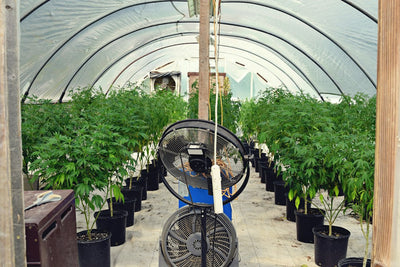
Photo by marsraw via Pixabay.
Most growers who lose a hydroponic run to root rot describe it the same way: everything looked fine on Tuesday, and by Friday half the room was wilting. That timeline isn't a coincidence -- it's how the disease actually works. In a recirculating system, root rot isn't a plant-by-plant problem the way spider mites or powdery mildew are. It's a reservoir-wide event. One infected root ball shedding spores into shared nutrient solution can seed every other plant on that line within days, sometimes hours, because they're all drinking from the same water.
The two organisms responsible for the overwhelming majority of cases are Pythium and Fusarium -- water molds and fungi that are built to exploit exactly the environment a warm, under-oxygenated reservoir provides. By the time you see the above-ground signs -- yellowing lower leaves, a plant that won't stand back up after a light stress, nutrient deficiencies that don't respond to feed adjustments -- the root system has usually been compromised for a week or more. Foliage is a lagging indicator. Roots are the leading one, and almost nobody is looking at them closely enough or often enough.
That's why the conversation among serious cultivators has shifted. Instead of treating an outbreak after it shows up, the better operations are engineering reservoirs that pathogens simply can't establish in -- through oxygenation, temperature control, and sanitation discipline built into the daily routine rather than the emergency response. This piece walks through why oxygen-starved, warm nutrient solution invites disease in the first place, and lays out the specific thresholds -- temperature bands, sanitation protocols, and biological controls -- that keep roots white and functional through an entire cycle.
Why Root Rot Spreads So Fast in Recirculating Systems

Photo by Keloke Grow via Pexels.
Deep water culture, NFT, and ebb-and-flow all share one structural vulnerability: the nutrient solution touching one plant's roots is the same solution touching every other plant's roots downstream. Pythium and Fusarium are water molds and fungi respectively, and both move through liquid with essentially no barrier once they're in the reservoir. There's no soil buffer, no beneficial fungal network slowing them down the way you might get in a living-soil setup -- just open water acting as a highway.
This isn't speculative. Punja and Rodriguez characterized these pathogens infecting hydroponic cannabis root systems specifically in a 2018 paper in the Canadian Journal of Plant Pathology, giving the industry its first solid look at how these organisms behave in cannabis rather than in the tomato and cucumber systems most prior hydroponic pathology work was based on. More recently, researchers Cora McGehee and Rosa Raudales at the University of Connecticut documented the same progression in commercial Connecticut cannabis facilities -- yellowing, wilting, and a steady decline in vigor that traced directly back to root infection rather than any nutrient or lighting issue growers initially suspected.
The speed is what catches people off guard. Under warm, low-oxygen conditions -- think a reservoir sitting at 76-78°F with a single undersized air stone -- a single infected plant's root exudate can contaminate an entire shared reservoir within 24 to 48 hours. That's not a slow creep. That's a system-wide infection window measured in a weekend.
And because above-canopy symptoms always lag behind actual root damage, growers routinely misread the timeline. Wilting, nutrient lockout, and leaf yellowing are downstream effects of a root system that's already lost a meaningful percentage of its functional mass. By the time those signs are obvious enough to act on, you're not managing a developing problem anymore -- you're managing crop loss, and the question becomes how much of the room you can save rather than whether you'll take a hit at all.
The Conditions That Let Pythium Thrive

Photo by Anna Shvets via Pexels.
If there's one number worth memorizing in this whole discussion, it's 72°F. Once reservoir temperature climbs above the 72-74°F range, Pythium's reproductive rate accelerates sharply, and it starts winning the competition for space on root tissue that healthy roots would otherwise occupy. Temperature is the single biggest risk multiplier in the entire equation -- more influential than pH swings, more influential than most nutrient imbalances.
Keeping reservoir water at or below 68-72°F should be treated as non-negotiable in any warm grow room or greenhouse. Chillers are the most reliable tool for this, and for smaller setups, simply insulating totes and reservoirs, keeping them out of direct light and away from HVAC exhaust, buys a surprising amount of headroom. A reservoir that creeps to 75°F on a hot afternoon and back down at night isn't safe just because the average looks fine -- pathogens don't average, they exploit the peak.
Low dissolved oxygen compounds the temperature problem rather than acting as a separate issue. Warm water holds less dissolved oxygen to begin with, and when DO drops, anaerobic pockets form right at the root zone -- exactly where healthy root tissue needs oxygen most to maintain its own defenses. Those low-oxygen pockets are where Pythium gets its foothold, because the plant's roots are the ones struggling while the pathogen is comfortable.
Stagnant water and organic debris make it worse still. Dead root matter, sloughed-off root hairs, and settled plant material left sitting in a reservoir aren't neutral -- they're a food source that lets pathogen populations build density before they ever touch a living root. And root stress from any source -- EC swings from inconsistent feeding, light hitting the reservoir and driving algae growth, or physical root damage during transplant -- opens wounds that make colonization easier. None of these factors operates in isolation. A warm reservoir with light leaks and rough transplant handling is stacking three risk factors at once, and that's usually when growers get blindsided.
Nanobubble Oxygenation: The 2026 Shift Toward Prevention

Photo by Leonard Antasari via Pexels.
The technology getting the most attention going into 2026 is nanobubble oxygenation, and the framing matters as much as the mechanism. Boštjan Veronik, CEO of Waboost, has described nanobubble oxygenation as a proactive strategy against Pythium rather than a reactive treatment applied after infection is already visible. That distinction is the whole point -- this isn't a stronger fungicide, it's a way of making the reservoir environment inhospitable to the pathogen in the first place.
Nanobubbles are exactly what they sound like: oxygen bubbles small enough -- typically under 200 nanometers -- that they don't rise and pop the way conventional air stone bubbles do. Instead they stay suspended in solution for weeks, continuously elevating dissolved oxygen throughout the reservoir rather than just at the point of injection. Compare that to hydrogen peroxide, which oxidizes and kills pathogens on contact but only addresses what's already there at the moment of application. One approach changes the environment; the other cleans up after a problem that's already established.
Growers running nanobubble systems consistently report whiter, denser root systems, noticeably better nutrient uptake, and a reduced need to lean on chemical disinfection as a regular maintenance step. That's the practical payoff of prevention-first thinking -- less firefighting, more consistent yield.
This isn't purely theoretical. BioTherm Solutions' Dissolved Gas Solution system, deployed at UMMA Sonoma in California, is a real commercial example of dissolved-oxygen enrichment applied directly to irrigation water at production scale, not a lab demo. And the underlying physics has research support -- a 2025 study in Sustainability found that conventional air stone bubbling diffuses oxygen poorly through deep-water columns compared to nanobubble technology, which achieves more even distribution and measurably better root development. For growers evaluating whether this is worth the equipment investment, that distribution difference is the crux of it: it's not just about how much oxygen you're adding, but whether it actually reaches the root zone where it matters.
Practical Oxygenation and Sanitation Without Nanobubble Equipment

Photo by Jonathan Borba via Pexels.
Nanobubble systems are still a meaningful capital investment, and plenty of home and small commercial grows run clean, rot-free cycles for years on much simpler equipment. Air stones, diffuser plates, and venturi-style sparging remain the accessible baseline, and they work fine when they're sized and maintained properly -- the failure mode isn't usually the equipment, it's undersizing it for the reservoir volume.
The visual test is simple: your reservoir surface should look visibly turbulent and fully aerated, with no calm corners. Dead zones -- the corner of a tote away from the air stone, the area right around a pump intake where flow gets sluggish -- are exactly where pathogens establish first, because that's where dissolved oxygen concentration drops fastest relative to the rest of the reservoir. If you can identify a spot in your tote where the water looks noticeably calmer than everywhere else, that's worth fixing before it becomes a problem, not after.
Sanitation between grows is the other half of this, and it's the step most commonly done halfway. Every tote, net pot, length of tubing, and pump that touched nutrient solution needs a real sanitizing pass -- a diluted bleach solution around 10%, or 3% hydrogen peroxide, followed by a thorough rinse to clear residue before the next crop goes in. A quick hose-down is not the same thing. Biofilm builds up in tubing and pump housings in ways that aren't visible until you're already dealing with a repeat outbreak that seems to have no obvious source.
Within a grow cycle, remove dead root matter and organic debris from reservoirs on a weekly basis, not just when you notice it or when you're doing a full changeover. That debris is a food source for pathogens the entire time it sits there, and weekly removal is cheap insurance against letting a population build density.
For growers scaling past a hobby setup but not ready for full nanobubble infrastructure, electrolysis-based oxygenators occupy a useful middle tier -- more consistent and higher-output than basic air stones, considerably less expensive than a commercial dissolved-gas system.
Biological Controls and Reservoir Temperature Targets

As reservoir water temperature rises from a safe 68°F to a high-risk 78°F, the relative risk of a Pythium (root rot) outbreak increases sharply, underscoring the importance of keeping water below 72°F.
Oxygenation changes the environment; biological controls change the competition happening on the root surface itself. Trichoderma, Bacillus, and Pseudomonas species are all documented, commercially available preventive biofungicides with demonstrated effectiveness against Pythium in cannabis systems, and they work through a mechanism that's worth understanding rather than just trusting the label.
These beneficial microbes colonize root surfaces and physically occupy the same space and nutrient sources Pythium needs to establish itself. It's competitive exclusion -- if the root surface is already covered in Trichoderma or Bacillus, there's simply less room and less available food for the pathogen to build a population on. Some of these species also produce compounds that directly suppress pathogen growth, but the space-and-nutrient competition is the part that matters most for prevention.
That mechanism only works if the timing is right. Biologicals are a preventive tool, applied at transplant and reinforced through vegetative growth on a regular schedule, not a rescue treatment you reach for once a plant is already showing above-canopy symptoms. By the time visible symptoms appear, the pathogen has likely already established enough of a foothold that beneficial microbes introduced at that point are fighting from behind. Get them in early, keep reapplying per label instructions, and you're maintaining a defensive population rather than trying to build one from scratch during an active infection.
None of this substitutes for temperature control. Keep reservoir temperatures in the 68-72°F band year-round, and treat every degree above that window as a measurable increase in outbreak risk rather than a minor deviation. This is worth tracking, not just setting and forgetting -- a chiller that's slightly undersized for a hot July grow room can drift a reservoir into risk territory without anyone noticing until it's too late.
The most resilient approach combines biological inoculants with oxygenation rather than treating them as competing strategies. One addresses the microbial competition on root surfaces; the other addresses the physical environment of the water itself. They're solving different parts of the same problem, and running both gives you redundancy if one system underperforms.
Building a Root Rot Prevention Routine

Photo by Couleur via Pixabay.
None of the science above matters if it doesn't turn into a routine someone actually follows. Daily, that means checking reservoir temperature, confirming pumps are running and not clogged, checking dissolved oxygen if you've got a meter for it, and doing a quick visual and smell check of the reservoir -- cloudiness or a sour, swampy odor are early warning signs worth acting on immediately rather than waiting to see if they get worse.
Weekly, clean out any accumulated debris, physically inspect net pots and visible root zones for browning, discoloration, or slime -- healthy roots should be white to cream-colored and firm, not brown, mushy, or trailing a slimy film -- and refresh beneficial microbe applications according to the product's label schedule rather than an arbitrary interval.
Between grows, do the full sanitation pass on every single component that touched nutrient solution: totes, net pots, tubing, pump housings, fittings. A rinse is not sanitation. Biofilm and pathogen spores persist on surfaces that look clean to the eye, and skipping this step is one of the most common reasons growers see root rot recur cycle after cycle despite doing everything right during the grow itself.
Genetics play a real role here too, even though it's easy to overlook in a conversation dominated by equipment and water chemistry. A plant that starts from vigorous, well-bred seed stock develops a stronger, more resilient root system from the outset, which gives it more margin before environmental stress or pathogen pressure becomes a real threat. Starting with quality genetics from a reputable source like Seedtiva won't override poor reservoir management, but it does give roots a stronger baseline to work from, which matters when conditions aren't perfect -- and in a working grow room, they rarely are.
It's also worth being honest that these thresholds are a starting framework, not a guarantee. Your specific system design, your water source's baseline chemistry, and your local climate all shift the exact numbers that work best for your setup. Treat the ranges here as where to start tuning from, and adjust based on what you actually observe in your own roots over a few cycles.
Strip away the equipment options and the research citations, and root rot prevention comes down to three levers: temperature, oxygen, and sanitation. Keep the reservoir below 72°F, keep dissolved oxygen high enough that no dead zones form at the root surface, and keep every piece of equipment that touches nutrient solution genuinely clean rather than superficially rinsed. Pythium and Fusarium need a specific set of conditions to establish, and denying them those conditions is a far more reliable strategy than trying to out-treat them once they're in.
The industry's move toward nanobubble oxygenation and dissolved-gas systems isn't a trend chasing novelty -- it reflects a lesson that applies well beyond hydroponics. Treating symptoms after an infection is visible is always a catch-up game, because the damage below the surface is already running well ahead of what you can see above it. Managing the environment before disease pressure ever builds is the only approach that keeps you ahead of the timeline instead of reacting to it.
The growers who avoid repeat outbreaks aren't the ones with the most expensive equipment -- they're the ones who check their reservoir temperature and root color as automatically as they check their pH. That daily discipline, applied consistently across an entire cycle, is what actually separates a clean run from a costly one.