Reviving Clones After a Heat Spike Kills Turgor
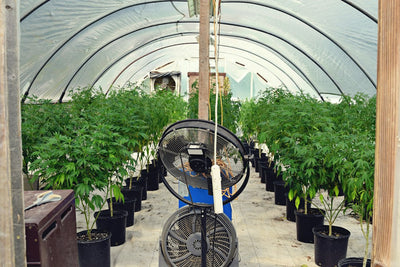
Photo by Ray_Shrewsberry via Pixabay.
You lift the dome lid to check on a tray of clones you stuck two days ago, and instead of the perky, slightly glossy cuttings you left behind, you find them folded over at the stem, leaves drooping like wet paper. The thermometer that was supposed to be sitting at 75°F is reading 91°F because the dome got pushed six inches closer to the light, or the heat mat lost its thermostat connection overnight, or the closet door got shut and the ambient room temp climbed with it. Every cultivator who's run more than a handful of clone rounds has had this exact moment, and it never stops being a gut punch, because clones represent real time and real genetics you don't want to lose.
Here's the part that actually matters, though: limp doesn't mean dead. There's a real, well-documented threshold in plant physiology between incipient wilt, where the tissue has lost rigidity but the cells are still alive and can bounce back, and permanent wilt, where the cellular damage is done and no amount of misting or babying brings that leaf back. The difference between those two states is often just a matter of hours and what you do in them. This piece walks through why a rootless cutting is so uniquely vulnerable to a heat spike in the first place, how to read your clones to figure out which side of that line they're on, and the exact sequence of moves to pull recoverable cuttings back from the edge.
Why a Rootless Cutting Can't Handle 85°F
Turgor pressure is the only thing holding a non-woody clone upright. It's the outward push of water inside plant cells against the cell wall, and when that water content drops, the cell walls lose their backing and the tissue folds -- that's the wilt you're looking at. In a mature, rooted plant this is a manageable, reversible daily fluctuation. In a clone, it's a much more precarious situation, because at the moment you stick a cutting into a plug or cube, it has zero root mass. There's no mechanism anywhere on that plant to pull water up from the substrate and replace what's being lost through the leaf surface. Whatever water is already in the tissue when you cut it is the entire budget until roots form, and the timeline for that varies depending on genetics and conditions.
Heat makes that budget disappear fast. Above roughly 82-85°F, the vapor pressure deficit inside the dome climbs and transpiration -- water evaporating out through leaf stomata -- speeds up dramatically. A rooted plant handles this by opening stomata wider when it has water to spare and closing them when it needs to conserve. A clone's stomata are its only line of defense, but that defense is a trap: closing them to stop water loss also shuts down the evaporative cooling that stomata normally provide, so the leaf tissue heats up even further while sitting in an already-hot dome. The clone is caught between losing water it can't replace and losing the one cooling mechanism it has.
That's the mechanism behind how fast these things go bad. A dome that spikes past 85°F for even a short stretch can produce visibly folded clones by the time you check on them, because there's no reservoir anywhere in the plant to buffer the loss. Compare that to a rooted mother plant or a vegging plant in soil -- roots several inches deep are pulling from moisture reserves in the substrate that a heat spike on the surface doesn't immediately touch, buying the plant hours or days of resilience a fresh cutting simply doesn't have. Recognizing that a clone has none of that safety margin is the whole reason a temperature swing that a vegging plant shrugs off can wipe out an entire tray.
Incipient Wilt vs. Permanent Wilt: Reading the Damage
Not every limp clone is a dead clone, and learning to read the difference saves you from either panicking and tossing salvageable cuttings or wasting tray space on ones that are already gone. The concept to know is the distinction between the incipient wilt point and the permanent wilt point. Incipient wilt means the tissue has lost turgor and looks bad, but the cells themselves are still alive and biochemically intact -- rehydrate them under the right conditions and they'll firm back up, often fairly quickly. Permanent wilt means actual cellular damage has occurred, membranes have broken down, and there's no amount of misting, humidity, or coddling that reverses it.
The physical check is straightforward. Look at the stem first -- if it's still green, flexible, and pliable when you gently bend it, that's a good sign regardless of how sad the leaves look. Then check the leaf tissue itself: press a folded leaf gently between two fingers. If it has any spring back, any resistance rather than just staying limp and flat, the cells are still turgid enough underneath to be viable. Those are recoverable clones, even if they look rough right now.
The warning signs of actual tissue death look different, and once you've seen it you won't confuse the two again. Leaves that have gone crispy or translucent -- almost see-through at the edges -- are cooked, not wilted. Tissue that stays collapsed and takes on a mushy, water-soaked texture even after you've corrected the dome conditions is dead tissue, not stressed tissue. And check the stem base at the cut site: any blackening or slimy texture there means rot has set in on top of the heat damage, and that clone is not coming back.
Give any clone that's ambiguous a real window before you make a call -- a few hours after you've corrected temperature and humidity is usually enough to see a clear trend, either visible firming up or continued decline. One more variable worth checking: clones that already have white root tips forming have more reserve capacity than a bare-stemmed cutting stuck yesterday, so give those a bit more benefit of the doubt.
The Rehydration Protocol: What to Do in the First Hour

Photo via Unsplash.
The first hour after you discover the spike is the hour that decides most of these outcomes, so don't waste it second-guessing. The single most effective immediate move is a heavy foliar misting -- soak the leaf surfaces directly. This matters because it rehydrates the plant through the leaf itself, bypassing the fact that there are no functional roots yet to pull water up from the cube. Get the whole plant wet, not a light spritz.
Close the dome immediately after misting. An open dome during a heat crisis just lets whatever humidity you've restored vent straight out, and you need that trapped moisture around the foliage to slow further transpiration losses while the tissue recovers.
Before you do the misting and closing, though, physically move the tray away from whatever caused the spike -- pull it back from the light fixture, off the ballast, away from a window getting afternoon sun. This sounds obvious but gets skipped constantly because people jump straight to fixing the plant instead of fixing the environment first. Rehydrating clones that are still sitting in a 90°F dome just repeats the same failure a few minutes later.
If the clones you're looking at have unusually large fan leaves, trim them back now. A clone with no root system supporting a full-size leaf canopy is trying to hydrate more surface area than its water budget allows -- reducing that surface area directly reduces the transpiration demand while roots are still forming.
Two instincts to actively resist here. First, don't crack the dome for fresh air or add airflow yet -- that's a step for later, once turgor is visibly restored, not something to do while the plant is still in crisis. Second, don't respond to a wilted clone by soaking the rooting cube heavily. It feels like the intuitive fix, but a stressed, rootless cutting sitting in oversaturated media is a direct setup for stem rot, and now you're fighting two problems instead of one.
Resetting the Dome to the Right Range

Clone dome temperatures should stay within the ideal range of 68-78°F; once temps climb past the 82°F risk ceiling, spikes like the 85°F example can stress or wilt clones.
Once you've stopped the bleeding in that first hour, the next job is making sure the dome environment itself is actually dialed in, not just cooled down from a crisis peak. The target range for clone dome temperature is 68-78°F, with root initiation happening fastest right in the 68-77°F (20-25°C) band. Humidity should sit at 70-80% for the first several days after sticking, tapering down gradually as roots develop. Treat 82°F as the practical ceiling, not a soft guideline -- growers troubleshooting wilt on otherwise healthy clones consistently point to that number as where things start going wrong, so anything creeping above it deserves an immediate check, not a wait-and-see.
Most heat spikes trace back to one specific piece of equipment: an uncontrolled heat mat. A fixed-wattage mat with no thermostat will just keep pushing heat regardless of what the dome actually needs, and it's one of the leading causes of overheated domes in home setups. If you're still running a mat straight into an outlet, put a thermostat controller between the mat and the wall -- it's a cheap fix for a problem that otherwise repeats every cycle.
Placement matters as much as the mat itself. Keep domes a real distance from direct light fixtures, LEDs included -- proximity heat adds up even from lights that don't run especially hot. And check the ambient room temperature, not just the dome reading. A dome sitting at a technically fine setpoint inside a room that's already at 80°F has almost no buffer left before a small equipment hiccup pushes it over the edge.
Once temperatures have been stable for a few hours and any recoverable clones are showing visible improvement, don't throw the dome wide open all at once. Reopen it gradually over the following days -- cracking vents a little more each day -- to let the clones harden off to ambient humidity rather than shocking them with a second stress event right after the first one.
When to Cut Your Losses
Some clones just aren't coming back, and the sooner you accept that, the better your remaining cuttings do. If a clone shows no improvement well after you've corrected temperature and humidity -- still folded, still no spring in the tissue -- treat it as a loss. Holding onto it in the tray doesn't help it and does cost you space and light that your recovering clones could use.
Watch specifically for blackened or mushy stem tissue at the base. That's not heat damage anymore, that's rot setting in on top of it, and rot spreads through humidity trays and shared water fast. Pull anything showing that immediately rather than leaving it in with cuttings that are still fighting to recover.
The best defense against this whole scenario is padding your numbers before you ever need it. Take a handful more cuttings than your actual target next round. That's not a sign you don't know what you're doing -- it's standard practice among growers who've been burned by a heat spike, a bad batch of media, or just normal clone failure rates. Losing a few cuttings to something like this stings a lot less when you planned for it.
Genetics play a role here too, even if it's less obvious than the equipment side. A clone taken from a vigorous, well-bred mother plant tends to have more resilience built in -- thicker tissue, better water retention, faster root initiation once conditions are corrected. It's part of why growers working from quality seed stock, including the genetics Seedtiva sells, often report their mother plants throw sturdier cuttings that shrug off minor stress better than clones from weaker or less stable lines. It's not a guarantee against a heat spike, but it's a real variable in how much margin you have when something does go wrong.
Last step, and the one people skip most: write down what actually happened. Where was the dome sitting, what was the mat wattage, what was the room temp that day. A five-minute note now is the difference between troubleshooting this once and troubleshooting it every single cycle.
Almost every one of these heat spikes has a boring, mechanical explanation once you go looking for it -- a mat with no thermostat, a dome sitting too close to a light rail, a room that runs ten degrees hotter in the afternoon than it did when you set everything up. Find that actual source before you stick your next round of cuttings, because fixing the plant without fixing the environment just means you're scheduling a repeat.
The window that decides whether a clone lives or dies is narrow and it moves fast. Act in the first hour -- mist, close the dome, pull it off the heat source, trim back excess leaf surface. Then give it real time to show you what it's going to do, a few hours for an initial read and a longer stretch before you write anything off for good.
None of this is a catastrophe, even when it feels like one standing over a tray of limp cuttings. Every experienced cultivator loses some percentage of every clone batch to something -- heat, damping off, a weak cut, bad luck. A dialed-in, thermostat-controlled dome sitting in a stable room is the single biggest lever you have over how big that percentage is, and it's a problem worth solving once rather than managing every cycle.
Sources
- How to Revive Wilted Clones and Prevent Future Wilting - Biology Insights
- Best cannabis strains for cloning | Get Seeds Right Here
- Cannabis Clone Dome Guide: Setup, Humidity, and Cloning Success Tips | Cannabis Shop
- Cannabis Plant Wilting & Drooping: Causes and Solutions
- Letters to Rev – Cloning Cannabis Plants | Skunk Global