SE4500's New Spectrum vs. Purple Strawberry Popesicle: Fact vs. Hype
Photo by Leo_Visions via Unsplash.
Somewhere in the last few weeks, a grow-forum thread turned into a claim, and the claim turned into a talking point: that Spider Farmer's redesigned SE4500 somehow boosts anthocyanin production in Purple Strawberry Popesicle. It's the kind of thing that spreads fast because it combines two things growers already like -- new hardware and purple weed -- into one tidy story. Problem is, there's no verified announcement, spec sheet, or study that actually connects those two things. Spider Farmer didn't publish an anthocyanin claim for this fixture, and nobody at Night Owl Seeds has tied their strain to a lighting partnership. We went looking for the source and found a redesign that's real, a strain that's real, and a link between them that's entirely speculative.
That doesn't mean there's nothing here worth your time. The SE4500 actually did go through a quiet but significant internal change recently, driven by shifts upstream in the LED supply chain, and it's worth understanding if you're shopping for a light in this class. Purple Strawberry Popesicle is also a real, well-documented autoflower cross with legitimate purple-phenotype variability -- it's just not a new release manufactured for this story, and it's been in circulation long enough that growers have a decent read on how it behaves. So this piece does three things: it separates the actual hardware news from the forum rumor, it walks through the real genetic and physiological drivers behind purple expression in this cross, and it lays out a protocol grounded in temperature, nutrition, and light that will actually move the needle if pigment is what you're chasing.
What Actually Changed Inside the SE4500

The SE4500 grow light provides balanced full-spectrum coverage, with equal relative presence of its red, warm white, and cool white bands.
The real story inside the SE4500 has nothing to do with pigments and everything to do with the diode supply chain. Samsung reallocated production capacity across its LED chip lines earlier this year, prioritizing certain diode classes for other markets, and that squeezed availability for the horticultural-grade chips Spider Farmer had been sourcing for the SE Series. Rather than redesign the fixture from scratch or eat a long parts delay, Spider Farmer re-engineered the board around a Bridgelux 3030 High-Efficiency LED platform, swapping out the Samsung diode layout that long-time SE4500 owners would recognize.
What's notable is how little changed on the spec sheet despite a full diode platform swap. PPF holds at 913 μmol/s, PPE sits at 2.85 μmol/J, and coverage is unchanged -- a 2'x4' core footprint with a 3'x5' max spread at the full 320W draw. Spider Farmer got there by increasing total diode count on the new board, compensating for whatever per-diode efficiency delta exists between the Bridgelux and Samsung parts so the output and uniformity numbers land in the same place growers were used to.
The published spectrum bands are also unchanged in character: a red band paired with a warm/cool white mix. That's a fairly standard full-spectrum horticultural blend built for vegetative and flowering coverage without heavy spikes in any one band. The detail that matters most for this whole conversation is what's not on the board: there are no dedicated UV diodes in the stock SE4500, in either the old Samsung version or the new Bridgelux one. If you're chasing pigment response through UV exposure, the core fixture simply isn't built to deliver it on its own, regardless of which diode platform is inside it.
Why the UV Bar Matters More Than the Core Fixture

Photo via Unsplash.
If there's a kernel of truth buried in the anthocyanin rumor, it's probably this: Spider Farmer does sell a separate 365nm UV supplemental bar, and that product's marketing copy does reference yield, terpene/aroma profile, and -- loosely -- quality improvements that could get rounded up into a pigment claim by someone skimming a product page. That bar is sold and mounted independently from the SE4500, not integrated into it, and it's not included in the SE4500's box or its spec sheet. Any real-world anthocyanin effect tied to this brand's hardware would have to come from that add-on, not from the main fixture's red/white-mix spectrum.
This distinction matters because UV exposure is actually one of the few lighting-side levers with legitimate grounding in horticultural research, separate from marketing. UV-B and UV-A wavelengths, particularly when applied during the last weeks of flower, have a documented relationship with secondary metabolite production in plants generally -- including flavonoid and anthocyanin pathways, and separately, trichome density and resin response in cannabis specifically. That's a real mechanism. It's just not a mechanism the stock SE4500 is equipped to trigger.
The practical upshot: if you bought an SE4500 expecting the fixture itself to shift pigment outcomes on Purple Strawberry Popesicle or anything else, running it solo won't replicate whatever claim set off this story. You'd need the 365nm bar added as a supplemental source, run on a specific late-flower schedule, not as a replacement for the core spectrum but layered on top of it. And even then, it's worth saying plainly -- there's no published study, from Spider Farmer or anyone else, linking this exact fixture-plus-bar combination to measured anthocyanin levels in this specific strain. What we have is a plausible mechanism attached to an unproven combination, which is a very different thing from a verified result.
Purple Strawberry Popesicle: The Genetics Behind the Color

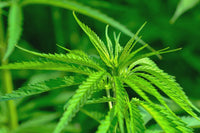
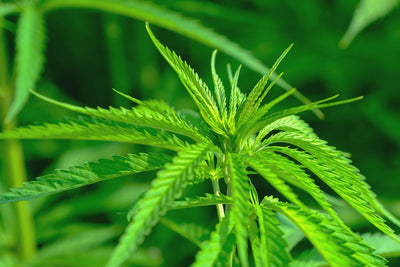
Photo by Brokkelen.nl via Pexels.
Purple Strawberry Popesicle isn't new, and it isn't tied to any lighting company's launch calendar -- it's a Night Owl Seeds autoflower, feminized, built as a 70/30 sativa-dominant cross of Popesicle (Purple Pheno) and Cookie Smasher. It's been available long enough that there's a reasonable base of grower reports to draw from, independent of whatever spectrum gear someone happens to run it under.
Flowering runs 80-90 days total given the autoflower life cycle, with yield landing in the average-to-high range for the category -- most growers report 2-4 oz per plant depending on container size, training, and overall dial-in. Purple coloration in this cross shows up the way it does in most anthocyanin-expressing genetics: late, concentrated in the final weeks of flower, and noticeably more pronounced when night temperatures run cool rather than warm.
The detail that should shape expectations more than anything else is the phenotype split. Grower reports on this cross consistently describe something close to a 50/50 divide -- roughly half of plants finish in vivid violet and purple tones, while the other half lean lime green with minimal pigment expression regardless of how they're grown. That split traces back to genetics, not environment. You can take two plants from the same seed pack, grow them side by side under identical light, temperature, and feed, and still end up with one deeply purple plant and one green one. It's the kind of variability that comes with crossing a purple-pheno parent into a line that doesn't carry the trait uniformly -- exactly what you'd expect from an autoflower cross rather than a stabilized, selectively-bred purple line.
That makes phenotype selection the first and most important variable in this whole conversation. Anthocyanin expression here is phenotype-dependent before it's anything else, and light or temperature protocols are modifiers on top of that baseline -- not substitutes for it. Set that expectation before spending money on spectrum gear aimed at pushing color on a plant that may simply not carry the trait.
What Actually Triggers Anthocyanin: Temperature, Nitrogen, and Light
Anthocyanin pigments aren't turned on by light exposure the way chlorophyll production is -- they're synthesized through a specific enzymatic pathway, and the environmental levers that matter most are temperature and nutrient availability, with light playing a smaller supporting role. Cool night temperatures in late flower, generally in the 60-68°F (15.5-20°C) range, slow pigment degradation and allow anthocyanins to accumulate and stabilize in leaf and calyx tissue across purple-expressing genetics broadly, not just this cross specifically. This is well-documented horticultural behavior, not strain-specific folklore -- it's the same reason maple leaves and grape skins deepen in color as autumn nights cool down.
Nitrogen availability is the second major lever. Tapering nitrogen over the final 2-3 weeks of flower, while increasing phosphorus and potassium in the feed, tends to intensify pigmentation in purple cultivars generally. High nitrogen late in flower keeps plants pushing green chlorophyll production, which visually masks the red-purple anthocyanins sitting underneath it; pull nitrogen back and the underlying pigment becomes more visible as chlorophyll breaks down naturally in senescing leaf tissue.
There's a useful parallel outside cannabis that illustrates why this is a pathway question rather than a lighting question. In strawberries, cyanidin-3-glucoside accounts for roughly 90% of total anthocyanin content, and its production is driven largely by the activity of the F3'H enzyme in the flavonoid pathway. Different plant, different enzyme specifics, but the same underlying principle: pigment output is governed by enzymatic pathways expressed according to genetics and triggered by environmental stress and temperature, not primarily dictated by which wavelengths are hitting the leaf surface.
None of this means spectrum is irrelevant. Shifting supplemental light toward blue or UV can support flavonoid pathway activity and has a real, if modest, role to play. But it's a supporting role. It will not override a phenotype that's genetically wired to finish green, and it won't produce results anywhere close to what a cold night and a clean nitrogen taper will do for a plant that's already carrying the purple trait. If you're deciding where to spend time and money first, temperature and feed management are the higher-leverage, lower-cost tools by a wide margin.
A Grounded Late-Flower Protocol for Chasing Purple

Photo by Washarapol D BinYo Jundang via Pexels.
If pigment is your goal with this cross, build the protocol around environment first and treat lighting as a secondary refinement. Starting around week 5-6 of flower, drop night temperatures into the 60-68°F range while holding day temps stable -- the goal is a strong diurnal swing, not a cold tent around the clock, since chilling day temps too aggressively can stress trichome development and slow resin production along with everything else.
Run the nitrogen taper on a parallel timeline, starting 2-3 weeks out from your expected harvest window. Shift your feed toward a phosphorus/potassium-heavy late-flower formulation and back off nitrogen-forward bloom nutrients during this stretch. Watch fan leaves for natural yellowing and die-back as chlorophyll breaks down -- that's the process that lets underlying anthocyanins show through, and it's supposed to happen.
If you're running an SE4500 and want to add a light-side component, bring in the 365nm UV supplemental bar for the final 2-3 weeks rather than expecting the stock fixture's spectrum to carry that work on its own. Introduce UV gradually -- short daily exposure windows ramped up over several days -- since UV stress responses can affect more than pigment if you go in at full intensity from day one.
Because this cross runs close to a 50/50 purple-to-green phenotype split, track results plant by plant, not tent by tent. A single average across a four-plant tent will blur the real story. If color matters enough to you to chase across future grows, select and preserve clones or seed from whichever individuals show the strongest pigment response under your conditions -- that's a far more reliable path to consistent purple than tuning any one environmental variable harder.
And hold your expectations loosely. Outcomes here vary by climate, tent setup, and the individual genetics in your specific seed pack -- a grower in a naturally cool basement will see different results than one running a tent in a warm garage, even with identical protocols. Starting with quality, well-bred seed stock from a reputable source gives you better odds of consistent pigment expression across a run than any amount of lighting-equipment experimentation ever will; Seedtiva's genetics are selected with exactly that kind of consistency in mind.
The lesson here extends well past one fixture and one strain. Grow-tech claims move fast through forums and social feeds precisely because they combine something verifiable with something aspirational, and the seam between the two is easy to miss if you're not tracing it back to an actual spec sheet or a real study. The SE4500's Bridgelux redesign is genuine, well-documented, and worth knowing about if you're in the market for a light in this power class. The anthocyanin story stapled onto it is not -- it's a plausible-sounding leap from a UV add-on's marketing copy to a stock fixture's spectrum, with no data connecting the two.
If purple color is actually what you're after, put your effort where the biology actually responds: phenotype selection first, then night temperature control, then a clean nitrogen taper in the final weeks. Those three variables will outperform any single light fixture, every time, on this cross or any other purple-leaning genetics. Spectrum tweaks and UV supplementation can refine an already-favorable result, but they can't manufacture one out of a plant that's genetically set to finish lime green.
None of that makes the SE4500 a bad light. Judged on its own technical merits -- the maintained PPF and PPE numbers, the diode-count compensation for the platform swap, the solid coverage footprint at 320W -- it's a competent, well-engineered fixture worth considering for a 4x4 flowering space. Just buy it for what it is, not for a pigment story it was never actually built to deliver.
Sources
- Spider Farmer SE4500 LED Grow Light Full Spectrum Hydroponics For Grow Light Kit
- 2026 Spider Farmer SE4500 320W Led Grow Light Dimmable High Efficacy
- Spider Farmer SE4500 Full Spectrum LED Grow Light 430W Smart App
- Spider Farmer®SE4500 320W LED Grow Light Dimmable High Efficacy
- Spider Farmer SE4500 Full Spectrum LED Grow Light