What Happens When a Cannabis Batch Fails Testing
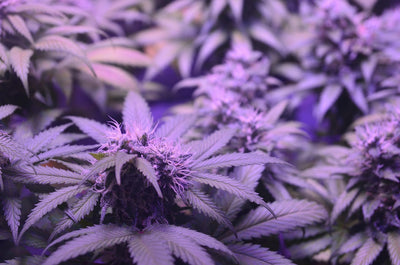
Photo by RF._.studio _ via Pexels.
The certificate of analysis hits your inbox on a Tuesday afternoon, and one line is flagged red. A harvest worth six figures is suddenly frozen on a shelf, and the next 15 to 60 days are set by rule, not by you.
A failed batch is not always a death sentence. Whether you can fix it, retest it or must destroy it depends on two things: what failed, and which state holds your license.
Rules differ by state, and some of what follows is still proposed rather than final. This article draws on California, Missouri, Oregon, Virginia and Kentucky. Treat it as a map of the terrain, then read the current rule text for your own license before you act on any of it.
Key takeaways
- Failed batches get quarantined and tracked first; remediate-or-destroy decisions come only after regulators are notified.
- Pesticide failures are the least remediable category in Oregon, Virginia and Kentucky, so prevention beats any cleanup plan.
- Retesting alone is not remediation: in California, a retest without remediation does not supersede the original failed result.
The First 48 Hours: Quarantine, Notify, Document
Start with the physical batch. Oregon's draft rules require a registrant whose batch fails to store and segregate it. California is more specific: the failed batch is quarantined at the distributor's premises, kept apart from other goods and labeled with the batch number.
Then start the clock on paper. Missouri requires you to notify the Division of Cannabis Regulation within fifteen days of a failed mandatory test. Fifteen days sounds generous until you factor in a weekend, a lab call and a compliance manager on vacation.
Record the exact date the failed result reached you. Oregon's draft requires that date to be recorded when a batch is re-sampled after a failure, and it is a good habit even where no one demands it. Every later deadline gets measured from somewhere, and you want your own record of where.
Here is the 48-hour checklist I run:
- Move the batch to a locked, labeled quarantine area, separate from sellable inventory.
- Log the date and time the failed result was received.
- Identify exactly which test category failed and by how much.
- Pull your state's notification deadline and put it on the calendar.
- Freeze all movement, sales and processing of the lot until you know your options.
One more rule to burn in. Kentucky bars combining a failed batch with another harvest or production batch. Blending a failed lot into a larger clean one feels like a clever dilution trick. It is a violation, and in any state it will look like concealment rather than a mistake.
Which Failures Can Be Fixed and Which Cannot
Most states sort failures by test category: microbiological, residual solvents, heavy metals, mycotoxins, water activity or moisture, pesticides and potency. The category decides everything, because each one has a different physical fix, or none at all.
Oregon's draft has separate subsections for each of those failures. It allows remediation of microbial failures, though a batch that fails again after sterilization is treated separately. Solvent failures may be remediated with procedures that reduce solvents, and heavy metal failures may be remediated too.
Virginia is narrower and speaks specifically to oil. Cannabis oil that fails microbiological, mycotoxin, heavy metal or residual solvent testing may be remediated through further processing. Oil that fails pesticide chemical residue testing cannot.
Pesticides are the dead end. They are the least remediable category in Oregon, Virginia and Kentucky. Oregon's draft excerpt says a pesticide-failed batch may not be remediated, and that includes finished inhalable cannabinoid products, though the excerpt cuts off, so confirm the exact wording.
Kentucky takes a sorting approach. Technical Advisory 2026-014, issued August 27, 2026 under 915 KAR 1:110, Section 5, separates remediable failures from destroy-only ones. Read the advisory itself for the list rather than trusting a summary.
| Failure type | Oregon (draft) | Virginia |
|---|---|---|
| Microbiological | May be remediated; repeat failure after sterilization treated separately | Oil and botanical: may be remediated |
| Residual solvents | May be remediated | Oil: may be remediated |
| Heavy metals | May be remediated | Oil and botanical: may be remediated |
| Mycotoxins | Separate subsection; check draft text | Oil and botanical: may be remediated |
| Pesticides | Generally not remediable (confirm wording) | Oil: not remediable |
This table is state-specific and Oregon's column is proposed, not final. Your state may sort things differently.
Remediation in Practice: Sterilization, Solvent Purge and Paperwork
Remediation sounds like a single step. In practice it is a technical process plus a stack of paperwork, and the paperwork is where batches get stuck.
On the technical side, microbial failures on flower typically go to a sterilization method, while solvent failures on extracts go through procedures that reduce the solvents. Oregon's draft frames it this way. Which methods a regulator accepts is a state decision, so I won't hand you a protocol here.
California runs the process through a corrective action plan. The plan must be approved by the Department of Cannabis Control and sent to remediation@cannabis.ca.gov. A lab's explainer puts the submission deadline at 30 calendar days from COA issuance, so verify that against current DCC rules. After approval, the failed batch must reach the approved manufacturer or microbusiness within 30 calendar days.
Missouri governs remediation under 119 CSR 100-1.110(10)(B). You file either the Approved Remediation Method Notification Form (6/16/2025) or, if your method is not on the approved list, the Unapproved Remediation Method Request Form (1/8/2026). Both are filed one form per failed tag, which matters when a harvest carries many tags.
Kentucky wants transparency before the retest. You must tell the safety compliance facility that the batch previously failed, and disclose the remediation or sterilization methods and any solvents used. Skip that disclosure and you have turned a fixable problem into a compliance one.
Run the math before you commit. Remediation costs money for processing, transport and retesting, and aggressive treatment can knock down terpenes and sometimes potency. A low-value trim lot may be worth more as a clean write-off, while a premium flower lot with one fixable failure often justifies the effort.
Retesting Is Not a Do-Over
Retesting feels like the obvious move. Nudge the sample, run it again, hope for a pass. Regulators designed the rules specifically to stop that.
In California, a lab may not retest a failed batch. It must issue the COA on the initial testing, and it may not amend a COA after issuance. A lab explainer adds that a retest without remediation does not supersede the original result. That source is dated, so check it against current DCC rules.
Missouri is more flexible but still structured. You may reanalyze the sample, and the original lab or a different one can do it. After remediation, though, the lot must be resampled and retested, not just reanalyzed.
Virginia follows the same logic for oil. Once further processing is done, a full retest follows. The point is that a fix has to be proven on the fixed product, not assumed.
Oregon is in flux. The Oregon Health Authority's Notice of Proposed Rulemaking, dated 09.30.2026 and covering rules 333-007 and 333-064, says current rules do not permit re-testing in certain situations and proposes to address that. It is a proposal, not a final rule, and the excerpt I saw did not say which situations. Check whether it has been finalized.
Then there is lab shopping, the temptation to send a failed lot to a friendlier lab. Regulators track results, and some states require disclosure of prior failures outright. Kentucky does. If a second lab produces a pass without a documented fix behind it, expect questions, not a clean bill of health.
When the Answer Is Destruction
Some batches simply end. California requires a failed batch to be destroyed within 60 days of failure unless it can be remediated. If the DCC decides a batch cannot be remediated, the distributor must destroy it within 30 days of notification.
Missouri frames destruction as one of four options after a failed mandatory test: reanalyze the sample, remediate by an allowed method, request approval for another method, or destroy the product. Destruction is a choice you make deliberately, with the others on the table.
Virginia offers a notable salvage path. A botanical batch that fails retesting counts as usable cannabis and may be processed into cannabis oil. The exception is a pesticide failure, which bars processing into oil entirely. That one carve-out tells you how seriously regulators treat pesticide residue.
Whatever the route, destruction is a regulated event, not a dumpster run. Record it in the state tracking system and keep the supporting records on file for audits. Photos, witness names, dates and the method used all help if anyone later asks what happened to that lot.
Treat the deadline as hard. Sitting on a doomed batch past its window creates a second violation on top of the first, and storage of failed product is a liability nobody wants to carry.
Preventing the Fail Before the Sample Is Pulled
Everything above is the expensive way to learn. The cheap way is to stop the failure before the compliance sample is pulled.
Pesticide failures are rarely fixable, so control your inputs. Vet every nutrient, spray and clone source, and check labels and supplier documentation. Outdoors, watch for drift from neighboring properties.
Microbial and mold risk builds in late flower and then in the dry. High humidity, poor airflow and dense canopies set the stage, and a slow or uneven dry finishes the job. As a general practice, aim for a controlled dry at roughly 60 F and 60% RH over 10 to 14 days. Results vary by setup, so adjust to your room.
Water activity and moisture failures usually trace back to a rushed dry or cure and poor storage afterward. Do not pack jars or bins before the stems snap cleanly, and keep storage stable.
Screen before you sample. Where permitted, run in-house or third-party pre-harvest testing so you learn about a problem while you still have options. A pre-test costs a fraction of a failed lot.
Starting clean matters too. Clean genetics and a clean starting environment lower your risk before a single plant goes in, and Seedtiva offers quality genetics and well-bred seeds as a sound starting point. Outcomes still vary by climate, facility and genetics, so no seed makes up for sloppy sanitation or drying.
The states agree on the shape of the process: quarantine, notify, remediate or destroy, then retest. They disagree on the details, from deadlines to forms to which failures are fixable. A written failed-batch playbook tied to your own state's current rule text is the best investment you can make before you ever need it.
Treat remediation as an expensive fallback, not a plan. Pesticide control is the real strategy, because that is the failure you usually cannot undo. A clean grow beats the best corrective action plan every time.
Sources
- OFFICE OF THE SECRETARY OF STATE TOBIAS READ SECRETARY OF STATE MICHAEL KAPLAN
- Failed Mandatory Testing Forms
- Cannabis Batch Requirements that Fail Regulatory Compliance Testing
- Representative sampling checklist for distributors - Department of Cannabis Control
- Title 3. Alcoholic Beverage and Cannabis Control
- OMC Guidance on Hard Edible Stamping and Batch Remediation - Kentucky Cannabis Law Blog