What It Really Costs to Grow Your First Cannabis Plant
Photo by Jamie Edwards via Unsplash.
Before anyone drops a seed into soil, they want a straight answer to one question: what is this actually going to cost me? Not the marketing-brochure version, the real number, with taxes and shipping and the stuff nobody mentions until you're three weeks in and realize you forgot to budget for a pH meter. It's a fair question, and the answer has a wider range than most people expect.
Here's the headline version. Growing a single plant outdoors, from seed to harvest, can be done for $50 to $80 total. Going indoors changes the math entirely -- a bare-bones tent setup starts around $200 to $300, and a more complete first build with proper lighting, ventilation, and monitoring gear lands in the $1,000 to $1,250 range. Both paths produce smokable cannabis. They just get there very differently, and the price tag reflects how much control over the environment you're buying.
What most first-timers miss is that the first harvest was never the point where the savings show up. That harvest is the expensive one -- it's carrying the full weight of your equipment cost, your learning curve, and probably a few mistakes. The real payoff arrives in year two and beyond, once the gear is already paid for and you're just buying nutrients and paying an electric bill. That's when a homegrown ounce starts costing a small fraction of what a dispensary charges.
One thing has to be said before any of the cost math matters: legality and plant limits vary enormously by state, and some legal-weed states still don't allow home cultivation at all. Check your local law first. No amount of budgeting advice is useful if the grow itself isn't legal where you live.
Outdoor: The Cheapest Way In

Outdoor is the cheapest legal path into growing your own, and it's not close. A single outdoor plant, grown in native soil or a fabric pot with basic amendments, typically runs $50 to $80 for the entire season -- seed included. That number holds up because the two most expensive line items in any indoor budget, lighting and climate control, simply don't exist outdoors. The sun is free, it covers a far wider spectrum than any LED panel on the market, and it doesn't show up on your electric bill.
Your real hard costs are a fabric pot in the 5 to 15 gallon range (bigger pots mean bigger root systems and bigger plants, so size up if your space allows), a basic soil mix with some organic amendment already worked in, and enough basic nutrients to carry the plant through veg and flower. Fabric pots run somewhere between $8 and $25 depending on size and brand, and a quality bagged soil mix is usually $15 to $25 for enough to fill a couple of containers. That's most of your budget right there.
What surprises a lot of first-time growers is how much genetics matter outdoors specifically. Indoors, you can paper over a mediocre seed with dialed-in PPFD, tight VPD control, and perfect feeding -- you're compensating constantly. Outdoors, you don't get that luxury. The plant is at the mercy of whatever your regional climate throws at it: humidity swings, temperature drops, pest pressure, an early frost. A genetically weak or unstable seed has nowhere to hide in those conditions, and a rough season can turn into a wasted one.
That's why the seed itself is worth spending real attention on, even on a shoestring budget. A well-bred feminized seed from a reputable breeder -- Seedtiva included -- runs $10 to $30 and is genuinely cheap insurance against losing an entire outdoor season to a plant that turns out to be a low-vigor dud or, worse, not actually feminized. On a total budget of $50 to $80, the seed is 20 to 40 percent of your cost and probably 80 percent of your outcome.
Indoor: What a Basic Tent Setup Actually Costs

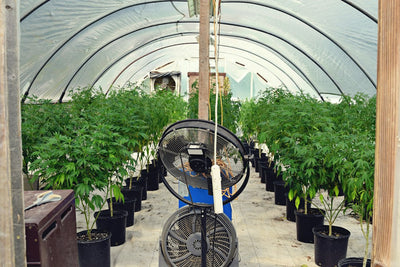
Indoor growing is where the budget conversation gets interesting, because the range is huge and almost entirely a function of how much control you want to buy. On the bare minimum end, a small tent grow for a first attempt can be pulled off for $200 to $300, and with careful shopping it's realistic to stay under $500 for a complete, functional setup.
Start with the tent itself, since everything else is sized around it. A decent tent alone runs $70 to $150 depending on dimensions and build quality -- look for 600D or 1680D canvas with a sturdy frame, since the cheap ones sag under the weight of lights and ducting. Bundled kits solve a lot of guesswork for beginners: a 4x4 tent packaged with a fan, carbon filter, and a 100-watt LED currently sells for around $203, which is a genuinely good entry point if you don't want to source components separately and risk mismatched sizing.
A more complete beginner build looks different. Add a proper full-spectrum LED sized to your canopy, an inline fan and carbon filter rated for your tent's volume, a digital thermometer/hygrometer combo so you can actually track VPD instead of guessing, fabric grow bags for the containers, and a starter set of nutrients with pH up and down. Add it up and you're looking at $1,000 to $1,250 for a setup that will actually hold stable conditions through a full flowering cycle rather than fighting you the whole way.
Seeds versus clones is worth thinking through here too. A pack of feminized seeds runs $10 to $30, while a clone typically costs $20 to $50 per plant. Clones skip the germination gamble entirely -- you know exactly what you're getting and it's already rooted -- but you're locked into whatever genetics that clone carries, with none of the diversity or vigor you'd get selecting from a fresh seed pack.
The single biggest lever on total cost is tent size and light wattage. A 2x2 tent with a 100W LED and a 4x8 tent with a 600W LED are not the same purchase decision, and it's easy to overbuy on square footage you don't have room to properly ventilate. Match tent size to your actual available space and electrical capacity before you spend a dollar on anything else.
The Ongoing Costs Nobody Budgets For

First-grow costs vary dramatically by method: basic outdoor setups can start around $65, while a complete indoor kit can run over $1,100—more than 17 times as much.
The purchase price is only half the story, and it's the half everyone budgets for. The ongoing costs are where first-timers get caught off guard, especially indoors.
Electricity is the big one. Depending on light wattage, tent size, and your local utility rates, indoor growers typically see $50 to $200 added to their monthly power bill during an active grow. A 100W LED running 18 hours a day in veg draws a lot less than a 600W fixture running 12/12 in flower, and your local rate per kilowatt-hour matters just as much as the equipment itself -- the same setup costs noticeably more to run in California than in a state with cheaper power. Some estimates put total per-harvest running costs -- electricity, nutrients, and replacement seeds combined -- at $100 to $300, and that figure tends to land toward the lower end for smaller tents and toward the higher end once you're running bigger lights for longer flowering photoperiods.
This is really why indoor costs more than outdoor in year one, and it's an important distinction: growing itself isn't more expensive indoors, the equipment is. You're amortizing a tent, a light, a fan, and a filter across however many harvests you get out of them before something needs replacing. Once that equipment is paid off, the ongoing cost of running an indoor grow starts looking a lot more reasonable.
Nutrients, pH adjusters, and filter replacements are the recurring line items people forget to plan for. A carbon filter loses efficiency over time and typically needs replacing every 12 to 18 months of regular use. Bottled nutrient lines need restocking every grow cycle, and pH up/down solutions run out faster than people expect once you're testing runoff regularly. None of these are individually expensive, but they add up across a season in a way that catches first-timers who budgeted only for the big-ticket equipment.
Outdoor stays cheap on the ongoing side too, which reinforces why it's the low-cost entry point. Your recurring costs are mostly water, occasional pest control if aphids or spider mites show up, and maybe one or two nutrient top-ups through the season if your soil isn't already well-amended. There's no electric bill attached to sunlight.
When Does Growing Your Own Actually Pay Off

Photo by Wesley Gibbs via Unsplash.
Here's where the math actually starts to matter. Dispensary cannabis runs $150 to $400 an ounce depending on your market and the quality tier you're buying, with legal states on the higher end of that range once taxes are factored in. That's the number you're measuring your grow against.
Once an indoor setup is amortized past its first year -- meaning the tent, light, and fan are already paid for and you're just covering electricity and nutrients -- a mid-tier indoor grow produces cannabis at roughly $13 to $25 an ounce. That's not a typo. The gap between that number and dispensary pricing is the entire reason people keep growing after their first harvest instead of treating it as a one-off experiment.
The catch is timing. Break-even on an indoor setup typically lands two to three harvests in, which works out to roughly six to nine months of grow cycles depending on your strain's flowering time and how quickly you can turn the tent around between runs. Your first harvest is carrying the full cost of the equipment on its own, which is why it always feels expensive relative to what you got out of it. The second and third harvests are where the equipment cost gets spread thin enough that the per-ounce number starts looking like the $13 to $25 range instead of something closer to dispensary pricing.
Outdoor growers see the payoff faster and more dramatically, mostly because there's so little equipment cost to amortize in the first place. A single healthy outdoor plant, given decent genetics and a full season, can yield around 8 ounces. At the low end of dispensary pricing, buying 8 ounces would run $1,200; at the high end, it's over $3,200. Against a $50 to $80 total outdoor grow cost, that's a return that shows up in your very first season, not your third.
The pattern across both paths is the same: the first harvest is the expensive one, and patience is what makes the rest of the math work in your favor. Growers who quit after one indoor cycle because it felt costly are quitting right before the setup starts paying for itself.
Check Your State Before You Spend a Dime

Photo by Brett Sayles via Pexels.
None of the cost math above matters if the grow itself isn't legal where you live, and this is the part first-timers skip past too quickly. As of 2026, roughly 21 to 24 states plus Washington D.C. allow some form of home cultivation, though that number shifts as legislatures act -- always confirm current status before spending anything.
The patchwork gets genuinely strange in a few places. Delaware, New Jersey, and Washington all have legal adult-use retail sales, meaning you can walk into a licensed store and buy cannabis legally, but none of them permit recreational home cultivation. You can buy it, you just can't grow it yourself, at least not yet. Illinois splits the difference differently -- home cultivation there is limited to registered medical patients, so if you're an adult-use consumer without a medical card, growing at home isn't on the table regardless of how much retail cannabis you're legally allowed to purchase.
Washington's situation is worth watching closely if you're in-state, because it illustrates how slow this can move even with sustained effort. Lawmakers there have tried and failed to legalize home grows for 11 consecutive years. A new bill introduced in January 2026 proposes allowing six plants per adult, and it's still facing pushback from law enforcement groups and city governments concerned about enforcement and zoning. There's no guarantee this year is the year it finally passes.
Where home cultivation is legal, most states settle on similar limits: around six plants per adult, capped at 12 plants per household no matter how many adults actually live there. That household cap matters more than people expect -- two adults in the same house don't each get their own six plants, they're sharing a combined limit of 12.
The practical takeaway is simple. Rules in this space change fast, sometimes year to year, and registration requirements vary even among states that do allow home grows. Verify your current local law -- state statute, not just what a dispensary employee told you -- before you buy a single seed, a pot, or a light.
Strip away the variables and the answer settles into something pretty clean. If your climate cooperates and your state allows it, outdoor in a fabric pot is almost always the cheapest legal path to a first harvest -- $50 to $80, sunlight doing the heavy lifting, and a yield that can outright dwarf what you spent to get there.
Indoor buys you something outdoor can't offer: control over temperature, humidity, light schedule, and timing, plus the ability to run multiple cycles a year regardless of season. That control has a price, and you pay it upfront in equipment rather than on the first harvest itself. Neither path is the wrong choice -- they're answering different questions about what you actually want out of growing.
Whichever route you take, don't cut corners on the seed. It's $15 to $30 out of a budget that might run into four figures, a small fraction of total cost, and yet it's the one input that determines almost everything else about how the season goes -- vigor, yield potential, resistance to stress, whether you're working with a stable feminized plant or rolling dice. Everything downstream of that seed -- your soil, your lighting, your feeding schedule -- is you managing the potential that seed already came with. Spend where it counts, and remember that results always depend on your specific climate, setup, and genetics rather than any guaranteed number.