Cannabis Packaging Compliance in 2027: A State-by-State Guide
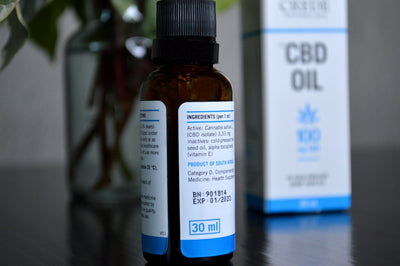
Photo by Resilience CBD via Unsplash.
Packaging compliance has always been one of those back-office line items that cannabis operators handle once and forget. That approach is about to stop working. Across a half-dozen state markets, 2027 is lining up as a genuine reset year for how cannabis products get sealed, labeled, and shipped to retail shelves -- not a handful of isolated tweaks to ignore until a compliance officer flags them.
Nearly everything traces back to a single federal baseline: the Poison Prevention Packaging Act, administered by the Consumer Product Safety Commission, which requires that at least 85% of children under five fail to open a package within a set window and at least 90% of adults succeed. That standard has quietly governed cannabis packaging since states started legalizing sales, and it's not going anywhere. What's changing is everything states are stacking on top of it.
A cluster of deadlines lands in the middle of 2027 -- California, Ohio, and Virginia all have packaging-related dates converging around that window, which matters enormously once you account for the lead time needed to redesign artwork, requalify child-resistant closures, and run new print jobs. And the scope has widened well past child-resistance testing. Anti-cartoon imagery bans, single-use plastic reduction mandates, and universal THC symbol requirements are now part of the same compliance conversation, often enforced by entirely different regulatory bodies within the same state.
The Federal Baseline Every State Builds On

Photo by Tima Miroshnichenko via Pexels.
Every state packaging rule in the country sits on top of the same federal floor. The CPSC's Poison Prevention Packaging Act requires that a test panel of children under five years old fail to open a package within five minutes if they've watched a demonstration, or ten minutes if they haven't -- and at least 85% of that panel has to fail. On the flip side, at least 90% of adults in the same test have to be able to open the package and then properly re-secure it, which is the part operators sometimes overlook when they're focused purely on keeping kids out.
States don't replace this standard -- they build on it. Labeling content requirements, serving-size limits, imagery restrictions, and universal THC symbols all get layered on top of the federal child-resistant testing baseline, which stays essentially constant from state to state. A package that passes CPSC testing in Colorado isn't automatically compliant in California or Ohio, but it's passed the hardest part.
That layering effect is exactly why multi-state operators tend to over-engineer their packaging rather than chase the bare minimum in each individual market. Designing fifteen separate packaging configurations tuned to the exact minimum requirement in each state is a logistical nightmare and a recipe for a shipment getting flagged at a border or failing a retail audit. Most MSOs instead build toward the strictest combination of requirements they're likely to encounter, then adjust labeling content state by state while keeping the physical child-resistant mechanism and base construction consistent. It costs more upfront but it means a single redesign cycle, not a dozen.
California: Two New Laws and a Plastics Deadline Collide

Photo by Elsa Olofsson via Unsplash.
California is the clearest example of why 2027 deserves its own compliance calendar rather than a single due date. Governor Newsom signed AB 2532 on September 30, 2026, and it requires clearer dosage and serving information on labels, mandates measurement tools for certain cannabis-infused drinks, and requires the national Poison Help line number to appear on edible and beverage packaging. The provisions covering multi-serving beverages specifically become operative July 1, 2027, giving beverage makers a hard date to have updated labels and, in some cases, dosing tools physically integrated into the product packaging.
Running alongside that is AB 2249, which targets packaging designed to appeal to children -- cartoon characters, anthropomorphic figures, certain playful fonts. The Department of Cannabis Control is required to publish a compliance rubric by July 1, 2027, so brands won't even know the exact design parameters until that date lands. There's a cushion built in: existing non-compliant inventory can still be sold through January 1, 2028, but that's strictly a sell-through allowance for stock already produced, not a license to keep printing old designs.
Then there's SB 54, California's extended producer responsibility law for plastics, which applies to cannabis packaging producers just like any other packaged-goods category. The first approved producer responsibility organization, Circular Action Alliance, is targeting program implementation on or before January 1, 2027, and producers are required to hit a 10% reduction in single-use plastic packaging by that same date. The CAA's final draft program plan, submitted to CalRecycle on October 13, 2026, proposes a 2027 program budget north of a billion dollars. Put together, California brands are tracking three distinct compliance clocks -- labeling, imagery, and plastics -- that happen to land in the same calendar year but answer to different regulators entirely.
Ohio and Virginia: One Market Tightens, One Launches
Ohio and Virginia show two very different versions of the same pressure. Ohio's updated packaging and labeling rules took effect September 11, 2026, and the Division of Cannabis Control's transition guidance set June 1, 2027 as the deadline for compliant packaging on any product transferred to a dispensary. New package and serving limits under OAC 1301:18-4-06 already took effect October 5, 2026, ahead of that labeling deadline, which means Ohio operators are effectively working through a staged rollout rather than a single cutover date.
That staging matters because Ohio already has a functioning supply chain, with cultivators, processors, and dispensaries all holding existing inventory and packaging stock built around the old rules. Retrofitting that pipeline -- clearing old packaging, requalifying new designs, coordinating transfer timing with dispensaries -- takes real logistical planning, especially for processors who package months of product in batches.
Virginia is the opposite case: a market being built from scratch. The Cannabis Control Authority expects to finalize regulations in December 2026, with an effective date in January 2027 and retail sales beginning July 1, 2027. But the packaging standards themselves aren't waiting on rulemaking to be written -- they're already codified under Virginia Code Section 4.1-1405, covering retail-package standards, labeling content, the universal THC symbol, certificate-of-analysis access requirements, and prohibitions on certain kinds of product presentation.
That's a meaningful contrast for anyone operating in both states. Ohio companies are reworking packaging around products and systems that already exist. Virginia vendors get to build compliant packaging into their launch plans from the very first production run, with the rules fully visible before a single retail shelf goes live. As always, confirm current requirements directly with each state's regulator, since both states' rules are still being finalized or clarified through guidance documents.
Minnesota, Vermont, Maryland and Illinois: The Smaller Moves That Still Matter

Photo by Elsa Olofsson via Unsplash.
Not every state is tightening packaging rules in the same direction, and a handful of smaller moves this cycle actually loosen some requirements while tightening others. Minnesota's Laws 2026, chapter 123, removes the state's general plain-packaging mandate but still requires prepackaging for most cannabis products, with additional medical-program changes phasing in through 2027. It's a partial rollback, not a wholesale retreat from packaging regulation.
Vermont took a narrower but still consequential step: the Cannabis Control Board announced on February 25, 2026 that it would stop accepting new packaging-waiver applications until 2027. Operators who already hold waivers -- covering things like post-consumer recycled plastic pouches, glass vape cartridges, and dropper tops -- keep those waivers valid through October 2027. That gives existing waiver-holders a real runway, but anyone hoping to get a new exemption approved is simply out of luck until the window reopens.
Maryland's proposed rule package, with a public comment period that closed July 27, 2026, would add a sublingual pouch product category to its regulatory framework while dropping its own plain-packaging requirement -- another instance of a state easing one rule while adding specificity elsewhere. And Illinois extended cannabis-style packaging logic into an adjacent market entirely: its hemp bulletin, effective November 12, 2026, now requires CPSC-compliant child-resistant sealed containers for all consumer hemp products sold in the state, closing a gap that had let some hemp-derived products skip the testing standard cannabis products have followed for years.
Taken together, these smaller states point toward the same overall direction as the bigger markets: regulators are willing to drop plain-packaging mandates that didn't do much for safety, while tightening child-resistance and category-specific requirements that actually prevent accidental ingestion.
What Brands, Cultivators, and Dispensaries Should Do Now

Photo by Kindel Media via Pexels.
The practical response to all of this starts with a real state-by-state compliance calendar, not a mental note that says 2027 is a busy year. California, Ohio, and Virginia all have mid-2027 deadlines sitting close enough together that a brand selling in all three needs to start redesign and print-run planning well before the new year even begins -- packaging lead times don't compress just because three deadlines happen to land in the same quarter.
Loop in packaging suppliers early, specifically around child-resistant testing certifications. Any meaningful tweak to a closure mechanism or container design can trigger a need for re-testing, and that process alone can add weeks to a production timeline that was already tight. Waiting until a final rubric or rule is published before starting supplier conversations is how brands end up scrambling in June.
Pay close attention to sell-through windows, and don't confuse them with production deadlines. California's AB 2249 allows non-compliant inventory to be sold through January 1, 2028, but that's a grace period for product already sitting on shelves or in distribution -- it's not permission to keep manufacturing old packaging designs past the rubric's publication date.
- Track plastic-reduction and EPR obligations, like California's SB 54, as a completely separate compliance track from child-resistance and labeling -- different regulator, different reporting cycle, different penalties.
- Confirm every detail directly with state regulators or legal counsel before finalizing packaging runs, since several of these rules are still being amended or clarified through guidance documents even as deadlines approach.
None of this is optional busywork. Operators who get packaging wrong at scale face product holds, recalls, or lost shelf space at exactly the moment competitors with compliant inventory are filling that gap.
Strip away the state-specific details and the pattern is the same everywhere: packaging compliance has stopped being a one-time checkbox you clear before launch and filed away. It's turned into an ongoing regulatory relationship, with separate tracks for child-resistance testing, imagery restrictions, plastic reduction, and labeling content, each running on its own clock and answering to its own regulator.
The operators most likely to get caught flat-footed in 2027 are the ones treating these deadlines as a single due date rather than a cluster of distinct, overlapping requirements. A brand that gets its AB 2532 labeling updated in California but misses the AB 2249 imagery rubric, or hits its child-resistant testing but ignores its SB 54 plastic-reduction percentage, is still out of compliance -- just on a different axis than the one it was watching.
Expect more of this, not less. As additional states mature their adult-use programs past the initial launch phase, the pattern holding across California, Ohio, Virginia, and the smaller markets covered here -- a federal child-resistance floor with increasingly specific state-level layering on top -- looks like the template going forward rather than a 2027 anomaly.