


Cannabis Reform Is a Civil Rights Issue, Not Just Policy
Photo by Shane Raynor via Pexels.
Twenty-four states have legalized recreational marijuana. Nearly forty allow medical use in some form. If you only read headlines, you'd assume the drug war on cannabis wound down years ago. The arrest data says otherwise. Black Americans are still arrested for marijuana at rates that dwarf their white counterparts, in legal states and illegal states alike, at usage rates that are essentially identical across racial lines. The policy map changed. The enforcement map didn't move nearly as much.
Then there's the rescheduling news out of Washington in 2026, which on its face sounds like the biggest federal cannabis shift in fifty years. It isn't nothing. But for the average person buying flower at a dispensary, or the person who got popped for possession in a state without legal weed, the practical difference is closer to zero than the press releases suggest. Recreational marijuana, for most people, is still sitting in the same legal category as heroin.
That's the tension worth sitting with: a growing pile of laws, executive orders, and court rulings that look like progress on paper, set against arrest reports, prison rosters, and stalled expungement dockets that tell a much slower, much more unequal story. Civil rights language gets attached to cannabis reform a lot these days. The numbers below are why that framing isn't rhetorical.
The Arrest Gap Hasn't Closed -- It's Widened
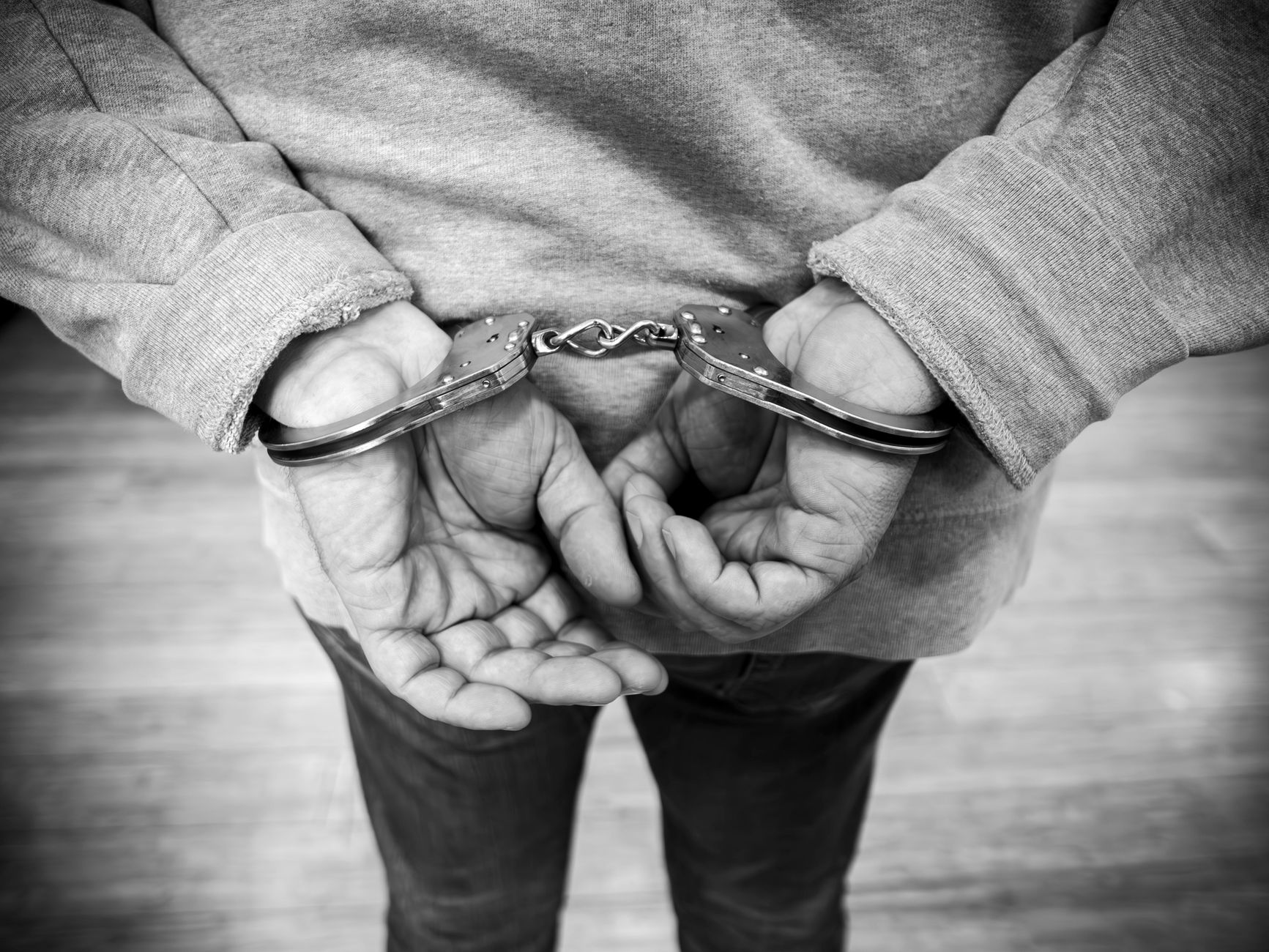
Photo by SHOX ART via Pexels.
The ACLU's long-running analysis of marijuana arrests put the national disparity at 3.6 times -- meaning Black people get arrested for cannabis at more than three and a half times the rate of white people, despite federal survey data showing roughly equal usage between the two groups. That number alone is damning. What's worse is the trendline: rather than shrinking as legalization spread, the gap actually widened in 31 states between 2010 and the most recent data available, even as more of the country moved toward legal or decriminalized markets.
The state-by-state spread is where this gets stark. Colorado, one of the first states to legalize recreational cannabis back in 2012, has the smallest racial gap in arrests in the country at 1.5 times. Compare that to Montana, Kentucky, Illinois, West Virginia, and Iowa, all of which post disparities above 7 times -- meaning a Black resident in those states is more than seven times as likely to be arrested for marijuana as a white resident doing the same thing.
Washington D.C. offers maybe the sharpest single data point in this whole conversation. Between 2015 and 2019, the district recorded 3,631 marijuana arrests. Eighty-nine percent of those arrested were Black, in a city where Black residents make up about 45% of the population. That's not a rounding error; that's a policing pattern.
Decriminalization does help. States that decriminalized possession saw arrest rates drop by more than 70%, and the racial disparity itself shrank by roughly 17% in those jurisdictions. That's a real, measurable improvement -- but a 17% reduction on top of a multiple-times gap still leaves a wide, well-documented racial disparity standing.
Rescheduling Sounds Big, But Read the Fine Print

Photo by Markus Winkler via Pexels.
On December 18, 2025, President Trump signed an executive order directing the Attorney General to expedite the long-stalled process of rescheduling marijuana under federal law. It read like the culmination of years of DEA review, court challenges, and lobbying from both the medical and adult-use sides of the industry. Cannabis advocates who've watched this process crawl since 2022 had reason to pay attention.
What actually happened next was narrower than the headlines implied. Acting Attorney General Todd Blanche's order moved FDA-approved marijuana drug products and state-licensed medical marijuana programs to Schedule III, effective April 28, 2026. That's a meaningful shift for pharmaceutical cannabinoid products and for people operating within state medical programs. It is not a rescheduling of marijuana itself as most consumers encounter it.
Everything outside that narrow lane -- recreational cannabis, any product that isn't FDA-approved or tied to a state medical license -- remains classified as Schedule I, the same category as heroin, alongside substances the DEA considers to have no accepted medical use and a high potential for abuse. A full rescheduling hearing at the DEA's facility in Arlington, Virginia is scheduled to run from June 29 through no later than July 15, 2026, and that proceeding will determine whether marijuana's broader classification actually shifts.
Until that hearing produces a ruling, the practical effect for most consumers and businesses operating in adult-use states is close to nothing. Federal criminal exposure for recreational cannabis activity hasn't changed. The banking, tax, and interstate commerce headaches tied to Schedule I status haven't changed either. The order matters for a specific slice of the medical cannabis world -- it just isn't the sweeping fix a lot of coverage made it sound like.
Expungement Promises Versus What Actually Happens
Since marijuana prohibition began in earnest, more than 30 million arrests have been logged in the United States. Of the millions of resulting convictions, just over 2.3 million have been formally cleared through expungement, vacatur, or pardon. That leaves millions of people who are technically eligible for relief but haven't received it, and it explains why expungement is where a lot of reform advocacy has shifted focus.
Only 13 states currently run automatic expungement systems, where records clear without the person having to file anything. Everywhere else, the burden falls on the individual -- and nationally, fewer than 15% of people eligible for expungement ever actually file the paperwork. That's not because people don't want clean records; it's because the process is confusing, costly, or simply unknown to the people it's meant to help.
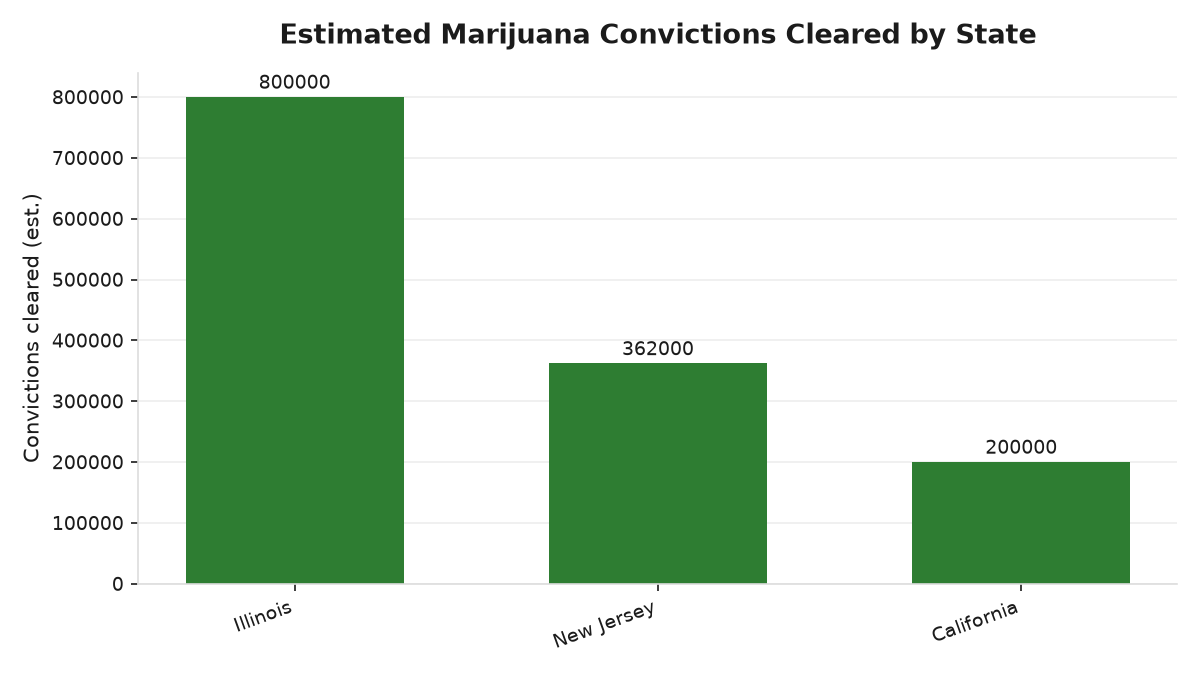
The states that have gone big on automatic relief show what's possible. Illinois expunged an estimated 800,000 marijuana convictions. New Jersey dismissed or vacated roughly 362,000 cases. California cleared close to 200,000. These aren't pilot programs -- they're proof that automatic systems can move at real scale when states build the infrastructure for it.
Missouri is the cautionary example. The state promised automatic expungement by June 8, 2023, under its adult-use legalization law. Yet state police have since told an appellate court that hundreds of thousands of eligible offenses may still be sitting on people's records, unresolved years after the deadline the law itself set. Meanwhile, an estimated 40,000 people remain incarcerated nationwide for cannabis offenses -- some of them in states where the exact conduct that put them behind bars is now perfectly legal.
Clemency Shows What's Possible When Leaders Act

Photo by Julia Sakelli via Pexels.
Executive clemency has moved faster than almost any legislative or court-based process, and it's worth looking at why. On January 17, 2025, President Biden commuted the sentences of 2,500 people incarcerated on non-violent drug offenses, a group that included nine individuals whose cases had been championed by the Last Prisoner Project, an advocacy organization focused specifically on cannabis-related incarceration. A single signature freed more people in one day than most state expungement statutes process in years.
Maryland provided the state-level version of that story in 2024, when Governor Wes Moore pardoned more than 175,000 residents with misdemeanor marijuana convictions. It's one of the largest single acts of clemency for cannabis offenses in U.S. history, and it happened through executive action rather than a slow-moving court docket or an opt-in filing system.
What both examples share is speed and reach. Court-by-court review and individual filing requirements process cases one at a time, at the mercy of court backlogs, legal fees, and whether someone even knows they qualify. Executive clemency skips that bottleneck entirely and clears people by the tens of thousands in a single action.
Set that against Missouri's stalled rollout and the lesson is hard to miss: legislation that promises automatic relief means nothing if the agencies responsible for executing it don't have the resources, mandate, or urgency to follow through. Maryland and Missouri both passed reform-minded laws. One delivered results measured in the hundreds of thousands within months. The other left hundreds of thousands of records unresolved years past its own deadline. The difference wasn't the law on the books -- it was what happened after the ink dried.
What Real Reform Would Require

Photo by Brett Sayles via Pexels.
Automatic, no-application expungement needs to stop being a 13-state exception and become the baseline everywhere cannabis is legal or decriminalized. Fewer than 15% of eligible people filing on their own isn't a personal responsibility problem -- it's a design failure that automatic systems in Illinois, New Jersey, and California have already shown how to fix.
Federal rescheduling to Schedule III, whatever the DEA ultimately decides after its Arlington hearing, doesn't touch arrests, criminal records, or incarceration for the vast majority of cannabis activity that remains classified as Schedule I. That's a separate problem requiring separate solutions -- state-level decriminalization, legalization, and record relief, not a federal scheduling memo.
The gap between Colorado's 1.5x arrest disparity and Iowa's 7x-plus disparity is proof that state and local enforcement choices matter just as much as what category the DEA puts marijuana in. Two states can have similar cannabis laws on paper and produce wildly different outcomes for who actually gets arrested.
If you're trying to figure out where you or someone you know stands, check your own state's expungement, sealing, or clemency programs directly -- deadlines, eligibility rules, and whether relief is automatic or filing-based vary enormously from state to state, and none of this should be taken as legal advice for your specific situation.
Legalizing cannabis without pairing it to automatic expungement and enforcement that actually equalizes across race doesn't end the war on drugs -- it just repackages the same disparities in a legal market's branding. The people still carrying old convictions, still sitting in prison for conduct that's now sold in a licensed storefront a few miles away, aren't experiencing "reform." They're experiencing the same system with better marketing.
The real work is in the gap between what's written into law and what actually happens to people. Missouri's backlog of unresolved records years past its own legal deadline. D.C.'s arrest numbers, where 89% of those picked up for marijuana are Black in a city that's 45% Black. Those aren't relics of the pre-legalization era -- they're current, ongoing facts. That gap is where civil rights advocacy still has genuine, unfinished work to do, and it's a lot less photogenic than a rescheduling press conference.
Rescheduling headlines and legalization milestones make for good news cycles, but they shouldn't be mistaken for the job being done. The arrest data, the incarceration numbers, and the expungement backlogs all say the same thing: there's still a long way between the law on paper and justice in practice.
Sources
- NORML Fact Sheet: Racial Disparity in Marijuana Arrests
- Extreme Racial Disparities Persist in Marijuana Arrests
- Cannabis Decriminalization and Racial Disparity in Arrests for Cannabis Possession - PMC
- Two Roads to Reform: Marijuana Policy Changes, Arrest Trends, and Racial Disparities in Chicago and Indianapolis | Journal of Public and International Affairs
- Pipe dreams: Cannabis legalization and the persistence of racial disparities in jail incarceration - ScienceDirect