Hemp THC Ban: A Rare Bipartisan Fight in a Divided Congress
Photo by Michael Judkins via Pexels.
Rand Paul isn't the guy you'd expect to be building bridges with Ron Wyden and Amy Klobuchar. But hemp policy has a way of scrambling the usual partisan lineup, and lately it's produced exactly that kind of coalition. A Republican senator recently made the point out loud: in a Congress that can barely agree on funding the government, keeping hemp-derived THC products legal has somehow become one of the rare issues where Democrats and Republicans are working the same side of the aisle.
The backdrop makes that coalition worth paying attention to. Buried in the continuing resolution that ended the government shutdown, a Mitch McConnell-authored provision capping hemp products at 0.4 milligrams of THC per container became law on November 12, 2025, when President Trump signed it. Enforcement doesn't kick in for a full year, until November 12, 2026, which has turned that date into a countdown clock for an entire industry. And even though the ban already passed, lawmakers from both parties are now scrambling to delay it, rewrite it, or replace it entirely before it ever takes effect.
How a Farm Bill 'Loophole' Became a Flashpoint
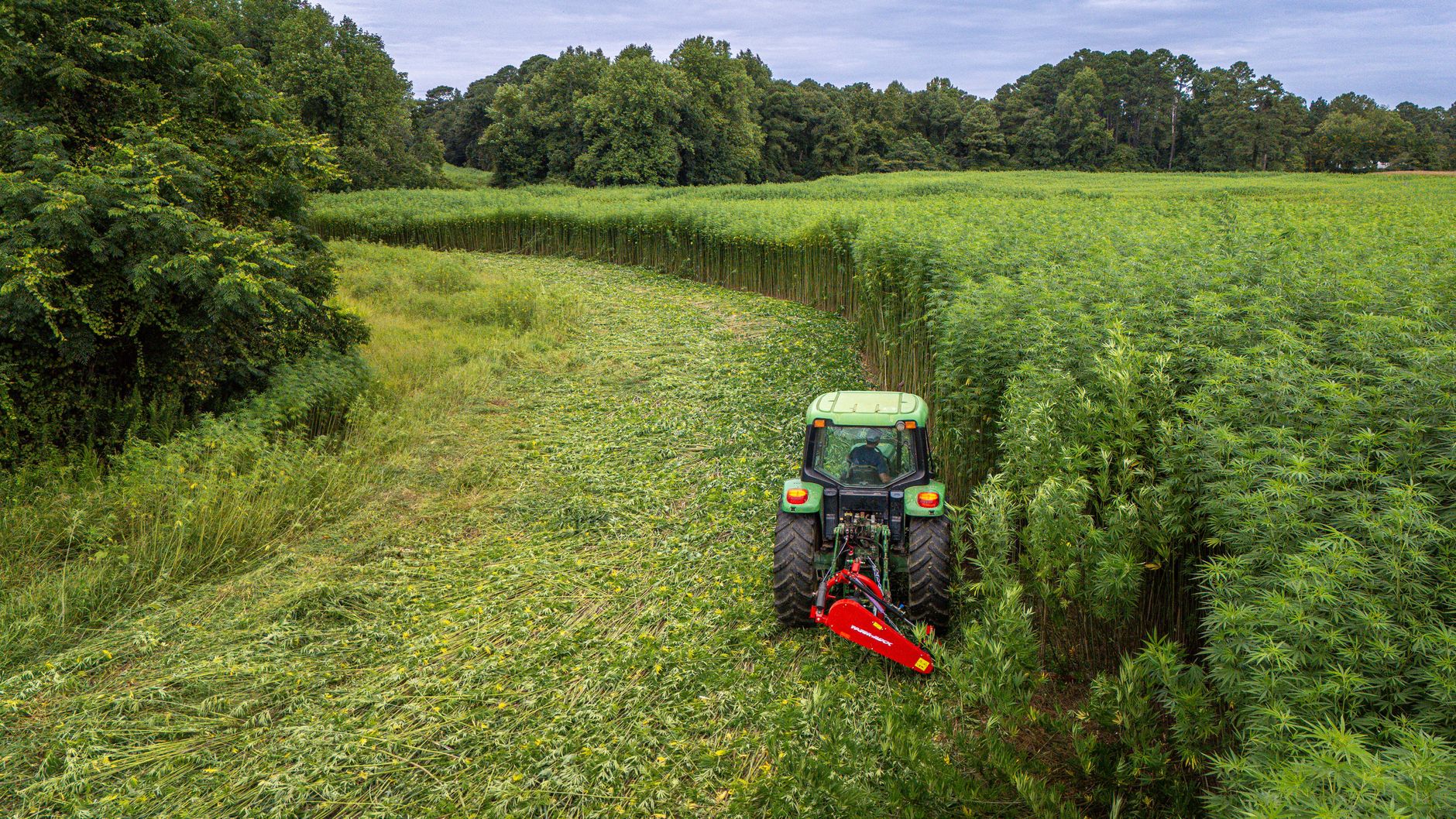
Photo by Mark Stebnicki via Pexels.
The story starts with the 2018 Farm Bill, which McConnell himself championed as a win for Kentucky agriculture. That law legalized hemp containing less than 0.3% THC by dry weight, opening the door for textiles, animal feed, and the CBD wellness products that flooded shelves in the years that followed. What almost nobody flagged at the time was how that 0.3% threshold could be worked around. Because the limit was based on concentration rather than total dose, manufacturers realized they could load up larger servings — drinks, gummies, tinctures — and still stay under the legal ceiling while delivering a genuinely intoxicating amount of THC. That's how delta-8 products and hemp-derived THC beverages became a fixture in convenience stores and bars in states where marijuana itself remained illegal.The Vote That Split Republicans, Not Democrats and Republicans

Photo by raksasok heng via Pexels.
McConnell later called this exact outcome a 'loophole' he never intended, and he spent the following years trying to close it. His fix arrived just before the government shutdown ended in November 2025, when Sen. Rand Paul led an amendment attempting to strip the THC cap out of the continuing resolution altogether. The Senate rejected that amendment 76-24, but the coalition on the losing side is the interesting part: 22 Democrats crossed over to vote with Paul, joined by one other Republican, against a measure their own leadership had negotiated into the funding bill. Paul and the Kentucky Hemp Association argued the cap wasn't really a safety fix at all — it was a de facto ban that would wipe out hemp and CBD businesses that had built compliant operations under the old rules. Paul has made this argument a recurring theme, framing hemp regulation as one of the few areas where lawmakers can still find common ground instead of retreating to their partisan corners. That framing got some backup a couple months earlier, when eight Democratic senators sent a letter in September pushing for actual regulation of hemp THC products rather than prohibition, signaling that this wasn't purely a libertarian-versus-establishment fight.The Bills Racing Against the November 2026 Deadline

Photo by RDNE Stock project via Pexels.
With the enforcement deadline set for November 2026, a cluster of bills has emerged trying to change the outcome before the clock runs out. Rep. Jim Baird introduced the Hemp Planting Predictability Act, HR 7024, on January 13, 2026, which would push implementation back to November 2028 — buying the industry two more years to adapt or lobby for something more permanent. Two days later, a Senate companion bill, S. 3686, landed courtesy of an unusual trio: Klobuchar, Paul, and Merkley, backed by 15 House co-sponsors and support from the Wine & Spirits Wholesalers of America, whose members have their own stake in how beverage-category THC products get treated. Then in April, Paul teamed up with Klobuchar and Joni Ernst on the Hemp Safety Enforcement Act, which takes a different approach entirely — creating an opt-out mechanism that would let individual states and tribal governments set their own rules rather than defaulting to the federal cap. Meanwhile, Wyden and Merkley have floated their own Cannabinoid Safety and Regulation Act, pitching a full regulatory framework as an alternative to what they see as a blunt prohibition. So far, none of this has broken through procedurally. Both attempts to fix the issue through Farm Bill amendments in the House have stalled, and the Energy and Commerce Committee hasn't taken up the delay bill at all.Why the Industry Isn't Waiting Around
Photo by Erik Mclean via Pexels.
The urgency isn't abstract for the businesses caught in the middle. Industry estimates put the intoxicating hemp sector at roughly $28.4 billion in value by 2025, supporting an estimated 300,000 jobs across cultivation, manufacturing, retail, and distribution. States have gotten used to the revenue too — hemp THC sales generate somewhere around $1.5 billion in state tax collections, money that disappears if the products vanish from shelves. If the cap takes effect as scheduled on November 12, 2026, any product exceeding that 0.4 milligram threshold gets reclassified as marijuana under the Controlled Substances Act, instantly turning compliant inventory into a federally controlled substance overnight. That reclassification would hit differently depending on where you live, since state law on hemp and cannabinoids already varies enormously — some states have their own THC caps, some have banned intoxicating hemp products outright, and others have left the market largely unregulated. Anyone selling or buying these products should check their own state's current rules rather than assume federal law is the only thing that matters here, because it usually isn't.Strip away the floor speeches and this isn't really a partisan fight at all — it's a disagreement about whether hemp-derived THC should be regulated or prohibited, and that fault line runs straight through both parties. That's exactly why you get a Paul-Klobuchar-Merkley bill on one hand and a Wyden-Merkley alternative on the other, with Ernst and House Republicans scattered across different camps depending on which fix they trust more.
What happens next won't be decided by anyone's talking points. It'll come down to whether the House Energy and Commerce Committee actually schedules a markup, whether the Senate can move S. 3686 or the Hemp Safety Enforcement Act to a floor vote, and whether leadership in either chamber decides this is worth spending floor time on before next November. Right now, none of that is guaranteed.
For the people actually running hemp businesses or buying these products, the legislative drama is background noise to a much more concrete problem: the clock on November 12, 2026 keeps ticking regardless of which bill gets traction. Whatever happens in Washington over the next several months, it's worth checking your own state's current hemp and cannabinoid laws now rather than waiting to see how the federal fight shakes out.
Sources
- 39 Attorneys General Tell Federal Lawmakers to Ban Hemp THC Products | Cannabis Business Times
- GOP senator would keep government shut to save hemp THC
- McConnell, Paul clash over Senate provision that critics say will destroy US hemp industry
- GOP tries to close 'hemp loophole' despite McConnell- ...
- Senate Advances Hemp Product Ban—But GOP Senator Has Last-Ditch Plan To Fight Back - Marijuana Moment