


HHS, VA Launch 5-Year Psychedelic Research Partnership
Photo by Werner Pfennig via Pexels.
On July 13, 2026, at VA headquarters in Washington, HHS Secretary Robert F. Kennedy Jr. and VA Secretary Doug Collins put their signatures on a memorandum of understanding that formally launches a five-year psychedelic research partnership between the two agencies. Kennedy framed the stakes in blunt terms, pointing to roughly 1 million veterans currently living with serious mental illness as the reason the federal government can't afford to keep treating psychedelic medicine as a fringe research topic.
The MOU is the clearest implementation yet of Executive Order 14401, the Trump administration directive ordering federal agencies to accelerate research into treatments for serious mental illness and to stop working in silos while doing it. But nobody signing this document is promising veterans walk-in access to psilocybin or MDMA therapy anytime soon. What's actually happening is slower and less headline-friendly than that: two massive federal bureaucracies are building the research pipelines, workforce training, and clinical protocols that would need to exist the moment -- if and when -- the FDA actually approves one of these therapies.
What the MOU Actually Does

Photo by Mark Stebnicki via Pexels.
Strip away the ceremony and the MOU is a coordination document -- it doesn't approve a drug or authorize a new treatment. It's a five-year agreement, renewable at the end of that term, that formally ties HHS and VA research efforts together under the mandate of Executive Order 14401. That order specifically directs agencies to expand clinical trial participation and tighten interagency coordination around serious mental illness treatments, and this MOU is the mechanism for doing that between the two departments most exposed to veteran mental health outcomes.
It's worth noting the VA isn't starting from zero here. The department is already involved in 20 active clinical trials examining psychedelic therapies for conditions ranging from PTSD to treatment-resistant depression, backed by more than $23 million in external funding from research institutions and philanthropic sources. That's a meaningful base of ongoing science the MOU is meant to organize and accelerate rather than originate.
Collins was careful, in comments around the signing, to frame the goal as readiness rather than access. The idea is to have research infrastructure, a trained clinical workforce, and treatment protocols sitting ready to go the moment the FDA clears a psychedelic-based therapy -- not to grant veterans early or off-label access ahead of that approval. That distinction matters a lot for anyone reading headlines and assuming this changes what's currently legal or available at a VA clinic. It doesn't. What it changes is how fast the system could move once the regulatory picture shifts.
FDA Joins In: New Guidance and a Separate VA Deal

Photo by Jonathan Borba via Pexels.
The HHS-VA agreement didn't arrive alone. FDA and VA signed a separate, companion MOU expanding information-sharing and scientific collaboration specifically around psychedelic therapy development -- essentially giving the VA a more direct line into FDA's regulatory thinking as trials progress, and giving FDA better visibility into what the VA's clinical data is actually showing.
Alongside that, FDA released final guidance for industry titled "Psychedelic Drugs: Considerations for Clinical Investigations." This is the kind of document sponsors and researchers have been waiting on for years -- it lays out FDA's expectations for trial design, blinding challenges unique to psychedelics (it's notoriously hard to run a placebo-controlled trial when participants can tell whether they've taken a dissociative or hallucinogenic compound), and endpoints regulators want to see in serious mental illness applications.
FDA also announced it will hold a public hearing on psychedelic therapy development, giving researchers, drug sponsors, veteran advocates, and clinicians a formal venue to weigh in before rules harden further. Taken together -- the guidance, the hearing, and the VA information-sharing agreement -- this is a noticeably more coordinated federal posture than what's existed for the past several years, when psychedelic research at FDA, NIH, and VA often moved on separate, uncoordinated tracks with little public visibility into how the pieces fit together.
Ibogaine Gets Its Own Push from ARPA-H and NIH
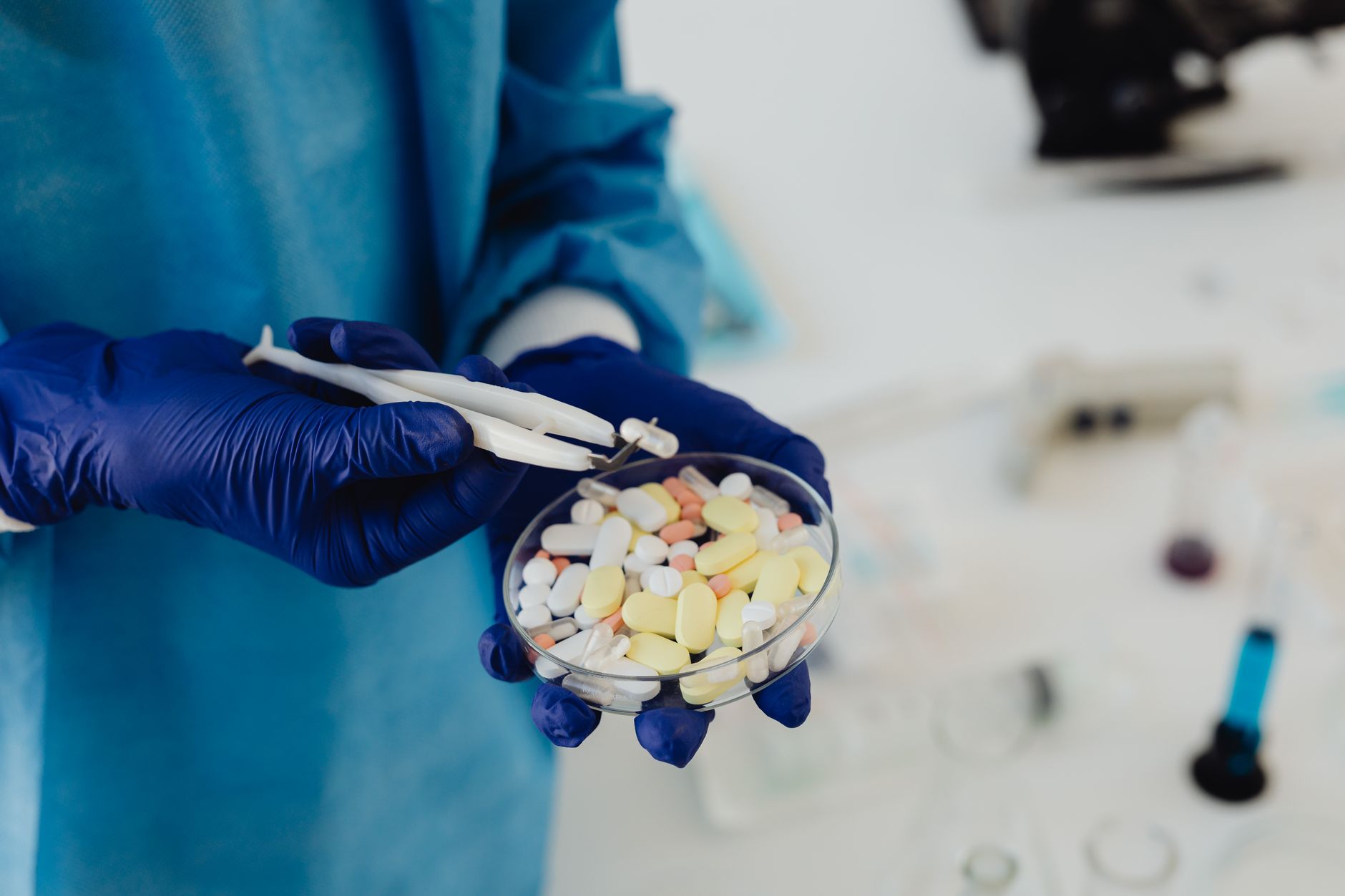
Photo by www.kaboompics.com via Pexels.
Psychedelic research isn't confined to PTSD and depression in this push, and ibogaine is the clearest example. ARPA-H, the Advanced Research Projects Agency for Health led by Director Alicia Jackson, is opening competitive funding specifically for research into ibogaine as a treatment for opioid use disorder -- a condition where existing pharmacological options remain limited and relapse rates stay stubbornly high.
NIDA, the National Institute on Drug Abuse within NIH, has been doing complementary groundwork, reviving and re-validating data from older ibogaine studies that had languished for decades, largely because ibogaine's legal status and safety profile scared off sustained institutional interest. NIDA has now awarded funding for a multi-phase research project explicitly designed to build toward an eventual Investigational New Drug application with FDA -- the formal step required before human trials can move forward under FDA oversight at scale.
None of this glosses over ibogaine's real liability: known cardiac safety concerns, including QT interval prolongation that has been linked to serious arrhythmias in uncontrolled settings outside the U.S. Any credible research program has to build cardiac monitoring and exclusion criteria directly into trial design, not treat it as an afterthought. That researchers are pursuing it anyway signals how seriously the federal government is now weighing psychedelics as addiction treatment, not just as a tool for mood and trauma disorders -- a meaningfully broader bet than where this research field stood even five years ago.
Preparing the Workforce: HRSA's Request for Information

Photo by RDNE Stock project via Pexels.
Drugs don't treat themselves, and that's the problem HRSA is trying to get ahead of. The Health Resources and Services Administration, led by Administrator Tom Engels, issued a Request for Information on July 14 seeking stakeholder input on whether the healthcare workforce is actually ready to deliver psychedelic therapies if and when FDA approves them.
The RFI specifically wants recommendations on delivery through community-based settings -- Federally Qualified Health Centers, Rural Health Clinics, and Certified Community Behavioral Health Clinics -- the safety-net infrastructure that reaches patients who'll never set foot in a specialty psychiatric research hospital. That's a deliberate choice. Psychedelic-assisted therapy typically requires trained facilitators present for extended dosing sessions, not just a prescription handed across a counter, and there's currently nowhere near enough clinical staff trained to do that work at any meaningful scale.
This RFI doesn't start from scratch either. It builds on the VA's 2023 "State of the Art" conference, which first gathered clinicians and researchers to map out what psychedelic readiness would actually require, and an April 2024 Integrated Project Team that turned those conversations into a more structured planning framework. HRSA's move essentially extends that readiness planning out from VA facilities into the broader community health system -- a recognition that access won't just hinge on an FDA approval letter. It also depends on whether a rural clinic in Montana or a community health center in Detroit has anyone on staff qualified to administer the therapy safely.
The Bigger Picture: Congress and Veteran-Led Momentum

Photo by RDNE Stock project via Pexels.
None of this exists in a vacuum. The VA's first-ever funded MDMA-assisted therapy study, announced in late 2024 in partnership with researchers from Brown and Yale, is expected to begin enrollment in February 2026 -- making it a direct precursor to this broader MOU rather than a separate initiative.
Congress is pushing from its own direction too. Senators Tim Sheehy and Ruben Gallego have introduced legislation that would require the VA to establish a dedicated Office of Novel Therapeutics tasked specifically with psychedelic readiness planning -- essentially trying to lock this work into statute so it survives beyond any single administration's executive order.
Veteran advocacy groups deserve real credit here. They've pushed psychedelic research harder and more consistently than almost any other constituency in this space, citing suicide and PTSD rates among former service members that have proven resistant to existing pharmaceutical and talk-therapy interventions. That advocacy is arguably the single biggest reason this issue has moved from fringe policy conversation to a bipartisan legislative priority.
Still, it's worth being clear-eyed about where the law actually stands right now. Psychedelics remain federally restricted outside of approved research trials, and legal status varies significantly from state to state, with some jurisdictions decriminalizing or regulating certain substances while federal law hasn't moved. Anyone reading about this partnership should confirm current local and federal law rather than assume any of this translates into accessible treatment today.
Strip away the acronyms and what's happening is straightforward: the federal government is building the institutional plumbing -- trial data, a trained workforce, community delivery infrastructure -- well before any psychedelic drug has actually cleared FDA approval. That's not a small bureaucratic exercise. It's a bet, made across HHS, VA, FDA, ARPA-H, NIH, and HRSA simultaneously, that approval for at least one of these therapies is coming within this five-year window, and that the agencies want to be ready rather than caught flat-footed when it happens.
Veterans are effectively the test case for how this would scale nationally. If MDMA-assisted therapy or psilocybin treatment for depression clears FDA review, the systems being built right now through VA trials and HRSA's community health outreach will be the closest thing the country has to a working model for rolling it out responsibly at scale, rather than leaving it to a patchwork of private clinics with wildly uneven training and oversight.
Whether that bet pays off on schedule is genuinely an open question. The next year will tell a lot: watch how FDA's public hearing goes, and pay attention to what kind of responses HRSA actually gets back on its Request for Information. Those two data points will show whether this infrastructure is coming together at the pace the administration wants, or whether it's still mostly aspirational -- a lot of MOUs and RFIs stacking up while the actual clinical and regulatory work grinds along at its usual pace.
Sources
- VA, HHS Launch New Psychedelic Therapy Partnership That Will Impact More Than 1 Million Veterans
- VA, HHS sign MOU to improve cooperation on psychedelic drug trials
- HHS, VA launch partnership to advance psychedelic therapies for veterans in need
- HHS and VA Collaborate on Psychedelic Treatment for Veterans
- HHS & VA Announce Bold, Comprehensive Partnership to Advance Rapid-Acting Mental Health Treatments for Veterans | HHS.gov