NORML Fights to Keep Cannabis Contracts Enforceable After 6th Circuit Ruling
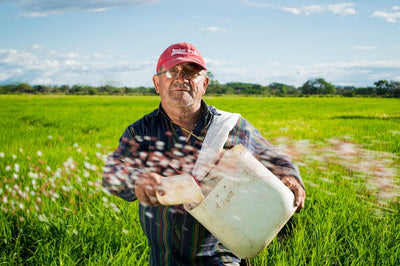
Photo by succo via Pixabay.
Here's the uncomfortable truth sitting underneath every cannabis supply contract, licensing deal, and vendor agreement in America: it only holds up if a court is willing to enforce it. A business can be fully licensed under state law, paying state taxes, passing state inspections, and still find itself with no recourse when a trading partner walks away from a deal. That's the fault line a Sixth Circuit panel just exposed in a Michigan cultivation dispute worth north of $37 million, and it's why NORML, an organization usually associated with legalization advocacy rather than commercial litigation, has now stepped into an appellate fight over cultivation contracts.
The case involves a grower, a Curaleaf subsidiary, a jury verdict that looked like a decisive win, and an appeals court that erased it on the theory that federal courts simply shouldn't be in the business of enforcing agreements built around a federally illegal plant. Whatever happens next will matter well beyond Michigan, because the same reasoning could reach into Ohio, Kentucky, and Tennessee, and it hands every cannabis company with a contract dispute in those states a tempting new defense: just argue the whole thing was illegal from the start.
How Hello Farms Lost a $37 Million Verdict
Hello Farms is an 80-acre sun-grown cultivation operation in Omer, Michigan, founded in 2020 right as the state's adult-use market was ramping up. That November, the company signed a supply agreement with two Curaleaf subsidiaries, GR Vending MI and CURA MI, committing to sell its entire 2020 and 2021 harvests to the companies. For a while it worked the way these deals are supposed to: GR Vending took delivery of roughly 2,000 pounds of flower. Then wholesale marijuana prices in Michigan started sliding, as they have across most mature state markets, and GR Vending stopped buying, leaving Hello Farms sitting on crops it had grown specifically to fulfill the contract.
Hello Farms sued for breach of contract, and in February 2025 a federal jury agreed, awarding $31.8 million. With prejudgment interest tacked on, the figure climbed to roughly $37.2 million, a verdict large enough to reshape the finances of a mid-sized cultivator and send a signal to every buyer in the state that supply commitments carry teeth.
That signal didn't survive appeal. On September 10, 2026, a Sixth Circuit panel led by Judge Raymond Kethledge's colleague Judge Nalbandian reversed the verdict outright, holding that federal courts cannot enforce contracts whose performance requires committing a federal crime, regardless of whether the underlying conduct is perfectly legal under state law. Marijuana cultivation and sale remain a Schedule I-adjacent federal offense under the Controlled Substances Act in the panel's framing, and a contract to grow and deliver it, the court reasoned, is a contract to commit that offense. The ruling is now binding precedent across the Sixth Circuit's footprint: Michigan, Ohio, Kentucky, and Tennessee.
Why Rescheduling Didn't Save the Contract

Photo by Adam Bezer via Unsplash.
Hello Farms didn't go down without pointing to the most obvious counterargument available: the federal government's own drug scheduling had changed. In April 2026, the DOJ finalized a rule moving marijuana from Schedule I to Schedule III, a shift advocates had pushed for years precisely because it would soften the federal legal cloud hanging over state-licensed businesses. Hello Farms argued that reclassification should allow a court to enforce an agreement that involved, after all, a substance no longer treated as having no accepted medical use.
The Sixth Circuit wasn't persuaded, and it gave two separate reasons, either one of which would have been sufficient on its own. First, the panel held that a contract illegal at the moment it was formed doesn't retroactively become enforceable because the law shifts underneath it later. Second, and more narrowly, the court noted that the 2026 rescheduling rule itself wasn't written or applied retroactively, so even setting aside the general principle, there was no textual basis to reach back and rehabilitate a 2020 agreement.
That timing distinction is the part operators should sit with. Hello Farms and Curaleaf's subsidiaries signed their deal in November 2020, nearly six years before marijuana's federal schedule changed, and the panel treated the contract as legally frozen in that moment rather than evaluating it against today's regulatory landscape. The practical effect is a trap: any cannabis contract executed before a federal reclassification or legalization event can be judged by the legal rules in place when ink hit paper, not by whatever more favorable regime exists by the time a dispute actually lands in court. Rescheduling, in other words, offers no shelter for deals that predate it, and possibly very little for deals signed after it, depending on how courts read scope and retroactivity going forward.
Hello Farms Pushes Back With a Rehearing Petition

Photo by Pavel Danilyuk via Pexels.
Hello Farms isn't treating the panel's decision as the final word. On October 8, 2026, the company filed a petition asking the full Sixth Circuit to rehear the case, a procedural move that sits between a lost appeal and a potential Supreme Court petition. The company's central argument is less about contract doctrine and more about market consequences: if businesses can walk away from signed agreements simply by invoking the federal illegality of the underlying product, every state-regulated cannabis market inside the circuit becomes structurally unstable, because no commercial promise can be trusted to survive a downturn in wholesale prices or a change of heart by the buyer.
A rehearing petition gives the Sixth Circuit two paths. The original three-judge panel could reconsider its own ruling, which happens occasionally but isn't common once a decision has been issued and published as precedent. More likely, if the court agrees to act at all, the case would go en banc, meaning the full roster of Sixth Circuit judges would rehear the arguments and potentially issue a new ruling that supersedes the panel's. En banc review isn't granted often, and courts typically reserve it for cases involving exceptional importance to the circuit's law or genuine inconsistency across prior rulings, both of which Hello Farms is clearly trying to argue here.
Nothing is guaranteed. The Sixth Circuit could deny the rehearing petition outright, leaving the panel's reversal as the final word unless Hello Farms pursues a Supreme Court appeal, an expensive and uncertain long shot given the Court's general reluctance to take up cannabis-adjacent commercial disputes. For now, the $37.2 million verdict exists only on paper, contingent on whether a broader panel of judges decides the original reasoning went too far.
NORML's Amicus Brief: A Consumer Protection Argument

Photo by Tima Miroshnichenko via Pexels.
NORML's involvement here is worth pausing on, because the organization has spent decades fighting legalization battles in legislatures and ballot initiatives, not arguing contract doctrine in federal appellate briefs. On October 19, 2026, the group filed a motion seeking permission to submit an amicus brief supporting Hello Farms' rehearing petition, framing its contribution as a distinct consumer-facing angle that neither party to the underlying commercial dispute is positioned to raise on its own.
NORML's core argument is that the panel's blanket rule, refusing to enforce any contract touching federally illegal cannabis activity, doesn't just settle a dispute between two businesses. It erodes the mechanisms that make state-regulated markets trustworthy for the people actually buying the product. The brief points specifically to testing provisions embedded in the Hello Farms-Curaleaf agreement, contractual language covering potency verification and contaminant screening, as exactly the kind of commitment that depends on courts being willing to hold parties to their word. If a cultivator or distributor can abandon testing and delivery obligations whenever it's financially convenient, and face no enforceable consequence because the product is federally illegal anyway, consumers lose the practical benefit of the regulatory structure states built specifically to protect them.
NORML is careful to frame the request narrowly, and that framing matters for how seriously a court might take it. The organization isn't asking the Sixth Circuit to compel anyone to grow or sell marijuana, and it isn't asking for shelter from federal criminal enforcement. It's asking the court to abandon a categorical, automatic refusal to enforce cannabis contracts in favor of the statutory and public-interest balancing test NORML says the court's own precedents already require, a framework that would weigh federal illegality as one factor rather than treating it as an absolute bar to relief.
A Doctrine Cannabis Companies Have Tried to Avoid Using

Photo by geralt via Pixabay.
Lawyers who track cannabis litigation have been blunt about what the Sixth Circuit's ruling could mean if it stands: a dangerous precedent, in the words of several attorneys following the case, not because the legal reasoning is novel but because of how rarely anyone has been willing to actually invoke it.
There's long been an informal understanding across the industry, something attorneys sometimes describe as a mutually assured destruction doctrine, under which cannabis companies avoid raising federal illegality as a defense in their own contract disputes. The logic is straightforward. Every operator in the space knows its own agreements are just as vulnerable to a federal-illegality challenge as anyone else's, so nobody wants to be the party that successfully convinces a court to void contracts on that basis, because the same reasoning would boomerang back on their own deals the next time they're the one trying to enforce an agreement against a counterparty.
The Hello Farms ruling threatens to break that truce. Once a federal appellate court has actually blessed the argument and reduced a $37 million jury verdict to nothing, the incentive calculus shifts for any company sitting on an unfavorable supply agreement, licensing deal, or distribution contract within the Sixth Circuit's reach. Walking away and citing federal prohibition becomes a live defense rather than a theoretical one nobody wants to test.
Enforceability in federal court is a separate question from whether a business holds a valid state license, and operators shouldn't confuse the two. Given how unsettled this area is right now, and how sharply it can vary by circuit, confirming how courts in your own state and jurisdiction are currently treating cannabis contract disputes isn't optional due diligence anymore.
Nobody knows yet whether the Sixth Circuit will grant rehearing, restore some version of the Hello Farms verdict, or let the panel's ruling stand as the law of four states. What's already clear is that federal courts in at least part of the country have shown they're willing to treat cannabis contracts as unenforceable on their face, and that willingness doesn't evaporate just because a particular case gets reversed on rehearing or appealed further.
Operators drafting agreements today, whether for cultivation, wholesale distribution, licensing, or equipment financing, should stop assuming a federal courthouse will be there to back them up if a deal goes sideways. That means building in arbitration clauses that keep disputes out of federal court entirely, choosing state court venues where judges have shown more willingness to treat cannabis businesses like any other regulated industry, and being explicit in contract language about which state's law governs enforcement. None of that is legal advice, and the right approach varies by state and by the specific terms of a deal, so this is exactly the kind of question worth putting in front of a cannabis attorney before signing anything, not after a buyer stops paying.
Sources
- NORML Says Federal Prohibition Shouldn't Make Marijuana Industry Contracts Unenforceable - Marijuana Moment
- Rod Kight: Legal Cannabis, Unenforceable Contracts? - Cannabis Law Journal
- Are US Cannabis Contracts Enforceable?
- Marijuana Contracts Are Not Enforceable in Federal Court
- Dentons - Amy Rubenstein & Brian Cohen : Can Federal Courts Enforce Contracts in the Cannabis Industry? - Cannabis Law Journal