Occasional Male Cannabis Users Feel Stronger Effects
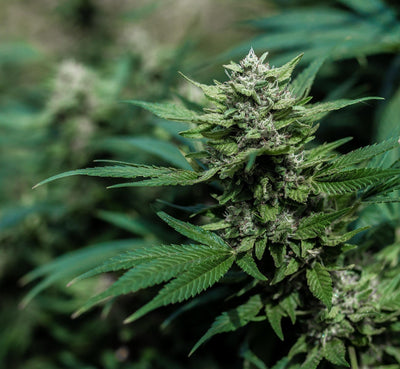
Photo by Dimitri Bong via Unsplash.
For years the working assumption in cannabis circles has been that women feel the plant harder than men do. A new controlled lab study from UCLA found the reverse among people who use cannabis only occasionally.
The work comes from a team led by Dr. Stephanie Lake of the UCLA Center for Cannabis and Cannabinoids and was published in Neuropsychopharmacology. UCLA Health describes it as the first experiment designed to test how sex and frequency of use together shape the short-term effects of smoked cannabis.
A few guardrails before the details. The headline applies to occasional users only. The study was small, and it was run in a lab rather than in anyone's living room, so it says little about real-world consumption.
Key takeaways
- In a UCLA study, occasional male users reported stronger effects from smoked cannabis than women with similar habits, despite similar blood THC.
- The experiment had only 44 participants, and several findings on occasional male users came from exploratory analyses needing replication.
- Frequent users of either sex showed more of cannabis's addictive qualities, challenging the idea that women are simply more sensitive.
What the UCLA Researchers Found

Photo by Chokniti Khongchum via Pexels.
Men who used cannabis occasionally reacted more strongly to smoked cannabis than women with similar use habits. According to Fox News coverage of the study, the men said they felt more high, more sedated and more impaired than the women did.
They also reported more unpleasant effects, anxiety among them. Their heart rate rose significantly after they smoked active cannabis.
The obvious explanation would be that the men simply absorbed more THC. That does not hold up. Blood THC levels were about the same in both groups, and UCLA Health says those levels did not explain the differences.
So the gap showed up in how the drug was experienced, not in how much reached the bloodstream. The paper appeared in Neuropsychopharmacology, with Lake as lead author.
How the Experiment Was Built

Photo by RDNE Stock project via Pexels.
Each participant attended three sessions. In one they smoked cannabis with no THC, in another a lower amount of THC, and in the third a higher amount.
The no-THC arm does real work. It lets researchers separate what the drug does from what people expect it to do, which is a persistent problem in any study where participants know they are smoking cannabis.
The team also accounted for hormones. Among women who were not using hormonal birth control, they controlled for menstrual cycle timing, a variable that earlier work often ignored.
That design is the study's main selling point. A speaker in the UCLA release said much of what was assumed about sex differences came from animal research and from human studies that pooled data from different trials. When the team looked at sex and frequency of use together, and controlled for hormones, the picture changed.
Why Frequency of Use Matters as Much as Sex
The sex finding grabbed the headline, but use history carried its own weight. Regardless of sex, frequent users were more likely than occasional users to say they liked the effects and wanted to use cannabis again. They also chose to take more cannabis during the study.
UCLA Health says frequent users showed more of the addictive qualities of cannabis than occasional users did. That fits the idea that regular use changes how the drug is experienced, and not always in a direction that makes people more cautious.
The results also push against earlier research suggesting women may be more sensitive to cannabis. Among occasional users here, the men were the ones reporting stronger effects.
Precision is needed on one point. The male-female gap described in the coverage applies to occasional users. The reporting does not describe the same gap among frequent users, so nobody should stretch the finding to cover everyone.
Limits of a 44-Person Lab Study

Photo by Gustavo Fring via Pexels.
The study had 44 participants. That is enough for a careful lab experiment and too few to settle a question about half the population.
Several findings about occasional male users came from exploratory analyses. Those are the kind of results researchers flag as worth chasing, not as established fact, and larger studies need to confirm them.
Some details were not available in the material I reviewed: how the participants split by sex, the exact THC doses, and the funding source. The paper itself is where to check them.
There is also the setting. Smoking a measured amount of cannabis in a controlled session is not the same as eating a gummy at a party or dabbing a concentrate at home. Potency, route and context all change the experience.
Researchers say larger studies are needed to learn whether men and women develop tolerance differently. That question could decide how far the finding travels.
What It Means for Consumers and the Industry

Photo by Cova Software via Unsplash.
UCLA says the work answers the National Institutes of Health's call for research on differences between women and men. It also argues that understanding those differences could inform how cannabis use disorder is prevented and treated.
For budtenders and brands, the practical takeaway is modest but real. Dosing advice built on sex alone looks shaky, and use history appears to matter at least as much. Asking a customer how often they consume tells you more than guessing from who they are.
For consumers, especially occasional ones, the safe reading is to start low. The men in this study reported more anxiety and impairment, but any infrequent user could land in the same spot after an overly ambitious dose.
Legality varies by state and country, so confirm the rules where you live before buying or consuming anything. Nothing here is medical or legal advice.
One 44-person study will not overturn the sensitivity assumptions baked into cannabis marketing and dosing guidance. What it does show is why sex and use history should be studied together rather than pooled into averages that hide the pattern.
Watch for replication in larger samples and for the tolerance research the authors say is needed. Those results will decide whether this finding holds up or ends up as a footnote.
Sources
- Occasional male cannabis users feel stronger effects, study suggests
- Occasional male cannabis users experience stronger effects than women
- UCLA Study: Men Who Use Cannabis Occasionally Feel Stronger Effects Than Women - Psychiatry
- Men and women who smoke marijuana may experience different effects, study suggests
- Men And Women Respond Differently To Occasional Marijuana Use, Study Finds
- Men And Women Respond Differently To Occasional Marijuana Use, Study Finds