PA Bill Would Let Dying Patients Use Medical Marijuana in Hospitals
Photo by AndrzejRembowski via Pixabay.
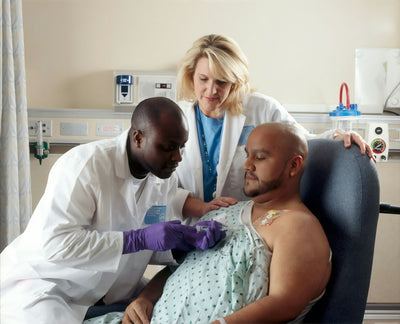
Under current Pennsylvania law, a patient can hold a valid medical marijuana card, have cannabis legally sitting in their home, and still be told they can't use it once they're admitted to a hospital or hospice facility. That gap is what SB 1035, known as Ryan's Law, is trying to close. On September 29, 2026, the Pennsylvania Senate Law & Justice Committee voted unanimously to advance the bill, which would let patients with a prognosis of less than a year to live use medical cannabis while receiving care in hospitals, nursing homes and hospice facilities.
The Senate measure follows a companion bill in the House, HB 2254, which already cleared that chamber by a lopsided 174-27 margin back in early June and has been sitting in the Senate since. With the committee vote now behind it, SB 1035 heads toward a full Senate floor vote, putting Pennsylvania closer than it's been in years to actually fixing a problem that's frustrated patients, families and hospice staff for as long as the state's medical marijuana program has existed: legal access on paper doesn't always mean legal access at the bedside.
What SB 1035 Actually Allows
SB 1035 is narrowly written, and that's largely the point. The protections only kick in for patients whose physicians have certified a prognosis of less than one year to live -- this isn't a general right for any cardholder admitted to a facility, but a carve-out specifically for people in end-of-life or terminal care. Covered settings include hospitals, long-term care nursing homes, hospices and other licensed care facilities where patients often spend their final weeks or months.
The bill also draws a hard line on method of consumption. Smoking or vaping cannabis would still be prohibited inside these facilities, full stop. Patients would be limited to non-inhaled forms already sold through Pennsylvania's medical dispensaries -- tinctures, capsules, edibles and similar products that don't raise the same air-quality, secondhand smoke or fire-safety concerns that make facility administrators nervous. Any cannabis brought on-site would need to be kept in locked containers, giving facilities a way to maintain security and control without simply confiscating a patient's medicine.
There are also carve-outs meant to keep the bill from bumping into federal law more than necessary. The right to use medical marijuana under this bill wouldn't extend to patients receiving emergency services, where clinical protocols and liability concerns are especially tight. And critically, facilities would be allowed to temporarily suspend compliance if the Department of Justice, the Centers for Medicare & Medicaid Services, or another federal agency takes enforcement action, or explicitly directs facilities to bar marijuana use. Since hospitals and nursing homes typically depend on federal funding streams and accreditation, that escape valve is what makes the bill workable for facilities that would otherwise be caught between state permission and federal risk.
The Story Behind Ryan's Law

Photo by Kampus Production via Pexels.
The bill takes its name from Ryan Bartell, a Coast Guard veteran diagnosed with terminal pancreatic cancer in his early 40s. While being treated in Pennsylvania, Bartell was kept heavily sedated on opioids, the standard approach for managing pain in advanced cancer cases but one that left him largely unable to engage with the people around him during what turned out to be limited time.
Bartell later transferred to a care facility in California, where state law allowed him to use medical marijuana as part of his treatment. According to the account that's shaped this legislation, that shift let him manage his pain with more mental clarity than the opioid regimen had allowed, giving him lucid hours to spend with his family before he died. That contrast -- sedated and largely absent in one state, present and communicative in another, simply based on which facility's policies applied -- became the emotional and legislative anchor for the bill.
Sen. John Kane, the bill's primary sponsor, cited Bartell's story directly in the legislative memo he circulated when introducing SB 1035, framing the legislation as a response to a specific, documented failure rather than an abstract policy fix. The bill itself goes further than simply permitting use -- it explicitly states that a patient's federal Schedule I classification of marijuana cannot, on its own, be used as grounds to deny that patient's use under the law. That provision is aimed squarely at preempting the argument facilities have historically used to block cannabis use on-site: that federal scheduling leaves them no choice but to refuse, regardless of state medical marijuana law.
Bipartisan Support and Where the Bill Stands
What's notable about SB 1035 isn't just its content but the coalition behind it. Sen. Kane, a Democrat, introduced the bill with more than 20 cosponsors drawn from both parties, and the Law & Justice Committee's Republican chair, Sen. Dan Laughlin, is among them. That's a meaningful signal in a legislature where cannabis policy usually splits along predictable lines. The committee's unanimous vote on September 29, 2026 reinforced that this isn't a party-line fight -- it moved forward without a single dissenting voice.
The Senate bill's momentum builds on groundwork already laid in the House. HB 2254, sponsored by Rep. Dan Frankel, passed the House by a 174-27 margin in early June 2026 -- a wide enough margin to reflect support well beyond Frankel's own party. That bill has been parked in the Senate since, and SB 1035's advancement gives Senate leadership a live vehicle to bring the underlying policy to a floor vote.
HB 2254 also fills in some of the operational details that matter to facility administrators weighing liability. It includes protections shielding facilities and staff from liability when they act in good faith to accommodate a patient's medical marijuana use under the law. At the same time, it sets real consequences for facilities that don't comply, authorizing civil penalties of up to $500 per violation per day. That combination -- protection for facilities that cooperate, penalties for those that don't -- is designed to give administrators a clear incentive structure rather than leaving compliance optional in practice.
Part of a Bigger Cannabis Push in Harrisburg

Photo by Brett A via Pexels.
Ryan's Law is advancing against the backdrop of a broader, more contentious cannabis debate in Harrisburg. Pennsylvania's House Speaker has suggested the state could move toward full recreational legalization as soon as next year if Democrats manage to flip the Senate in the November elections. The House has already passed a legalization bill built around state-owned dispensary sales, a model that drew sharp criticism from the Republican-controlled Senate majority and stalled there. Separately, a Democratic senator recently filed a discharge resolution attempting to force a bipartisan cannabis bill out of committee and onto the floor, a procedural move that underscores just how stuck broader legalization efforts have become.
Pennsylvania is now one of the larger states in the Northeast and Mid-Atlantic corridor without an adult-use market, a notable holdout as New Jersey, New York and Ohio all sell legal recreational cannabis just across state lines. That regional gap has become a recurring talking point for legalization advocates who note that Pennsylvania residents can simply drive to buy legally what they can't purchase at home.
Ryan's Law exists somewhat apart from that fight, focused on a much narrower patient population and a much more specific harm. But its progress is worth watching alongside the bigger legalization push, since it shows what cannabis policy can accomplish in Harrisburg when the scope is tightly bounded. As with any state cannabis policy, rules around medical marijuana access, facility compliance and patient rights can vary and shift quickly, so patients, families and caregivers should confirm current Pennsylvania law and facility-specific policies rather than assuming this bill's provisions are already in effect.
Every limit built into SB 1035 -- no smoking, no use during emergency services, a federal enforcement escape hatch for facilities -- reads like the product of lawmakers trying to make this as easy as possible to vote for. This isn't a legalization bill wearing a disguise. It's a narrowly targeted fix aimed at a specific, sympathetic population, engineered to avoid the federal funding and liability landmines that have made hospitals and nursing homes reluctant to accommodate medical marijuana use even where state law technically allows it.
Whether it actually becomes law still depends on a full Senate vote and, eventually, the governor's signature. But a unanimous committee vote is a rare thing in a legislature that has spent years gridlocked on cannabis policy more broadly, and it suggests the votes may well be there when it counts. For terminally ill patients in the position Ryan Bartell was in, none of the political maneuvering in Harrisburg is really the point. The question that matters is much simpler: whether they get to spend their remaining time clear-headed enough to talk to their families, instead of sedated because a facility's policy left them no other option for pain control.
Sources
- This Pa. bill would let terminally ill patients use medical marijuana even if they’re hospitalized
- Pennsylvania Lawmakers File Bill to Guarantee Medical Marijuana Access for Terminally Ill Patients in Care Facilities
- Pennsylvania House Passes Bill to Expand Medical Marijuana Access for Terminally Ill Patients
- Pennsylvania Senate Committee Schedules September 29 Vote on Bill Allowing Medical Marijuana Use in Hospitals
- Pennsylvania Senate Law & Justice Committee Unanimously Passes Ryan’s Law Allowing Terminally Ill Patients to Use Medical Marijuana in Health Care Facilities