Hop Farms vs. Indoor Grows: Yakima Cannabis in 2035
Photo by Ahmed Hamed Aly via Pexels.
Drive out past Toppenish in late summer and the hop yards rise on both sides of the road, rows of tall trellis wire strung with bine. Haas, one of the valley's best-known hop companies, keeps experimental fields at its Home Farm there and runs a 2026 Haas Hop Harvest program. The farming culture, the machinery and the buildings are all real and working.
So here is the question: could that agricultural base help sun-grown cannabis undercut indoor wholesale prices by 2035? It is a fair thing to ask. It is also easy to answer badly, and I would rather say up front where the evidence runs out.
The research behind this piece verified only the hop side. Washington wholesale flower prices, outdoor-grow rules, hop acreage trends and the federal rescheduling status were not confirmed, so I treat them as open questions and name the sources where you can check them. Every claim below is labeled as established fact, reasoned extrapolation or open speculation. Where I give numbers, they are illustrative assumptions you can change, not forecasts.
Key takeaways
- Yakima Valley hop operations are active today, with Haas citing over a century of farming at its Toppenish Home Farm.
- Hop drying, baling and trellis assets might transfer to cannabis, but how much is unverified and likely smaller than it looks.
- A 2035 outdoor cost advantage depends on rules, rescheduling and quality perception, none of which are settled.
What We Can Actually Say About Yakima Hops Today

Photo by ulleo via Pixabay.
Start with what is established. Haas advertises a 2026 Haas Hop Harvest program and says it has over a century and four generations of hop-growing experience behind it. Its experimental hop fields sit at the Home Farm in Toppenish, and Michael Ferguson is Director of Hop Breeding. A company that employs a breeding director and keeps trial fields is doing research, not just farming.
There is more evidence of an institutional culture. The Haas Hops Academy was scheduled for Tuesday, September 29, 2026, from 10am to 4pm at the Haas Innovations Center on River Road. Some hops are also available on the spot market through Yakima Valley Hops, so the valley has working channels for selling a crop, not only growing one.
Now the limit, stated plainly: none of this says anything about cannabis. It shows that a mature, technical, well-capitalized agricultural sector exists in the Yakima Valley. It does not show that anyone there is converting, planning to convert, or could do so profitably.
The brief also did not establish current hop acreage trends, or how many growers are idle, shrinking or switching crops. That number matters, because acreage that is truly surplus is the raw material for any conversion story. I will not guess at it. Hop Growers of America and the USDA publish acreage data, and anyone serious about this thesis should start there.
Everything after this section is built on that narrow base. Treat the hop facts as a floor of verified context, and the rest as reasoning laid on top.
Which Hop Infrastructure Could Plausibly Transfer
This section is reasoned extrapolation, not reported fact. A hop yard is a lot of built infrastructure: tall trellis systems, drip or furrow irrigation, tractors, harvest equipment, and large buildings for drying and conditioning. The useful question is which of those pieces would fit a cannabis crop, and which would not.
Irrigation is the most obvious candidate. Water delivery and field layout are crop-agnostic enough that some of it could carry over, though emitter spacing and scheduling would need rethinking. Tractors and general farm equipment are similar. Trellis is a murkier case, since a cannabis plant is a bushy, branching shrub rather than a climbing bine, and wire built for one would need heavy modification for the other.
The buildings are where boosters get most excited, and where I would be most cautious. Hop kilns are designed for fast, hot drying of cones. Cannabis flower generally needs slow, controlled drying and curing to protect terpenes. Reusing a kiln as it stands could damage the product, so any reuse would likely mean converting the space into controlled drying rooms, which is a capital cost, not a freebie.
The deeper counter-case is that cannabis is not a hop. Plant spacing, harvest timing, pest and mold pressure, and post-harvest handling all differ. Equipment reuse will be partial at best, and the savings from it should be modeled as a modest discount on startup cost, not a transformation.
One more admission: no sourced hop-to-cannabis conversion project was verified for this piece, so I will not offer an example. When one surfaces, it will be worth more than any amount of theorizing. In the meantime, a university agricultural extension program is the right place to look for crop-level evidence on irrigation and outdoor performance in this climate.
The Cost Math: Where Sun Beats Electricity
Here is the mechanism, with no per-pound figures, because none were verified. Indoor cultivation pays for lighting, climate control and dehumidification all year round. Outdoor swaps most of that for sunlight and a single harvest per year. That is the entire basis of the sun-grown cost argument, and it is a sound one in principle.
A fair comparison has to cover more than electricity. The main cost buckets are:
- Energy: lighting and climate control indoors, versus pumping and fuel outdoors
- Labor: trimming and harvest crunch outdoors, steadier staffing indoors
- Facility: building or retrofit costs versus land, lease and field prep
- Compliance: security, tracking and licensing requirements for either setting
- Testing: lab costs per batch, and failure risk from mold or contaminants
- Shrink: product lost to weather, pests or poor curing
Current Washington wholesale flower prices for indoor and outdoor product were not verified. The Liquor and Cannabis Board market data at lcb.wa.gov is the place to find them, and the spread between the two tiers is the number this whole thesis hangs on.
To make the logic adjustable, here is an illustrative assumption set, not a sourced one. Suppose outdoor all-in cost per pound lands at some fraction of indoor cost. Suppose outdoor wholesale sells at some discount to indoor. Under those invented inputs, outdoor margins would be wider even at a lower price. Change either figure and the conclusion can flip, which is exactly the point.
The counter-case is important. One annual harvest sends a lump of supply to market at once, and storage is costly. If many outdoor growers harvest in the same weeks, outdoor prices could fall further than outdoor costs, and the cost advantage would end up in the pockets of buyers rather than growers. Whether that happens is open speculation, but it is the oldest story in agriculture.
Rules, Rescheduling and the Policy Wildcards
Start with what was not verified: Washington LCB outdoor-grow rules, canopy limits and licensing changes, and any 2026 legislation touching outdoor cultivation or agricultural buildings. I will not characterize them. The places to check are lcb.wa.gov for rules, app.leg.wa.gov for bills, and federalregister.gov and dea.gov for the federal rescheduling status as of late 2026.
What I can offer is a reasoned pattern. Outdoor and farm-scale cannabis has generally expanded only after states loosened licensing and zoning, so the pace has been set by rules, not by agronomy. Plants grew fine outdoors long before the law allowed it at scale. I am not naming specific states here, because I would want to verify each one first.
Now the open speculation, labeled as such. If federal rescheduling progressed, or if interstate commerce ever opened, a low-cost sun-grown region could ship to other markets, much as established agricultural regions supply the rest of the country. That is a large if. Rescheduling by itself would not necessarily permit interstate sales, and nothing in the brief supports a timeline.
The counter-case is more mundane and probably more powerful. Agricultural zoning, county rules, water rights and security requirements could stop hop acreage from converting even where the economics work. A grower with a perfect field and a restrictive county ordinance has no business plan.
So the practical reading is this: policy is a gate, and the gate is local before it is federal. Anyone modeling a 2035 outcome should treat rule changes as a precondition to be observed, not an assumption to be made.
Quality, Branding and the Premium Problem

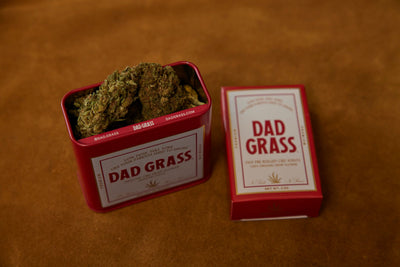
Photo by Dad Grass via Pexels.
This is reasoned extrapolation from how the market has long behaved. Indoor flower has carried a premium for consistency and appearance, and outdoor product has often been treated as a value tier, steered toward extraction and pre-rolls. That perception is sticky, and a lower cost of production does not erase it.
The case for change runs through branding. Sun-grown cannabis can be marketed on terroir and sustainability, the way the hop industry sells named varieties and regional identity. Haas is a useful analogy: it presents breeding, field trials and a Hops Academy as part of its identity. A valley with that kind of agricultural storytelling could, in theory, build a regional cannabis reputation in the same manner.
The counter-case is that buyers may stay loyal to indoor for potency, bag appeal and year-round supply. Retail shelves reward predictability. A product that is cheaper but looks or tests differently from one harvest to the next does not automatically win space, and budtenders and shoppers both have habits.
Where outdoor could win regardless of branding is in categories where input cost counts for more than appearance:
- Extraction and concentrates
- Edibles, where flower appearance never reaches the buyer
- Pre-rolls, where the flower is ground and rolled
That is plausible, not proven. It depends on processors accepting outdoor biomass and on testing results holding up.
Finally, outdoor growing carries quality hazards that indoor growers avoid: mold in a wet autumn, wildfire smoke, and weather swings in any given year. How serious these are in the Yakima Valley should be checked against university extension research, not assumed away. A single bad harvest can undo a year of brand building.
A 2035 Scenario Map: Three Ways This Plays Out
Everything here is open speculation. I lay out three scenarios and say which one the evidence favors, with the caveat that only hop-side facts were verified.
| Scenario | What would have to be true |
|---|---|
| Base case: partial adoption, outdoor wins extraction and value tiers | Rules permit outdoor scale-up; some equipment is reusable; processors accept outdoor input |
| Optimistic: broad price pressure on indoor wholesale | Favorable federal movement or wider markets; conversions work; buyers accept sun-grown flower |
| Stall: little changes | Zoning, water and security rules block conversion; indoor premium persists |
The leading indicators are observable. Watch LCB licensing changes, hop acreage trends from USDA data, early conversion pilots, and the wholesale price spread between indoor and outdoor product. If the spread widens while pilots succeed, the optimistic case gains ground. If rules stay put, the stall case does.
Which does the evidence support most? The defensible stance is the base case, with the hop-infrastructure advantage likely smaller than boosters claim. Kilns need rebuilding, trellis needs rethinking, and the price premium for indoor flower exists for reasons beyond cost. Cheaper inputs help, but they are one variable of several.
A final note on sourcing. Market-size and price figures need to be sourced before anyone publishes them as fact, and nothing in this article should be read as a forecast number. The fractions above are placeholders for reasoning, not predictions.
The Yakima Valley plainly has the farming know-how and physical assets for large-scale crops. Whether they translate to cannabis is a question of rules and buyer behavior more than agronomy. Land, irrigation and skilled growers are necessary, but they are not what decides the outcome.
What to watch next is concrete: LCB rule changes, rescheduling developments, hop acreage data, and the first real conversion pilots. Those pilots matter most, since a single documented project with real cost and quality data would be worth more than a dozen forecasts. If they appear, this speculation should turn into evidence well before 2035, and the 2035 question will have an answer rather than an argument.
Sources
- Hop Harvest - John I. Haas
- From Yakima farms to your glass: Hop harvest season underway in the valley
- Yakima Valley Hops
- It Happened Here: Hops become a major cash crop for Yakima Valley
- Yakima Chief Hops grower Jeff Perrault on Farmer Voices - WA Farmland Trust
- Yakima Valley, Washington Brewery Guide - San Diego Beer News®