Dose-Metered Cannabis Lounges: Serving Sizes by 2030
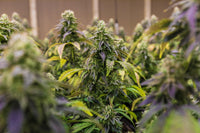
Photo by Elsa Olofsson via Pexels.
A bartender knows what a drink is. Pour 12 ounces of beer, 5 ounces of wine or 1.5 ounces of spirits and you have roughly one standard unit, and everything from server training to a customer's own mental arithmetic hangs on it. A cannabis lounge has no equivalent. Once a guest lights a joint or pulls on a vape on site, nobody behind the counter has an agreed way to say how much that guest has taken.
The idea of dose-metered lounges is this article's thesis. It is a projection, not an established policy trend, and the research behind it is thin. I found no source that describes standardized dose metering in lounges, and none that sets a 2030 target. What follows is reasoned extrapolation from adjacent rules and precedents, labeled as such.
The question is narrow and testable. Could the per-serving limits already written for packaged cannabis products become the working unit inside public consumption venues by 2030? The case for it is real, and so are the reasons it might stall.
Key takeaways
- Existing state serving caps, such as 10 mg THC per edible serving in California, give lounges a ready-made unit to build on.
- Lounge training and air-quality rules already exist in Nevada and Colorado, but no source I found mandates dose-metering in venues.
- A standard serving in lounges by 2030 is plausible in a few states, but a national standard looks unlikely on that timeline.
Where Lounges Stand Today, and What the Record Shows
Start with what the record supports. California's AB 1775, signed in 2018 and effective in 2019, let local jurisdictions permit on-site consumption at licensed retailers. It came with limits on food service and a bar on alcohol sales. Follow-up bills have been discussed in the years since, but I haven't verified their current status, so I won't cite them.
Colorado created hospitality licenses after HB19-1230. Nevada authorized consumption lounge licenses by statute in 2021. Exact dates, license categories and operating conditions vary and change, so anyone building a business plan should read each regulator's current rules rather than rely on a summary like this one.
One document gives a glimpse of how regulators think about staffing. In December 2021, Nevada's Cannabis Advisory Commission published its Cannabis Consumption Lounge Recommendations. It proposed at least four hours of initial employee training and two hours of supplemental training each year. It said this was modeled on Colorado's rule 3-515. It also called for indoor air quality standards.
Two cautions apply. That document is a 2021 recommendation, not current law, and Nevada's licensing has almost certainly moved on since then. More to the point for this article, nothing in it, or in anything else I retrieved, mentions dose-metered serving sizes.
That absence is the finding. The training requirements show regulators already treat lounge staff as people who need formal preparation to serve an intoxicating product. They do not show anyone requiring staff to count milligrams.
What remains unknown is how lounges actually cap what a customer consumes on site. Some states may limit what can be sold per visit. Others may leave it to the operator, and some rules may be silent. I could not confirm which is which, state by state. Treat any claim about existing on-site limits, including mine, as unverified until you have checked the regulator's text.
The Serving-Size Rules That Already Exist
If a lounge needed a unit tomorrow, it would not have to invent one. Packaged-product rules already define a serving, and they are remarkably consistent across the legal US market.
| Jurisdiction | THC per serving | THC per package |
|---|---|---|
| California | 10 mg | 100 mg |
| Washington | 10 mg | 100 mg |
| Colorado | 10 mg (commonly cited) | 100 mg |
| Alaska | 5 mg | 50 mg |
| Canada (national) | Not applicable | 10 mg total for an edible |
A flag on Colorado and Washington: my research notes pointed to 5 mg per serving for both, which conflicts with the 10 mg figure most sources use. Verify against each state's current regulations before you repeat either number. The Alaska figures also need confirming against current rules.
The broader point survives that uncertainty. Regulators in several jurisdictions have decided that a serving is a small, fixed number of milligrams. Canada went furthest for packaged edibles, capping an entire package at 10 mg THC. That shows a strict unit can be enforced at national scale, at least for products with a label and a factory behind them.
The reasoned extrapolation is simple. A lounge selling a single-serving gummy or beverage could define a serving as whatever its state already defines it to be. No new science is needed, only a decision to apply an existing number to a new setting.
Here is the limit, and it is a big one. These rules cover packaged edibles. They say nothing about flower, concentrates or the number of puffs from a vape. Those are the products most people would actually consume in a lounge, because the point of going is to use on site and feel it quickly. A serving definition that stops at the gummy aisle leaves most of the room unmeasured.
The Alcohol Precedent: How a Standard Drink Became a Standard

Photo by LicorBeirao via Pixabay.
Alcohol offers the best precedent, and its history is instructive. In the US, a standard drink is defined as 14 grams of pure alcohol, whether it comes as beer, wine or spirits. Bars, server training and public health guidance are all organized around that unit.
The unit did not appear first as a law. It came out of public health research that needed a common yardstick. Liability pressure then gave it teeth. Dram shop liability, which makes a venue answerable for over-serving, and server training requirements came afterward and spread state by state. The sequence was measurement first, then legal exposure, then rules.
The reasoned extrapolation is that lounges face the same incentive chain. Staff who serve an intoxicating product carry legal risk if a guest is hurt or hurts someone else. Insurers price that risk. Regulators respond to incidents. A shared unit is the cheapest way to make over-serving something you can define, train for and defend in court.
Now the counter-case, which is serious. Alcohol is a liquid with fairly predictable absorption, and a gram of ethanol behaves much the same in most drinkers. Cannabis does not. Potency varies by product, effects differ by route of use, and tolerance varies enormously between a daily consumer and a first-timer. Ten milligrams of THC in a gummy is a different experience from ten milligrams inhaled, and a different one again for two people of the same weight. A cannabis unit would be a rough guide, not a measure of impairment.
The more speculative read is that the first unit would not be official at all. A lounge, or a chain of them, might adopt a house unit of 5 mg or 10 mg THC, mirroring state edible limits, because it gives staff something to say to a guest. I have no evidence any venue does this today. It is a plausible path, not an observed one.
The Technology That Would Make Metering Possible

Photo by sarahjohnson1 via Pixabay.
Timing is the first practical problem. Inhaled cannabis takes effect within minutes, while edibles often take 30 to 120 minutes. A guest who feels nothing after a gummy and orders a second is a classic stacking problem, and a server who cannot see the clock on the first dose has no good way to intervene.
The easiest metering is the least technical. Pre-dosed items sold at a lounge counter, such as single-serving edibles, drinks and capped vape cartridges, carry the unit on the package. Staff count items rather than milligrams. A rule that says no more than a set number of labeled servings per visit would be enforceable with nothing more than a point-of-sale record. That is the reasoned extrapolation, and it requires no new hardware.
Beyond that, the picture is open speculation. Puff-counting vaporizers, or point-of-sale systems that log each customer's cumulative milligrams, could plausibly exist by 2030. I found no evidence of a deployed lounge system, so treat this as a possibility, not a pipeline.
The hard case is flower. A joint or a bong passed around a table cannot be metered in milligrams in any practical way. Potency of the flower is known, but how much each person inhales is not. Any rule that tried to measure it would be guesswork presented as precision.
Then there are cost and privacy. Tracking per-customer intake means collecting and storing data about a person's cannabis use, which raises obvious privacy questions in a country where the drug is still federally controlled. It also adds compliance costs. Small venues running on thin margins may resist, and they will have a fair argument. The likelier technology outcome is boring: labeled single-serve products and a counter log, with the clever sensors staying in demos.
A Realistic Legislative Path to 2030
Cannabis rules have a habit of traveling. Packaging, testing and serving limits spread through a few early states, notably Colorado and Washington, and were then copied by others, often within a few years of each other. Regulators borrow because writing a rule from scratch is expensive and being first to err is politically risky.
If that pattern holds, the likeliest sequence is that one state with an active lounge market adds a per-visit or per-serving rule first. Colorado, California, Nevada and New York are the obvious candidates, since all have some form of consumption venue or active rulemaking. Others would then adapt the language. That is projection from precedent, not a prediction of any named state.
Three things could drive it:
- Insurer demands, if carriers start asking lounges to show how they limit over-service.
- Pressure from local governments, which hold much of the licensing power in places like California.
- An incident involving an over-served customer, which historically moves legislators faster than any study.
Three things could stall it:
- Federal uncertainty over rescheduling. I could not verify its current status, and it could change the whole risk calculation for insurers and operators.
- Lounge economics. Per-customer caps cut revenue, and operators will lobby against them.
- Political appetite. In states with only a handful of lounges, nobody is pushing for new rules.
I am not asserting a date. The history of US cannabis policy argues for a patchwork: a few states with explicit lounge serving rules, several with vague guidance, and many with none. A single national standard by 2030 would require federal action that nothing I found suggests is coming.
Business Opportunities and the Case Against Metering

Photo by Pavel Danilyuk via Pexels.
Suppose a few states do move. Where does the money go? The first opportunity is for operators. A lounge that adopts a clear house serving standard early may find insurers and licensing boards friendlier. I can't say how large that effect would be, and no source I found quantifies it. It is a reasonable bet, not a measured one.
The second opportunity sits upstream. Suppliers of single-serving, accurately labeled products would benefit from any rule that defines a lounge serving, since their packaging already is the unit. So would providers of server-training programs, which already exist in rough form given the Nevada recommendations for four hours of initial and two hours of annual training. If lounges need staff who can explain a serving and recognize a guest who has had enough, someone will sell that training.
The case against metering deserves a fair hearing, because it is strong in places. Critics may argue that caps push customers back to unregulated home or street consumption, which defeats the purpose of a supervised venue. Experienced consumers may reasonably say that dosing is individual, and that a rule built around the average novice treats a daily user as a risk.
There is also a practical objection. Enforcement costs money, and there is no measurement standard for smoked flower. A rule that can be applied only to packaged items could end up symbolic, policing the easy products while the main activity in the room goes unmeasured. If that happens, the rule will reward operators who skip flower service and quietly shape the business model.
The risk factors are plain: federal change, thin margins, privacy exposure, and political drift. What I cannot give you is a market size or growth estimate for lounges. None is established in the material I had, and inventing one would be worse than saying so.
The most likely outcome by 2030 is not a universal dose meter. It is a de facto serving unit, borrowed from edible limits, that lounges adopt in a handful of states, probably through house policy and insurer preference before statute. The alcohol precedent suggests the unit comes first and the law follows.
Watch three signals. First, new rules or guidance from regulators in Colorado, California, Nevada and New York. Second, any insurer requirements aimed at lounges. Third, any pilot of intake tracking at the point of sale. If none appears by the middle of the decade, this thesis was too tidy, and the honest conclusion will be that lounges stayed a hospitality problem, not a dosing one.
Sources
- Cannabis June 2026 Newsletter
- Cannabis Consumption Lounge Recommendations
- Vegas Weed Lounges — DAZED! & NuWu SkyHigh
- Open a Cannabis Consumption Lounge in New Jersey: 2026 Guide to Compliance and Success
- Nevada 2025–2026: Consumption Lounges Compliance Playbook—Ventilation, Serving Limits, and Event Tie‑Ins
- Nevada Cannabis Consumption Lounge Rules Summary