Oklahoma's License Glut and the Next State Moratorium
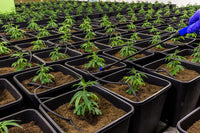
Photo by TeeFarm via Pixabay.
In June 2018, Oklahoma voters passed State Question 788, a medical marijuana program with no cap on how many licenses the state could issue. A few years later, the state stopped issuing new commercial ones. That swing from open door to closed door is the cleanest real-world test we have of what unlimited licensing does to a regulator.
Does it predict anything? One state is one data point, and anyone who names the next moratorium state from a single case is guessing. So this piece does something narrower: it builds a screening framework from Oklahoma's pattern, then reads a handful of candidate states against it.
A caution on sourcing. The Oklahoma details here, including the moratorium's timing and what happened to it afterward, are treated as claims to be checked against Oklahoma Medical Marijuana Authority reports and the legislature's bill records. No license counts are asserted. I mark what is documented, what is reasoned extrapolation, and what is plain speculation, so you can take each piece with the right amount of salt.
Key takeaways
- Oklahoma's State Question 788 set no license cap, and the state later paused new commercial licenses, which makes it the closest precedent we have.
- Forced moratoria follow measurable stress signals: license density, falling wholesale prices, regulator backlog, and diversion into illicit sales.
- Any state named as next is an extrapolation; uncapped statewide licensing combined with weak enforcement capacity is the pattern worth watching.
What Oklahoma Actually Did, and What to Verify
Start with what is documented. Oklahoma voters approved State Question 788 in June 2018, creating a medical program with no statutory cap on licenses and a low barrier to entry. Nothing in the law limited how many growers, processors or dispensaries could apply.
The Oklahoma Medical Marijuana Authority, or OMMA, became the regulator. Its public monthly reports are the primary source for license and patient counts, and they are where anyone should go for numbers. I am not quoting exact license totals or the patient share of the state's population here, because those figures must come from OMMA data, not memory.
The second documented fact is the pause. In 2022 the legislature passed a two-year moratorium on new commercial licenses, effective August 2022. What happened next is something to confirm in the legislature's bill records: whether it was extended, allowed to lapse or repealed. I believe there was an extension, but that is a belief, not a finding.
Why does the case deserve attention anyway? Because the arc is short. Oklahoma went from an open-door program to a closed one in under four years, and few other states have moved that fast in either direction. Most legal markets were designed with limits from day one. Oklahoma was designed with none, which makes it the closest thing to a controlled experiment in what happens when entry is easy and the regulator has to keep up.
Everything that follows is reasoning from that one case, plus precedents from other states. Treat the Oklahoma facts above as the anchor and the rest as inference.
The Saturation Mechanism: Why Open Licensing Stalls
Start with the economics that are well established. When entry costs are low and licenses are unlimited, supply capacity tends to outrun the patient base. More cultivators chasing the same patients push wholesale prices down. That is ordinary market behavior, not a cannabis quirk.
Thin margins create a second problem. Operators who cannot make a living selling to registered patients have an incentive to move product into unregulated channels. Diversion is the harm regulators usually cite when they ask for a pause, and it is worth noting that it follows directly from the price squeeze.
Then there is regulator capacity. Inspectors and compliance staff are hired through budgets and civil-service pipelines, and they scale far more slowly than license counts do. When an agency's workload grows faster than its staff, enforcement gaps widen, and gaps are where the diversion happens.
Here is the reasoned extrapolation. A moratorium is often a triage tool: it caps the workload so inspectors can catch up. Read that way, it is less a verdict on the program than a request for time. If that reading is right, the trigger to watch is enforcement strain, not the price chart.
The counter-point deserves real weight. Falling prices are good for patients, who pay less for medicine, and a glut is not automatically a policy failure. Plenty of consumers would call cheap, abundant supply the point of the program. A state can sit on low prices for years without anyone in the legislature caring, so long as inspections keep pace and nobody is documenting leakage.
So the mechanism has three links: easy entry, thin margins, and a regulator that cannot keep up. Break any one of them and the pause becomes less likely. That is the logic the screening test in a later section tries to capture.
Precedents: How Other States Capped or Paused Growth
Oklahoma is not the first place to try to control how fast a cannabis market grows. It does belong to a different group than most, though, and the grouping is the useful part. Every precedent below should be checked against primary sources before any date or count is quoted.
Washington's legalization came with a capped retail license structure and a limited application window. That is an example of controlling supply from the start, deciding the size of the market before it exists. I would verify the specifics before citing numbers.
California and Michigan took another route, leaning on local control. Municipalities can ban cannabis businesses or cap how many operate within their borders. That works as a de facto moratorium without a statewide freeze, and it produces a patchwork in which some towns are saturated while others have no storefront at all.
Colorado offers a third pattern. Cities and counties there used local moratoria in the early years of the market, a documented habit of pausing first and writing rules second. The freeze bought time to draft zoning and licensing rules that did not exist yet.
Put these together and a pattern shows up:
- Caps are written in advance. Washington decided on limits before the market opened.
- Local pauses fill gaps. California, Michigan and Colorado let towns freeze when the state would not.
- Statewide moratoria arrive after stress appears. Oklahoma is in this group.
That last category is the informative one. A state that wrote no cap in advance can only respond to stress after it shows up, and the response is a freeze. A state that capped from the start never reaches that decision point, which is the whole argument for why the next candidate is more likely to be an uncapped market.
A Screening Test for the Next State
A framework is only useful if it can be checked. Here are five indicators, each tied to a source a reader can pull without paywalls.
| Indicator | What to check | Source |
|---|---|---|
| Licenses per capita | Total active commercial licenses divided by state population | State regulator monthly reports |
| Patient share | Registered patients as a share of population | State regulator patient reports |
| Wholesale flower price trend | Direction and speed of decline over several quarters | Regulator or tracking data, where published |
| Inspector-to-licensee ratio | Staff positions against active licenses | Agency budget and staffing announcements |
| Statutory license cap | Whether the law limits license numbers at all | State statute and regulations |
Now a reading of candidates, labeled as a reading of the framework and not a finding. Michigan and California are large markets with local control, which means saturation may be handled town by town instead of through a statewide freeze. Missouri has a newer program following its recreational vote, so its license trajectory is the one to watch. Colorado is mature and already strained, but its history of local pauses suggests it manages stress differently.
One plain statement: the state data was not gathered for this piece. Anyone using the framework should pull each number from regulator reports before drawing conclusions, and my placement of these states is a hypothesis to test, not a result.
The most speculative read is this. A state with no statutory cap and a fast-growing license count is more exposed than a mature market with an established cap. If I had to place a bet on which indicator combination matters most, it would be uncapped licensing plus a thin inspector ratio. Price decline alone is a weaker signal, for the reasons given earlier.
The Case Against a Forced Moratorium
Here is the conservative case, and it is a strong one. Most legal markets cap licenses by design, so a state with a cap has little reason to need an emergency pause. The forecast only applies to states that left the door open.
Oklahoma's pause also carried political drivers, such as concerns about illegal operations, that may not transfer elsewhere. What the legislature actually cited should be confirmed in the bill records and floor materials. If the push was tied to local politics and a specific enforcement scandal, another state may never feel the same pressure.
Moratoria meet resistance. Existing applicants who have spent money on leases and build-outs push back, as do local economic interests that want the tax revenue. A freeze bill can stall in committee, and that is a normal fate for legislation that creates visible losers.
A pause also does not fix oversupply by itself. Existing licenses stay active, so price pressure can continue unless enforcement or consolidation follows. A freeze stops the problem from getting worse, which is different from making it better, and a legislature that sees that may decide the political cost is not worth it.
So what would have to be true for the forecast to hold? Three things, all at once:
- Rapid license growth in a state without a cap.
- Visible enforcement failures, ideally documented by the regulator or the press.
- Legislative appetite in the same session.
That is a demanding list. Missing any one of the three, and the likeliest outcome is slow adjustment through fees, rulemaking or local control rather than a statewide freeze. Within a one-to-three-year window, I would treat a forced moratorium as a low-probability event for any given state, even if the watchlist is worth keeping.
What a Moratorium Means for Operators and Investors
If a moratorium does arrive, the mechanics are likely to follow the Oklahoma pattern. New applications freeze, existing licenses are grandfathered, and renewal rules tighten. That sequence is reasoned from one case, so hold it loosely.
What follows is speculation, not documented fact. A freeze tends to give existing licenses scarcity value, since nobody new can enter. That can shift the business model toward acquisitions and consolidation, with stronger operators buying weaker ones. Whether prices for licenses actually rise depends on how much oversupply remains, which is the same question the screening test asks.
Opportunities may open for operators who need to prove they are clean. The likeliest areas:
- Compliance services, helping licensees survive tougher renewal reviews.
- Seed-to-sale tracking, since traceability is the standard answer to diversion.
- Testing, as regulators lean harder on documented product quality.
- Wholesale logistics, for a consolidating supply chain.
The risks for license holders are real. Renewal criteria can tighten, fees can rise, and a freeze may be lifted earlier than expected, which would erase the scarcity premium overnight. Anyone paying up for a license on the assumption the door stays shut is taking a policy bet.
The practical takeaway is about timing. Bill introductions and regulator staffing announcements tend to come before a moratorium vote, so they are the early signals. A reader who watches those two feeds in their own state will see the pause coming earlier than one who waits for headlines.
Oklahoma shows that an open-license model can pivot to a pause quickly. It does not show that every uncapped state will follow. One precedent supports a watchlist, not a prediction, and the honest forecast for any single state in the next one to three years is a modest probability, not a likelihood.
The practical edge belongs to readers who track the five indicators in their own state's regulator reports instead of waiting for a bill to appear. By the time a freeze is on the floor calendar, the numbers that justified it have usually been public for months. The data is there for anyone willing to read the monthly reports, and that habit is worth more than any single forecast, including this one.
Sources
- Licensing and Tax Data - Oklahoma.gov
- Extended moratorium on Oklahoma medical marijuana business licenses approved by House • Oklahoma Voice
- Oklahoma Medical Marijuana Authority Page 1 10/16/26 First Name Last Name Type
- Patient Licenses - Oklahoma.gov
- Medical Marijuana Dispensary Registration Portal
- FOX23 Investigates: Oklahoma sees drastic drop in medical marijuana dispensaries since 2023