Craft Cannabis Growers After Interstate Shipping Arrives
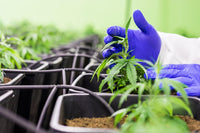
Photo by TeeFarm via Pixabay.
Craft cannabis growers in Oregon and California are already selling hand-trimmed flower for less per pound than a few years ago, and talk of a national market now arrives on top of that. Interstate shipping could rescue some of them and ambush others.
My read is that interstate shipping would be a mixed outcome for craft growers, and that the winners will be sorted by identity rather than scale. Growers with a recognizable name, a story and a customer list could gain a lot. Growers selling anonymous flower by the pound could lose their one remaining protection, the state border.
This is a projection, not a forecast of a date. It leans on how wine, beer and hemp behaved when their own borders opened, and the legal path for cannabis is still unresolved. Where I am extrapolating rather than reporting, the wording says so.
Why Interstate Shipping Is Further Off Than It Sounds
Cannabis remains federally controlled, and carrying it across a state line is a federal offense today, whatever licenses a grower holds at home. State legalization never changed that.
Rescheduling is often confused with interstate commerce. The DEA's proposed rule to move marijuana from Schedule I to Schedule III would change tax treatment and loosen research rules. It would not authorize commerce across state lines, whatever happens to that rulemaking.
Some states have pre-positioned. California's AB 1111 and Oregon's own legislation allow interstate agreements, but only if federal law permits. They are conditional placeholders, not working markets, and no grower can ship anything under them today.
Real shipping would need a federal framework that answers several questions at once:
- Who licenses producers and carriers, and at what level?
- Do states honor each other's lab testing, or retest everything?
- Whose labeling rules apply to a package in transit?
- How is excise tax collected and split between states?
- Which agency regulates transport?
The conservative read deserves weight. Congress has repeatedly stalled on comprehensive cannabis bills, and a framework this complicated is harder than any of them. A three-to-seven-year window is plausible, though far from certain, and the rest of this piece is conditional on it.
The Squeeze Craft Growers Already Feel
Before any shipping arrives, craft growers in mature markets such as Oregon and California are already squeezed. Both states have seen oversupply and falling wholesale flower prices.
The structural cause is well understood. Licensed capacity grew faster than in-state demand, and state borders trap the surplus inside each market. A glut that would drain away through trade in any other crop just sits and drives prices down.
Small operators carry costs that large ones spread thinly: licensing fees, compliance testing, local taxes and Section 280E, which denies ordinary business deductions to businesses trafficking in Schedule I or II substances. Rescheduling to Schedule III might ease 280E, which would help margins regardless of shipping.
Interstate access would let surplus states sell outward, which sounds like relief. It would also let low-cost producers elsewhere sell into every craft grower's home market, and the second effect is the one small farms are less equipped to absorb.
Advocacy groups such as the Craft Cannabis Association and the Oregon Craft Cannabis Alliance have long argued for protections for small licensees. Their general concern, that small farms get outcompeted once markets consolidate, is the thing to test against the evidence below.
What Wine, Beer and Hemp Already Taught Us
Cannabis has no precedent of its own for this, so reasoning from neighboring industries is the best available method. Four are worth naming.
Alcohol after Prohibition. The Twenty-first Amendment and the three-tier system of producer, distributor and retailer gave states control over how alcohol moves. That structure still shapes how small producers reach buyers, and it is the closest model for what states will want to keep.
Wine direct shipping. In Granholm v. Heald, the Supreme Court struck down state rules that discriminated against out-of-state wineries shipping directly to consumers. Direct-to-consumer later became a lifeline for small wineries that distributors would never carry.
Craft beer. Breweries grew from a few dozen in the late 1970s to thousands. That followed federal legalization of homebrewing and a distribution model that rewarded local identity. Legal change helped, but brand made the growth stick.
Hemp. The 2018 Farm Bill opened interstate hemp transport. Prices and farm margins were then heavily squeezed, a warning for any crop that behaves like a commodity.
If cannabis follows alcohol, states will keep gatekeeping power, and shipping may arrive as a patchwork of reciprocity deals rather than a free market. Open borders in the full sense are the less likely path. Cannabis has no constitutional alcohol-style carve-out, though, so a more uniform federal framework than alcohol ever had is possible.
Scenario One: The Commodity Flood
The bad outcome is easy to sketch. Low-cost, large-scale outdoor and greenhouse producers in favorable climates ship bulk flower and trim to higher-priced states. Prices fall nationally toward the cost of the cheapest producer.
Agriculture has done this repeatedly, and hemp is the freshest example: scale tends to win on undifferentiated products. A pound of generic flower is hard to distinguish from another pound once it passes a lab test.
The first flows would probably be bulk biomass and extraction input rather than premium flower. Those buyers care about cannabinoid yield and price per unit, not brand, so they would be the quickest to switch suppliers.
Compliance costs, differences in state testing rules, transport regulation and plain state protectionism could all blunt the flood or delay it for years. Every state legislature with a local industry to protect has a reason to write rules that slow outside product. Alcohol states did exactly this for decades.
Who is most exposed? Not necessarily the smallest craft operators. The sharpest risk falls on mid-sized indoor growers with high overhead and no brand. They are too expensive to compete with bulk outdoor producers on price, and too anonymous to charge a premium. Tiny farms with loyal customers can survive on a niche, and the biggest operators can compete on cost.
Scenario Two: Provenance, Appellations and Brand
The opportunity side starts with wine. Appellations turned place into pricing power, since a bottle labeled with a famous region sells for more than an identical-tasting one without it. Cannabis could do the same through origin-labeled programs. California has an appellation framework in law, and counties such as Humboldt are the obvious candidates, but how far that program has actually been implemented is uncertain.
A cannabis plant's chemical profile, including its terpenes, depends heavily on genetics, and also on growing conditions and post-harvest handling such as drying and curing. How much of that is true terroir, as in grapes, is still debated. Genetics drive a large share of the profile, but whether a hillside or a climate leaves a signature a buyer could taste remains open.
The more speculative read is that brands may not need proven terroir. Cultivar genetics, regenerative or sun-grown methods and verified lab data could each carry a premium on their own, the way organic and single-origin coffee do. The label has to be believable, and third-party verification would be the backbone.
Premium buyers are a small slice of total volume. Consumers have historically bought cannabis on price and THC percentage, and a national market could simply push more of them toward the cheapest high-potency option.
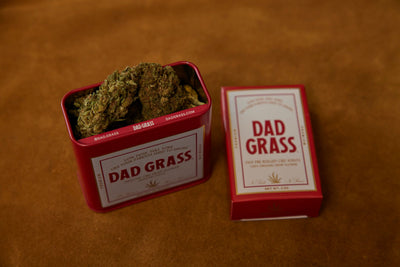
Direct-to-consumer shipping, if allowed, would be the strongest lever for small brands. It helped small wineries reach buyers who would never see them on a retail shelf, and it could do the same for a farm with a story and a mailing list.
New Business Models for Small Growers
If the commodity scenario is the risk, these are the plausible responses. They are models to consider, not documented success stories, and none has been proven at scale.
- Co-ops and shared processing. Small growers pool drying, trimming, testing and packaging, sharing costs that crush a single farm. A pooled lot can also meet the volume an out-of-state buyer demands.
- Licensing genetics and brand. Rather than shipping product, a grower licenses a cultivar or label to partners in other states who grow locally. That sidesteps transport rules entirely, much as beer and spirits brands expand through contract production.
- Agritourism and farm-gate sales. Tasting rooms and farm visits keep value local and mirror the winery model, where hospitality often earns more per bottle than wholesale.
- Specialty segments. Minor cannabinoids, sungrown pre-rolls and small-batch concentrates reward craft and care more than scale.
The risks are real. Each of these needs capital, and small growers are already running thin. Federal rules are uncertain, so a business built around one assumption could be stranded by another.
The biggest risk is that large multistate operators capture distribution first. Alcohol's three-tier system shows how control of the middle layer can matter more than the farm at the start. If a few big firms own the trucks, warehouses and retail relationships, small brands may have to go through them on their terms.
Signposts to Watch Over the Next Seven Years
Nobody can date the arrival of interstate shipping, but there are markers that would tell you which way things are moving. Here is what I would watch through the next seven years.
- Federal rulemaking. Whether Schedule III is finalized, and whether any bill that explicitly addresses interstate commerce or a regulatory framework moves out of committee. Introduction alone means little.
- State action. Whether states begin signing interstate compacts, and whether testing and labeling standards start to converge. Convergence is the quiet precondition for everything else.
- Court activity. Commerce Clause challenges to state bans on out-of-state cannabis could echo the alcohol cases. This is speculative, since federal illegality complicates the argument, but a ruling would be a major signal.
- Market behavior. Whether in-state wholesale prices stabilize or keep sinking before any shipping begins. A market already at the floor has less left to lose.
For growers, the practical takeaway holds in every scenario. Build a brand and direct customer relationships now: an email list, repeat retail partners, a clear story about how and where the plants are grown. Those assets are portable. They help in a flood, in a patchwork and in a world where nothing changes.
The deciding factor is probably not whether shipping arrives but who writes the rules for it. Alcohol history suggests that state gatekeeping and the distribution layer will shape winners more than any federal statute. Anyone watching Washington alone is watching the wrong place.
Craft growers who spend the waiting years building an identifiable brand and a real customer base are best placed in both the optimistic and pessimistic scenarios. Undifferentiated mid-sized producers carry the most risk, because they have neither a cost advantage nor a story. The window is open now, and it will be cheaper to use before the borders move than after.
Sources
- THC Shipping Rules 2026: Can Hemp THC Ship to Your State?
- Are Cannabis Seeds Legal in 2026? Section 781 Explained
- Can You Mail Edibles or Hemp in 2026? Carrier Rules
- Cannabis Delivery Loads Cargo Van: 2026 Carrier Guide
- Hemp and THC Shipping Rules
- What Happens to Cannabis Seeds You Already Own in 2026?