Swiss Cannabis Pilots and the Liechtenstein Border Question
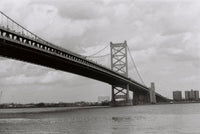
Photo by suju-foto via Pixabay.
Switzerland is running regulated cannabis supply, and the pilot design keeps every gram inside a closed loop. Registered adult participants, a regulated source, a research purpose. Nothing leaves the loop, and nothing was ever meant to.
That makes the cross-border question more interesting than it first looks. Liechtenstein sits in a customs union with Switzerland and leans on Swiss institutions for much of its regulatory machinery. But a customs union does not copy one country's experiments into another's statute book. Whether the Swiss pilots reach Liechtenstein at all, and what that implies for the wider EFTA bloc, is the real test case.
This piece is a forecast for the next one to three years, built on legal structure and precedent rather than market data. I could not verify current details against primary sources while preparing it, so dates, trial lists and thresholds below are flagged for checking against fedlex.admin.ch, bag.admin.ch, parliament.ch and regierung.li before anyone acts on them. Where I am reasoning rather than reporting, I will say so.
Key takeaways
- Switzerland's pilot trials are built for registered local participants, so they offer no legal basis for exporting cannabis to Liechtenstein or elsewhere.
- Liechtenstein's customs union and treaty ties with Switzerland make it the most exposed neighbor to any future Swiss legalization law.
- Norway and Iceland sit outside the customs union and are bound by the UN drug conventions, so near-term trade there is very unlikely.
What Art. 8a Actually Permits (and What It Doesn't)
The experimental article, Art. 8a of the Narcotics Act (BetmG), took effect on May 15, 2021. As I understand it, it allows time-limited scientific pilot trials of regulated cannabis supply. Confirm the exact wording and any amendments on fedlex.admin.ch.
Trials need federal approval from the FOPH (BAG) and are aimed at adults who already consume cannabis. The current eligibility rules and participant caps are details to check, because they have changed in other pilot schemes as they matured. Cities and cantons that have run or planned trials include Basel, Zurich, Bern, Geneva, Lausanne and Biel. The BAG site should carry the live list and enrolment figures; I have not confirmed either.
What the article does not do matters more for this topic. The structure is a closed loop: registered participants, regulated supply, a research question attached to every study. There is no commercial licence in it, no retail channel open to the public, and no export mechanism of any kind.
Here the fact ends and the reading begins. The absence of any cross-border provision looks like a design feature, not an oversight. A trial that measures effects on consumption, health and the illicit market needs a sealed population to measure. Letting product cross a border would contaminate the study and collide with Switzerland's obligations under the UN drug conventions, which tolerate scientific use more readily than trade.
The conservative counter-case is simple. Pilots can be extended, enlarged and amended by ordinance. A future adjustment could, in theory, touch supply chains. But nothing in the structure points toward trade, and I would not forecast it.
Where the Parliamentary Bill Stands

Photo by Louis via Pexels.
The pilots are one track. The other is the parliamentary bill. As I recall, the National Council's Social Security and Health Committee (SGK-N) drafted a cannabis regulation bill following parliamentary initiative 19.510. Check parliament.ch for the current stage, because I could not.
The general path is well established. A committee drafts, a consultation collects reactions from cantons, parties and associations, the Federal Council gives its opinion, and both chambers must agree. Any resulting law can then face an optional referendum if enough signatures are gathered. Each step can add months, and a disagreement between chambers can add rounds.
Precedent argues for patience. The four-pillar narcotics revision is the documented example to check: prevention, therapy, harm reduction and enforcement were codified into the Narcotics Act only after years of debate and a decade of practical experiments with measures such as heroin-assisted treatment. If that rhythm repeats, a regulation law is a multi-year project, not a one-session fix.
The case for faster movement rests on evidence. Pilot data from places like Basel and Zurich gives lawmakers something they lacked a decade ago: Swiss results on Swiss consumers. That can move undecided members, especially on questions like consumer safety, product quality and effects on the illicit market.
The counter-case is a split parliament and the chance of a popular vote. Drug policy tends to mobilize both supporters and opponents, and a referendum could stall or reshape the bill. My own judgment, flagged as such: the bill is more likely to arrive slowly and in narrower form than the committee's first draft, with the pilots continuing meanwhile. A law in force and operating within the next few years looks less likely than a law still being argued over.
Liechtenstein: Customs Union, Not Legal Mirror

Photo by Rodrigo Curi via Pexels.
Liechtenstein has been in a customs union with Switzerland since the 1920s, and it has historically applied much Swiss narcotics regulation. That much is the established background, though regierung.li and llv.li should confirm the specifics.
The key distinction is that sharing a customs area is not the same as sharing a drug law. The open questions are whether Liechtenstein applies Swiss BetmG provisions directly or through its own legislation, and whether Art. 8a pilots reach it at all. My working assumption is that a Swiss pilot authorization has no legal force in Liechtenstein unless Liechtenstein's own law adopts it. That needs confirmation from the government and a local lawyer.
The practical consequence is easy to state. A product lawful inside a Swiss trial can still be unlawful once it crosses a border where no trial exists. It does not matter whether customs controls are present at the crossing. Possession and supply are judged under the law of the country where they occur, and a pilot participant's registration is not a passport.
Here is the pieces to confirm:
- The narcotics treaty arrangements between the two countries and how they allocate responsibility.
- The role of Liechtenstein's health authority versus Swiss bodies such as Swissmedic.
- Enforcement practice for personal possession, which can differ from the written law.
Now the open speculation. Liechtenstein is small and reliant on Swiss regulators for technical capacity. It may well wait for the final Swiss law rather than build its own pilots, then negotiate how that law applies. A country with limited regulatory staff has little reason to run experiments that its larger neighbor is already running. The counter-view is that Liechtenstein could see a first-mover niche, but I find that less plausible given its institutional dependence.
The EFTA Picture: Norway, Iceland and the UN Conventions
Switzerland, Liechtenstein, Norway and Iceland are all bound by the UN drug conventions. Those treaties constrain supply for anything other than medical and scientific purposes. How each country interprets that constraint is something to verify; Switzerland's pilots lean on the scientific-purpose reading.
Norway and Iceland are not in the Swiss-Liechtenstein customs union. Goods moving to either would face ordinary customs checks and each country's own drug laws. A product legal in a Swiss trial would simply be a controlled substance at a Norwegian or Icelandic border.
EFTA matters here mostly as a source of confusion. It is a free-trade framework, not a drug-policy body. Free movement of goods under trade agreements has always carried public-health and public-order exceptions, and narcotics sit squarely inside them. Membership grants no cross-border cannabis trade rights, and I know of no EFTA mechanism that could.
The counter-case is that Norway and Iceland could shift policy on their own. Nothing I can verify points to near-term liberalization there, and I flag that as a gap to check against current government and parliamentary sources. Even if one of them moved, it would act domestically first, as Switzerland has.
The precedent worth reasoning from is the Netherlands. Its coffeeshop system has long operated on domestic tolerance while cross-border trafficking stayed illegal, and the supply side, the so-called back door, stayed in a legal gray zone for decades. Tolerance at home never converted into trade rights abroad. Switzerland's pilots, which are more tightly regulated than coffeeshops, give even less reason to expect an export right to emerge.
Three Scenarios for the Next Few Years
Here are three scenarios for the next few years. The likelihoods are my judgment, not data, and the timing of any Swiss law is uncertain, so I state assumptions instead of asserting dates.
| Scenario | Trigger | Likelihood (author's judgment) | Main risk |
|---|---|---|---|
| 1. Baseline: pilots continue or expand in Switzerland | Existing Art. 8a framework, ongoing BAG approvals | Most likely | Political backlash or study design problems |
| 2. Swiss regulation law passes late in the window; Liechtenstein negotiates application | Chambers agree and no successful referendum | Plausible, less likely than baseline | Delays, a referendum, treaty friction |
| 3. Bilateral arrangement allows limited Liechtenstein participation | Political will in both countries plus treaty adjustment | Least likely | UN convention constraints, legal complexity |
The baseline rests on the closed-loop design. It requires nothing new, and each pilot is built to stay inside its participant list. Liechtenstein watches and does not act.
The moderate case assumes the bill clears parliament near the end of the window. Even then, entry into force and implementing ordinances would take time, and Liechtenstein would have to decide how the law fits the existing treaties. I would not expect trade within the window.
The speculative case would need several things to be true at once: a Swiss law in place, Liechtenstein political appetite, a treaty basis, and a defensible reading of the UN conventions. That stack of conditions is why I rank it last.
Signals to watch: BAG trial reports, SGK-N and Federal Council announcements, and any statement from the Liechtenstein government on its intentions.
What This Means for Businesses and Researchers
The near-term opportunity sits inside Switzerland. Licensed growers supplying pilots, analytical testing, data management and compliance work are the natural niches. Check which producers actually hold pilot supply contracts before naming any; I have not verified that.
Cross-border sales planning for Liechtenstein or the wider EFTA bloc is premature. Operators should not assume legal parity from the customs union. The customs union removes some border friction, but it does not make a Swiss-lawful product lawful next door.
CBD and low-THC products are a separate regulatory track from the Art. 8a pilots. The THC thresholds that define them differ between legal regimes and have changed over time, so verify the current Swiss and Liechtenstein limits before building any plan around them. Treat this as an open check, not an assumption.
The practical step is to get written advice from a Swiss or Liechtenstein lawyer and from the regulators before drafting any export model. I flag this as a verification gap, not a recommendation to trade.
The risk factors are familiar from other markets:
- Political reversal after an election or a failed vote.
- A referendum that reshapes or blocks the law.
- Enforcement differences between countries, even where statutes look similar.
- Banking restrictions that can choke a legal business through its payment channels.
Researchers face a gentler version of the same picture. The pilots generate data that will shape the Swiss debate, and groups that can contribute analytical or methodological capacity are better placed than anyone hoping for a trade route.
The most useful forecast here is a negative one. The Swiss pilots test regulation, not trade, and cross-border sales will follow legal change rather than lead it. Anyone planning around a gray-area export window is reading the design backwards.
Liechtenstein is the signal to watch. Its choice, whether to follow Swiss law, wait for it or negotiate its own terms, will show how far a customs union stretches into drug policy. If a country this closely tied to Switzerland still needs its own legal act, the answer for Norway and Iceland is already clear. The thing to verify first is the legal channel by which Swiss narcotics law reaches Vaduz, because every scenario above turns on it.
Sources
- Analysis of results from cannabis pilot trials in Swiss cities - International Drug Policy Consortium (IDPC)
- Analysis of Results from Cannabis Pilot Trials in Swiss Cities
- Switzerland’s groundbreaking experiment with cannabis regulation
- From Pilot Projects to Legislation: Switzerland as a Cannabis Policy Lab - Cansativa Group
- [Regulated cannabis distribution pilot studies in Switzerland: an example in Geneva] - PubMed
- Switzerland Launches Eighth Cannabis Pilot, Testing Home Delivery for the First Time