Uruguay's Cannabis Model: A Template for the Caribbean?
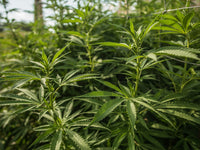
Photo by Richard T via Pexels.
Uruguay is routinely described as having a state cannabis monopoly. It doesn't, quite. The state licenses, audits and controls, while private licensed companies do the growing and the exporting of medical cannabis. That gap between the label and the machinery is the real story, and it is where a forecast for the Caribbean has to start.
The question for the next three to seven years is whether small, export-minded Caribbean states could copy that structure. To be plain about it: I found no formal announcement from any Caribbean government or from CARICOM adopting a Uruguay-style model. The template claim here is my argument, not reported policy.
The method is simple. Established facts come first, then reasoned extrapolation from precedent, then open speculation, labeled as such. The counter-case gets as much room as the case for it, because you should be able to take any of this with a grain of salt.
Key takeaways
- Uruguay's model is state regulation plus private licensed operators, not a pure monopoly, and that distinction is what makes it exportable.
- Uruguay reported 28.6 tons of medical cannabis production in 2023 and 52 IRCCA-authorized projects, per its export promotion agency.
- The Caribbean-template idea is this article's argument, not an announced policy; GMP costs, treaty limits and banking are the main obstacles.
The Monopoly That Isn't One
Start with what is established. Uruguay's 2013 law created the IRCCA, the Instituto de Regulación y Control del Cannabis. It grants licenses and oversees export-related activity. That is the state's role: it holds the licensing gate and the regulator's chair.
Behind that gate, private licensed companies do the actual growing and the export of medical cannabis. The recreational market runs separately, with pharmacy sales as one of its channels. So under one law there are several distinct systems, each with its own rules and participants.
This matters for how we talk about it. Calling the model a monopoly suggests state-owned farms and a single seller, and that is not what the regulator's structure describes. What a Caribbean government could actually borrow is a licensing-and-control architecture: who may grow, who may export, who checks them.
Everything in this section is fact drawn from how the regulator is built. No projection has started yet. The forecasting begins in section five, and it only works if we are copying the right thing.
What Uruguay Has Actually Shipped
What has the architecture produced? The best available source is Uruguay XXI, the government's own investment and export promotion agency. It says Uruguay has exported cannabis-derived products since 2018. That is a claim from an agency whose job is to promote the sector, so read it with that in mind.
The same overview reports medical cannabis production of 28.6 tons in 2023. It also counts 52 projects authorized by the IRCCA across the medical, research and recreational markets, and describes the wider value chain as about 100 projects.
Those numbers are modest. Nobody should read 28.6 tons as a market-shaping volume. What they show is a functioning licensing pipeline that has moved from paper to product within about a decade of the law.
Two caveats. These figures date from 2023 or earlier, and the source page is undated in what I could access, so they may be stale. Uruguay's 2025-2026 export volumes and destination markets are not established here, and I will not name destination countries or revenue figures I could not verify.
The fair reading: the agency's claims suggest a working system, not a proven commercial success. That distinction should temper any template talk.
Why a State-Anchored Structure Fits the Treaty Map
Why would a regulator-centered model suit small states? Start with the treaty map. The 1961 Single Convention on Narcotic Drugs requires states that permit cannabis cultivation for medical or scientific purposes to set up a national agency to control it. Article 28 cross-references the poppy rules in Article 23, which is where the agency requirement comes from. A model built around a central regulator maps naturally onto that.
Uruguay's recreational market is widely regarded as in tension with the treaties. Medical export under a regulator is the more defensible lane. That is a legal reading, not a settled ruling, and treaty bodies and governments disagree about how far the tension goes.
Here is the reasoned extrapolation. Small states have little leverage in treaty bodies and little appetite for a diplomatic fight. If I were advising one, I would build the version that is hardest to challenge: a regulator, a licensing gate, medical and scientific focus, export under documentation.
The counter-point is real. Other jurisdictions, Canada among them, export under licensing frameworks that look nothing like Uruguay's. So the treaty logic favors having a regulator. It does not specifically favor Uruguay's design, and a Caribbean state could reach the same legal comfort by many routes.
That weakens the claim that Uruguay is the template, though not the claim that the regulator is the essential piece.
The Caribbean Starting Line
The Caribbean is not starting from zero. Jamaica has a Cannabis Licensing Authority, established after its 2015 Dangerous Drugs Amendment Act, and it plays a role comparable to the IRCCA. I have not verified its current export rules, so I am citing only its existence and function.
As background worth checking, the CARICOM Regional Commission on Marijuana delivered a report in 2018 recommending that member states reconsider their cannabis laws. Treat that as context rather than a settled record until verified.
The structural resemblance to Uruguay is small domestic consumer markets. A country of a few million people, or far fewer, cannot build a serious industry on local sales alone. Any meaningful revenue has to come from export.
Again, the limit of the evidence: no CARICOM or individual government statement adopting a Uruguay-style model turned up. The template idea is mine.
There is also an open tension. Caribbean licensing so far has often centered on small local growers and tourism-linked activity. That pulls against a pharma-export design, which wants scale, consistency and documentation. Which pull wins is a political choice, not a technical one.
The Case for Convergence by the Early 2030s
This section is reasoned extrapolation, and the assumption needs stating up front: foreign medical demand keeps growing and import rules keep opening. If either fails, none of this follows.
The precedent is Uruguay's own timeline. From the 2013 law to exports in 2018 is roughly five years. A Caribbean state that started now would land inside this article's three-to-seven-year window, in the early 2030s at the outside.
Two mechanisms make the structure attractive. First, a single regulator that licenses, audits and certifies gives foreign pharmaceutical buyers one counterparty to trust, which should lower their due-diligence cost. Second, a clear licensing gate lets a government cap the number of exporters and favor consolidated, GMP-capable producers over scattered smallholders.
If that happens, the business opportunities look like this:
- Contract cultivation for licensed exporters
- Extraction and testing laboratories
- Packaging and compliance services
- Cold-chain logistics for shipments to foreign buyers
Note that most of these are picks-and-shovels businesses, not plant-touching ones. They also depend on the regulator existing first.
The more speculative read is that one or two states move early and the rest copy selectively. I would not put a date on it.
What Could Stall It
Plenty could stall this. Pharmaceutical-grade standards such as EU-GMP are expensive, and small island producers may struggle to fund certified facilities. Uruguay is itself a modest country, and it faces the same scale problem.
Financing is the second choke point. Banking constraints on cannabis businesses can strangle export-oriented investment, especially for firms that depend on international correspondent banks. A regulator can certify a facility, but it cannot make a bank lend to it.
Then there is political economy. Caribbean smallholders and Rastafari communities have strong claims on the sector, and a consolidated licensing model could be read as squeezing them out. A government that ignores that risks backlash, and a government that honors it may find it cannot build the consolidated producers buyers want.
Competition is the fourth problem. Canada, Colombia and others already sell into the same foreign medical markets with established track records. A newcomer has to offer something beyond existing.
Finally, Uruguay itself may change. I could not verify any 2025-2026 policy shift under the current government, so I will not claim one. But the model is not frozen, and a template that moves is a harder thing to copy.
Signals to Watch Before Betting on It
If you want to know whether this thesis is gaining ground, watch for concrete signals rather than speeches:
- A Caribbean government commissioning a study of the IRCCA structure.
- A bilateral regulatory agreement with Uruguay.
- A licensing reform aimed at export-only permits.
- A country pursuing EU-GMP certification for domestic facilities, which would show real intent and real money.
Also track Uruguay's reported production and export figures after 2023. A plateau would weaken the template argument. Steady growth would strengthen it.
For investors and operators, the advice is plain. Treat the template thesis as a hypothesis, not a plan. Position compliance-first, since quality systems, testing and documentation pay off whichever model emerges. And verify every current figure before committing capital, including the ones in this article, which date from 2023 or earlier.
The more useful lesson from Uruguay is about the plain machinery: a credible, boring regulator can count for more than whatever label the model carries. That is the piece the Caribbean can copy, because it does not require Uruguay's politics, its recreational market or its scale.
My honest bet is that the template appears as selective borrowing. Expect a single export authority or a certification regime before anything resembling a full copy of Uruguay. The signals above will show which way it goes, and if none of them appear within a few years, I was wrong.
Sources
- CANNABIS - Uruguay XXI
- Trump effect on cannabis: how regulatory changes in the US could transform Uruguay into an export hub for Brazil
- ExpoCannabis Uruguay 2026
- Cannabis Conferences Latin America 2026
- Cannabis in Uruguay: The First Country to Legalize Weed
- Uruguay considers allowing sale of cannabis to tourists and non-residents to combat the illegal market