Can Uttarakhand Hemp Become a Billion-Dollar Export?
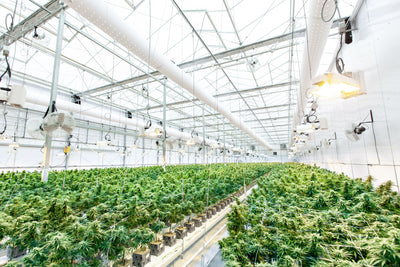
Photo by Gio Bartlett via Unsplash.
India's narcotics law classes cannabis as a controlled drug, yet the same statute hands state governments the pen to license certain kinds of cultivation. That gap is where Uttarakhand, a Himalayan state, became the first to run a controlled industrial hemp program.
The headline asks whether this could seed a billion-dollar fiber and CBD export industry. Treat that figure as a hypothesis to stress-test, not an established market number. I did not find a reliable estimate of any Indian hemp export market, and I will not invent one.
The method here is simple. Read the legal text first, then look at precedents from other hemp markets, then walk through the arithmetic transparently and give the counter-case its full weight. Where something is established fact, projection, or plain speculation, the prose will say so. Several details about Uttarakhand's current rules also still need checking against official sources, and I flag those as they come up.
Key takeaways
- The NDPS Act lets states license hemp for fiber and seed, but flower and resin stay tightly controlled, which limits CBD.
- Fiber and seed are the realistic export lanes; CBD faces central-government gaps and strict import rules abroad.
- A billion-dollar outcome is speculation, not a forecast; it needs assumptions the evidence does not yet support.
What the NDPS Act Actually Lets States Do
The Narcotic Drugs and Psychotropic Substances Act of 1985 is the starting point. As I understand it, Section 10 empowers state governments to make rules permitting and regulating the cultivation, possession, transport and use of cannabis plants. The exact wording should be checked against the current Act text before anyone relies on this summary.
Section 14 is the other hook. It is generally read as allowing cannabis cultivation for industrial purposes, meaning fiber and seed, and for horticultural purposes. Which level of government the provision refers to is a detail that needs legal verification.
The Act's definition of ganja centers on the flowering or fruiting tops of the plant. Seeds and leaves are treated differently. That distinction is why hemp seed and fiber have more legal room than flower or resin. This is the established structure of the statute, though the fine print deserves a lawyer's reading.
Here the facts end and the interpretation begins. How much room the law leaves for CBD extraction is an open and contested question. CBD is typically pulled from flowers and leaves, which sit uncomfortably close to the controlled parts. Anyone claiming a clean answer in either direction is overstating it.
The state-by-state design has practical consequences. Policy can diverge between states, so a license in one place says nothing about the next. An exporter would also have to satisfy two layers: the state's cultivation conditions and the central government's rules on moving goods abroad. A state can open the field gate, but it does not control the port.
Uttarakhand's Licensing Experiment So Far

Photo by ~ Khantwal via Pexels.
Uttarakhand is generally reported as the first Indian state to license controlled industrial hemp cultivation, around 2018. Confirm the date and the policy text on the state government's website before treating that as settled. The policy has reportedly been revised since, and I cannot confirm the current version.
Specific numbers are the weak spot. License counts, hectares under cultivation and fee levels are not verified in the material I have. Rather than guess, I will say plainly that these figures are the first thing to look up, because any forecast about scale depends on them.
Research bodies and startups have been associated with the effort, including CSIR-IIIM and hemp-focused companies. The exact roles should be checked and attributed carefully rather than assumed.
Geography gives some context. The program centers on hill districts in the Himalayas, where hemp fiber and seed have a long traditional history of local use. That is background, not a documented export record. Traditional village use of a plant does not mean an export supply chain exists.
In practice, a state hemp license usually controls a handful of things:
- Which seed varieties may be planted
- The permitted THC threshold in the crop
- Where cultivation may take place
- Who the grower may sell or transport to, typically approved buyers only
That last control is the commercially important one. It tends to tie farmers to a small set of licensed processors, which can protect against diversion but can also limit price competition. Whether Uttarakhand's version helps or hinders growers is something the license data should eventually show.
The Fiber and Seed Case: The More Realistic Lane

Photo by Andre Taissin via Unsplash.
Fiber and seed are the more realistic lane because they sidestep the flower and resin restrictions that make CBD so tangled. Legally, they are the most straightforward export categories in the Indian context. That is a reading of the statute, not a guarantee of ease, but it is the sensible place to bet first.
Demand has at least one possible anchor. FSSAI is understood to have approved hemp seed as a food around 2021-22. The date and the scope of that approval should be verified. If it holds, domestic food demand gives seed growers a buyer other than an export market.
Canada is the useful precedent. It legalized industrial hemp in 1998 and built a sector led by seed and grain rather than fiber. I would check current figures before citing any numbers. The lesson is about sequence: food and grain markets matured before anything else did.
China is the opposing precedent. It is the long-standing leader in hemp fiber and textiles, with established and low-cost processing. Indian fiber would be entering a market where the incumbent already has scale. Competing on price from a standing start looks hard.
The counter-case is infrastructure. Hemp textiles and hempcrete need decortication and processing capacity, and hill districts may lack it. This is the typical bottleneck in new hemp regions: growers appear first, processors later, and the gap strands the crop.
So the projection splits in two. If processing clusters emerge near licensed farms, fiber and seed could scale first. If they do not, the likely outcome is raw material leaving at low value, with the margin captured elsewhere. Which branch plays out is an investment question more than an agricultural one.
The CBD Problem: Legal Gaps at Home, Barriers Abroad
CBD is where the headline gets ambitious and the evidence gets thin. It is extracted mainly from flowers and leaves, which collides with the NDPS Act's control of flower and resin. The central government's current position needs checking with the Ministry of Home Affairs, DGFT and FSSAI before anyone assumes a path exists.
Even with a domestic green light, importing markets set their own terms. The EU treats CBD food as a novel food, and the US FDA has not approved CBD as a dietary supplement. Both positions should be verified as current. A product made legally in India can still be stuck at the border of its buyer.
The best precedent is the American one. After the 2018 Farm Bill, hemp CBD planting surged, then oversupply pushed biomass prices down. I would check the specifics before citing figures, but the pattern is well known: a legal opening produced a rush, and the rush produced a glut.
The conservative reading follows from that. Compliance, testing and traceability requirements in export markets favor established, capital-heavy players. A smallholder in the hills is poorly placed to meet them, and the money tends to flow to whoever can afford the lab.
The more speculative read is narrower. A pharmaceutical-grade or research-linked export channel looks more plausible than a broad consumer CBD market. It would involve fewer players, tighter controls, and a regulator comfortable with a closed chain of custody. That is a guess, not a forecast, and it depends on central policy that has not been written.
Doing the Billion-Dollar Arithmetic Honestly
No reliable Indian hemp export market figure turned up in my research. The billion-dollar number is therefore a thought experiment, and it should be read that way.
The structure of the calculation can still be shown without inventing inputs:
- Hectares licensed
- Multiplied by yield per hectare
- Multiplied by processed value per tonne
- Multiplied by the share that is exported
Each of those four numbers is currently unverified for Uttarakhand. Anyone presenting a result before filling them in is working backward from the headline.
One structural point is safe to make. A billion dollars would almost certainly require value-added products such as textiles, building materials, food ingredients and pharmaceuticals. Raw fiber and seed alone sell at the low end of the value chain, so volume would have to be enormous to reach that scale.
Precedent also argues for caution. Even mature hemp markets are modest next to cotton or the wider textile trade. I would check current sources before putting numbers on that comparison, but the direction is not in serious dispute among industry observers.
The sensitivity matters more than the total. The result depends mostly on two variables: processing capacity and whether CBD is permitted at all. Those are the two least certain inputs. Change either one and the answer moves by an order of magnitude, which is a good reason to distrust any single confident number.
What Could Stall It, and Who Disagrees
The first constraint is the division of power. A state can license cultivation, but it cannot by itself create export permission or change central narcotics policy. A farmer with a valid state license could still find the central side closed.
Enforcement fears are the second. Law-enforcement concerns that high-THC cannabis could be diverted through licensed hemp plots have slowed hemp programs elsewhere. Hill terrain that is hard to inspect makes that concern easier to raise, and officials who worry about it have a point worth taking seriously.
Farmer economics is the third. Without guaranteed buyers, small hill farmers may not earn enough to justify compliance costs. Licensing paperwork is a real expense for a household with a small plot, and a crop with no ready purchaser is a liability.
Policy pattern is the fourth. Indian reforms have often arrived through gradual pilots and state variation rather than a single national bill. If that holds here, expect uneven progress: some states moving, others waiting, and the central position clarifying slowly.
Then there is the open disagreement. Skeptics argue hemp is a distraction from crops farmers already know how to sell. Supporters argue it suits degraded or hilly land where other crops struggle. The evidence I have does not settle that argument, and I would not pretend otherwise. Field data on yields and farm incomes would.
Signposts to Watch in the Coming Years
Reasoning from precedent, here is what to watch over the coming years. Each signpost is something you can check rather than something you must take on faith.
- Uttarakhand's own numbers. Published license counts and hectares, and whether the policy is renewed or expanded.
- Other states. Whether Uttar Pradesh, Madhya Pradesh, Gujarat and Himachal Pradesh formalize hemp rules. Their current status needs verifying first.
- Central clarity. Any statement on hemp-derived CBD, or export codes from DGFT or APEDA.
- Private capital. Investment in decortication and processing plants near licensed farms.
The last one is the clearest sign of commercial seriousness. Announcements are cheap. A built plant with a supply contract is not.
History sets the expectation for timing. Legal hemp industries elsewhere have usually taken several years from first licenses to meaningful processing capacity. Canada's seed-led sector did not appear overnight after 1998, and American CBD went from rush to glut within a few seasons.
A horizon of several years therefore points to early-stage growth, not scale. That is a projection from precedent, not a date. A faster path would need processing investment to arrive early, and a slower one would follow if central policy stays silent on CBD.
The most defensible forecast is modest. Within that horizon, Uttarakhand could become a credible fiber and seed pilot, if buyers and processors show up. A billion-dollar industry would depend on processing investment and on central CBD policy that does not yet exist.
The practical test for readers is to watch for buyers and processing plants, not announcements. Earlier hemp booms succeeded or failed there, in the unglamorous space between the field and the finished product.
Sources
- Regulation of Hemp - Loc
- It is high time we legalise and regulate cannabis in India
- Between Prohibition and Permission: Unpacking Section 14 NDPS — The Special Provision for Cannabis in India - Dr. Abhishek Gandhi
- India Cannabis Laws: NDPS Act, Bhang Exemptions & State Regulations — ongoing CannIntel coverage · CannIntel
- Is Hemp Legal In India? - Legal Shouts
- Hemp and CBD in Uttarakhand: Complete 2026 Legal Guide