Will Germany's EKOCAN Review Reshape Flower Imports?
The headline question assumes something that may not be true: that EKOCAN sets, or can change, import quotas for Canadian and Portuguese flower. Before building a forecast on that assumption, it has to be tested. As far as the research for this piece could establish, no direct legal mechanism connects the two.
The real story is messier and more useful. Two laws took effect together in April 2024, one for consumers and one for medicine. Producers in Canada and Portugal earn a meaningful part of their German revenue under the second, while the political reading of the first shapes the mood in which lawmakers handle both.
A word on method. This piece separates what is documented (how the statutes are structured), what is reasoned extrapolation (how politics might leak from one law into the other), and what is open speculation (who benefits over the next few years). The research behind it could not confirm current figures, so no tonnage, price or ranking numbers appear here. Check every specific against official German sources before acting on it.
Key takeaways
- EKOCAN evaluates the 2024 consumer law (KCanG), so any effect on medical flower imports would be indirect and political, not legal.
- Germany's medical flower imports run through permits and the Cannabis Agency, so a fixed per-country quota for Canada or Portugal is unverified.
- The bigger near-term driver of Canadian and Portuguese volumes is likely MedCanG amendments on prescribing and mail-order, not EKOCAN findings.
What EKOCAN Actually Measures
EKOCAN is the research consortium tasked with evaluating the Cannabis Act (KCanG), the consumer law that took effect on April 1, 2024. That law governs private possession, home cultivation and non-profit cultivation associations. It is not a review of medical cannabis rules, and nothing in its remit covers prescriptions or pharmacy supply.
The KCanG builds in staged evaluation duties. The first stage looks at youth protection and consumption patterns. Later stages turn to the effects on organized crime and the wider consequences of the law. I could not verify the exact report dates, or which reports had been published by November 2026, so check the health ministry site and ekocan.de for the current schedule.
The structural point matters more than the calendar. On the same date, medical cannabis was taken out of the Narcotics Act and given its own statute, the Medical Cannabis Act (MedCanG). The evaluation mandate sits in one law and the import framework sits in another.
So the correction is plain: no direct legal link between EKOCAN findings and import volumes has been verified. A headline implying one needs fixing.
The confusion is understandable. Both laws passed as one reform package, both were sold politically as ending the criminalization of cannabis users, and investors often treat them as a single thesis. Treating them as one story is easy. Legally, they are separate machinery, and the people who run each are different too.
How Medical Flower Imports Really Work in Germany
Start with what is documented. Imports of medical flower into Germany require permits issued by the Cannabis Agency at the BfArM. What I could not confirm is whether this works as a formal quota, as a permit-and-estimate system, or as little more than tracking. That distinction decides whether the headline question is even answerable, so verify it on bfarm.de.
Above the national level sits the UN Single Convention. Under it, Germany reports cannabis estimates to the INCB, the closest thing to a ceiling on volumes. How that reporting applies after the 2024 reclassification is a point I could not verify, and it deserves a direct look rather than an assumption.
Then there is domestic supply. The Cannabis Agency ran a cultivation tender intended to cover a small share of demand. I could not check its current status or actual output, so I will say nothing about how much German-grown flower reaches pharmacies. Anyone modelling import dependence needs that number first.
One structural detail is worth keeping in mind. Importers and wholesalers, rather than the foreign producers themselves, typically hold the German permits. A policy change therefore lands first on the distribution layer, and only then travels back up the chain to a grower in Ontario or Alentejo.
To keep the ledger honest, here is how the claims sort out:
- Documented: BfArM issues import permits; the INCB estimates framework exists; permit holders are usually importers.
- Unconfirmed: whether a formal per-country quota exists, how INCB estimates changed after reclassification, current tender output.
- Deliberately omitted: any tonnage figure, since none could be sourced.
Why Canada and Portugal Sit at the Center

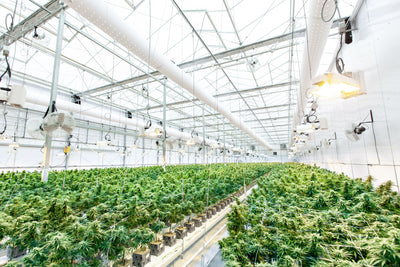
Photo by CannabisVera via Pixabay.
Canada and Portugal are widely reported as leading suppliers of medical flower to Germany. I could not pull the latest BfArM or industry import figures by country, so I am not ranking them. If you need the order, the BfArM data and trade reporting are the places to look.
What can be said is how the two supply models differ. Canadian licensed producers bring scale, GMP-aligned production and years of export experience from a federally regulated market. Portuguese producers bring EU-GMP production inside the bloc and shorter logistics, which matters for a product where freshness and delivery reliability affect pharmacy orders.
Both share a vulnerability: heavy reliance on German demand. A producer with several export markets can absorb a bad year in one. A producer that earns a large share of its export revenue in Germany cannot, and that makes both groups more exposed to a German policy swing than their diversified peers.
Pricing pressure is a documented theme in the German market as supply has grown. I will keep that qualitative, because I have no sourced price figure to offer. The direction is easy to understand: more suppliers chasing the same pharmacy shelf tends to compress margins.
As a risk lens, the contrast is useful. Non-EU producers face customs and regulatory friction that EU-based producers do not. In a calm market that friction is a cost line. In a tightening market it could become a competitive disadvantage, and that is the logic that makes the Canada-versus-Portugal comparison worth running at all.
Three Indirect Paths From EKOCAN to Import Volumes
If EKOCAN cannot touch imports directly, it might still matter indirectly. I see three paths, ordered from weakest to strongest. Everything below is extrapolation, not established fact.
Path one: political. Evaluation findings will be read as evidence that the consumer law is working or failing. That reading shapes how hard lawmakers push on the broader cannabis framework, medical rules included. The counter-case is that legislators change medical rules all the time without citing any evaluation report, and nothing obliges them to wait.
Path two: demand substitution. Home grow and cultivation associations under the KCanG may pull some patients and consumers away from prescription flower. The case for it is plausible: if you can legally grow or join an association, the prescription is less necessary. The counter-case is that quality, consistency and price gaps keep many buyers in the medical channel, particularly those who value standardized product. There is no verified data on the size of this shift yet.
Path three: prescribing rules. This is the most direct lever. Proposed MedCanG changes would restrict online prescribing and mail-order dispensing of flower. Because telehealth-driven prescribing has been a major source of medical demand, curbing it acts on exactly the channel imports serve. I could not confirm the amendment's current status, so check the Bundestag and recht.bund.de.
For a precedent, consider Canada after its 2018 legalization. The qualitative pattern was that the arrival of adult-use sales changed medical patient registrations and reshaped supply dynamics over the following years. I will not quote figures. The lesson is that a consumer market can quietly redraw the medical one, but the effect took years to show and varied by patient type. Germany's version, with home grow and associations rather than retail shops, may behave differently.
Three Near-Term Scenarios
Here are three scenarios for the next few years. This is reasoned scenario analysis, not forecast data, and no probabilities are attached.
| Scenario | Condition that must hold | Effect on Canadian vs Portuguese suppliers | What would falsify it |
|---|---|---|---|
| Status quo, steady imports | Medical rules stay unchanged; consumer law causes little substitution | Both keep volume; price competition decides share | A passed prescribing restriction |
| Tighter prescribing rules | Online prescribing and mail-order flower are curbed | Demand growth slows for both; non-EU suppliers carry more friction | Amendment stalls or is softened |
| Broader recalibration | Evaluation findings prompt wider changes to both laws | Hard to call; depends on the details | Coalition shows no appetite to reopen either law |
My judgment is that the tighter-prescribing scenario looks most consequential for import volumes. It works on the demand channel that imports actually serve, whereas the consumer law's evaluation works at one remove. That is a view, not a finding.
A formal per-country quota change would need a legal basis that I could not confirm. Unless the law is amended to create one, treat that outcome as low probability.
Plenty could stall all three scenarios. Coalition politics can freeze an amendment for months. Court challenges can reshape or delay a rule once passed. EU-level rules on cross-border distribution could constrain how mail-order restrictions work in practice, particularly for products shipped from within the bloc. Any single one of these can push the timeline out considerably further.
What to Watch and Where the Openings Are
A practical watch list for the next two years:
- Published EKOCAN interim and final reports, via the health ministry and ekocan.de.
- The Bundestag status of MedCanG amendments, tracked at bundestag.de and recht.bund.de.
- BfArM import data releases, which will show whether volumes actually move.
- The outcome of the domestic cultivation tender.
On opportunity, a speculative read: if rules tighten on imports from outside the bloc, Portuguese and other EU-GMP producers hold a structural logistics edge. The counter-case is that Canadian scale and price could offset that edge, especially if German buyers keep prioritizing cost. Neither side of that bet is settled.
A second opening lies with compliant telehealth-adjacent and pharmacy-channel businesses. If prescribing is restructured rather than curtailed, with stricter consultation standards but continued access, firms that already operate to a high compliance bar could gain. If it is curtailed outright, that opening shrinks.
The risks are straightforward. Single-market dependence leaves producers with nowhere to hide. Price compression erodes margins even in a flat-policy world. And regulatory change can arrive faster than evaluation reports, so waiting for the scorecard may mean acting too late.
Before acting on anything here, check the primary sources: bundesgesundheitsministerium.de, bfarm.de, recht.bund.de, bundestag.de and ekocan.de. The figures and statuses I could not verify are exactly the ones those pages can settle.
The sharpest insight here is a correction. EKOCAN is a scorecard for the consumer law, and import volumes will move on medical-law decisions that may or may not cite it. Anyone who reads an EKOCAN headline as a signal about quotas is reading the wrong document.
For Canadian and Portuguese producers, the practical takeaway is to watch MedCanG amendments and BfArM data more closely than EKOCAN coverage, and to stress-test plans against a tighter-prescribing scenario. If the numbers still work under that case, the rest is upside. If they do not, that is worth knowing before a Bundestag vote rather than after.
Sources
- Evaluation des Konsumcannabisgesetzes (EKOCAN): 2. Zwischenbericht
- Zweite Evaluation zur Cannabis-Teillegalisierung
- BMI - Presse - Zweite Evaluation zur Cannabis-Teillegalisierung
- Evaluation des Konsumcannabisgesetzes (EKOCAN): 1. Zwischenbericht
- Zweite Evaluation zur Cannabis-Teillegalisierung - BMBFSFJ
- Zweite Evaluation zur Cannabis-Teillegalisierung - Der Beauftragte der Bundesregierung für Sucht- und Drogenfragen