What Tobacco's Stalled Flavor Bans Mean for Cannabis Vapes
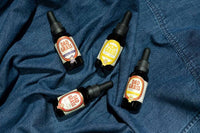
Photo by lindsayfox via Pixabay.
On January 21, 2025, the Office of Information and Regulatory Affairs logged something that doesn't usually make headlines on its own: a formal withdrawal notice for a proposed rule. The rule in question was FDA's plan to ban menthol as a characterizing flavor in cigarettes and strip characterizing flavors from cigars, first proposed in May 2022. Three years of rulemaking, thousands of public comments, a mountain of public-health literature behind it — withdrawn, right at the hinge point between administrations, without ever becoming enforceable.
That detail matters well past the tobacco aisle. State cannabis regulators have spent roughly a decade watching the federal tobacco playbook the way a neighboring state watches a border state's tax policy — not because they're bound by it, but because it's the closest thing to a precedent for what vapor-product flavor regulation looks like when it's tried at scale. When that federal effort stalls out entirely, it changes the political cover available to anyone drafting similar rules for cannabis vape cartridges.
So the question worth asking isn't whether the menthol ban's collapse is bad news for tobacco control, which it plainly is for the advocates who pushed it. The question is what it predicts for cannabis flavor regulation specifically: does a federal stall-out mean cannabis vape flavors also drift along unregulated, or does it just confirm that the real action was always going to happen in state capitols regardless of what Washington did? What follows is reasoned extrapolation from a specific, documented regulatory failure — not a guess about what any particular cannabis control board will do next.
The Menthol Ban's Rise and Collapse, in Order

Photo by Alexander Zvir via Pexels.
The timeline is worth laying out plainly because the length of it is the lesson. FDA proposed its menthol cigarette and flavored cigar rule in May 2022, but the policy groundwork went back much further — a 2013 FDA-commissioned report on menthol's public health effects, and a citizen petition pushing for action that also dates to 2013. By the time the proposed rule landed in 2022, the agency had nearly a decade of its own accumulated evidence showing menthol cigarettes are associated with higher rates of youth initiation and lower successful quit rates compared to unflavored products. This wasn't a rule built on thin data. It was built on close to two decades of public health consensus, through multiple FDA commissioners and two changes of administration.Then, on January 21, 2025, OIRA formally documented the proposal's withdrawal. No enforceable restriction ever took effect. Not a partial rule, not a delayed implementation date — a full withdrawal, landing exactly at the transition point between administrations, which is itself a tell. Regulatory transitions are when politically contested rules either get rushed through or get shelved, and this one got shelved.
What's important here is distinguishing what changed and what didn't. The underlying science didn't change between 2022 and 2025 — nothing emerged undermining the link between menthol and youth smoking initiation. What changed was the political calculus: industry pressure, concerns about law enforcement interactions with menthol bans in Black communities (a point raised repeatedly during the comment period), and a new administration with a markedly more deregulatory posture toward FDA tobacco rulemaking generally. The rule died of politics, not evidence.
The practical lesson for anyone watching adjacent vapor categories is about fragility and duration. A federal rulemaking process that ran from 2022 to 2025 produced zero enforceable flavor restriction, despite clearing the proposed-rule stage and despite broad public health agreement on the underlying harms. If that's how long a well-evidenced, politically popular public health measure takes to die in federal rulemaking, it tells you federal vapor-flavor regulation generally is a slow, fragile, reversible process — one administration's proposal is the next administration's withdrawal notice.
Why Cannabis Vapor Isn't Following the Same Track -- Yet
Cannabis vape products never actually sat inside the same regulatory lane as the menthol rule to begin with, and that's the first thing to get right before drawing any parallel. FDA's authority over flavored tobacco products comes from the Tobacco Control Act and its Premarket Tobacco Product Application (PMTA) pathway, both of which apply to tobacco and nicotine products specifically. Cannabis remains a Schedule I substance under the Controlled Substances Act, which means FDA has no PMTA jurisdiction over cannabis vape cartridges the way it does over a Juul pod or a menthol Marlboro. The menthol ban, had it taken effect, would never have touched a THC vape cartridge sold in a licensed Colorado dispensary.That jurisdictional gap isn't closing anytime soon, either. FDA's own draft guidance on flavored-PMTA review for nicotine products — the rulebook that would, in theory, be the closest template for any future cannabis vapor framework — remains in draft form as of July 2026, years after it was first circulated. If the agency hasn't finalized its own flavor guidance for the product category it actually has authority over, there's no credible near-term scenario where it builds a parallel framework for a category it has no authority over at all.
What this means structurally is that cannabis flavor rules get written one state at a time, through cannabis control boards, state health departments, and licensing agencies, rather than through a single federal rulemaking that either succeeds or collapses nationwide. That's a fundamentally different process — more fragmented, slower to generalize, but also less fragile to any single political transition. California, Colorado, and Massachusetts have each already layered their own additive restrictions, flavor disclosure rules, or vape-cartridge testing requirements onto cannabis products, entirely independent of whatever has happened with menthol cigarettes at the federal level. Those rules didn't wait for FDA and won't be undone by FDA's retreat.
There's a real counter-case worth taking seriously, though: rescheduling. If cannabis moves to Schedule III, or gets descheduled entirely, FDA's jurisdiction could eventually expand into cannabis-derived products, at least in some form. That would import the same slow, politically reversible rulemaking playbook that just failed on menthol. But that outcome depends entirely on the pace and structure of federal cannabis reform, which remains genuinely uncertain in both timing and shape.
The Youth-Access Argument Will Outlive the Federal Rule

Photo by Matheus Bertelli via Pexels.
Strip away the federal mechanism and the underlying public health argument behind the menthol ban maps almost exactly onto cannabis vape products marketed under names like watermelon gelato or blue razz. Youth appeal through flavor and branding, easier concealment of use in school or home settings, and elevated initiation rates among younger users were the core justifications FDA leaned on for menthol and flavored cigars. None of those concerns are tobacco-specific; they're vapor-product concerns, and cannabis vape cartridges sold with candy-adjacent names and bright packaging sit squarely inside that same argument.The structural advantage state cannabis regulators have here is one FDA never had: they don't need a multi-year federal rulemaking process to act. State cannabis control agencies already set THC potency caps, dictate packaging requirements, and restrict marketing language under licensing authority they hold directly. Adding a flavor or naming restriction to that existing framework is a smaller regulatory lift than FDA building a flavored-tobacco rule from scratch, because the licensing relationship with every operator is already in place and enforcement already runs through license renewal rather than federal court challenges.
History backs up the idea that states don't wait on Washington for this category of rule. Massachusetts banned flavored tobacco products statewide in 2020, well ahead of any finalized federal menthol action, and a number of municipalities imposed their own flavored e-cigarette restrictions independently after the 2019 EVALI vaping-illness outbreak, without federal prompting. State-level momentum on flavor restrictions has repeatedly moved ahead of federal rulemaking, not behind it.
The reasoned forecast, then, isn't a single sweeping cannabis flavor ban arriving on a particular date. It's a slow drip: individual states tightening packaging language, restricting cartoon-adjacent branding, or limiting candy-coded cartridge names, modeled loosely on how states responded to flavored e-cigarettes after 2019 rather than on how FDA tried and failed to handle menthol. Expect this to proceed unevenly, state by state, over the next several years rather than in one coordinated wave.
Cannabis industry groups will push back with an argument tobacco harm-reduction advocates already made against the menthol ban: restricting flavors pushes consumers toward unregulated products of unknown composition. That argument carries extra weight in cannabis, where the illicit market remains substantially larger relative to the legal market than illicit nicotine products ever were, and where a dispensary flavor ban has a more readily available illicit substitute sitting one text message away.
What a Deregulatory Federal Posture Does to State Incentives

Photo by jarmoluk via Pixabay.
Washington stepping back from flavored-tobacco rulemaking doesn't just leave a jurisdictional vacuum — it removes a reference point that state legislators and public health advocates used to cite when building their own cases. For years, a pending federal menthol rule functioned as a kind of political permission slip: if FDA was moving on flavor restrictions, a state legislator proposing something similar for cannabis vapes could point to federal momentum as validation. With that rule withdrawn, the federal playbook now reads less like a template to copy and more like a cautionary tale about a regulatory effort that consumed three years and ultimately produced nothing enforceable.That shift could cut in two directions, and it's genuinely unclear yet which dominates. Some states may feel more, not less, freed up to design cannabis-specific flavor rules on their own terms, unconstrained by any expectation of federal alignment they'd have to match or defer to. Others, especially in politically divided legislatures, may simply deprioritize the issue now that there's no federal signal lending it urgency or inevitability.
For manufacturers and multi-state operators, the practical effect is a patchwork compliance environment where the cost of doing business varies sharply by state rather than converging toward one national standard. This isn't a new pattern — nicotine vape companies navigated exactly this kind of patchwork after California, New York, Massachusetts, and New Jersey each passed their own flavor restrictions well before any federal rule took shape, and they kept doing it even while the federal menthol process dragged on for years without resolution.
That fragmentation is also where a real business opportunity opens up, grounded in exactly how the nicotine vape sector adapted after 2019. Compliance consulting firms that can translate a shifting map of state rules into operational checklists become more valuable precisely because there's no single federal standard to build against. Reformulation work — shifting from candy-coded names toward terpene-based flavor descriptions that describe aroma profile rather than evoking fruit snacks — gives manufacturers a way to retain flavor differentiation while reducing youth-appeal exposure. Lab-testing services that can certify flavor-additive composition across multiple state frameworks simultaneously gain value for the same reason.
This section is the most speculative layer in this piece, and it's worth flagging as such: it's reasoned from how the nicotine vape industry behaved under patchwork state bans, not a certainty about cannabis, since cannabis operators already build state-specific compliance into their business model as a baseline cost of operating at all.
The Rescheduling Wildcard

Photo by Mark Stebnicki via Pexels.
Rescheduling is the variable that could eventually scramble everything laid out above, so it's worth taking seriously even though its timing is unknown. If cannabis moves to Schedule III, or is descheduled outright, FDA could gain some authority over cannabis-derived products depending on exactly how Congress or the agency structures that transition. Smoked or vaped flower would likely remain outside conventional FDA product frameworks for a meaningful stretch of time regardless, since FDA's existing product categories were built around pharmaceuticals and tobacco, not botanical material consumed by combustion or vaporization.There's a useful precedent for how slow and uneven this kind of post-reform rulemaking tends to be: hemp. The 2018 Farm Bill created a legal pathway for hemp-derived products federally, but states spent years afterward scrambling to write their own rules for hemp vape products and delta-8 THC, with wildly inconsistent results state to state and some gaps persisting years later. Federal legalization of a product category doesn't produce an immediate, coherent regulatory framework — it produces a starting gun for years of uneven state-level catch-up, often with federal guidance trailing well behind state action rather than leading it.
The flavored-PMTA draft guidance for nicotine products is itself a signal worth weighing here. If FDA's own guidance for a product category it unquestionably has authority over is still sitting in draft form after years, that's a reasonable basis for expecting any cannabis-specific flavor framework, should FDA ever gain authority to write one, would take considerably longer still. Realistically, that pushes any federal cannabis vapor flavor framework well beyond the 1-3 year window this analysis is working within.
The reasoned conclusion for the near term is that state and local action remains the primary, and probably only, venue for cannabis vapor flavor rules through at least 2028. Federal involvement, if it arrives at all in this window, is far more likely to show up as a downstream side effect of broader rescheduling reform than as any standalone cannabis flavor initiative FDA chooses to pursue on its own. Anyone budgeting for federal cannabis flavor rules inside a three-year planning horizon is planning around a regulatory event with no documented path to occurring that fast.
The menthol ban's collapse doesn't mean flavor regulation is dead for cannabis vapor products — it means the venue was never really going to be federal in the first place, and now there's less ambiguity about that. States already hold more direct regulatory authority over licensed cannabis products than FDA ever held over tobacco, because cannabis licensing runs through state agencies from seed to sale, with no interstate commerce clause complications and no PMTA process to navigate. A state cannabis control board doesn't need a three-year rulemaking docket to add a packaging restriction; it can do it through the same licensing renewal cycle it already uses for potency caps and testing requirements.
That asymmetry is the practical takeaway for anyone operating in this space. Operators who treat state-by-state flavor and marketing compliance as an ongoing cost center, the way multi-state nicotine vape companies learned to after 2019, will be considerably better positioned than those holding out for a unifying federal signal. On the evidence laid out here — a federal flavor rulemaking that took three years to produce nothing, a flavored-PMTA guidance still in draft years after circulation, and a hemp precedent showing federal reform triggers years of uneven state catch-up rather than instant clarity — that federal signal isn't arriving within this decade, let alone within a three-year planning window.
If there's a broader lesson in the 2022-2025 menthol saga, it isn't really about menthol at all. It's that product regulation in the United States moves at the speed of whichever jurisdiction is least federally entangled, and for cannabis, that jurisdiction is almost never Washington. It's a state capitol, usually one already accustomed to writing cannabis rules without federal input, because it's had no other choice since the day it legalized.
Sources
- FDA Reopens Door for Flavored Cigars and Menthol Cigarettes
- FDA Menthol and Flavored Tobacco Restrictions
- A Breath of Fresh Air: Trump’s FDA Takes a Step Back from the Menthol Ban
- FDA Withdraws Proposed Bans on Menthol Cigarettes and Flavored Cigars
- FDA Menthol Cigarette Ban Withdrawal: Public Health Impact