China's 6,000-Year Legacy as the Birthplace of Hemp Textiles
Photo via Pexels.
In a cave site in northern China, archaeologists found something that doesn't look like much at first glance: pottery shards with faint impressions pressed into the clay before it hardened. Those marks are rope imprints, dating back to around 10,000 BC. That makes China home to one of the oldest continuous records of hemp use anywhere on the planet, older than written language, older than the pyramids, older than agriculture itself in most other parts of the world.
Before cotton showed up in China via trade routes and spread widely during the Northern Song dynasty between 960 and 1127 AD, hemp wasn't some specialty crop grown by a handful of mountain villages. It was the fabric. Peasants wore it, soldiers wore it, farmers grew it alongside grain because the government expected them to. For thousands of years, if you were an ordinary person in China and you put on clothes in the morning, there's a good chance those clothes were woven from hemp fiber.
The line connecting a Han dynasty farmer squinting at his plants to tell the males from the females -- because male plants gave better fiber -- to a trade show floor in Shanghai in September 2026 stuffed with hemp-PET composites and automotive interior panels is a lot longer and stranger than most people realize. And here's the twist: modern China, sitting on top of this six-millennia inheritance, now restricts hemp cultivation to two provinces under permitting regimes tight enough to require GPS-tagged plots, even as the country supplies something like 70% of the world's raw hemp supply.
Rope Marks on Pottery: Hemp's Earliest Traces

Photo via Pexels.
The rope imprints found on pottery fragments in northern China are usually dated to around 10,000 BC, pressed into wet clay before firing by people who were using twisted plant fiber cordage in daily life long before anyone was writing anything down. That's not proof of cultivation on its own -- cordage could theoretically come from wild hemp stands rather than deliberately planted ones -- but it establishes that humans in the region were working with hemp fiber at a startlingly early date.
The domestication question is murkier and still debated among archaeologists. Some researchers place the shift from wild harvesting to actual cultivation at around 8000 BC, with evidence of early hemp use showing up both on the Chinese mainland and in Taiwan across a long window stretching from roughly 10,000 to 4000 BC. That's not a tight timeline, and it reflects how scattered and fragmentary this kind of evidence tends to be -- pottery impressions here, seed remains there, no single smoking gun.
When historians line up the archaeological record against China's own written histories, a more conservative and widely defensible figure emerges: somewhere between 5,000 and 6,000 years of continuous, documented hemp cultivation. That's still an enormous span, and it's the number most commonly cited when China's hemp heritage comes up in serious scholarship rather than marketing copy.
What this adds up to is a strong, evidence-backed claim that China isn't just an early adopter of hemp fiber technology -- it's very likely the place where hemp was first domesticated specifically as a fiber crop. No other region has a comparable depth of record. Hemp use in Central Asia and Europe appears to postdate what's visible in the Chinese archaeological sequence, which is part of why botanists and textile historians alike keep coming back to northern China when they're tracing the species' origin story.
The Land of Mulberry and Hemp

Photo via Pexels.
For most of recorded Chinese history, hemp cloth wasn't a lifestyle choice -- it was simply what people wore. Cotton didn't become a serious presence in Chinese textile production until it spread more widely during the Northern Song dynasty, roughly 960 to 1127 AD, which means hemp had already been the default fabric for ordinary people for several thousand years before cotton even entered the picture as competition.
This isn't just inference from archaeology. The Book of Songs, one of the oldest surviving collections of Chinese poetry, references hemp cultivation directly, and The Annals, compiled by the statesman Lu Buwei during the Warring States period between 476 and 221 BC, lists hemp among the six staple crops that farming households were expected to grow. It sat alongside grains in the basic agricultural curriculum of the era -- not a luxury, not a sideline, a staple.
Han dynasty agricultural knowledge went further than just growing the crop. Farmers understood enough about hemp's biology to distinguish male from female plants and to specifically select and harvest male plants for spinning, since male plant fiber tends to be finer and better suited to textile production. That's a level of applied botanical knowledge that required generations of accumulated farming experience to develop and pass down.
Hemp also carried social weight. During the Western Zhou dynasty, roughly 1100 to 771 BC, status was quite literally worn on the head -- hats woven from hemp fiber signified rank and position within the social order, not unlike how specific fabrics or colors marked nobility in other ancient cultures. Between the practical ubiquity of hemp clothing and its symbolic use in headwear, it's easy to see why China earned the old epithet land of mulberry and hemp. Mulberry fed the silkworms that produced silk for the wealthy; hemp clothed everyone else. Together, the two crops defined the entire textile economy of China for millennia.
What the Mawangdui Tomb Revealed

Photo via Unsplash.
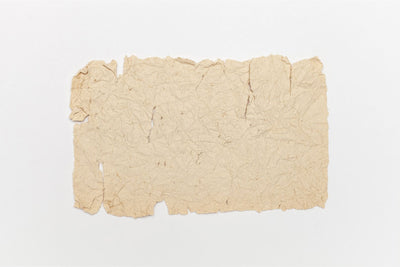
Near Changsha in Hunan province sits the Mawangdui tomb complex, one of the most significant archaeological sites from the Han dynasty era and a place most people associate with astonishingly preserved silk textiles, painted silk banners, and lacquerware that still looks vivid after two thousand years in the ground. What gets less attention, even among people who know the site well, is that Mawangdui also yielded a preserved piece of hemp cloth.
That hemp cloth turned out to be more than a curiosity. When researchers measured the fiber dimensions, they found values that closely match modern hemp varieties grown today. That's a striking result -- it suggests a degree of genetic and processing continuity across roughly two thousand years that's rare to document with this kind of physical precision. The plant being cultivated and processed by Han dynasty weavers wasn't some distant, unrecognizable ancestor of today's hemp. In fiber terms, it was close enough to modern crops that direct measurement comparisons make sense at all.
Mawangdui's international fame rests almost entirely on the silk and lacquerware, and understandably so -- those objects are visually spectacular and relatively well publicized outside specialist circles. The hemp cloth doesn't photograph the same way and doesn't get the same museum spotlight, but for textile historians it's arguably just as important a data point, because it offers a rare physical anchor for understanding how hemp fiber technology evolved -- or didn't -- over two thousand years.
Part of why this matters so much is simply how rare this kind of evidence is. Organic plant fiber generally doesn't survive two millennia in the ground; it decomposes, degrades, or gets consumed by microorganisms long before archaeologists get anywhere near it. Mawangdui's unusual burial conditions preserved organic material that would have vanished almost everywhere else, which is exactly what makes its hemp find so valuable to anyone trying to trace the real history of fiber technology rather than relying only on written references.
From Imperial Staple to Restricted Crop

Photo by NickyPe via Pixabay.
Modern China's relationship with hemp looks almost nothing like its ancient one, at least on paper. Industrial hemp cultivation today is legal in only two provinces, Yunnan and Heilongjiang, and even there it operates under a strict provincial licensing structure rather than anything resembling open agricultural practice.
Growers in those provinces need permits issued through the provincial public security bureau before they can plant a single seed. Once licensed, they're subject to annual inspections, and their plots have to be registered with GPS coordinates so authorities can monitor exactly where hemp is being grown and confirm it matches what was authorized. This isn't a loose permitting system with occasional paperwork -- it's active, ongoing oversight tied to location data.
Growing hemp outside that licensed framework carries real legal risk. Unlicensed cultivation falls under Article 351 of China's Criminal Law, and the penalties scale with the size of the operation -- plots of 500 plants or more can bring sentences of up to five years. That's a meaningfully serious legal exposure for what, in agricultural terms, is a fairly modest-sized growing operation.
On top of the cultivation restrictions, consumable hemp-derived products are banned nationwide, regardless of whether they originate in a licensed province or not. The permitting system governs where and how raw hemp can be grown for fiber and industrial use; it doesn't open any door toward hemp-derived food or beverage products reaching Chinese consumers.
The two-province split isn't arbitrary -- it reflects a fairly deliberate division of labor based on climate and end use. Heilongjiang's cooler northern conditions suit fiber-focused hemp varieties well, which fits its role as a fiber production center. Yunnan's growing conditions lean more favorable to flower and leaf production aimed at extract use. Shanxi, while not holding the same cultivation status as the two licensed provinces, contributes grain-type hemp to the broader national production picture, rounding out a system that's narrow in geography but structured around distinct product streams.
Hemp's Second Act in Technical Textiles
At Cinte Techtextil China 2026, held in Shanghai from September 1 to 3, the Asia International Hemp Federation put together a showcase that traced hemp's path from raw fiber bale all the way through to finished technical products -- a deliberate attempt to reposition the crop in the eyes of an industrial textile audience rather than a niche wellness or apparel crowd.
What was actually on display tells you where the industry thinks the growth is. Woven fabrics sat alongside recycled PET-hemp fiber blends, hemp-derived bioplastics, composite materials built for structural or semi-structural use, automotive interior components, and even furniture pieces incorporating hemp fiber reinforcement. None of that reads as novelty-shop material -- it reads as an industrial supply chain pitch aimed at manufacturers who care about performance specs and cost per unit, not provenance stories.
That framing matters. The show wasn't selling hemp as a heritage crop or a wellness ingredient; it was positioning hemp fiber as a legitimate input for mainstream technical and industrial textile manufacturing, competing on functional terms with synthetic and blended materials rather than trading on novelty.
The scale behind that pitch is significant, even accounting for the fact that the numbers come from industry sources rather than a single unified government statistical body. Industry estimates put China's share of global hemp production at roughly 70% as of 2025, with annual cultivation estimated somewhere between 40,000 and 50,000 tonnes. Those figures should be treated as directional rather than precise -- hemp statistics globally tend to be patchy -- but even a rough estimate at that scale confirms China's position as the dominant raw hemp supplier worldwide, operating out of just two licensed provinces.
That gap is really the whole story in miniature: a crop once grown by nearly every farming household across the country, woven into daily clothing for thousands of years, is now produced almost entirely within GPS-tracked, permit-bound plots in Yunnan and Heilongjiang -- narrow geography, outsized global output.
It's tempting to read China's hemp history as a simple before-and-after story -- free cultivation for millennia, then a clampdown in the modern era. That framing doesn't really hold up. What the record actually shows is a crop that's been reshaped by every era to serve whatever that era needed: a status marker woven into Zhou dynasty hats, a staple crop farmers were legally expected to grow during the Warring States period, a quiet archaeological footnote at Mawangdui overshadowed by silk, and now a feedstock for composite automotive panels on a trade show floor in Shanghai.
The 5,000-to-6,000-year archaeological and historical record gives China a legitimate, well-supported claim to the deepest hemp lineage of any country on earth. Seen against that backdrop, the current two-province licensing system in Yunnan and Heilongjiang starts to look less like prudent regulatory caution and more like a narrow bottleneck squeezed onto an industry with genuinely ancient roots and, right now, roughly 70% of global market share running through it.
Whether China's regulators loosen those provincial restrictions further in the coming years, or hold the line at two tightly permitted provinces while demand for industrial hemp fiber keeps climbing, will say a lot about where this crop's next chapter goes. Either hemp's current reinvention as a technical-textile and composite-materials input sticks and grows into something closer to its old ubiquity, or it stays boxed in as a well-managed but fundamentally narrow export business -- a six-thousand-year-old crop confined, for now, to a pretty small patch of modern map.