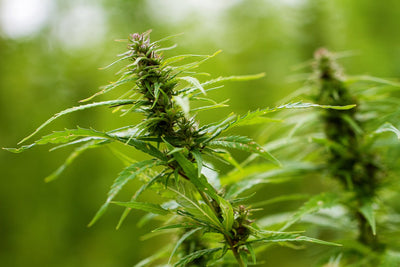
Before Wood Pulp: The 2,000-Year Reign of Hemp Paper
Photo via Pexels.
Walk into any office supply store and the paper on the shelf has a quiet, unremarked-upon history: for a very long stretch before wood pulp entered the picture, paper meant hemp. Not exclusively, but overwhelmingly. The plant that modern regulators spent a century treating as a legal afterthought to marijuana was, for most of written history, the backbone of the world's record-keeping.
The earliest fragments of hemp paper trace back to China around 206 BCE -- a good two centuries before Cai Lun, the court official popularly credited with inventing paper, supposedly came up with the idea around 105 CE. That gap alone should tell you something about how history gets simplified in the retelling.
Some of the most consequential documents humans have ever produced were printed or written on hemp-content paper, which makes it a strange kind of invisible material -- everywhere in the historical record, almost nowhere in public memory. This piece traces that arc: how papermaking started in China, how it crept westward over a span of many centuries, and how a 19th-century industrial pivot to wood pulp had far more to do with logistics and existing supply chains than with any chemical shortcoming in hemp itself.
China's Early Monopoly on Papermaking

Photo via Pexels.
Credit for inventing paper usually goes to Cai Lun, a eunuch official in the court of Emperor He of Han, who presented an improved papermaking process to the imperial court around 105 CE. It's a tidy story with a named inventor and a specific date, which is probably why it stuck. The archaeological record tells a messier, older story. Fragments of coarse hemp paper have been recovered from Han dynasty sites dating to around 206 BCE, roughly 200 years before Cai Lun's court presentation. What Cai Lun likely did was refine and standardize a process that had already existed in workshops for generations -- improving fiber preparation and consistency enough that the method could be scaled and formalized for administrative use.
That earliest hemp paper wasn't anything you'd want to write on. It was coarse, thick, and uneven -- more useful for wrapping bronze mirrors or padding fragile goods during shipment than for recording text. It took decades of refinement in beating, soaking, and sheet-forming technique before hemp paper became smooth and thin enough to take ink reliably, at which point it started replacing bamboo strips and silk as China's primary writing surface.
Hemp wasn't chosen for papermaking because someone ran a materials trial against alternatives. It was chosen because it was already everywhere. Chinese farmers had been cultivating hemp for millennia before papermaking existed, growing it for rope, woven textiles, fishing nets, and seed oil. The raw fiber supply chain -- cultivation, retting, fiber separation -- was already mature and widespread. Papermakers didn't need to build a new agricultural industry; they needed to find a new use for a plant that farms across the region were already producing in bulk. That's a pattern worth remembering, because it's essentially the inverse of what happened to hemp paper many centuries later.
From Korea and Japan to the Islamic World and Europe

Photo via Pexels.
Papermaking didn't stay a Chinese secret for long, at least by the standards of ancient technology transfer. By the 6th century AD, knowledge of hemp-based papermaking had reached Korea and Japan, traveling along the same routes as Buddhist monks, sutras, and the administrative bureaucracies that both regions were busy building on Chinese models. Paper was useful for exactly the reasons bureaucracies need it: it's light, it's cheap relative to silk, and it holds a seal and a signature. Papermakers in the region adapted the Chinese techniques to their own available fibers over time, but hemp remained part of the early toolkit.
Heading west was a much slower proposition. It took roughly another 700 years for papermaking to reach Europe, and it didn't go there directly. The route ran through the Islamic world first -- by some accounts, Chinese papermakers captured after the Battle of Talas in 751 CE brought their craft knowledge into Central Asia and the Abbasid Caliphate, where it spread through Baghdad, Damascus, and eventually across North Africa into Moorish Spain. Islamic scholarly and trade networks, with their appetite for record-keeping, translation, and commerce, did as much to carry papermaking across continents as any single invention did.
Europe picked it up unevenly and late. Spain had paper mills by the 12th century, Italy by the 13th, but Germany didn't see hemp paper production until the 14th century -- a long gap after the first Han dynasty fragments. That lag is a useful corrective to any assumption that useful technology spreads quickly once it exists; within Asia, diffusion took centuries, and getting from Asia to northern Europe took nearly as long again. Once established, though, hemp paper mills became common fixtures of medieval European towns, frequently sharing vats and labor with linen rag paper producers, since both drew on the same cellulose-rich fiber stock and similar pulping processes.
The Documents That Carried Hemp's Legacy

Photo by Hossam M. Omar via Unsplash.
If hemp paper feels like a historical footnote today, it's worth sitting with exactly which documents were printed on it. The Gutenberg Bible, produced in Mainz in the 1450s and widely regarded as the starting point of the European printing revolution, is reported to have used hemp-content paper for the majority of its print run, with a smaller number of copies produced on vellum for wealthier buyers. That's not a fringe use case -- that's the book that arguably changed how information moved through Western society.
Go back further and the Magna Carta of 1215 was recorded on paper carrying hemp fiber content, predating Gutenberg's press by well over two centuries. In the American context, early drafts of the Declaration of Independence are reported to have been composed on hemp-content paper during Thomas Jefferson's drafting process, though the final engrossed copy signed by delegates was inked on parchment -- treated animal skin, not paper at all, which was the standard choice for formal state documents meant to last.
Taken together, these examples push back against the idea that hemp paper was some kind of rustic or marginal material. For most of papermaking's long history, hemp-content paper was the default choice for exactly the kind of documents that needed to survive and matter -- religious texts, legal charters, foundational political documents. It wasn't a niche; it was the infrastructure.
A caveat belongs here, though, because it's easy for a good story to outrun its sourcing. Provenance claims about historic documents -- exactly what fiber blend a given sheet contains, in what proportion -- are often repeated in popular hemp-history retellings with more confidence than the underlying paper analysis actually supports. Many historic papers were blends of hemp, linen rag, and other fibers rather than pure hemp stock, and claims about specific famous documents deserve the same scrutiny you'd apply to any widely repeated historical factoid.
Hemp vs. Wood: The Chemistry Behind the Switch

Dried hemp contains about 57% cellulose, notably higher than wood's roughly 45%, highlighting hemp's potential as a more cellulose-rich material for paper production.
The case for hemp paper isn't just sentimental. Dried hemp stalk runs about 57% cellulose by weight, compared to roughly 40-50% in most wood species. Cellulose is the structural molecule papermakers actually want; the rest is largely lignin, the stiffening compound that has to be chemically stripped out before pulp turns into something you can write on. Higher cellulose content, lower lignin content -- on paper, hemp should have had an edge going into the industrial era.
It didn't win out, and the reason has almost nothing to do with chemistry. By the 19th century, wood was already being logged at massive scale for construction lumber and fuel, which meant the raw material and the supply infrastructure -- sawmills, transport networks, forestry operations -- already existed and could be redirected toward pulp production at marginal cost. Hemp, by contrast, needed dedicated acreage, a planting and harvest cycle, and labor-intensive retting to separate fiber from stalk before it ever reached a pulping vat. Industrial economics rewarded the material that was already being produced as a byproduct of something else.
There were still people making the chemical case well into the 20th century. In 1916, USDA chief botanist Lyster Hoxie Dewey and chemist Jason L. Merrill produced paper from hemp hurds -- the woody core left over after fiber processing -- and reported that it compared favorably to wood pulp paper given the similar chemical composition of the two materials. It's a small, telling footnote that by 1943, when Dewey published his own book surveying hemp and other fiber crops, papermaking doesn't come up again as a hemp application. The industry had already moved on, and even one of hemp's most credentialed advocates had stopped arguing the point.
One notable holdout ran against this trend for a remarkably long time. Russia's Goznak mill in St. Petersburg, opened in 1818, used hemp as its primary fiber input for decades, producing banknotes, postal stamps, government bonds, and stock certificates -- precisely the kind of high-durability document where hemp's long fiber length and tear resistance mattered more than production cost.
Untangling the Hearst-DuPont Conspiracy Story

Photo by Pexels via Pixabay.
No discussion of hemp paper's decline gets far online without running into the Hearst-DuPont conspiracy theory, and it's worth untangling because the real story is more interesting than the myth, just less cinematic. The popular version holds that William Randolph Hearst, DuPont, and Treasury Secretary Andrew Mellon conspired to criminalize hemp through the 1937 Marihuana Tax Act in order to protect Hearst's timber holdings and DuPont's emerging synthetic fiber business from hemp competition.
The timeline doesn't hold up well under examination. The widely-cited Popular Mechanics article titled Billion Dollar Crop, which is usually invoked as evidence that hemp was poised for an industrial renaissance just before being suppressed, ran in February 1938 -- six months after the Marihuana Tax Act had already been signed into law in August 1937. An article published after the fact can't document a threat that supposedly motivated the law. Nylon, DuPont's signature synthetic fiber and the supposed beneficiary of hemp's suppression, wasn't even sold commercially until 1939, two years after the Act passed. And Hearst's own business interests complicate his assigned motive: he was one of the country's largest purchasers of newsprint for his newspaper empire, which means cheap paper, wood or otherwise, served his bottom line far more than restricting fiber supply would have.
Recent scholarship has been blunt about this. A 2026 peer-reviewed paper by Hall et al. in the journal Addiction states plainly that the Marihuana Tax Act did not ban hemp fiber production. What it did was impose a registration, licensing, and tax-stamp regime on anyone growing cannabis, with no legal mechanism in the Act to distinguish low-THC industrial hemp from psychoactive marijuana. Farmers and processors faced the same paperwork burden, law enforcement scrutiny, and compliance risk regardless of which variety they grew. That bureaucratic ambiguity, not a boardroom plot, is what made commercial hemp cultivation impractical for American farmers in the decades that followed.
Hemp Paper's Quiet Comeback
The regulatory fog that settled over American hemp in 1937 didn't lift until the 2018 Farm Bill legalized industrial hemp cultivation at the federal level, finally drawing a clear statutory line between hemp and marijuana based on THC content. That single change reopened the door to a whole category of hemp fiber products that had been functionally off-limits for commercial US farmers for 80 years, paper included.
The resulting market is real but still modest. Industry estimates put global hemp paper value somewhere in the $1.4 to $2.1 billion range currently, with projected annual growth rates ranging from roughly 9.7% to as high as 16.66% through 2034, depending on which market research firm's methodology you trust. The growth story being sold to investors and sustainability-minded buyers leans heavily on hemp's agronomics: it reaches harvest in about four months versus the years or decades a tree takes, and its lower lignin content means less bleaching chemistry is needed to produce bright white paper.
It's worth flagging a separate, unrelated policy wrinkle here, mostly because it tends to get conflated in casual conversation. A federal restriction on hemp-derived THC products -- the kind found in drinks and gummies sold under the hemp umbrella thanks to the 2018 Farm Bill's loose definitions -- was pushed back to December 11, 2026 via continuing resolution. That fight is about intoxicating cannabinoid products, not fiber crops or paper, but it's a useful reminder that hemp policy in the US remains genuinely unsettled across multiple fronts at once, even after the 2018 reset.
Even with favorable growth projections, hemp paper is still a rounding error next to wood pulp's industrial footprint. Wood pulp got a roughly 150-year head start building mills, supply contracts, harvesting equipment, and chemical processing infrastructure at a scale hemp simply hasn't approached yet. Chemistry alone doesn't rebuild that kind of infrastructure.
None of this adds up to hemp paper losing because it was the lesser material. By the raw chemistry -- higher cellulose, lower lignin, less bleaching required -- it arguably should have remained competitive well into the industrial era. What actually happened is that 19th-century papermaking built its entire supply chain around wood, because wood was already being harvested at scale for buildings and fuel, and redirecting an existing resource stream is simply cheaper than standing up a new agricultural crop from scratch. Swapping cellulose sources turned out to be a logistics problem dressed up as a technical one.
The conspiracy version of this story -- Hearst, DuPont, and Mellon quietly strangling a rival industry in a smoke-filled room -- is undeniably more satisfying to tell than the documented reality. But the real history, bureaucratic overreach rather than boardroom villainy, is arguably the more useful lesson. The Marihuana Tax Act never banned hemp fiber outright; it just made growing it administratively indistinguishable from growing something federally criminalized, and that ambiguity alone was enough to flatten an industry over a few decades. Regulation doesn't need an explicit ban to kill a market. It just needs enough friction.
With hemp cultivation legal again in the US since 2018, the open question isn't whether hemp paper can hold its own chemically against wood pulp -- it clearly can. The question is whether anyone has the appetite to rebuild, mill by mill and supply contract by supply contract, the kind of processing infrastructure that the timber industry spent a century and a half perfecting. History suggests that's the harder project by far.