Naga and Mizo Cannabis Custom vs. India's Drug Law
Photo by Capricious Wayfarer (Saptarshi) via Pexels.
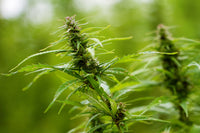
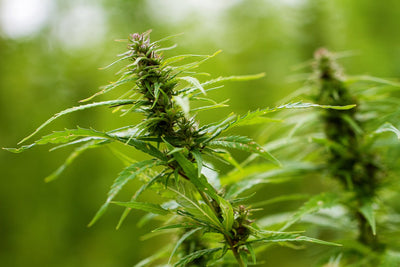
Drive the hill roads out of Kohima toward the Myanmar border, or up through the terraced slopes around Aizawl, and you'll find cannabis growing the way it has for generations -- along field margins, in kitchen gardens, on disturbed ground at the edge of jhum cultivation plots. Nobody planted it as contraband. In many Naga and Mizo villages, the plant has simply always been there, used for fiber, for seed, for home remedies passed down through families long before anyone in Delhi had drafted a narcotics statute. That history doesn't square easily with the law as it exists today.
The Narcotic Drugs and Psychotropic Substances Act, 1985 -- the NDPS Act -- is the overlay that changed the picture nationwide, criminalizing the flowering tops and resin of the cannabis plant regardless of where it's grown or why. It wasn't written with the hill districts of Nagaland or Mizoram in mind; it was written to bring India into line with international drug-control treaty obligations and to standardize enforcement across a country where cannabis use ranged from temple offerings to street-corner bhang stalls. In the Northeast, it landed on top of social and agricultural practices it never accounted for.
That collision raises a question nobody has fully answered: do the special constitutional protections given to Nagaland and Mizoram under Articles 371-A and 371-G -- provisions that shield tribal customary law from automatic application of parliamentary statutes -- actually have the power to carve customary cannabis use out from under a national narcotics law? It's not a rhetorical question, and it's not settled. No court has ruled on it definitively, no state legislature has formally adopted or excluded the NDPS Act on this specific point, and the practical result is a legal gray zone that persists simply because nobody has forced the issue.
The NDPS Act and Its Built-In Loophole

Photo by Rakshit Yadav via Unsplash.
The NDPS Act was introduced in the Lok Sabha on 23 August 1985, received presidential assent on 16 September that year, and came into force on 14 November 1985. It has been amended four times since -- in 1988, 2001, 2014, and 2021 -- each round adjusting penalty structures, classification schedules, and procedural rules, but never fundamentally revisiting the plant-level technicality that still shapes cannabis policy across the entire country.
That technicality is simple and consequential: the Act's definition of controlled cannabis covers the flowering or fruiting tops of the plant and its resin, but it does not cover the leaves or the seeds. That's the gap that keeps bhang -- made from cannabis leaves -- legal to sell, prepare, and consume across most of India, including during Holi festivities where it's openly served. Ganja and charas, derived from flower and resin, fall squarely under criminal prohibition; bhang, by statutory accident rather than design, does not.
The Act also contains two provisions that, on paper, open a narrow legal path for cultivation. Section 10 allows individual state governments to permit cannabis cultivation for scientific or medicinal purposes within their territory. Section 14 allows licensing for industrial production tied to fiber and seed. In practice, neither pathway has done much. Where medicinal use has been acknowledged at all, it's stayed confined mostly to homeopathic and ayurvedic preparations, and most state governments -- including Nagaland and Mizoram -- have simply not issued cultivation licenses under either section.
So the national backdrop is a patchwork: a blanket prohibition on flower and resin, an accidental carve-out for leaf and seed preparations, and cultivation provisions that exist in statute but rarely in practice. Understanding how this framework interacts with hill tribe custom means starting from that patchwork, not from a clean national rule.
Cannabis in the Hills Before the Law Arrived
Long before 1985, cannabis in the hill districts of what are now Nagaland and Mizoram grew wild and semi-cultivated across village lands, often indistinguishable in status from other useful plants growing at field edges. Communities used it practically -- fiber for cordage and textiles, seed for food and oil, and various preparations folded into traditional remedies. It wasn't treated as a vice to be managed or a substance requiring special caution; it was part of the working plant inventory of a rural hill economy, the same category of resource as bamboo or castor.
Regulation of conduct and plant use in these communities historically ran through village-level customary authorities -- the councils that, under both Naga and Mizo systems, have long adjudicated disputes, set local rules, and enforced social norms according to tribal custom rather than any centralized statute book. These bodies predate Indian independence and operate on a logic entirely separate from narcotics bureaucracy: they're concerned with community order, land use, and dispute resolution within a kinship- and clan-based framework, not with scheduling substances according to pharmacological risk categories.
When the NDPS Act arrived in 1985, it didn't engage with any of this. It was layered on top of existing local governance structures as a uniform national statute, with no specific carve-outs acknowledging that cannabis in these hill districts had a different social history and different customary status than cannabis trafficked through urban drug markets elsewhere in the country.
The result is a structural mismatch that's easy to describe and hard to resolve: a plant embedded in everyday rural life for generations, governed by village councils with their own long-standing authority, suddenly subject to a 20th-century statute drafted largely to satisfy international treaty commitments and address urban and cross-border drug trafficking concerns that had little to do with how cannabis actually functioned in Naga or Mizo villages.
Article 371-A and 371-G: A Constitutional Shield, Untested
India's Constitution gives Nagaland and Mizoram a degree of legal autonomy that has no real equivalent elsewhere in the country. Articles 244 and 244-A establish special administrative arrangements for certain Northeastern and tribal areas, while Article 371-A, specific to Nagaland, and Article 371-G, specific to Mizoram, go further still -- they say that Acts of Parliament do not automatically apply in these states on a defined list of subjects unless the state's own legislative assembly decides to adopt them.
For Nagaland, that list under Article 371-A explicitly includes Naga religious or social practices and Naga customary law and procedure. For Mizoram, Article 371-G provides a comparable protection over Mizo customary law and procedure. Read plainly, this means that where an act of Parliament touches on a matter of customary law or social practice, it isn't supposed to simply override local custom by default -- the state legislature has to affirmatively bring it in.
Applied to cannabis, this opens a genuinely interesting legal question: if customary cannabis use in Naga or Mizo communities counts as a social practice or falls under customary law and procedure, does the NDPS Act's prohibition on flower and resin actually require specific legislative adoption by the Nagaland or Mizoram assembly before it can be enforced against that customary practice? Nobody has definitively answered this. There's no appellate ruling, no assembly resolution, no settled precedent that spells out where the line sits.
Adding to the uncertainty, legal scholars studying Nagaland have documented considerable shifts recently in how customary law actually functions on the ground -- including friction between traditionalist factions who want customary authority preserved in something close to its older form and reform-minded voices pushing for codification and modernization. That internal contest over what customary law even means today makes it harder, not easier, to predict how a cannabis-specific test case would be argued or decided if one were ever brought.
Customary Courts Gain Ground While Cannabis Policy Stands Still

Photo by sarangib via Pixabay.
While the cannabis question sits frozen, Nagaland's customary law infrastructure has actually been moving forward on other fronts. According to PRS Legislative Research's Annual Review of State Laws 2025, the state amended a colonial-era law to establish a three-tier structure of customary courts, giving tribal custom and practice a more formalized judicial architecture for handling disputes than existed before. That's a meaningful institutional development -- it signals the state is actively investing in customary law as a functioning, modernizing system rather than treating it as a static historical holdover.
The legislature itself has stayed busy more broadly. Nagaland's 14th Legislative Assembly convened its 8th session in March 2026, passing legislation including the Investment and Development Authority of Nagaland (Validation) Bill, 2025. That kind of activity shows an assembly that is legislatively engaged and willing to pass substantive bills -- it simply hasn't chosen to take up cannabis specifically, in either direction. There's been no bill proposing formal adoption of the NDPS Act's application to customary practice, and none proposing an exemption.
So the institutional momentum toward formalizing customary law in Nagaland hasn't extended to cannabis at all. The overlap between NDPS enforcement and Article 371-A protection remains exactly where it was before the customary court reforms -- undefined.
Critics of the current arrangement make a straightforward argument: the NDPS Act's ban on flower and resin is blunt by design, built to distinguish controlled substances from uncontrolled ones, not to distinguish customary or cultural use from recreational or abusive consumption. Applied uniformly, it risks criminalizing conduct that was, within living memory, socially unremarkable in these hill communities -- people growing and using a plant their grandparents also grew and used, now exposed to the same penalty structure as trafficking offenses.
Meanwhile the supposed safety valves in the national statute remain unused locally. No cultivation licenses have been issued under Section 10 in either Nagaland or Mizoram, and no industrial licensing has been pursued under Section 14. Those pathways exist in the text of the law; they simply haven't been activated in either state.
What Enforcement Actually Looks Like on the Ground
None of the constitutional ambiguity changes what happens when police encounter cannabis flower or resin in Nagaland or Mizoram today. Seizures, arrests, and prosecutions tied to the NDPS Act continue in these states just as they do everywhere else in India. Absent a court ruling or a formal state legislative decision invoking Article 371-A or 371-G specifically to exempt customary cannabis practice, there is no documented, recognized exemption that police or prosecutors are instructed to apply.
Local and state law enforcement operate under the national framework by default, because that's the only framework that currently has clear legal force on this question. Customary protections may exist in constitutional theory, but they haven't translated into an actual policy carve-out that officers on patrol or magistrates in court are working from. If someone is found cultivating or possessing cannabis flower, the NDPS Act applies to them the same way it would apply to someone in Punjab or Maharashtra, regardless of how many generations their family has grown the plant on that same hillside.
The one piece of unambiguous legal ground available to hill communities is the same one available to the rest of the country: preparations made from cannabis leaves and seeds, bhang included, which fall outside the Act's definition of controlled cannabis. That's not a special Northeast accommodation -- it's the general national exception, applying in Kohima or Aizawl exactly as it applies in Varanasi.
This leaves a real gap between constitutional theory and policing practice. Individuals and communities engaged in customary cannabis use face genuine legal exposure, not because any court has rejected their constitutional argument, but because nobody has yet required the state to test it. It's worth stating this plainly and without judgment: the law as written applies nationally, uniformly, and by default, unless and until a specific state legislative adoption or a binding court ruling says otherwise. Right now, neither has happened.
The legal architecture for a different outcome already exists. Article 371-A and Article 371-G are sitting in the Constitution, available to Nagaland and Mizoram, written broadly enough to plausibly cover customary cannabis practice as a matter of social practice and customary law and procedure. What's missing isn't the legal mechanism -- it's the test case. Nobody has brought the petition, pushed the legislative resolution, or forced a court to rule squarely on whether the NDPS Act's application to customary cannabis use in these states required the kind of affirmative adoption the Constitution seems to demand.
Until that happens, the gray zone isn't a resolved compromise between competing legal principles -- it's a default. It persists because the question has never been forced into a courtroom or an assembly chamber where someone would have to give a definitive answer, not because anyone has decided that this is where the line should sit.
The piece of this worth watching closely is Nagaland's customary court system, now built out into a formal three-tier structure under recent legislative amendment. Institutions like that tend to accumulate jurisdiction over time, hearing disputes that test the boundaries of what customary law actually covers. If that system keeps maturing, cannabis -- as a plant with deep customary roots and an unresolved relationship to national narcotics law -- is a plausible candidate for eventually landing in front of it. Nothing requires that to happen on any particular timeline. But the infrastructure now exists that could one day be asked the question nobody has asked it yet.