How Malta's ARUC Reshaped Acceptance of the Cannabis Club Model
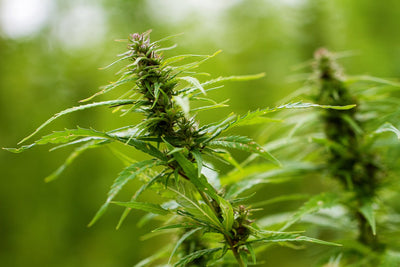
Photo by Vazha Despotashvili via Pexels.
Malta did something no other EU member state had done when, on December 18, 2021, it passed Chapter 628, the Act establishing the Authority on the Responsible Use of Cannabis. It was a genuine first: an EU country writing adult-use cannabis into law, not through a court ruling or a slow decriminalization drift, but through a dedicated statute creating a dedicated regulator. The headlines wrote themselves at the time. What got less attention was how long it would take for any of this to actually function on the ground — and what that gap would reveal about the distance between a law on paper and a law people can actually use.
The club model Malta envisioned, built around non-profit Cannabis Harm Reduction Associations, took years to produce its first real transaction. By the time it did, in early 2024, the conversation had already shifted from whether Malta would legalize cannabis to whether its chosen method of doing so could work in practice. Five years on from Chapter 628, the picture has split into two distinct threads. One is a slow but real expansion of licensed clubs serving a growing membership base. The other is a mounting set of questions about whether the authority overseeing all of it is holding up its end of the bargain. That's really the question worth asking in 2026: has Malta's cannabis club model earned the public's trust, or has it simply avoided enough scrutiny to keep operating?
From Chapter 628 to the First Open Club: A Two-Year Gap

Photo by Eva Darron via Unsplash.
Chapter 628 did two things at once. It legalized personal possession and home cultivation for adults, and it created an entirely new category of organization — the Cannabis Harm Reduction Association, or CHRA — as the only legal channel through which cannabis could actually be distributed to members. No commercial dispensaries, no pharmacy sales, no storefronts. Just member-run, non-profit clubs, each one requiring a license from a brand-new regulator built specifically for this purpose: the Authority on the Responsible Use of Cannabis, or ARUC.
That structure made sense on paper. Malta wanted a tightly controlled supply chain rather than a commercial industry chasing volume, and a dedicated authority meant vetting, licensing, and inspection could happen under one roof instead of being split across existing agencies with no cannabis expertise. But standing up a regulator from scratch, writing its operating procedures, and then processing license applications through it takes time — more time, it turned out, than almost anyone involved publicly anticipated.
No club actually distributed a gram of cannabis to a member until KDD Society opened its doors on January 30, 2024 — a wait of more than two years after the law that supposedly made it all possible. For a country that had just made EU history, that silence was conspicuous. Supporters of ARUC's approach framed the delay as the cost of doing this properly: due diligence on financials, premises, security, and association bylaws before anyone was allowed to hand cannabis to a member. Critics saw something closer to bureaucratic drag — a licensing process so cautious it discouraged exactly the legitimate, well-intentioned operators the law was designed to invite in, while the illicit market Malta was trying to undercut kept right on operating, uninterrupted and unbothered by any of it.
Slow Start, Steady Growth: The Club Numbers in 2025-2026

The number of licensed cannabis clubs (ARUC permits) in Malta grew from 19 in April 2025 to 22 by February 2026, reflecting steady growth in the regulated market.
Once the first club opened, growth came — just slowly, and in fits and starts rather than a rush. As of April 2025, 19 cannabis clubs held active ARUC permits. By February 2026, that number had climbed to 22, with a further batch of applications still working through the pipeline. It's not explosive growth by the standards of a commercial cannabis market, but for a non-profit, membership-capped system, it represents steady and apparently sustainable expansion rather than a stalled experiment.
The structural guardrails haven't changed much since the early days. Each CHRA is capped at 500 members, keeps its non-profit status under ARUC's ongoing oversight, and operates within fixed purchase limits: 7 grams per member per day, with a hard ceiling of 50 grams per month. Those numbers aren't arbitrary — they're meant to keep the club model aligned with harm reduction rather than quietly functioning as retail by another name.
The rules governing how clubs actually get off the ground have been adjusted at least once in response to real complaints. In May 2023, Parliamentary Secretary Rebecca Buttigieg and ARUC head Leonid McKay introduced fine-tuned entry requirements after it became clear the original application process was creating unnecessary friction for would-be associations. That tweak helped, but it didn't satisfy everyone. Andrew Bonello of ReLeaf Malta has been one of the more persistent voices arguing that grassroots growers and smaller community groups still find the process of actually starting an association next to impossible — that the paperwork, capital requirements, and compliance burden favor people with resources and legal help over the ordinary cannabis consumers the harm reduction framing was supposedly built around. The club count is growing. Whether it's growing in a way that reflects the diversity of Malta's cannabis community is a separate question entirely.
The Pesticide Study That Changed the Conversation

Photo by Mikhail Nilov via Pexels.
If the first two years of Malta's club model were defined by delay, the last year has been defined by a piece of actual evidence the model could point to. In February 2026, researchers at the University of Malta published a study comparing cannabis samples pulled from licensed CHRAs against samples sourced from the illicit market. The results were about as clean a contrast as a harm reduction program could hope for: pesticide residues turned up in five of the illicit-market samples tested. None of the twelve regulated CHRA samples showed any pesticide contamination at all.
That's a meaningful finding, and not just as a talking point. For years, advocates for the club model had been making a largely theoretical case — that regulated, tested cannabis would be safer than whatever was moving through Malta's informal supply chains. The University of Malta data gave that argument something it had been missing: an actual lab result. It's one thing to say a regulated market should produce a cleaner product. It's another to have twelve samples with zero pesticide hits sitting next to five contaminated samples from the street.
ARUC used the momentum to push the product offering further. The authority amended its rules to let CHRAs produce and distribute cannabis concentrates, though it drew a clear line on method — only solventless extraction is permitted, meaning techniques like rosin pressing rather than anything relying on butane, propane, or other chemical solvents to pull cannabinoids out of plant material. That's a meaningful restriction in its own right; solventless methods carry none of the residual-solvent risk that has occasionally dogged commercial concentrate markets elsewhere.
Put together, the pesticide study and the concentrate expansion did something the law itself hadn't quite managed on its own: they reframed the club model, at least for a stretch of the public conversation, as a product-safety mechanism first and a legal workaround second. That's a different kind of legitimacy than regulatory approval. It's the kind built on data rather than statute, and it's considerably harder to argue with.
Leadership Turnover and a Transparency Crisis

Photo by Annie Spratt via Unsplash.
The regulator behind all of this hasn't exactly projected stability. ARUC's board has seen real turnover since its creation, including the resignation of Mariella Dimech, a former Caritas addictions expert whose presence on the board had been one of the authority's clearer signals that it took the harm reduction side of its mandate seriously. Other board departures followed. Leonid McKay, who had already been a visible figure in the authority's public-facing work, now chairs ARUC following those changes.
Meanwhile the physical scale of what's being destroyed keeps drawing attention. In March 2026, Prime Minister Robert Abela confirmed that another 5.7 tonnes of cannabis had been destroyed after being deemed unsuitable for use. That's not a small figure for a country Malta's size, and it raises an obvious question that hasn't gotten a clear public answer: unsuitable by what measure, discovered through what process, and destroyed under what documented chain of custody. Without more detail, a number like that reads less like reassurance and more like a prompt for further questions.
The bigger issue, though, is money — or rather, the complete absence of any public accounting of it. ARUC has not submitted a single financial report since it was established, despite that being a legal requirement of its founding statute. This isn't a minor paperwork lapse. The authority is supposed to collect 5% of total annual CHRA revenue specifically earmarked for harm reduction efforts, plus a further 10% of each association's net revenue directed toward community projects. That's real money, flowing from a growing number of licensed clubs, meant to fund specific public-benefit purposes the law spells out.
With zero financial reports filed, there is currently no public way to confirm whether that money has actually been collected, let alone whether it's been spent anywhere close to its intended purpose. That silence does more damage to public confidence than any single scandal could, precisely because it's open-ended. Club numbers can keep climbing and lab results can keep coming back clean, but an authority that won't show its books is asking the public to take an awful lot on faith.
What the Model Tells Other Countries Watching

Photo by Carl Gruner via Unsplash.
Malta still stands alone in the EU as the only member state running a licensed, non-profit club system instead of building toward full commercial retail. Germany's reforms and Luxembourg's more limited steps toward legal cultivation get compared to Malta's approach constantly, but the comparison only goes so far. Neither country has adopted anything like the CHRA structure — a 500-member cap, mandatory non-profit status, and a dedicated authority sitting on top of every club's operations. Malta's model is its own thing, not a smaller version of Germany's or a cautious preview of Luxembourg's.
What Malta has demonstrated, and it's a real demonstration rather than a theoretical one, is that a government can control a cannabis supply chain — testing, product form, purchase limits, membership size — without ever opening the door to commercial retail at all. The University of Malta pesticide data backs that up with something other regulators actually care about: measurable evidence that a tightly controlled non-commercial system can outperform the illicit market on basic product safety. For jurisdictions nervous about full commercialization but still looking for an exit from pure prohibition, that's a genuinely useful data point.
But the ARUC reporting lapse is just as instructive, and arguably more so for anyone trying to copy this model rather than just study it from a distance. Writing a statute that mandates financial transparency means nothing if the agency bound by that statute simply doesn't comply and faces no apparent consequence for it. Malta built good rules. It hasn't yet proven it can enforce those rules against its own regulator. Any country looking seriously at the Maltese model will have to weigh both halves of that record — the pesticide-testing win and the transparency failure — before deciding how much of this to import wholesale, and how much to rebuild with sharper enforcement teeth built in from day one.
Strip away the politics and Malta's club model has produced something concrete: cannabis sold through licensed CHRAs tested clean of pesticides across every sample examined, against a meaningful contamination rate in product pulled from the illicit market. That's not spin and it's not a policy talking point dressed up as research — it's a university lab result, and it's exactly the kind of outcome harm reduction frameworks are supposed to produce. Five years after Chapter 628, and more than two after the first club actually opened its doors, Malta has something to show for the wait.
What it doesn't have is a regulator that's earned the same level of confidence. An authority with zero financial reports filed since its creation, sitting on top of a system that's supposed to be channeling a fifth of club revenue into harm reduction and community projects, isn't a minor administrative footnote. Combine that with multi-tonne cannabis destructions announced with little explanatory detail and a board that's churned through experienced members, and you get an authority whose internal workings remain largely opaque to the public it's meant to serve.
The real test facing Malta's experiment was never whether a non-profit club could hand out tested, pesticide-free cannabis to its members without incident. The clubs have shown they can do that. The test is whether ARUC can run itself with the same transparency the law demands of everyone underneath it — and on that count, five years in, the answer is still an open question rather than a settled one.