Hereditary Chiefs, Band Councils, and BC's Cannabis Licensing Maze
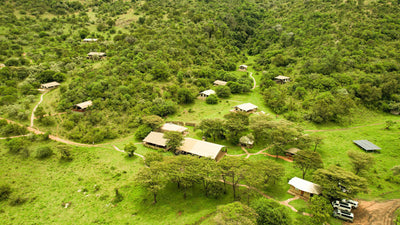
Photo by Fabio Sasso via Unsplash.
Drive the Yellowhead Highway through Hazelton, BC, and you'll pass through Gitxsan territory without much signage to tell you that two distinct systems of government have authority over what happens on that land. One is the Gitanmaax Band Council, created under the federal Indian Act, which administers reserve lands and can sign commercial agreements with the province. The other is the hereditary chief system, the Simgigyet of the Gitxsan and the Dinï ze' and Tsake ze' of the Wet'suwet'en, who trace their authority through house groups and clan lineages that predate the reserve system entirely and claim jurisdiction over a much larger swath of territory than any reserve boundary.
There is no court case literally titled Gitxsan and Wet'suwet'en chiefs versus BC's cannabis retail board. If you go looking for one, you won't find it. What you will find is something more interesting and more revealing: a government-to-government cannabis agreement between the province and the Gitanmaax Band, reportedly the eighth such deal BC has struck with an Indigenous government, finalized at the band council level with no hereditary chief signature anywhere near it. That absence is the story.
This territory isn't new to jurisdiction fights. It's the same ground that produced Delgamuukw v. British Columbia, the 1997 Supreme Court of Canada case brought by Gitxsan and Wet'suwet'en hereditary chiefs that forced Canadian law to treat oral history as legitimate evidence of Aboriginal title. Delgamuukw didn't settle who holds title in this region, and that unresolved question is exactly what resurfaces every time a new industry, cannabis included, needs a governing partner to sign a deal with.
Two Governments, One Territory

Photo by Thomas Svensson via Pexels.
The Gitxsan and Wet'suwet'en traditional territories cover a substantial stretch of north-central British Columbia, roughly tracing the Skeena and Bulkley River watersheds through communities like Hazelton, Smithers, and Moricetown. This isn't a small patch of land under dispute. It's tens of thousands of square kilometers that have been fished, hunted, and governed by Gitxsan and Wet'suwet'en house groups for generations, long before the Indian Act drew reserve boundaries around a fraction of that territory in the late 1800s.
Band councils exist because the Indian Act requires them. They're elected, they administer federal and provincial funding, and their legal authority is generally confined to reserve lands, small parcels carved out within the much larger traditional territory. That narrow but clearly defined jurisdiction is precisely why a band council can sign something like a provincial cannabis retail agreement: there's a specific address, a specific reserve, and a specific legal entity the province recognizes as the counterparty.
Hereditary chiefs operate under an entirely different framework. Authority passes through house groups and clan systems, and the claim isn't to a reserve parcel but to the whole territory, river systems, mountainsides, trapline areas, all of it. This is the exact claim that went to the Supreme Court of Canada in Delgamuukw v. British Columbia, filed by Gitxsan and Wet'suwet'en hereditary chiefs in the 1980s and decided in 1997. The court ruled that oral histories, the adaawk and kungax passed down through house groups, count as valid evidence of Aboriginal title, a genuinely significant shift in Canadian law. But the court stopped short of declaring where title actually sits in this territory, sending the underlying question back toward negotiation rather than resolving it outright.
Nearly three decades later, that gap hasn't closed. So when cannabis retail licensing shows up looking for a governance partner, it runs straight into the same unresolved fork in the road: does the province deal with the council that has clear reserve jurisdiction, or does it need to account for a hereditary system whose territorial claim is broader and, legally speaking, still unsettled?
]The Gitanmaax Cannabis Agreement

Photo by Cova Software via Unsplash.
The concrete, documented development here is the agreement between the province of British Columbia and the Gitanmaax Band, part of the Gitxsan Nation, based near Hazelton. The two sides are finalizing a government-to-government cannabis agreement that builds on something already up and running: Gitanmaax operates a provincially licensed cannabis retail store in the community, giving the band practical experience in the regulated market before this broader deal came together.
Reporting on the agreement describes it as the eighth such deal the province has reached with an Indigenous government over cannabis, which tells you this isn't an improvised one-off arrangement. BC has been building a repeatable template for bringing reserve communities into the legal cannabis economy on terms different from a standard provincial retail license.
The legal hook for that flexibility is section 119 of the Cannabis Control and Licensing Act, a provision that specifically authorizes these bilateral agreements with Indigenous governments. Normally, BC's cannabis framework keeps production and retail licenses separate, a deliberate anti-vertical-integration rule meant to stop a single operator from controlling growing and selling under one roof. Section 119 carves out an exception for Indigenous government agreements, and the Gitanmaax deal reportedly uses it, meaning a band-affiliated entity could hold both a cultivation license and a retail license simultaneously. The province also describes adjusted rules for on-reserve sales, terms not available to a non-Indigenous retailer applying through the standard process.
What's worth sitting with is who actually signed this. This is a band council agreement, negotiated and finalized by Gitanmaax's elected government under its Indian Act authority over reserve lands. It is not an agreement negotiated with, or publicly endorsed by, the Gitxsan hereditary chiefs whose claimed jurisdiction extends well beyond the Gitanmaax reserve boundary into the wider territory. That's not necessarily a problem for the deal's validity under provincial law, since the band council has clear authority over its own reserve lands and the retail operation sits there. But it's exactly the kind of gap that becomes consequential if cannabis cultivation or distribution activity were ever to extend into territory the hereditary system considers its own to govern.
]Why Hereditary Chiefs Aren't Automatically at the Table
BC's cannabis retail licensing framework was built to deal with recognized Indigenous governments, and in practice that almost always means Indian Act band councils, because they come with defined reserve jurisdiction, elected leadership, and a clear legal address for the province to contract with. A retail storefront needs a location, a license holder, and a governing body that can be held accountable for that specific site. Band councils fit that description. Hereditary chief systems, built around territory-wide Aboriginal title claims rather than parcel-based jurisdiction, don't fit as neatly into a licensing structure designed around a storefront.
This isn't a hypothetical tension unique to cannabis. It's the same divide that played out very publicly in 2020, when Wet'suwet'en hereditary chiefs opposed the Coastal GasLink pipeline running through their traditional territory, even though elected band councils along the pipeline route had signed benefit agreements with the project. That standoff drew national attention, rail blockades, and extended negotiations between hereditary leadership and both provincial and federal governments, and it demonstrated clearly that an agreement signed by a band council doesn't necessarily settle the question of consent from the hereditary side.
To be direct about what is and isn't documented: there is no public record of Gitxsan or Wet'suwet'en hereditary chiefs formally challenging a cannabis retail license, or specifically objecting to the Gitanmaax agreement. That challenge, as far as available reporting shows, hasn't happened. What is well established, though, is the structural disagreement over who holds authority to speak for the broader territory, a disagreement with a direct precedent in Coastal GasLink and a direct legal history in Delgamuukw. That disagreement doesn't disappear just because cannabis hasn't triggered it yet.
Given how unsettled and sometimes quietly handled these jurisdictional questions can be, anyone with an actual stake in this, a prospective retailer, a band member, a researcher, should go directly to current statements from both the Gitanmaax Band Council and Gitxsan or Wet'suwet'en hereditary leadership rather than relying on a secondhand summary, including this one.
]What Section 119 Actually Allows

Photo by Colin redwood via Unsplash.
Section 119 of BC's Cannabis Control and Licensing Act is a narrow provision doing a fairly significant job. The general rule in BC's cannabis market is strict separation between production and retail licenses, meant to prevent large operators from controlling the entire supply chain and squeezing out smaller, independent sellers. It's a structural choice the province made deliberately when it built out its post-legalization framework.
Section 119 exists as the carve-out to that rule, but only for agreements negotiated directly with Indigenous governments. Under it, a band-affiliated entity can hold both a cultivation license and a retail license at once, something no standard BC applicant is permitted to do. The Gitanmaax agreement reportedly makes use of this exception, paired with modified terms for on-reserve sales that give the band more flexibility than a non-Indigenous retailer would have under the standard provincial rulebook.
The fact that this is reportedly the eighth agreement of its kind suggests BC has moved past treating section 119 deals as experimental one-offs and is now running them as a standard, repeatable pathway for reserve communities entering the legal cannabis market. That's a meaningful shift from the early post-legalization years, when Indigenous communities across Canada frequently complained of being left out of license allocation entirely.
But section 119 answers a narrow legal question, who can hold what license type, and leaves a much bigger one untouched: within a given nation, which governing body, band council or hereditary structure, actually has the authority to negotiate on behalf of the broader territory. The Gitanmaax deal resolves that question for its own reserve lands by virtue of the band council's clear jurisdiction there. It does nothing to resolve it for Gitxsan or Wet'suwet'en territory more broadly, and nothing in section 119 is designed to.
]Strip away the cannabis specifics and what's left in northern BC is a governance question that's been sitting unresolved since at least 1997: when a new regulated industry arrives, which Indigenous authority does the province sit down with. Cannabis retail licensing didn't create that question. It just inherited it, the same way pipeline permitting did a few years earlier with Coastal GasLink.
The Gitanmaax agreement is a real, workable answer to one piece of that puzzle, a band council with clear reserve jurisdiction, paired with a section 119 exception that lets it run both cultivation and retail. It's a template the province has now used eight times, and it will likely get used again. What it hasn't done, and wasn't designed to do, is settle whether Gitxsan or Wet'suwet'en hereditary chiefs will eventually assert a competing claim over cannabis activity happening on territory they consider theirs to govern, the way they did when Coastal GasLink's pipeline route crossed the same ground band councils had already signed off on.
That test hasn't arrived yet for cannabis. But given how closely this pattern tracks the pipeline dispute, and given that BC keeps signing more of these section 119 deals, it's worth watching for the first agreement that draws a formal hereditary objection. When that happens, and not before, this stops being a structural tension worth noting and becomes the concrete jurisdictional fight the headline implies.
Sources
- Gitxsan leaders rally against industry injunctions, calling the orders ‘a license to kill’ - IndigiNews
- Wet’suwet’en and Gitxsan leaders in Gatineau to speak for their communities and lands at summit on C-5 legislation
- Gitxsan hereditary chiefs announce support for Wet’suwet’en hereditary chiefs - The Smithers Interior News
- Wet’suwet’en Crisis: Whose Rule of Law?
- Wet'suwet'en Explained — The Indigenous Foundation