Uganda's Cannabis Boom Leaves the Batwa Behind
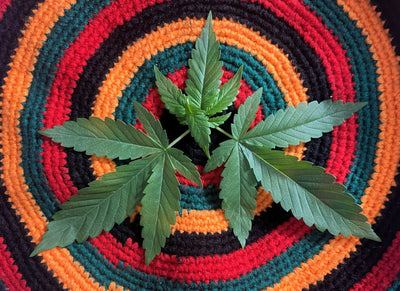
Photo by Entumoto Safari Camp via Pexels.
On October 3, 2026, a few dozen people gathered in a conference room in Naguru, a Kampala suburb, to ratify membership tiers for Uganda's new medicinal cannabis cooperative. There was a corporate partner category. There was an affiliate tier priced at Shs150,000 a year. There were warnings about record falsification and licence abuse. About 500 kilometers southwest, in villages ringing the Bwindi Impenetrable Forest, Batwa families who have grown cannabis informally for years as one of the few income sources left to them after decades of displacement were not in the room, not on the agenda, and not mentioned once.
Those two facts sit side by side without touching, which is exactly the problem. Uganda is building a formal, exportable cannabis industry at the same moment its most marginalized indigenous community depends on the same plant to survive informally. The contrast isn't accidental cruelty -- nobody in Kampala is targeting the Batwa specifically. But it raises the question that will determine what kind of industry this becomes: as East Africa's cannabis economy goes legitimate, who actually gets to hold a licence, and who gets left cultivating in the legal margins, same as before.
A Cooperative Built for Investors, Not Smallholders
The Uganda Medicinal Cannabis Industry and Hemp Cooperative Society -- UMCHICS -- formally launched on October 2, 2026, with Justine Kasule Lumumba, the Minister of ICT and National Guidance, chairing the proceedings. The following day's annual general meeting in Naguru set the organization's actual operating terms: full members pay Shs7,000, affiliate members pay Shs150,000 annually, and a separate corporate partner tier sits above both, presumably for the processors, exporters, and investment groups expected to anchor the industry's commercial side.
Juma Witonze Kisekka, the Minister of State for Internal Affairs, used the platform to draw a careful legal line: medical licensing under the Narcotic Drugs and Psychotropic Substances (Control) Act, 2024 -- in force since April 14, 2025 -- is not general legalisation. Cannabis remains a controlled substance for anyone operating outside the licensed medical and export framework. Officials at the AGM reinforced that distinction with specific compliance warnings: licence abuse, falsified cultivation or sales records, and diversion of controlled product out of the regulated chain would trigger enforcement, not a warning letter.
What's notable is everything the rollout didn't say. Across the ministerial speeches, the membership tier structure, and the compliance warnings, there is no reference to smallholder farmers, informal growers, or indigenous communities -- no mention of a pathway for people already growing cannabis in Uganda, just not under a UMCHICS card. The cooperative's architecture reads like it was built by people thinking about pharmaceutical export contracts and GACP certification audits, which it probably was. It reads like it was not built by anyone who has spent time in a Batwa settlement near Bwindi, where land titles and annual membership fees are not how the local economy works. That's not a conspiracy. It's just what happens when a licensing framework is drafted around the needs of capital and compliance, with no deliberate mechanism to pull in the people operating outside both.
Who the Batwa Are, and Why They Were Already on the Margins
The Batwa are Uganda's indigenous forest hunter-gatherers, sometimes referred to in older literature and by outsiders as Pygmy communities, though that term is not how the Batwa generally describe themselves. Uganda's 2024 census put their population at an estimated 3,857 people -- roughly 0.01 percent of the national population, making them one of the smallest and least politically visible ethnic groups in the country. For generations before that census existed, the Batwa lived inside the forests of southwestern Uganda, particularly the Bwindi and Mgahinga ranges, relying on the forest for food, medicine, shelter, and the full structure of daily life.
In 1991, the Ugandan government evicted Batwa communities from Bwindi and Mgahinga without compensation when those forests were gazetted as national parks. Three years later, in 1994, Bwindi Impenetrable National Park was inscribed as a UNESCO World Heritage Site -- a designation that cemented conservation and tourism as the forest's permanent legal purpose, and with it, the Batwa's permanent exclusion. The park that today draws travelers paying thousands of dollars for gorilla trekking permits is the same forest the Batwa were removed from with nothing offered in return.
That removal has a legal record. Uganda's highest court ruled in 2021 that the government was culpable for failing to adequately compensate or resettle displaced Batwa communities, according to reporting by Mongabay on the case and its aftermath. The ruling acknowledged the harm; it has not, by most accounts on the ground, translated into functioning land restitution. Today, Batwa communities report minimal land ownership of their own, with many adults working as casual agricultural laborers on land that belongs to other ethnic groups. Child malnutrition rates in Batwa settlements run above Uganda's national average -- a concrete, measurable marker of what three decades without a land base or a formal foothold in the national economy actually produces.
Cannabis as a Lifeline Nobody Licensed
A March 2026 report from TalkingDrugs documented something that should reframe how Uganda's cannabis rollout gets discussed: Batwa communities have been relying on cannabis as an economic lifeline, precisely because they remain locked out of mainstream Ugandan economic life. Cultivation has been observed in villages near the tourist corridors around Bwindi and Mgahinga -- grown informally, at subsistence scale, sold quietly into whatever local market exists for it.
This cultivation sits entirely outside the UMCHICS framework now being stood up in Kampala. It isn't licensed. It isn't taxed. It isn't recorded in any compliance ledger that the Minister of State for Internal Affairs would recognize as legitimate. Depending on local enforcement posture at any given moment, it's either quietly tolerated or treated as a criminal act under the 2024 Narcotic Drugs and Psychotropic Substances Act -- the same law now providing the legal basis for the medical export industry being built around the Bwindi region's wealthier counterparts in Kampala boardrooms.
The irony is specific and uncomfortable: the plant now generating cabinet minister attendance, formal cooperative bylaws, and corporate partnership tiers has been quietly keeping some of Uganda's poorest households fed for years, off the books, with zero institutional recognition. Nobody drafting UMCHICS's membership structure appears to have asked what happens to that existing cultivation base once a formal licensing regime -- and the enforcement apparatus that comes with it -- fully stands up. There is currently no mechanism, proposed or otherwise, to convert Batwa cultivation knowledge or activity into formal licensing participation. The expertise exists. The legal pathway to use it does not.
The Pattern Repeating Across East Africa's Cannabis Rollouts
Uganda isn't inventing this pattern -- it's running a version of licensing architecture that's shown up across Africa's emerging cannabis markets, where membership fees, corporate partner categories, and compliance regimes consistently favor capitalized investors over rural or indigenous growers. The specific numbers matter here. Shs150,000 a year for UMCHICS affiliate membership is genuinely modest money for a foreign investor or a Kampala-based agribusiness. For a Batwa household already described in government and NGO reporting as subsisting through casual agricultural labor with minimal land ownership of its own, that same fee is a real barrier, not a rounding error.
The deeper structural issue is land tenure. Formal cannabis licensing -- in Uganda and virtually everywhere else -- generally requires documented land ownership or a legal lease to even apply, since regulators need a fixed, inspectable cultivation site tied to a named license holder. The Batwa, displaced from their ancestral forest land in 1991 with no resettlement package that stuck, largely lack exactly that kind of documented land claim. It isn't that they can't grow cannabis competently; it's that they can't produce the paperwork a licensing body is built to require.
Without a land base and without formal recognition as cultivators, the Batwa are structurally boxed into one of two roles as this industry formalizes: either they keep growing informally and absorb the legal risk that comes with operating outside a now-active enforcement regime, or they become laborers on land licensed to someone else -- working the crop without owning any part of the business built around it. This is not a uniquely Ugandan failure. It's the same dynamic that's played out in other countries' legal cannabis transitions, where the people with the longest informal cultivation history are routinely the first group squeezed out once an industry formalizes around capital and paperwork rather than around the people already doing the work.
What Inclusion Would Actually Require

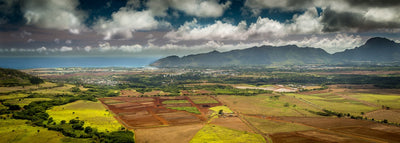
Photo by Micah Camper via Unsplash.
None of this is irreversible, but fixing it requires specific design choices that nothing in UMCHICS's current structure suggests are being considered. A real inclusion pathway would mean named, scaled membership or licensing tiers built for smallholder and indigenous economic realities -- not a fourth category bolted onto the existing three-tier fee schedule, but something priced and structured around what a Batwa household or a small farming cooperative can actually sustain, with financing or fee waivers tied to need rather than charity.
It would also mean treating the 2021 Supreme Court ruling on inadequate Batwa compensation as more than a historical finding of fault. That ruling is a legal hook that could be used to tie land tenure remedies directly to cannabis cultivation rights -- giving displaced Batwa communities a documented claim to land specifically usable for licensed growing, rather than leaving restitution and cannabis policy as two unconnected government processes that never reference each other.
Technical and compliance assistance matters just as much as land access. An informal grower who's never filled out a GACP compliance form or kept the kind of cultivation records UMCHICS officials warned about at the Naguru AGM isn't going to clear that bar on the first attempt without support -- and without support, the likely outcome isn't inclusion, it's prosecution once enforcement activity picks up. Other emerging legal cannabis markets have experimented with indigenous co-op licensing categories or set-aside tiers reserved for communities with historical cultivation ties, with mixed but instructive results. Uganda's framework, as it stands today, includes none of that. And that's really the core point: formalization doesn't exclude communities like the Batwa out of malice. It excludes them by default, because a licensing system designed around investors, land titles, and annual fees simply isn't built to see people operating outside those systems -- unless someone deliberately designs it to.
Uganda has a real chance here, the kind most emerging cannabis markets don't get twice. It has a documented legal finding that the state failed the Batwa on land and compensation. It has a young cooperative structure still flexible enough to add tiers, carve-outs, or technical assistance programs before enforcement fully ramps up. And it has, right now, an existing base of informal cultivation expertise near Bwindi that could become a genuine licensed supply chain rather than a prosecution target.
Whether any of that happens isn't going to be decided in a forest village -- it's going to be decided in follow-up meetings in Naguru, in ministry offices in Kampala, in whatever amendments get made or ignored to UMCHICS's bylaws over the next year or two. The Batwa aren't asking for a favor; they're asking to be written into a framework that, as of October 2026, doesn't mention them at all. Whether Uganda's cannabis industry becomes a genuine export success story or another entry in the long list of legal markets that quietly priced out the people who cultivated the plant first depends entirely on decisions still being made at AGMs in Kampala conference rooms -- far enough from Bwindi that it's easy to forget who's missing from the room.
Sources
- In Uganda, Cannabis is a Lifeline for Pygmy Communities - TalkingDrugs
- Uganda: Govt Backs Medical Cannabis Investment, Warns Against Illicit Diversion - allAfrica.com
- Cannabis in Uganda
- Marijuana in Africa in 2026: What Are the Current Weed Laws?
- Uganda Launches a Cooperative Dedicated to Medical Cannabis - Newsweed