Vanuatu's Cannabis Framework: Licensed but Stuck at the Bank
Photo by bogdan6821 via Pixabay.
Vanuatu's Parliament has now done something most Pacific nations haven't even attempted: built out a full legal architecture for licensed medical cannabis and industrial hemp cultivation, complete with island-by-island zoning, permit fees quoted in US dollars, and a gazetted national policy. On paper, that puts the archipelago of roughly 320,000 people ahead of much larger neighbors in regulatory readiness. But the law was always written around a single, unresolved premise -- that someone outside Vanuatu would actually buy what gets grown.
That's where things get complicated. Australia and New Zealand, the two economies within realistic shipping distance, both maintain tight restrictions on cannabis -- recreational use remains illegal in both countries, and medical cannabis import channels run through narrow, tightly audited pharmaceutical pathways rather than anything resembling an open market. So the practical question hanging over Vanuatu's entire framework isn't really about cultivation licenses or permit fees. It's about whether the region it's built to sell into is even structured to buy.
What the 2021 Act Actually Legalized

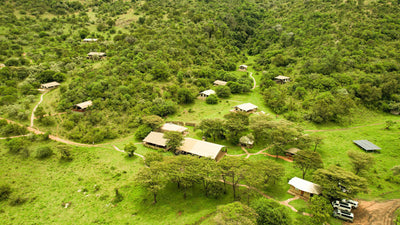
Photo by Mark Stebnicki via Pexels.
The Industrial Hemp and Medical Cannabis Act No. 31 of 2021 is the legal foundation here, and it's worth being precise about what it actually does. The Act authorizes licensed cultivation, processing, manufacture and export of medical cannabis and industrial hemp products. That's it. It does not touch recreational marijuana, which remains fully criminalized under the Dangerous Drugs Act [CAP 12] -- possession, cultivation, use and supply are all still prosecutable offences, full stop. There's no decriminalization tier, no personal-use exemption, nothing resembling the gradual loosening seen in some Pacific-adjacent jurisdictions. This matters because cannabis use on the islands is reportedly common in informal, unregulated settings despite the criminal penalties, creating a wide gap between lived practice and statute that the 2021 law did nothing to close.
What the Act did do was put Vanuatu among the first Pacific nations to legalize both an industrial hemp sector and a medical cannabis sector in the same piece of legislation, rather than phasing one in after the other. That's a notable legislative choice -- most jurisdictions that have gone this route treat hemp and medical cannabis as separate regulatory tracks with different timelines, given how differently the two crops are grown, processed and sold.
But passing a law and making it operational are different things, and Vanuatu's gap between the two was substantial. The Act received assent in 2021, yet the regulations needed to actually implement it -- the detailed rules governing licensing procedures, compliance standards and enforcement mechanics -- weren't signed until February 8, 2023. That's a two-year stretch where the law existed in name without the administrative machinery to act on it, a lag that foreshadowed the operational troubles that would follow once licenses actually started getting issued.
The Licensing Rules: Where, Who, and How Much

Photo by Leon Seibert via Unsplash.
Once the regulations landed in 2023, the licensing structure that emerged was notably specific about geography. Hemp cultivation is restricted to five islands -- Efate, Santo, Malekula, Tanna and Erromango -- while medical cannabis cultivation is confined to a tighter set of three: Efate, Santo and Malekula. That's a deliberate containment strategy, likely aimed at keeping oversight manageable in a country spread across more than 80 islands, rather than letting cultivation sprawl across the whole archipelago from the outset.
The application bar for prospective licensees isn't trivial either. Applicants have to produce bank statements demonstrating financial capacity, show at least ten years of relevant industry experience, submit a full business plan, and provide proof of a land lease before they're even considered. The government capped availability too -- at least two medical cannabis licences and three industrial hemp licences were made available, each running a 10-year term, which signals an intent to keep the sector small and controlled rather than throw the door open to a flood of applicants.
The costs reflect that same exclusivity. Licence holders face an annual fee of US$81,300, on top of capital investment requirements in the range of VT10-12 million (the equivalent in US dollars will vary with the exchange rate, so readers should check current conversion figures). That's a serious barrier to entry for a country where the median income is modest, effectively steering the opportunity toward well-capitalized foreign or joint-venture operators rather than smallholder ni-Vanuatu farmers working independently.
Crucially, none of this was ever designed to serve a domestic market. From the earliest drafting stages, the government structured the entire industry as export-only -- there was never a provision for local retail sale, medical dispensing to ni-Vanuatu patients, or any domestic commercial channel. Everything grown under these licences is meant to leave the country.
Licensed in 2023, Stalled Through 2024
Licenses got issued in 2023. Then, for all of 2024, essentially nothing happened. No imported genetics, no planting, no processing infrastructure standing up, no export shipments -- despite companies holding valid, paid licenses and presumably having lined up the capital and land leases the application process demanded.
MALFB Director General Timothy Tumukon has publicly pointed to gaps in the original 2021 legislation as the root cause, explaining that the law simply didn't contain the provisions needed to actually operationalize the industry it had created. It's one thing to authorize an activity in statute; it's another to build the regulatory plumbing -- permitting workflows, inspection regimes, compliance checkpoints -- that lets a licensee move from paperwork to planting.
The most concrete manifestation of that gap was banking. Local financial institutions in Vanuatu simply refused to open accounts or process payments connected to cannabis licence-holders, leaving companies that had cleared every regulatory hurdle -- paid the fees, proven the experience, secured the land -- with no legal mechanism to actually move money into or out of their operations. You can hold a ten-year cultivation licence and still not be able to pay a contractor or receive an export payment if no bank in the country will touch the transaction.
It's a familiar story in cannabis markets well beyond the Pacific. Legalizing an activity on paper does nothing to guarantee that banks, insurers, shipping companies or payment processors will treat that activity as legitimate enough to service -- a wall that cannabis markets in a number of other countries have also run into. Vanuatu's 2024 standstill is a small-scale, clearly documented version of a problem that has stalled far larger cannabis markets -- regulatory permission and financial infrastructure are not the same thing, and the second one often lags the first by years.
The 2025 Fix: A Permit System and a Gazetted Policy
The response to 2024's standstill came in two parts. First, the Industrial Hemp and Medical Cannabis (Amendment) Bill, drafted in 2024 and reintroduced in 2025, replaces the static licensing model with a permit system layered on top of it. Under the amended structure, holding a licence no longer means you're cleared to simply operate -- licensees now have to apply for a specific permit each time they intend to import genetics or inputs, cultivate, harvest, use material in manufacturing, or export a shipment. It's a more granular, checkpoint-by-checkpoint model, presumably designed to give regulators (and skittish banks) more confidence that each discrete transaction has been individually vetted rather than waved through under a blanket ten-year licence.
That Bill has officially passed, according to Vanuatu's Parliament bills page, clearing during the Second Extraordinary Session as the Industrial Hemp and Medical Cannabis (Amendment) Act of 2025. Separately -- and this is worth treating as a distinct milestone rather than the same event -- the government completed an Industrial Hemp and Medical Cannabis Policy and Strategy in late October 2025. That policy document was approved by Parliament, signed by the President, and formally gazetted into force, giving the sector a published strategic framework to sit alongside the amended legal text.
Officials have been notably careful in how they've framed what comes next. Public statements have stressed that any permitted activity has to be tightly regulated and securely managed, with every unit of product destined for export overseas and no local sales permitted under any circumstance -- language clearly aimed at heading off the domestic confusion that had cropped up around the law.
As for timelines, the government's target is early operations by the first quarter of 2026, but officials have kept expectations modest, describing success at that stage as simply seeing visible signs of activity -- land being prepared, first imports clearing customs -- rather than promising a fully functioning export industry straight out of the gate.
Who's Actually Buying? The Regional Export Puzzle

Photo by Oleksiy via Pexels.
Here's the structural problem that no amount of domestic legislative fixing resolves on its own: Vanuatu built an export-only cannabis industry before confirming who, exactly, is positioned to buy from it. Australia and New Zealand are the obvious nearest markets by geography and existing trade relationships, but both countries still prohibit recreational cannabis outright, which narrows the realistic buyer pool almost entirely to medical and pharmaceutical-grade supply chains.
That's a meaningfully higher bar than it might sound. Medical cannabis export markets typically demand pharmaceutical-grade compliance -- rigorous, consistent processing standards, lab testing and certification, and import permits cleared on the receiving country's side before a shipment can even leave port. Building that level of processing and quality-assurance infrastructure from scratch, on islands that had zero functioning cannabis cultivation as recently as 2024, is a tall order to clear quickly, regardless of how clean the permit system back home looks.
There's also been a domestic communication problem running parallel to the export question. As of late 2025, officials have had to publicly clarify confusion among ni-Vanuatu citizens, reiterating plainly that marijuana itself remains illegal and is still classified as a dangerous drug under national law -- a sign that the rollout of a sophisticated licensing and permit regime hasn't necessarily translated into public clarity about what has and hasn't actually changed.
None of this is unique to Vanuatu. Several small Pacific island nations have looked at cannabis cultivation as a potential agricultural diversification play, something to sit alongside kava, copra or tourism as an export earner. But the pattern repeats: limited local processing capacity, distant end markets with their own strict import controls, and a financial services sector that's often reluctant to service the industry even once it's legal. Vanuatu is simply the furthest along in writing the rules down -- it hasn't yet proven the rules translate into a shipment landing on a buyer's dock.
Vanuatu has, in a few years, gone from a single piece of enabling legislation to a licensing regime, a stalled industry, an amended permit system, and a gazetted national policy -- more regulatory iteration than most jurisdictions manage on cannabis in a decade. That's real progress, and it shouldn't be dismissed as just paperwork churn, given how genuinely hard the banking bottleneck proved to be.
But the early 2026 target the government has set is modest by design, and for good reason. Passing an amendment bill and gazetting a policy document only fixes the parts of this problem that are within Vanuatu's own borders. The harder question -- whether Australia, New Zealand, or other medical-cannabis import markets will actually clear product from a small, newly operational Pacific producer through their own pharmaceutical-grade approval pipelines -- isn't something Port Vila's legislature can resolve by itself. Those countries are still working out their own domestic medical cannabis frameworks, and a first-time export relationship with a small island nation isn't likely to be their top priority. Whether Vanuatu ends up as a genuine, if modest, Pacific cannabis exporter or as a case study in how far good domestic regulation can carry you without a buyer waiting on the other end will probably be decided less in Vanuatu's Parliament than in regulatory offices across the region.