Is Cannabis Legal in Alaska? Rules, Taxes and Limits
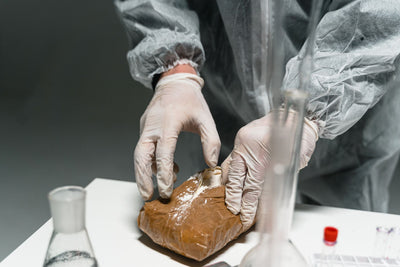
Photo by Yuanpang Wa via Pexels.
On the night of November 4, 2014, Alaska voters passed Ballot Measure 2, the same evening Oregon and Washington, D.C. approved their own measures. Colorado and Washington State had gone first, which made Alaska part of the opening wave of legal adult-use states.
So, is cannabis legal in Alaska? Yes, for adults 21 and older. But the answer comes with limits on how much you can have, where you can use it, and where you can legally buy it.
Alaska also had a head start most states lacked. A 1975 state Supreme Court ruling, Ravin v. State, had already carved out a privacy-based protection for cannabis in the home, four decades before the ballot box weighed in.
One caution before the details. This article draws on general knowledge of Alaska law rather than a fresh check of current regulations, and cannabis rules change often. Confirm anything you plan to act on with the Alcohol and Marijuana Control Office (AMCO).
Key takeaways
- Alaska voters legalized adult-use cannabis through Ballot Measure 2 in November 2014, making it one of the first four legal states.
- Adults 21 and older can possess up to 1 ounce and grow 6 plants, with no more than 3 mature.
- Cannabis remains federally illegal, so public use, local opt-outs and federal land restrictions still shape what Alaskans can actually do.
The Short Answer: What Alaska Law Allows
Alaska voters approved Ballot Measure 2 in November 2014. Along with Colorado, Washington and Oregon, Alaska was one of the first four states to legalize adult-use cannabis. The rules that followed are fairly simple on paper.
- Age: 21 or older.
- Possession: up to 1 ounce.
- Home grow: up to 6 plants, with no more than 3 mature (flowering) at a time.
- Public use: banned.
The public-use ban shapes daily life more than the other rules. Because you cannot consume in public, use is effectively limited to private property, and only with the owner's permission. A rental unit, a friend's cabin or a hotel room may all be off limits depending on who holds the keys and what they allow.
The plant count trips people up. Six plants is the total, not six mature plants. If you have four flowering at once, you are over the line even though the overall number looks fine.
Treat these as the baseline, not the whole picture. Local governments can layer on their own restrictions, and the sections below cover how that plays out.
Ravin v. State: Alaska's Head Start
Long before 2014, the Alaska Supreme Court decided Ravin v. State in 1975. The court found that the state constitution's privacy protection covers some cannabis possession in the home. Few other states had anything like it at the time, and it still sets Alaska apart on the legalization timeline.
The protection was narrow, though. It was tied to the home and to personal use. It did not legalize sales, create a licensed market, or give anyone license to carry cannabis around town.
In the decades after, state lawmakers and voters pushed back and forth on the issue. Recriminalization efforts and court challenges tested how far the ruling really reached. I won't try to reconstruct each round here. What matters is that the privacy principle survived in some form while the political fights over it kept coming back.
That history helps explain why Alaska's approach feels relatively relaxed. When voters passed Measure 2 in 2014, they were not starting from zero. They were writing down a principle that many Alaskans already treated as settled, then adding the structure of age limits, plant limits and licensing around it.
It also explains why the home remains the center of gravity in Alaska law. Privacy came first. Commerce arrived about forty years later.
How the Legal Market Works: AMCO, Licenses and Taxes
A yes vote in 2014 did not put cannabis on shelves right away. The first licensed retail stores opened in Fairbanks and Valdez in October 2016, nearly two years after the election. The gap was spent writing rules, standing up an agency and processing license applications.
Regulation now sits with the Alcohol and Marijuana Control Office, known as AMCO. Cannabis was originally overseen by a standalone Marijuana Control Office and its own board. Those functions were later folded into a combined alcohol and marijuana structure, so older articles may reference agency names that no longer match.
Then there is the tax. Alaska charges a state excise tax of $50 per ounce on bud and flower. It applies at the point of wholesale transfer from cultivator to retailer, not at the register, so customers do not see it as a line item on a receipt.
The distinction matters because this is a per-weight tax rather than a percentage-based sales tax. The burden does not rise or fall with the retail price. A premium ounce and a budget ounce carry the same state charge at transfer, which can weigh more heavily on lower-priced product.
I have not verified current license counts or total tax revenue, and I won't offer numbers I can't back up. For either, check AMCO and the Alaska Department of Revenue. Tax rates themselves can also change, so confirm the current figure before relying on it.
Local Control and On-Site Consumption
Statewide legality does not mean a store in every town. Local governments can add their own taxes, and they can ban or opt out of cannabis businesses altogether. Availability varies by borough and by community.
Alaska's geography makes this more than a technicality. Many residents live in remote communities far from any licensed retailer, and some places have chosen not to allow cannabis businesses at all. Before assuming you can buy locally, check the rules where you are.
In 2019 the state began allowing on-site consumption endorsements for retailers. In plain terms, a store with the endorsement can let customers use products on the premises. How those endorsements should work was not obvious at first, and disputes went through regulators and the Alaska Supreme Court before the first on-site licenses were issued.
These rooms fill a real gap. Public consumption stays banned everywhere else, so a visitor staying in a hotel that prohibits use, or a local who rents, has few legal places to consume. An on-site endorsement is one of the few answers.
Whether one operates near you, and what it allows, is a local question. Delivery and consumption rules are also areas where details shift, so verify current status with AMCO and your borough or city.
Federal Law and What Visitors Should Know

Photo by David Syphers via Unsplash.
Alaska law does not override federal law. Cannabis remains illegal under the federal Controlled Substances Act, whatever the state allows. For most daily purposes the state rules govern day-to-day enforcement, but the federal rule is still on the books.
It matters most in Alaska because so much of the state is federal land. National parks and other federal property fall under federal jurisdiction, so possessing or using cannabis there can violate federal law even if you bought it legally from a licensed store.
A rescheduling process moving cannabis to Schedule III was under way at the DEA and HHS as of the last information available to me. I don't know its current status. Check federalregister.gov or dea.gov for where things stand.
Rescheduling would not, on its own, legalize recreational sale or change Alaska's state licensing. It would alter federal classification and could affect things like research and taxation, but adult-use retail would still run through state systems.
For travelers, the most practical rule is simple. Do not carry cannabis on a flight, including between Alaska towns. Airports operate under federal jurisdiction, and a short domestic hop does not change that.
Alaska reached legalization by an unusual route: privacy law first, voters second. That order shows in how the system feels. It is relaxed about the home and personal use, yet fairly firm about public spaces, licensed commerce and federal boundaries.
If you plan to buy, grow or travel with cannabis, verify specifics before you act. AMCO and your local borough can tell you what applies where you are. Tax rates, on-site consumption rules and federal scheduling can all change, and this article reflects general knowledge rather than a current legal check.