Is Cannabis Legal in Jamaica? Ganja Laws Explained
Photo via Pexels.
Ask someone in Kingston whether weed is legal in Jamaica and you'll probably get a shrug and a "kind of." That shrug is doing a lot of work. Jamaica never flipped a switch and made cannabis legal the way, say, Uruguay or Canada did. What it built instead is a three-track system that took shape gradually after 2015, and each track answers a different question for a different kind of person.
Track one is the everyday stuff -- what happens if a Jamaican citizen gets caught with a spliff or grows a few plants in the backyard. Track two is specific to Rastafari, a faith with a documented, decades-old relationship to ganja as sacrament, now formally written into law rather than just quietly ignored by police. Track three is the one most visitors actually care about: the licensed herb houses where a tourist can walk in, get a permit on the spot, and buy cannabis legally before flying home to a country where none of this applies. Understanding Jamaica's ganja laws means keeping these three tracks separate, because conflating them is exactly how people end up in trouble at customs or confused about what a JMD $500 ticket actually means.
The 2015 Law: What Actually Changed
For most of the 20th century, Jamaica's relationship with cannabis was governed by the Dangerous Drugs Act of 1948, a piece of colonial-era legislation that treated possession, cultivation, and distribution as straightforward criminal matters. Anyone caught with ganja, regardless of quantity, faced arrest and a criminal record that could follow them for life -- a particularly heavy burden in a country where cannabis use, especially within Rastafari communities, had never actually gone away despite the law.
That changed on February 25, 2015, when the Dangerous Drugs (Amendment) Act passed. The reform didn't legalize cannabis outright. Instead it recategorized possession of two ounces (56.7 grams) or less as a non-arrestable petty offense, punishable by a fixed JMD $500 ticket rather than a criminal charge or court appearance. No handcuffs, no record, no lawyer required -- just a fine roughly equivalent to a few US dollars.
The same law gave every household the right to grow up to five cannabis plants, regardless of whether anyone living there uses cannabis medically or otherwise. It also established the Cannabis Licensing Authority (CLA), the body tasked with building out a regulated medical, therapeutic, and scientific cannabis industry from scratch. Minors caught with cannabis are diverted to counseling programs rather than the justice system, reflecting a public health approach rather than a punitive one for young people.
What the 2015 Act did not do is open the door to unrestricted recreational commerce for adults. There's no framework allowing anyone to buy cannabis for pure recreational enjoyment outside the licensed medical system or Rastafari exemptions. Jamaica decriminalized personal use and built a regulated industry around it -- a meaningfully different thing from full legalization, and a distinction that trips up a lot of visitors expecting an Amsterdam-style free market.
Rastafari Sacramental Exemption

Photo via Unsplash.
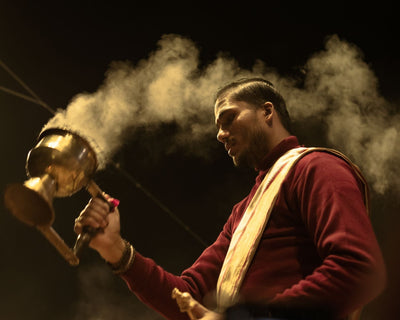
Rastafari's relationship with ganja predates any Jamaican statute by generations, rooted in scripture-based practice that treats the plant as a sacrament for meditation and spiritual communion rather than recreation. The 2015 reforms were the first time Jamaican law formally recognized that practice rather than simply tolerating it at the discretion of individual police officers.
Under the amended Dangerous Drugs Act, Rastafarians 18 and older can legally cultivate and smoke ganja for sacramental purposes at registered places of Rastafarian worship. The exemption isn't limited to individuals acting alone -- Rastafarian organizations can themselves register, giving established churches and communities a formal legal footing to maintain ganja as part of communal worship rather than something practiced in legal limbo.
Bigger gatherings, like festivals or larger religious events where sacramental use extends beyond a single registered place of worship, require more paperwork. Organizers must apply to the Minister of Justice for what's called an exempt event order under section 7D(8) of the Act. That application isn't a rubber stamp: it requires consultation with both the Chief Medical Officer and the Executive Director of the National Council on Drug Abuse before an order can be granted, meaning public health input is baked into the approval process.
On top of the ministerial order, event organizers also need a permit from the relevant Parish Council, and they're required to notify the nearest police station at least 30 days before the event takes place. That advance notice gives local law enforcement time to plan around the gathering rather than treat it as a surprise, and it reflects how the exemption is designed to coexist with normal policing rather than override it entirely.
Taken together, this framework does something fairly unusual by global standards: it writes a specific religious community's use of a controlled substance directly into national drug law, with defined registration and notification procedures, rather than leaving it to case-by-case police discretion or vague constitutional religious-freedom arguments.
Herb Houses and the Rules for Tourists
For visitors, the practical question isn't about theology or the fine print of household cultivation limits -- it's where to legally buy cannabis and how not to get arrested doing it. The answer is the herb house system, a network of licensed dispensaries that emerged directly out of the CLA's regulatory framework established in 2015.
Because Jamaica's law permits medical, therapeutic, and sacramental cannabis use, tourists can access it through a straightforward workaround: obtaining a medical permit, which at licensed herb houses is typically issued on site after a brief consultation, sometimes taking only a few minutes. From there, purchases at that dispensary are entirely lawful. Operators like Kaya Herb House and Epican have built out multi-location businesses specifically around this tourist-accessible medical framework, with staff experienced in walking visitors through the permit process.
This matters because the alternative -- buying from an unlicensed street seller, which remains common and visible in tourist areas -- carries real legal exposure. The decriminalization of small possession amounts doesn't extend blanket legal protection to unregulated sales transactions, and licensed herb houses exist precisely to give visitors a lawful, traceable channel instead.
Where Jamaican authorities draw an absolutely firm line is at the border. Exporting cannabis from the island, in any quantity and by any traveler, is treated as a serious criminal offense rather than a gray area extension of decriminalization. Airport security at both Sangster International in Montego Bay and Norman Manley International in Kingston actively screens departing passengers for cannabis, and enforcement here is not casual.
Recognizing that visitors sometimes leave a resort or herb house purchase in their luggage without thinking it through, both airports maintain amnesty boxes positioned before security screening. These allow travelers to surrender any cannabis products voluntarily and walk away without legal consequence, rather than risk arrest for attempting to carry it through security or onto a flight. It's a simple system, but skipping it in favor of trying to sneak product home is one of the more common and entirely avoidable ways tourists get into serious legal trouble in Jamaica.
Licensing Reform and a $63.5 Million Industry

Jamaica's licensed cannabis industry is projected to grow sharply, from US$38.9 million in 2024 to US$63.5 million in 2025—a jump of over 60%.
Jamaica's licensed cannabis industry has moved from a slow-building regulatory experiment to a genuinely sizable business. CLA CEO Farrah Blake put the industry's value at US$38.9 million in 2024, climbing to US$63.5 million in 2025 -- a 63% jump in a single year. Since the licensing program launched, the CLA has issued close to 200 licenses across cultivation, processing, retail, and transport.
The most consequential recent shift came with amendments to the Dangerous Drugs (Cannabis Licensing) (Interim) Regulations in April 2026, which introduced a Cultivator's Transitional Special Permit. This is a two-year on-ramp designed specifically for traditional small farmers -- people who've grown ganja for personal or informal community use for years, often outside any licensing structure -- to move into the legal market without having to clear the same bar as large commercial operators from day one.
Alongside it came a new Special Community Permit, which allows collective small-scale farming arrangements rather than forcing every individual grower to obtain a full standalone license. That's a meaningful change for rural growing communities where farming has traditionally been a shared, informal activity rather than something organized around individual corporate licenses.
The reforms also slashed the cost of entry dramatically: application fees dropped from US$3,000 to just US$150. New industry ID cards, standardized three-year license terms, and formal delivery authorization for licensed retailers rounded out the package, all aimed at reducing friction for smaller players who'd previously found the licensing system too expensive or too bureaucratic to bother with.
The changes were formally launched at an April 16, 2026 event featuring Minister of State Delano Seiveright, CLA CEO Farrah Blake, and Maurice Ellis, president of the Ganja Growers and Producers Association -- a lineup that signaled buy-in from both the regulatory side and the farmer advocacy side. One statistic from Blake stands out as evidence of how much the market itself has changed: about 40% of ganja sales now happen remotely, a sharp departure from the storefront-only retail model the industry started with less than a decade ago.
Hurricane Melissa's Hit to the Ganja Sector

Photo by camera obscura via Unsplash.
Hurricane Melissa hit Jamaica in November 2025, and its damage to agriculture broadly is well documented -- but the licensed cannabis sector took a specific, quantifiable hit that illustrates just how exposed this industry still is to Caribbean weather. Emergency measures put in place ahead of the storm's landfall are credited with preventing an outright shortage of ganja in the formal licensed system in the weeks that followed, which given the scale of Melissa's destruction elsewhere in the agricultural sector, counts as a real success for CLA and grower preparedness.
Individual operators weren't spared, though. Cultivator Vaswani reported that production would have risen by 55% that season if not for the hurricane, after losing six greenhouses to the storm. That's not a minor operational setback -- it's the kind of loss that erases a year's planned growth in a single weather event.
What stands out in Vaswani's account is what didn't get lost: the operation managed to preserve its genetic stock through the storm, meaning the specific cannabis strains and breeding lines the business had built weren't wiped out along with the physical infrastructure. Seven greenhouses have since been rebuilt, suggesting a fairly quick recovery effort, but the rebuilding itself represents capital and time that could otherwise have gone toward expansion.
Melissa is a useful case study precisely because it isn't an isolated incident -- it's a preview. Much of Jamaica's licensed cannabis cultivation still happens outdoors or in greenhouse structures that, however well-built, aren't designed to withstand a major hurricane. As the industry scales toward and past that US$63.5 million mark, storms like Melissa are a reminder that growth on paper can be undone in a single named weather event.
Put the three tracks together and Jamaica's cannabis law starts to make sense as a coherent, if unusual, system: decriminalization and household growing for ordinary citizens, a formally recognized sacramental carve-out for Rastafari, and a licensed medical-tourism retail channel for visitors, all sitting on top of a fast-growing regulated industry that's more than doubled in value in two years. It's a more thoughtfully layered approach than the blanket legalize-or-don't framing that dominates cannabis coverage elsewhere.
But Hurricane Melissa is the detail worth sitting with longest. Farrah Blake and the CLA can keep cutting license fees and opening pathways for small farmers, and Delano Seiveright can keep announcing reforms at press events, and none of that changes the fact that a single storm took out six of Vaswani's greenhouses and cost the operation 55% of a season's projected growth. Regulation shapes who's allowed to grow and sell. Climate shapes whether there's anything left standing to grow and sell in the first place. As Jamaica's ganja industry keeps scaling, how much of it stays exposed to open fields and greenhouses -- versus more storm-resilient infrastructure -- may end up mattering as much as anything written into the Dangerous Drugs Act.
Sources
- Can Jamaica’s New Cannabis Permits Deliver for Legacy Growers?
- New cannabis rules remove barriers for small farmers, says CLA head - Jamaica Observer
- Cannabis Licensing Authority – Ministry of Industry, Investment & Commerce
- Cannabis Licensing Authority
- How Tourists Legally Buy Weed at Jamaica's Herb Houses (2026 Permit Guide) · CannaCarib